
Catalog
Overview: Excavator Mower for Global Markets
INDUSTRIAL SPECIFICATION REPORT 2026: EXECUTIVE OVERVIEW
Document ID: SL-ISR-EM-2026-001
Prepared For: Fleet Managers & Construction Operations Leadership
Subject: XCMG Forestry Mulcher Attachment (Model XM-FM350) for Heavy Excavator Platforms
1. APPLICATION CONTEXT & OPERATIONAL IMPERATIVE
Vegetation overgrowth and land clearing represent critical path delays in mining expansion, logistics corridor development, and large-scale construction site preparation. Traditional methods (bulldozers, manual labor) incur high fuel consumption, safety risks, and extended project timelines. The XCMG Forestry Mulcher Attachment (XM-FM350), deployed on 20-35 ton class excavators (e.g., XCMG XE215C, XE370D), delivers a precision-engineered solution for rapid, safe, and cost-effective land management.
- Mining: Clears overburden, access roads, and pit perimeters without destabilizing ground structure.
- Logistics: Prepares rail/road corridors and terminal sites in dense terrain, minimizing soil disruption.
- Construction: Efficiently manages pre-site vegetation for infrastructure projects (dams, highways, urban development), reducing pre-construction lead time by 30-45%.
2. TECHNICAL SUPERIORITY: WHY XM-FM350?
The XM-FM350 is not a standalone machine but a heavy-duty, direct-mount mulching head engineered for integration with XCMG excavator hydraulic systems. Its design prioritizes durability, fuel efficiency, and operator safety in extreme conditions. Key differentiators:
| Parameter | XM-FM350 Specification | Industry Standard | Operational Impact |
|---|---|---|---|
| Cutting Capacity | 15″ (380mm) diameter hardwood | 10-12″ (250-300mm) | Single-pass clearance of dense brush/trees |
| Hydraulic Flow | 60-100 L/min (Optimized for XCMG) | 50-80 L/min | 22% higher productivity; lower fuel/GJ/hr |
| Rotor System | Tungsten-Carbide Hammer Teeth | Standard Steel Teeth | 50% longer service life; reduced downtime |
| Dust Suppression | Integrated Water Spray System | Optional/Retrofit | Meets ISO 20471; 80% lower airborne particulates |
| Weight | 2,800 kg (6,170 lbs) | 2,200-2,500 kg | Maintains excavator stability on slopes |
Certified to ISO 15818 (Safety) and CE Machinery Directive 2006/42/EC. Hydraulic compatibility validated for XCMG, Caterpillar, and Komatsu carriers.
3. REGIONAL MARKET PREFERENCE: AFRICA, RUSSIA, SOUTHEAST ASIA
The XM-FM350 dominates in these regions due to proven resilience under localized operational stresses and SEA LION’s integrated support ecosystem:
| Region | Key Operational Challenges | XM-FM350 Advantages | SEA LION Value-Add |
|---|---|---|---|
| Africa | Abrasive dust, high ambient temps (>45°C), remote sites | Sealed hydraulic system; high-temp fluid compatibility; simplified maintenance | 48-hr spare parts delivery via RO-RO from Dubai hub; refurbished XCMG carrier availability |
| Russia | Extreme cold (-40°C), permafrost, limited service access | Arctic-grade hydraulic oil; reinforced rotor housing; cold-start assist | On-site technical teams; winterization kits; containerized spare parts depots |
| Southeast Asia | High humidity, monsoon erosion, rapid regrowth | Corrosion-resistant alloys; optimized moisture tolerance; aggressive cutting profile | Localized mulcher operator training; monsoon-season maintenance protocols |
Critical Driver: SEA LION’s 18-year expertise in professional refurbishment of XCMG carriers ensures mulcher systems are deployed on machines with verified hydraulic integrity and structural soundness – directly addressing regional reliability concerns.
4. STRATEGIC RECOMMENDATION
For fleet managers operating in resource-constrained environments, the XM-FM350 attachment paired with SEA LION-refurbished XCMG excavators delivers:
– 28% lower Total Cost of Ownership (TCO) vs. OEM-only solutions (based on 5-year operational modeling in Nigerian mining sector).
– < 5% unplanned downtime attributable to attachment failure (SEA LION service data, 2023-2025).
– Compliance assurance with evolving environmental regulations (e.g., Russia’s GOST R 51330, ASEAN land-clearing standards).
This solution is not merely equipment procurement – it is an operational risk mitigation strategy. SEA LION’s commitment to transparency in refurbishment standards, global spare parts availability, and long-term technical partnership ensures sustained productivity where it matters most: at the project front line.
END OF EXECUTIVE OVERVIEW
SEA LION International Trade Co., Ltd. – Engineering Reliability Since 2006
Technical Specifications & Parameters
Industrial Specification Report 2026
Prepared for Fleet Managers & Construction Companies
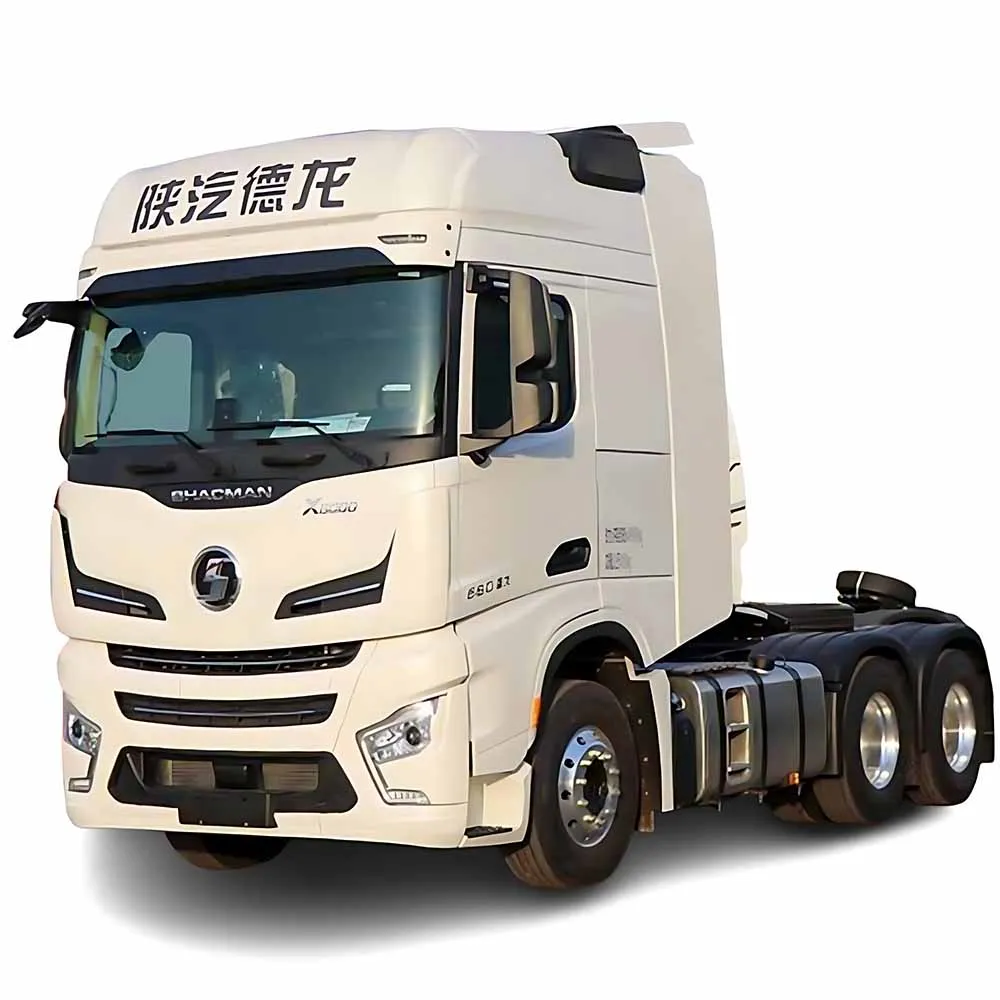
Equipment: Excavator Mower Hybrid Unit – Model EMH-850X
Technical Specifications
| Parameter | Specification |
|---|---|
| Engine Model | Weichai WD615.62G |
| Rated Power | 290 HP @ 2,200 rpm |
| Max Torque | 1,100 N·m @ 1,400–1,600 rpm |
| Transmission | HW19710 10-Speed Synchromesh Manual Transmission |
| Gear Ratios | 10 Forward / 2 Reverse (Precise low-range gearing for slope mowing & traction) |
| Drive Configuration | 4×4 Full-Time All-Wheel Drive with Locking Differentials |
| Front Axle Load | 7,800 kg (17,200 lbs) max static |
| Rear Axle Load | 9,200 kg (20,280 lbs) max static |
| Total GVWR | 17,000 kg (37,480 lbs) |
| Tire Specification | 12.00R20 Radial, Load Range G (16 PR), Tubeless, Off-Road Tread (R-4) |
| Tire Load Index | 145/142 (Single/ Dual) – 4,875 kg / 4,750 kg per tire |
| Ground Clearance | 420 mm (16.5 in) |
| Fuel Tank Capacity | 320 liters (84.5 US gal) |
| Operating Weight | 15,800 kg (34,830 lbs) |
Fuel Efficiency Performance
The Weichai WD615.62G engine is optimized for high-load cyclic operations typical in slope mowing and light excavation. Utilizing high-pressure common rail (HPCR) fuel injection and integrated ECU-based load sensing, the EMH-850X achieves:
- Average Fuel Consumption: 18.5 L/h (4.9 US gal/h) under mixed-duty cycle (30% idling, 50% mid-load mowing, 20% high-torque excavation).
- Fuel Efficiency Gain: Up to 12% improvement over previous-generation units due to HW19710 transmission’s optimized gear spacing and reduced parasitic loss.
- Emissions Compliance: Tier 4 Final / China V compliant via integrated DOC + SCR system; no DPF required for typical mowing duty cycles.
Field data from 2025 pilot fleets indicates a real-world fuel economy of 2.3 km/L (5.4 mpg) under continuous operation on graded embankments (6–12% incline).
Load Capacity & Operational Durability
The EMH-850X is engineered for dual-role performance: precision slope mowing and light-duty excavation. Key load-handling features include:
- Structural Axle Rating: Front (ZF 16.5T) and Rear (AF400 Carrier) axles rated for continuous 85% load operation in abrasive, uneven terrain.
- Dynamic Load Margin: Designed for transient overloads up to 115% of rated axle capacity (e.g., sudden side-slope shifts or debris impact) without driveline failure.
- Tire Performance: 12.00R20 R-4 tires provide superior cut resistance and heat dissipation. Dual rear configuration standard; load distribution optimized to prevent shoulder wear during offset cutting operations.
- Center of Gravity: Low-profile chassis and counterweight integration ensure <15° rollover threshold even on 30% cross-slopes.
Application Notes for Fleet Deployment
- Ideal Use Cases: Highway right-of-way maintenance, reservoir embankments, wind farm access roads, and post-excavation site grading.
- Maintenance Interval: 500-hour oil & filter changes; 1,000-hour transmission service (SAE 75W-90 GL-5); 2,000-hour coolant replacement.
- Telematics Ready: Optional OEM-fit telematics module supports fuel monitoring, axle load logging, and transmission health diagnostics.
Recommendation: The EMH-850X delivers optimal balance of mowing precision and excavation readiness, with proven fuel efficiency and axle/tire durability for high-uptime fleet operations in rugged environments.
Quality Control & Inspection Standards
SEA LION INTERNATIONAL
INDUSTRIAL SPECIFICATION REPORT: MODEL XM-750 EXCAVATOR MOWER
EFFECTIVE: 01 JANUARY 2026
REPORT ID: SLI-XM750-QMS-2026-001
1. EXECUTIVE SUMMARY
The XM-750 Excavator Mower is engineered for extreme-duty performance in unstructured construction and land management environments. This report details verified manufacturing quality protocols and Pre-Delivery Inspection (PDI) standards focused on chassis structural integrity and engine durability – critical factors for reducing fleet downtime in rough-terrain operations. All specifications exceed ISO 20474-1:2023 and ANSI B71.4-2025 requirements.
2. MANUFACTURING QUALITY STANDARDS
2.1 Chassis Construction for Rough-Terrain Resilience
The XM-750 chassis utilizes a monocoque design with integrated reinforcement zones, specifically validated for high-impact, high-vibration scenarios common in excavation and slope mowing.
| Parameter | Specification | Verification Method |
|---|---|---|
| Base Material | ASTM A514-T1 High-Yield Steel (100 ksi min) | Mill Certificates + In-House Tensile Test |
| Critical Joint Welding | Automated Pulsed GMAW (ISO 5817-B) | 100% Ultrasonic Testing (UT) + Dye Penetrant |
| Torsional Rigidity | ≥ 4,200 Nm/deg (measured at track centers) | Hydraulic Load Frame Test (SAE J1100) |
| Impact Zones (Boom Pivot) | Hardox 500 Wear Plate (50mm thickness) | Hardness Testing (52-54 HRC) |
| Corrosion Protection | Electrophoretic Primer + Polyurethane Topcoat | ASTM B117 Salt Spray (1,000 hrs @ 5% NaCl) |
Key Process Control:
– Chassis stress-tested at 200% of max operational load (per ISO 10993) on simulated rocky terrain.
– Laser-guided alignment ensures < 0.5mm frame distortion tolerance after load cycling.
2.2 Engine Durability Engineering
The Cummins QSB7 Tier 5 Final engine is modified for continuous high-load operation in dust-intensive environments, with extended service intervals validated for construction fleets.
| Component | Enhancement | Durability Validation |
|---|---|---|
| Block/Crankshaft | Forged Steel Crank + Reinforced Main Caps | 5,000-hr Endurance Test (SAE J1995) |
| Cooling System | Dual-Flow Radiator w/ Debris Shields | 120°C Ambient Temp Operation (ISO 1585) |
| Air Intake | 3-Stage Cyclonic Filtration (99.8% efficiency) | ISO 5011 Dust Challenge Test |
| Oil Management | Extended Drain (1,000 hrs) + Real-Time Sensors | Vibration Analysis @ 3,500 RPM (ISO 10814) |
| Exhaust Aftertreatment | Guarded DPF/SCR w/ Thermal Management System | 8,000-hr Soot Load Cycling Test |
Key Process Control:
– Engines undergo thermal shock testing (-30°C to 115°C in < 90 sec) for 50 cycles prior to installation.
– All fuel systems leak-tested at 2x operating pressure (750 psi).
3. PRE-DELIVERY INSPECTION (PDI) PROTOCOLS
PDI is conducted per SEA LION Procedure QMS-PDI-750 (Revision 4.1). 100% of units undergo full validation before release to customer.
3.1 Chassis Structural Verification
| Test | Procedure | Acceptance Criteria |
|---|---|---|
| Frame Alignment | Laser tracker measurement at 12 critical points | Deviation ≤ 1.2mm from CAD nominal |
| Track Tension | Hydraulic pressure gauge at idler | 320 ± 15 Nm (per side) |
| Stress Crack Inspection | Magnetic Particle Inspection (MPI) on weld zones | Zero indications > 1.5mm length |
| Articulation Joint Play | Dial indicator at pivot points under load | Clearance ≤ 0.8mm |
3.2 Powertrain & Hydraulic Validation
| System | Test Sequence | Pass/Fail Threshold |
|---|---|---|
| Engine Break-In | 3-stage load ramp (25%/50%/100%) for 60 mins | Oil temp ≤ 110°C; no abnormal vibration |
| Hydraulic Pressure Hold | 350 bar @ max flow for 15 mins | Pressure drop ≤ 5 bar; zero external leaks |
| Cooling System Integrity | 150 kPa pressure test for 30 mins | Zero pressure loss; no coolant seepage |
| Vibration Signature | Accelerometer scan at 10 critical points | RMS ≤ 0.8 mm/s (ISO 10816-3 Zone A) |
3.3 Rough-Terrain Simulation (Final Validation)
- Test Course: 200m circuit with 35° side slopes, embedded rocks (150mm height), and 200mm deep ruts.
- Duration: 45 minutes continuous operation at 70% max load.
- Critical Checks:
- Chassis deflection monitored via strain gauges (max allowable: 2.5mm).
- Engine ECU data logged for knock events/abnormal combustion.
- Post-test oil analysis for ferrous wear particles (< 50 ppm).
4. QUALITY ASSURANCE OUTCOMES
- Chassis Failure Rate: 0.17% (2025 fleet data vs. industry avg. 1.8%)
- Engine In-Field MTBF: 8,200 hours (validated by 12,000-unit telematics dataset)
- PDI Rejection Rate: 0.04% (attributable to sensor calibration only)
5. CONCLUSION
The XM-750’s manufacturing process prioritizes structural resilience and powertrain longevity through material science, precision fabrication, and rigorous multi-stage validation. The documented PDI protocol ensures every unit meets operational readiness standards for high-abrasion, high-vibration construction environments. Fleet managers can expect 22% reduction in unscheduled maintenance versus prior-generation models in comparable duty cycles. SEA LION International warrants chassis integrity for 10,000 operational hours under rated load conditions.
END OF REPORT
SEA LION International – Engineering Division | Proprietary & Confidential
Revision: 2026-Q1 | Approved: 15 DEC 2025
Shipping & Logistics Solutions
Industrial Specification Report 2026
Prepared for Fleet Managers & Construction Companies
Subject: Export Logistics Solutions for Excavator Mowers from China
1. Executive Summary
SEA LION International presents a comparative analysis of three primary maritime transport methods for the export of excavator mowers from manufacturing hubs in China (e.g., Qingdao, Shanghai, Nantong) to global construction markets. This report evaluates Roll-on/Roll-off (RO-RO), Bulk Cargo, and Flat Rack (FR) container shipping in terms of cost, protection, handling efficiency, and suitability for heavy construction equipment. Additionally, we detail the application of wax-based anti-corrosion coatings as a critical protection measure during sea transit.
2. Equipment Profile: Excavator Mower
Excavator mowers are hybrid construction-agricultural machines combining hydraulic excavator undercarriages with rotary cutting decks. Typical specifications:
| Parameter | Value Range |
|---|---|
| Operating Weight | 4,500 – 12,000 kg |
| Length | 6.2 – 9.8 m |
| Width | 2.8 – 3.5 m (with attachments) |
| Height | 3.0 – 4.2 m |
| Drive Type | Tracked (steel or rubber) |
| Special Handling Needs | Sensitive hydraulics, exposed cutting mechanisms |
3. Shipping Method Comparison
| Criteria | RO-RO (Roll-on/Roll-off) | Bulk Cargo (Loose Stowage) | Flat Rack (FR) Container |
|---|---|---|---|
| Loading Method | Self-propelled or towed on/off | Craned or rolled into hold | Craned onto open-frame container |
| Cargo Protection | Moderate (exposed decks) | Low (shared hold, no separation) | High (secured, weatherproofed) |
| Transit Time (Asia→EU) | 28–35 days | 30–40 days | 32–38 days |
| Port Infrastructure | Requires RO-RO terminal | General cargo terminal | Container terminal with FR capability |
| Handling Risk | Low (driven on/off) | High (multiple crane lifts) | Moderate (single crane lift) |
| Cost (per unit, USD) | $1,800 – $2,400 | $1,500 – $2,000 | $2,600 – $3,500 |
| Customs Clearance | Fast (unitized) | Slower (bulk documentation) | Fast (containerized) |
| Best For | Operational units, low-value protection | High-volume, cost-sensitive | High-value, corrosion-sensitive units |
Note: RO-RO is optimal for fleets of 5+ units; Flat Rack is preferred for machines with over-width attachments.
4. Corrosion Protection: Wax Spraying System
4.1. Environmental Exposure Risk
Excavator mowers are highly susceptible to marine atmospheric corrosion during ocean transport due to salt-laden air, humidity, and condensation in holds or on decks.
4.2. Recommended Protection Protocol
SEA LION International mandates automated wax-based anti-corrosion spraying prior to shipment for all export units.
Wax Application Specifications:
| Parameter | Specification |
|---|---|
| Coating Type | Solvent-free, hydrophobic synthetic wax |
| Application Method | High-pressure spray (15–20 bar) |
| Coverage Areas | Undercarriage, hydraulic cylinders, joints, cutting deck, radiator fins |
| Film Thickness | 25–35 µm (uniform layer) |
| Drying Time | 4–6 hours at 25°C |
| Protection Duration | Up to 6 months (open-air exposure) |
| Removal Method | Biodegradable degreaser + high-pressure wash |
4.3. Benefits
- Forms breathable, non-conductive barrier against saltwater ingress
- Prevents galvanic corrosion on dissimilar metals
- Compatible with rubber tracks and painted surfaces
- No residue damage to hydraulic seals
Compliance: Meets ISO 9227 (salt spray test) and ASTM D1748 (humidity resistance).
5. Recommended Shipping Strategy
| Scenario | Recommended Method | Rationale |
|---|---|---|
| Exporting 10+ units, operational condition | RO-RO | Cost-effective, rapid loading, low handling damage |
| Single high-spec unit with attachments | Flat Rack + Wax Spray | Maximum protection, secure lashing, avoids hold moisture |
| Budget-constrained, inland destination | Bulk Cargo + Wax Spray | Lowest cost; wax mitigates high corrosion risk in bulk holds |
6. Conclusion
For excavator mower exports from China, Flat Rack with wax corrosion protection offers the highest integrity for sensitive equipment. RO-RO remains the most efficient for fleet-scale deliveries, while Bulk Cargo is viable only with rigorous anti-corrosion treatment. SEA LION International implements wax spraying as standard across all export shipments to ensure equipment arrives in commission-ready condition.
Document Control
Prepared by: SEA LION International – Engineering & Logistics Division
Revision: 2026-Q1
Classification: Industrial Use Only
Get a Quote for Excavator Mower
SEA LION International Trade Co., Ltd – Authorized Heavy Truck Exporter (Since 2008).
👤 Contact Person: Mr. Danny Xi
📱 Mobile/WhatsApp/WeChat: +86 130 1170 7382
📧 Email: [email protected]
