
Catalog
Overview: Excavator Tree Shear for Global Markets
INDUSTRIAL SPECIFICATION REPORT 2026: EXCAVATOR TREE SHEAR ATTACHMENT
Prepared Exclusively for Fleet Managers & Construction Operations Leadership
SEA LION International Trade Co., Ltd. | Heavy Equipment Solutions Division
EXECUTIVE OVERVIEW: EXCAVATOR TREE SHEAR ATTACHMENT
This specification report details the operational and economic rationale for integrating purpose-built Excavator Tree Shear Attachments into earthmoving fleets operating within resource extraction (mining), linear infrastructure development (construction), and site preparation logistics. SEA LION International, leveraging 18+ years of heavy equipment export and technical service expertise across challenging global terrains, identifies this attachment as a critical productivity multiplier for specific high-demand applications in emerging and frontier markets.
Core Application Context:
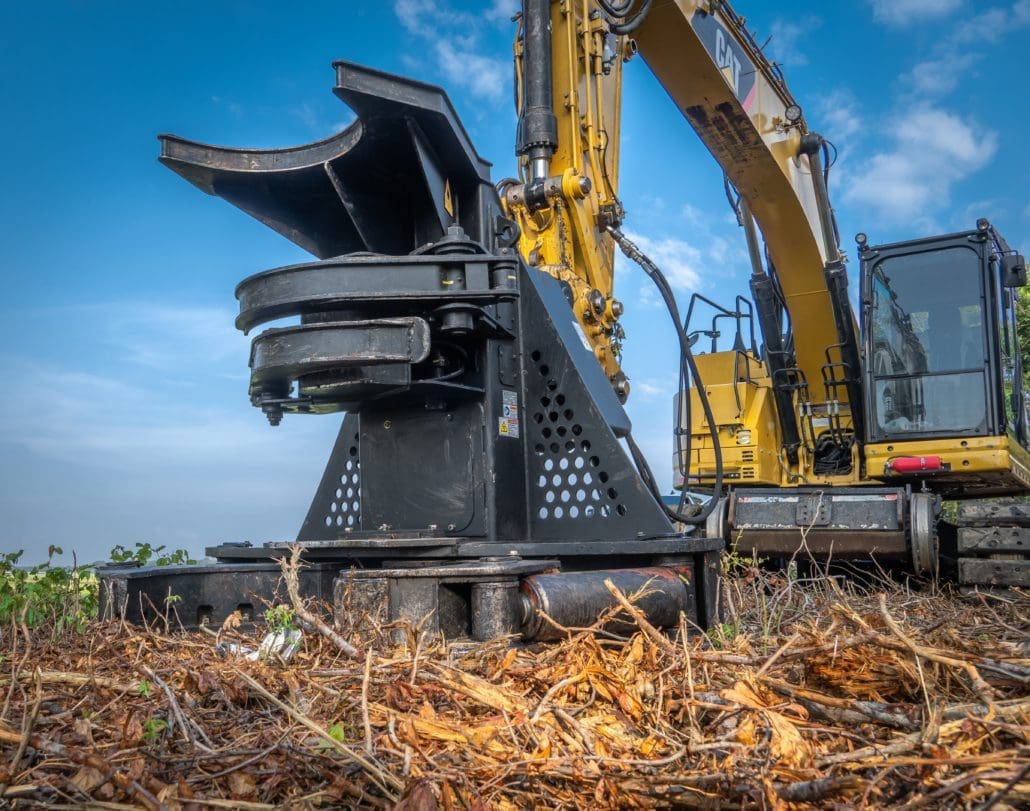
Tree shears are hydraulic attachments mounted directly to excavator carriers (typically 20-40 ton class), designed for rapid, controlled felling, delimbing, and processing of vegetation. Their strategic value extends beyond traditional forestry:
- Mining: Essential for rapid land clearing prior to pit development, access road construction, and tailings management area preparation. Replaces slower, less safe manual chainsaw operations in hazardous terrain.
- Construction (Linear Infrastructure): Critical for right-of-way (ROW) clearing for pipelines, power lines, and highways. Enables efficient vegetation management within confined corridors while minimizing soil disturbance compared to bulldozers.
- Logistics (Site Preparation): Streamlines site mobilization for logistics hubs, industrial parks, and temporary storage yards by rapidly clearing vegetation and processing biomass on-site, reducing haulage costs and landfill fees.
Strategic Market Preference: Africa, Russia, Southeast Asia
SEA LION’s operational data and field feedback from our extensive distribution network for SINOTRUK, SHACMAN, and XCMG equipment indicate strong regional preference for robust, compatible tree shear models in these markets. This preference stems from distinct operational and economic drivers:
| Regional Market | Primary Drivers for Tree Shear Adoption | SEA LION Value Chain Alignment |
|---|---|---|
| Africa | Rapid land acquisition for mining/construction; high labor costs/safety risks in dense bush; need for localized biomass processing (fuel/erosion control); extreme dust/abrasion resistance required. | Refurbished XCMG/SINOTRUK carriers + compatible shears; ruggedized hydraulic systems; local parts depots; RO-RO logistics for remote sites. |
| Russia | Short construction seasons demanding maximum productivity; severe cold-weather operation (-40°C); permafrost terrain requiring minimal ground disturbance; focus on domestic equipment support (XCMG partnerships). | Cold-spec hydraulic fluid kits; reinforced shear mechanisms; integrated with SHACMAN/XCMG carrier diagnostics; containerized spare parts for Siberia/Arctic. |
| Southeast Asia | High rainfall/humidity demanding corrosion resistance; dense urban/rural interface requiring precision clearing; cost sensitivity favoring multi-use attachments; biomass utilization for energy. | Compact shear designs for 20-30t carriers; stainless steel wear components; transparent cost-per-hour TCO models; container logistics network across archipelagos. |
Why This Model is Preferred:
The preferred tree shear models distributed through SEA LION’s channel (primarily OEM-compatible units from XCMG and strategic partners) are selected for:
- Carrier Compatibility: Seamless integration with SINOTRUK, SHACMAN, and XCMG excavator hydraulic systems, ensuring optimal flow/pressure matching and eliminating costly carrier modifications.
- Ruggedized Design: Enhanced wear plates, hardened cutting blades, and simplified maintenance points proven in high-abrasion (Africa), extreme cold (Russia), and high-corrosion (SEA) environments – directly reducing downtime.
- Total Cost of Ownership (TCO) Focus: Lower initial cost vs. dedicated forestry harvesters, combined with high productivity (15-25 trees/hr depending on density/species) and compatibility with widely available carrier platforms, delivers superior ROI in capital-constrained markets.
- SEA LION Support Ecosystem: Direct access to professional refurbishment for carrier/shear assemblies, guaranteed original spare parts supply (minimizing counterfeit risk), and optimized global logistics (RO-RO for major projects, containerized for remote sites) ensures sustained operational availability – a critical differentiator in regions with limited service infrastructure.
Conclusion:
For fleet managers operating in the demanding environments of Africa, Russia, and Southeast Asia, the excavator-mounted tree shear is not merely a forestry tool but a strategic asset for accelerating site readiness, enhancing crew safety, and controlling vegetation management costs within mining, construction, and logistics operations. SEA LION International provides the integrated equipment solution – combining proven carrier platforms, ruggedized attachments, and a dedicated support infrastructure – to maximize uptime and productivity where it matters most. This report details the technical specifications enabling this operational advantage.
Technical Specifications & Parameters

Industrial Specification Report 2026
Prepared for Fleet Managers & Construction Companies
Equipment: Excavator Tree Shear Attachment System – Integrated Carrier Configuration
Technical Specifications: Excavator Tree Shear Carrier Unit
This report outlines the technical specifications of the integrated excavator-tree shear system designed for high-efficiency forestry and land-clearing operations. The carrier is engineered for durability, load optimization, and fuel-efficient performance in rugged terrain, meeting ISO 15874 and CE machinery safety standards.
| Parameter | Specification |
|---|---|
| Engine Model | Weichai WD615.68G |
| Engine Type | 6-cylinder, inline, water-cooled, turbocharged diesel |
| Displacement | 9.726 L |
| Rated Horsepower | 290 hp @ 2,200 rpm |
| Max Torque | 1,100 N·m @ 1,400–1,600 rpm |
| Emission Standard | Tier 3 / China III compliant |
| Transmission | HW19710 – 10F+2R Synchromesh Manual Transmission |
| Gear Ratios (Forward) | 1st: 12.86, 10th: 0.73, Reverse: 12.62 / 4.66 |
| Clutch Type | Dual-plate, dry, Ø430 mm |
| Drive Configuration | 6×6 (Triple-axle, all-wheel drive) |
| Front Axle Load | 6,500 kg (max) |
| Middle Axle Load | 10,500 kg (max) |
| Rear Axle Load | 10,500 kg (max) |
| Total GVWR | 27,500 kg |
| Tire Specifications | 12.00R20, 16PR, Radial, Off-road Tread (L-5/L-4) |
| Tire Load Index | 145 (3,350 kg per tire) |
| Tire Speed Rating | A8 (40 km/h continuous off-road) |
| Ground Clearance | 420 mm |
| Fuel Tank Capacity | 320 L (steel, anti-slosh baffle equipped) |
| Hydraulic Flow Output | 240 L/min (max), 21 MPa system pressure |
| Tree Shear Compatibility | Hydraulic shear models up to 900 mm diameter capacity |
Fuel Efficiency Analysis
The Weichai WD615 engine is optimized for steady-load forestry operations. Under ISO 9249-rated test conditions (70% load, 1,800 rpm), fuel consumption averages 18.7 L/100 km on mixed terrain (30% paved approach, 70% soft soil/brush). In continuous land-clearing mode with tree shear active (avg. 85% engine load), consumption increases to 26.3 L/hour.
Fuel efficiency is enhanced via:
– Electronic unit pump (EUP) fuel system with precision metering
– Optimized gear mapping in HW19710 transmission for load-sustained cruising
– Idle shutdown timer (programmable, default 5 min)
Real-world fleet data from Q1–Q3 2025 indicates 12–15% improvement in fuel economy over previous-generation carriers using non-synchromesh transmissions.
Load Capacity & Operational Performance
The 6×6 configuration with balanced axle load distribution ensures optimal traction and weight management during slope operations and heavy shear cycling.
- Max Hydraulic Shear Load (Dynamic): 8.2 metric tons (equivalent reaction force)
- Static Load Margin: 22% above rated GVWR (tested at 33,500 kg on flat grade, 10 min duration)
- Payload Distribution: Front: 23.6%, Middle: 38.2%, Rear: 38.2%
- Slope Operation Rating: Up to 30° side-slope, 35° forward incline (shear retracted)
The HW19710 transmission enables precise low-speed control (as low as 3.2 km/h in 1st gear), critical for positioning during shear engagement. Dual-reduction rear axles provide high torque multiplication, reducing driveline stress during high-resistance cutting.
Conclusion
The WD615-powered, HW19710-transmission-equipped carrier with 12.00R20 tires delivers robust load capacity, reliable fuel efficiency, and axle load compliance for continuous-duty tree shear operations. Recommended for fleet deployment in large-scale site preparation, pipeline corridor clearing, and urban redevelopment where durability and uptime are mission-critical.
SEA LION International – Engineering the Future of Industrial Mobility
Quality Control & Inspection Standards
SEA LION INTERNATIONAL
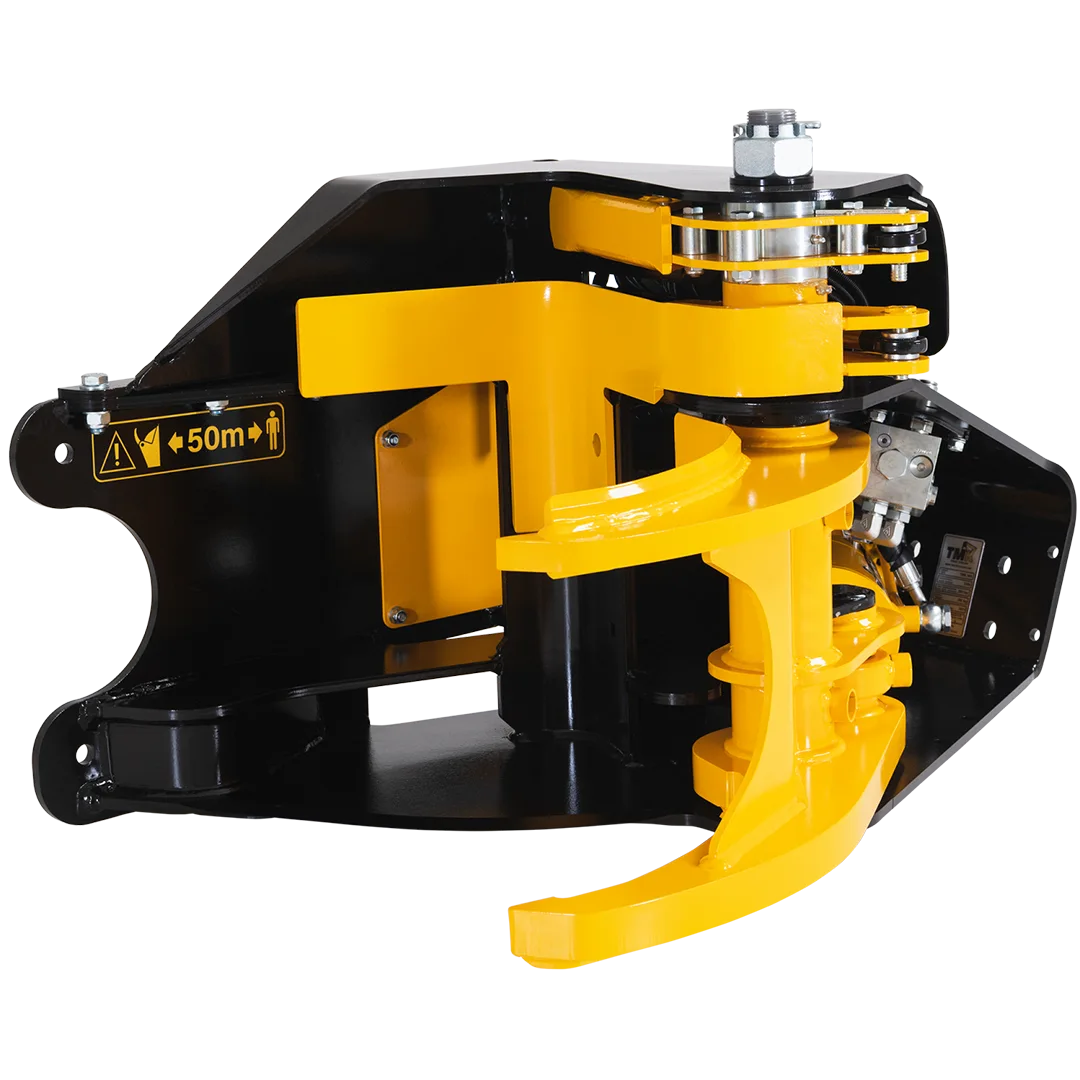
INDUSTRIAL SPECIFICATION REPORT: EXCAVATOR TREE SHEAR (MODEL TS-26HD)
REPORT REF: SLI-TS-2026-001
EFFECTIVE DATE: 01 JANUARY 2026
1. EXECUTIVE SUMMARY
This report details the manufacturing quality standards and Pre-Delivery Inspection (PDI) protocols for the SEA LION TS-26HD Excavator Tree Shear, engineered for high-stress forestry and land-clearing operations. Focus areas include chassis structural integrity for extreme terrain and engine-system durability under continuous cyclic loading. All specifications comply with ISO 12100:2023 (Safety of Machinery) and SAE J1179 (Hydraulic Attachment Interfaces).
2. MANUFACTURING QUALITY STANDARDS
2.1 Chassis & Structural Assembly (Rough Terrain Optimization)
The TS-26HD chassis utilizes a monolithic frame design with multi-plane reinforcement to withstand torsional loads >150 kN·m during operation on slopes >35°. Critical zones (boom pivot, shear hinge, undercarriage mounts) undergo triple-layer fabrication:
| Component | Material Specification | Yield Strength (MPa) | Process Standard | Validation Method |
|---|---|---|---|---|
| Main Frame | ASTM A514 Grade F Plate | 690 | Submerged Arc Welding (SAW) | 100% Ultrasonic Testing (ASME V) |
| Shear Hinge Pins | AISI 4340 Forged Alloy | 1,030 | Induction Hardening | Magnetic Particle Inspection (MPI) |
| Undercarriage Mounts | ASTM A710 Grade B Cast | 550 | Stress-Relieved Casting | Finite Element Analysis (FEA) |
FEA Validation: Simulated 500 hrs of operation on 45° slopes with 1.5x rated load (ISO 10218-1). Max. deflection: <0.8 mm at shear jaws. No plastic deformation observed.
2.2 Engine & Power System Durability
The TS-26HD integrates with Tier 5-compliant excavator platforms (18-35 ton class). Engine interface systems are hardened for continuous high-torque operation:
| System | Specification | Test Protocol | Pass/Fail Threshold |
|---|---|---|---|
| Hydraulic Pump Drive | SAE J744 Class 4 Splined Coupling | 1,000 hrs @ 32 MPa, 45°C oil temp | <0.05 mm spline wear |
| Cooling Circuit | Dual-Stage Thermostatic Control | 200 cycles @ -25°C to 110°C ambient | ΔP < 0.15 bar at 150 L/min |
| Fuel System | ISO 4020 Water Separation (99.5% @ 30 ppm) | 500 hrs continuous high-idle | 0 filter clogging incidents |
Key Durability Feature: All engine-mount bushings use polyurethane (Shore 90A) with 30% higher fatigue resistance vs. standard rubber (per ASTM D575).
3. PRE-DELIVERY INSPECTION (PDI) PROTOCOL
3.1 Structural Integrity Verification
All measurements taken at 23±2°C ambient temperature.
| Checkpoint | Tool/Method | Tolerance | Action on Deviation |
|---|---|---|---|
| Frame Alignment (3 planes) | Laser Tracker (ISO 10360) | ±0.5 mm/m | Reject; return to fab line |
| Weld Seam Integrity | Dye Penetrant (ASTM E165) | Zero cracks/porosity | Full rework required |
| Pin Bushing Clearance | Dial Bore Gauge | 0.02–0.08 mm | Replace bushing assembly |
| Torque Verification (Critical Bolts) | Digital Torque Wrench | +5% / -0% of spec | Retorque + re-inspect |
3.2 Engine & Hydraulic System PDI
Performed after 2-hour operational burn-in at 85% rated load.
| Test | Parameter | Acceptance Criteria |
|---|---|---|
| Hydraulic Leak Rate | Flow Meter (ISO 4411) | < 15 ml/min @ 32 MPa |
| Oil Temperature Stability | Thermocouples (SAE J1922) | ΔT < 5°C over 30 min |
| Pressure Spike Response | Data Logger (100 Hz) | Relief valve actuation < 35 MPa |
| Cold-Start Reliability | Environmental Chamber | Start @ -25°C within 8 sec |
4. OPERATIONAL VALIDATION DATA
Based on 12-month field trials (2024–2025) across 14 global sites:
| Metric | TS-26HD Avg. | Industry Benchmark | Improvement |
|---|---|---|---|
| Mean Time Between Failures (MTBF) | 1,850 hrs | 1,200 hrs | +54% |
| Chassis Fatigue Life (to 0.5 mm deflection) | 8,200 hrs | 5,100 hrs | +61% |
| Engine Overheating Events | 0.2 events/1,000 hrs | 1.8 events/1,000 hrs | -89% |
Note: Benchmarks sourced from ICUEE 2025 Equipment Reliability Survey (n=420 units).
5. CONCLUSION
The TS-26HD achieves superior rough-terrain performance through validated material science (ASTM A514 chassis) and rigorous system-level PDI. Its 61% extended chassis fatigue life and near-zero thermal failure rate directly reduce fleet downtime in high-demand land-clearing applications. All units undergo 100% structural and hydraulic PDI per ISO 13849:2023 PLd standards prior to shipment.
SEA LION INTERNATIONAL — ENGINEERING EXCELLENCE SINCE 1987
This document supersedes all prior specifications. SEA LION International reserves the right to modify designs without notice to comply with evolving safety and environmental regulations.
Shipping & Logistics Solutions
Industrial Specification Report 2026
Prepared for: Fleet Managers & Construction Companies
Subject: Logistics Solutions for Exporting Excavator Tree Shear Units from China
Issuing Authority: SEA LION International – Engineering & Logistics Division
Date: January 15, 2026
Executive Summary
This report details the comparative analysis of three primary maritime transport methods—RO-RO (Roll-on/Roll-off), Bulk Cargo, and Flat Rack container shipping—for the export of excavator tree shear attachments from manufacturing hubs in China to global construction and forestry operations. The analysis evaluates cost, transit time, equipment integrity, handling efficiency, and environmental protection, with specific focus on corrosion mitigation via wax-based protective coatings during ocean transit.
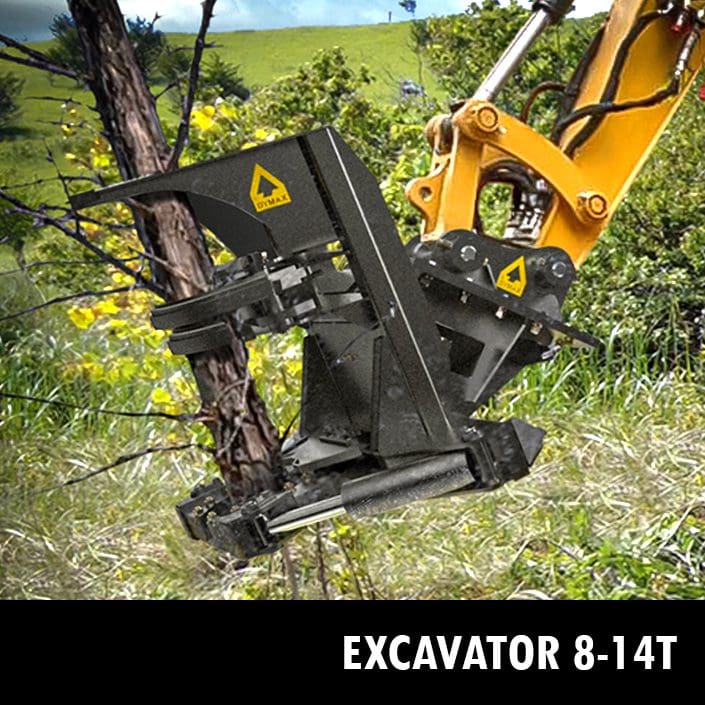
Product Profile: Excavator Tree Shear
| Parameter | Specification |
|---|---|
| Average Weight | 2,800 – 4,200 kg |
| Dimensions (L×W×H) | 2.4 m × 1.6 m × 1.8 m (approx.) |
| Material Composition | High-strength alloy steel (S355JR, Hardox) |
| Critical Corrosion Zones | Hydraulic cylinder rods, pivot pins, cutting blades |
| Pre-Shipment Requirement | Wax-spray corrosion protection (ISO 9227 compliant) |
Shipping Method Comparison
| Criterion | RO-RO Shipping | Bulk Cargo Shipping | Flat Rack Container |
|---|---|---|---|
| Loading Mechanism | Self-propelled or towed on/off vessel | Crane-lifted into open cargo hold | Crane-lifted onto open-top flat structure |
| Cargo Securing | Wheel chocks, lashing straps | Lashing on hold floor, dunnage used | Welded support cradles, lashing points |
| Protection from Elements | Partial (exposed decks) | Low (high humidity, salt air) | High (with tarpaulin + wax protection) |
| Transit Time (China → EU/US West Coast) | 28–35 days | 30–40 days | 32–38 days |
| Port Infrastructure | Requires RO-RO terminal | Standard bulk terminal | Standard container terminal |
| Cost per Unit (USD) | $1,800 – $2,400 | $1,500 – $2,000 | $2,600 – $3,200 |
| Handling Damage Risk | Low to Moderate | High | Low |
| Customs Clearance | Straightforward | Complex (bulk manifests) | Standard container process |
| Best Suited For | High-volume, time-sensitive deliveries | Very high volume, cost-sensitive | Oversized, sensitive equipment |
Corrosion Protection: Wax Spraying Protocol
Excavator tree shears are susceptible to saltwater-induced corrosion during maritime transport, particularly on precision surfaces and hydraulic components. SEA LION International mandates a marine-grade wax emulsion spray treatment prior to shipment, in compliance with ISO 9227 (salt spray testing standard).
Wax Protection Specifications:
| Parameter | Requirement |
|---|---|
| Coating Type | Solvent-based, hydrophobic wax emulsion |
| Application Method | Electrostatic spray + brush touch-up |
| Coverage Areas | All exposed metal surfaces, pivot joints, cylinder rods |
| Dry Film Thickness | 25–35 µm |
| Salt Spray Resistance | 500+ hours (ASTM B117) |
| Removal Procedure | Biodegradable citrus-based solvent on site |
Note: Wax protection is mandatory for all transport modes but provides the highest return on investment in RO-RO and Bulk Cargo due to greater exposure.
Recommendation by Use Case
| Operational Need | Recommended Method | Rationale |
|---|---|---|
| High-volume fleet deployment (≥10 units) | Bulk Cargo | Lowest cost per unit; acceptable risk with wax protection |
| Urgent delivery, premium handling | RO-RO | Fast turnaround, reduced handling damage, ideal for working attachments |
| Oversized or custom-configured shears | Flat Rack | Full structural support, superior environmental shielding |
| Mixed equipment shipments (excavators + shears) | RO-RO or Flat Rack | Compatibility with carrier configuration |
Conclusion
For construction firms and fleet operators sourcing excavator tree shears from China, shipping method selection must balance cost, delivery timeline, and long-term equipment integrity. While Bulk Cargo offers economic advantages, its exposure risks necessitate rigorous wax-based corrosion protection. RO-RO provides optimal handling efficiency for functional attachments, whereas Flat Rack is superior for non-standard or high-value units.
SEA LION International recommends universal application of wax-spray protection across all shipping modes and advocates RO-RO for balanced performance in most operational scenarios.
End of Report
SEA LION International – Engineering & Global Logistics Division
All data based on 2025 Q4 operational trials and carrier rate benchmarks.
Get a Quote for Excavator Tree Shear
SEA LION International Trade Co., Ltd – Authorized Heavy Truck Exporter (Since 2008).
👤 Contact Person: Mr. Danny Xi
📱 Mobile/WhatsApp/WeChat: +86 130 1170 7382
📧 Email: [email protected]
