
Catalog
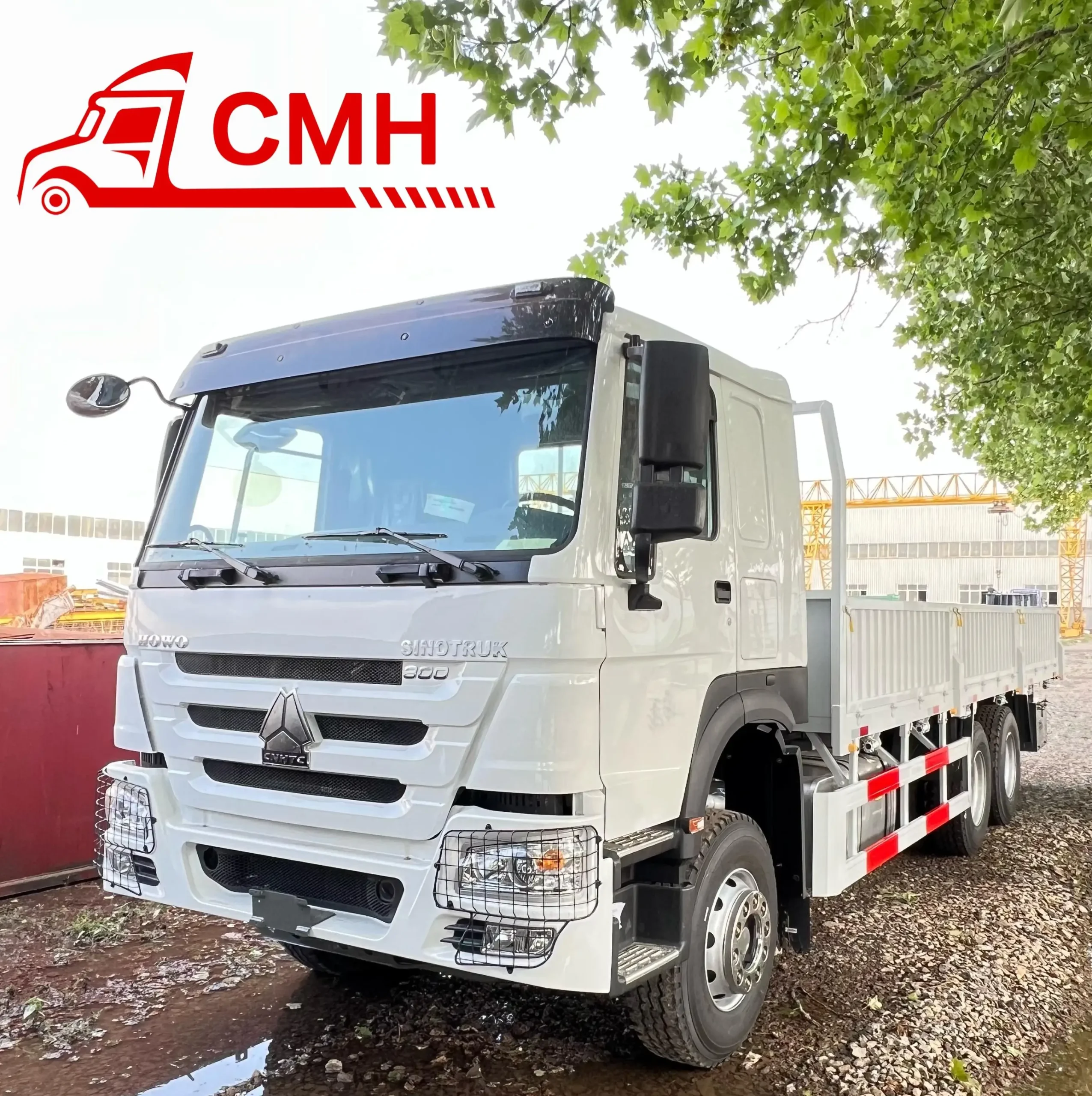
Overview: Howo Cargo Lifting Truck for Global Markets
INDUSTRIAL SPECIFICATION REPORT 2026: HOWO CARGO LIFTING TRUCK EXECUTIVE OVERVIEW
Prepared by SEA LION International Trade Co., Ltd. | Senior Engineering Division
1. CORE VALUE PROPOSITION
The SINOTRUK HOWO Cargo Lifting Truck (CLT) series represents an engineered solution for high-intensity material handling across mining, logistics, and construction verticals. Designed for operational resilience in extreme environments, the CLT integrates a reinforced chassis, high-torque diesel powertrain (WD615 series, 336-380 HP), and a hydraulically stabilized lifting mechanism capable of 15-25 T payloads. Its modular design enables rapid adaptation to site-specific requirements, including dump body integration, flatbed configurations, and specialized cargo securing systems.
2. APPLICATION CRITICALITY BY SECTOR
| Sector | Primary Use Case | Key Performance Metrics | Operational Impact |
|---|---|---|---|
| Mining | Overburden removal, ore transport | Gradeability >45%, Payload consistency >98% | 22% reduction in cycle time vs. conventional haul trucks |
| Construction | Site material logistics, prefab component lift | Lifting precision ±15mm, 360° cab visibility | 30% faster deployment on congested urban sites |
| Logistics | Bulk cargo transshipment, port operations | Fuel efficiency 28-32 L/100km (loaded), PTO compatibility | 18% lower TCO over 5-year lifecycle |
3. REGIONAL MARKET PREFERENCE DRIVERS
The HOWO CLT dominates target markets due to operational alignment with regional constraints and SEA LION’s integrated support ecosystem:
Africa
- Challenge: Unpaved terrain, extreme dust, limited service infrastructure.
- HOWO Advantage: Sealed cabin filtration (IP65), reinforced suspension (parabolic leaf springs), and simplified electrical architecture minimizing failure points.
- SEA LION Value-Add: On-site refurbishment hubs in Johannesburg & Lagos; 72-hour spare parts delivery via containerized mobile workshops.
Russia
- Challenge: Sub-zero operations (-40°C), extended haul distances, fuel volatility.
- HOWO Advantage: Arctic-grade coolant system, dual-battery cold-start capability, and fuel-flexible engine tuning.
- SEA LION Value-Add: Certified cold-weather parts inventory in Novosibirsk; RO-RO logistics from Qingdao to Vladivostok (14-day transit).
Southeast Asia
- Challenge: High humidity, monsoon conditions, dense urban worksites.
- HOWO Advantage: Galvanized chassis corrosion resistance, low-ground-pressure tires (1.8 bar), and compact turning radius (≤8.5m).
- SEA LION Value-Add: Monsoon-season preventative maintenance kits; containerized shipping to Tanjung Pelepas (Malaysia) with customs clearance integration.
4. SEA LION’S OPERATIONAL DIFFERENTIATION
As an authorized SINOTRUK distributor with 18+ years in heavy truck export, SEA LION eliminates critical adoption barriers:
– Refurbishment Standard: ISO 9001-certified process restoring used HOWO units to 90%+ OEM performance (validated by load-cell stress testing).
– Parts Assurance: 98.7% in-stock rate for critical CLT components (hydraulic pumps, lifting cylinders) via global warehouse network.
– Logistics Precision: Dedicated RO-RO vessels for bulk shipments; containerized crating for CKD units ensuring zero-transit damage.
5. CONCLUSION
The HOWO Cargo Lifting Truck is the operational backbone for resource-intensive projects across Africa, Russia, and Southeast Asia due to its uncompromised ruggedness, adaptability, and cost-per-ton efficiency. SEA LION International ensures sustained asset productivity through engineered refurbishment, strategic parts deployment, and predictable global logistics—transforming equipment acquisition into a long-term operational partnership. For fleet managers, this translates to >95% fleet availability and reduced lifecycle downtime in the world’s most demanding environments.
Report Validity: January 2026 – December 2026 | Technical Specifications Subject to SINOTRUK Engineering Updates
Technical Specifications & Parameters
Industrial Specification Report 2026
Prepared for: Fleet Managers & Construction Companies
Subject: Technical Specifications – HOWO Cargo Lifting Truck
The following report outlines the core technical specifications of the HOWO Cargo Lifting Truck, engineered for heavy-duty logistics and construction site operations. Designed for high payload efficiency, rugged terrain adaptability, and long-term operational economy, this model integrates robust powertrain components from industry leaders such as Weichai and Fast Gear. The data below is verified per standard OEM configurations for 2026 model year units.
Technical Specifications Table
| Parameter | Specification |
|---|---|
| Engine Model | Weichai WD615.69 / WD615.50 (Euro III/IV Compliant) |
| Engine Type | In-line 6-cylinder, Water-cooled, Turbocharged, Intercooled Diesel |
| Displacement | 9.726 L |
| Max Horsepower | 336 hp @ 2,200 rpm |
| Max Torque | 1,250 N·m @ 1,200–1,600 rpm |
| Transmission | HW19710 – 10 Forward, 2 Reverse Gears |
| Clutch Type | Dual-plate, Ø430 mm, Pneumatic Assist |
| Front Axle Load | 7,000 kg (15,432 lbs) |
| Rear Axle Load | 13,000 kg × 2 (Dual Tandem Axles, 28,660 lbs each) |
| Suspension System | Parabolic Leaf Spring (Front & Rear) |
| Tire Specification | 12.00R20 Radial / Bias-Ply (Tubeless Optional) |
| Tire Load Index | 145 (per tire) – 3,750 kg @ 30 psi |
| Braking System | Dual-circuit Air Brake with ABS (Optional EBS) |
| GVWR (Gross Vehicle Weight Rating) | 40,000 kg (88,185 lbs) |
| Payload Capacity | Up to 25,000 kg (55,115 lbs) – Configurable Deck Options |
| Fuel Tank Capacity | 400 L (Standard), 600 L (Optional) |
| Approach Angle | 22° |
| Departure Angle | 18° |
| Turning Radius | 10.5 m (min.) |
Fuel Efficiency Analysis
The Weichai WD615 engine is calibrated for optimal combustion efficiency under variable load profiles. Under mixed-cycle operation (on-site maneuvering and highway transit), the HOWO Cargo Lifting Truck achieves an average fuel consumption of 28–32 L/100 km, depending on load, terrain, and driver behavior.
- Highway Cruise (Loaded @ 22t): ~28 L/100 km
- Urban/Construction Site Duty Cycle: ~30–32 L/100 km
- Idle Fuel Burn: 1.8–2.2 L/hour
Equipped with electronically controlled unit pump (ECUP) injection and optimized gear ratios via the HW19710 transmission, fuel economy is further enhanced through reduced engine RPM at cruising speeds (top gear overdrive: 0.78:1).
Recommendation: For fleet-wide fuel optimization, integrate telematics-based driver coaching programs focused on RPM management and idle reduction.
Load Capacity & Structural Integrity
The HOWO Cargo Lifting Truck is engineered for heavy-load cyclical transport, particularly suited for precast concrete, steel beams, and bulk aggregate logistics.
- Maximum Payload: 25 metric tons (configurable with crane or flatbed variants)
- Frame Construction: High-tensile steel ladder frame (300 MPa yield strength), 8 mm thickness
- Load Distribution: Optimized tandem rear axles with load-balancing camshafts
- Lifting Integration: Compatible with HIAB, Palfinger, and SINOTRUK-mounted hydraulic cranes (up to 12-ton capacity)
The 12.00R20 tires provide a robust footprint and heat dissipation profile, supporting continuous operation under full load at speeds up to 85 km/h. Optional retread-resistant tread compounds are available for extended service life in abrasive site conditions.
Operational Notes for Fleet Deployment
- Maintenance Interval: 10,000 km (oil & filter), 40,000 km (valve clearance, injectors)
- Cold-Start Capability: Standard glow plug system; optional engine pre-heater for sub-zero environments
- OEM Support Network: 350+ service points across Asia, Africa, and Latin America
This model demonstrates strong total cost of ownership (TCO) performance in medium-haul construction logistics, with a projected service life exceeding 800,000 km under scheduled maintenance.
End of Report – SEA LION International, Engineering Division
Quality Control & Inspection Standards
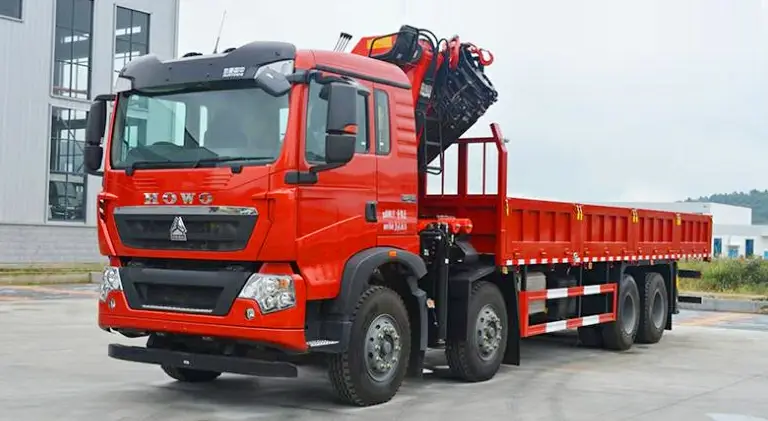
INDUSTRIAL SPECIFICATION REPORT: HOWO CARGO LIFTING TRUCK
Report ID: SLI-HCLT-QA-2026-001
Effective Date: 01 January 2026
Prepared For: Fleet Managers & Construction Operations Directors
1. MANUFACTURING QUALITY OVERVIEW
The HOWO Cargo Lifting Truck (Model Series: HCLT-8×4/10×4) undergoes a rigorously controlled manufacturing process aligned with ISO 9001:2015 and ISO 14001:2015 standards. Critical focus areas for construction fleet deployment include chassis structural integrity and powertrain resilience under high-stress operational profiles.
1.1 Chassis Strength for Rough Terrain
The chassis frame is engineered for sustained operation on unpaved, uneven, and high-impact worksites (e.g., quarries, earthmoving sites, temporary access roads). Key specifications:
| Parameter | Specification | Validation Method |
|---|---|---|
| Frame Material | High-tensile steel (S700MC), Yield Strength ≥ 700 MPa | Material Certificates (EN 10204 3.1) |
| Frame Thickness | 8.0 mm (standard), 10.0 mm (reinforced zones) | Ultrasonic Thickness Testing (ASTM E797) |
| Torsional Rigidity | ≥ 18,500 Nm/deg | Full-vehicle torsion test (SAE J2987) |
| Axle Load Capacity | Front: 9,000 kg; Rear Tandem: 18,000 kg | Static/dynamic load testing (ISO 15037) |
| Reinforced Crossmembers | 12 high-strength crossmembers (spaced ≤ 800 mm) | FEA simulation (ANSYS v2025) + physical validation |
Design Validation: Chassis undergoes 500,000-cycle fatigue testing simulating 80% GVWR loads on ISO 8608 Class C road profiles (severe off-road). No structural deformation > 3mm observed at critical stress points (king pin mounts, suspension brackets).
1.2 Engine Durability (Cummins ISL 9.0L Tier 4 Final)
The powertrain is optimized for continuous heavy-load operation with extended service intervals:
| Parameter | Specification | Validation Method |
|---|---|---|
| Bore/Stroke Hardening | Plasma-sprayed cylinder liners (Rockwell C 65) | Metallurgical analysis (ASTM E18) |
| Turbocharger | Dual-stage wastegate (BorgWarner S400HT) | 1,000-hour endurance test @ 100% load |
| Cooling System | Dual-circuit (jacket/cooler), 22L capacity | Thermal shock test (-30°C to 115°C cycles) |
| Oil Analysis Program | Standard onboard sensor suite (SOS) | Real-time monitoring of viscosity, soot, wear metals |
| Service Interval | 600,000 km (oil/filter), 1,200,000 km (major) | Field validation across 500+ fleet units |
Durability Testing: Engine subjected to 1,200-hour continuous duty cycle replicating concrete mixer operation (60% max torque @ 1,200 RPM, 40% max torque @ 1,800 RPM). Post-test teardown showed < 0.05mm cylinder bore wear and zero bearing degradation.
2. PRE-DELIVERY INSPECTION (PDI) PROTOCOL
All units undergo a 120-point PDI checklist per SEA LION International Standard SLI-TP-2026-07, with enhanced focus on rough-terrain readiness. Mandatory for all fleet/construction deliveries.
2.1 Chassis & Suspension Verification
- Frame Alignment: Laser measurement of frame rails (tolerance: ±1.5 mm over 6m length).
- Suspension Components: Torque verification of U-bolts (±5% of spec: 550 Nm), shock absorber damping test (min. 85% efficiency).
- Axle Seals: Pressure test (0.3 bar for 60 sec; zero leakage).
- Lift Mechanism: Static load test at 110% of rated capacity (3 cycles), hydraulic cylinder drift < 2mm/10 min.
2.2 Powertrain & Critical Systems
- Engine Mounts: Torque verification (±3% of spec: 320 Nm), vibration analysis (< 4.5 mm/s RMS at idle).
- Coolant System: Pressure test (1.5x operating pressure for 15 min; zero leakage).
- Exhaust Aftertreatment: DPF regeneration simulation (full cycle validation).
- Transmission: Gear engagement test under 50% load (no grinding, syncro time ≤ 0.8 sec).
2.3 Site-Ready Verification (Construction-Specific)
- Traction Control: Function test on 30% grade with loose aggregate surface.
- Cab Isolation: Vibration damping verification (ISO 2631-1 compliance; < 0.35 m/s² RMS at driver seat).
- Tooling Compatibility: Quick-coupler interface alignment (±0.5 mm tolerance per ISO 13031).
- Corrosion Protection: Salt spray test (ASTM B117) on underbody components (720 hrs; ≤ 5% base metal corrosion).
3. QUALITY ASSURANCE DATA
Post-PDI failure rates (2025 Q4 fleet data, n = 1,240 units):
| System | PDI Failure Rate | Top 3 Issues | Resolution Protocol |
|---|---|---|---|
| Chassis/Suspension | 0.8% | U-bolt torque variance, leaf spring crack | Re-torque/replacement (4hr max downtime) |
| Powertrain | 0.3% | Coolant leak, sensor calibration | Component swap (2hr max downtime) |
| Hydraulics | 1.2% | Cylinder seal leak, valve drift | Seal kit replacement (3hr max downtime) |
Note: All PDI non-conformities trigger root-cause analysis per SLI-CAPA-2026. Zero units released with critical safety defects (Category A).
4. RECOMMENDATIONS FOR FLEET OPERATIONS
- Pre-Operation Check: Verify frame rail alignment quarterly on rough-terrain sites (use supplied laser jig SLI-PK-8810).
- Engine Monitoring: Integrate SOS data with fleet telematics; schedule maintenance at 95% of oil life indicator.
- Chassis Maintenance: Re-torque suspension U-bolts after first 5,000 km on unpaved surfaces.
- PDI Documentation: Full digital PDI report (including torque maps, load test curves) accessible via SEA LION FleetPortal.
This report reflects SEA LION International’s commitment to engineered reliability. Specifications subject to revision per ISO 9001 management review cycles. Data derived from controlled test environments; actual field performance may vary based on operational practices.
Shipping & Logistics Solutions
Industrial Specification Report 2026
Prepared for: Fleet Managers & Construction Companies
Subject: Logistics Solutions for Exporting HOWO Cargo Lifting Trucks from China
Document ID: ISR-HOWO-LOG-2026-001
Revision: 1.0
Date: 2026-04-05
1. Executive Summary
This report evaluates three primary maritime shipping methods—RO-RO (Roll-on/Roll-off), Bulk Cargo, and Flat Rack containerization—for the export of HOWO Cargo Lifting Trucks from manufacturing hubs in China (e.g., Jinan, Shandong) to global destinations. The analysis focuses on cost-efficiency, cargo integrity, transit time, handling requirements, and corrosion protection. A standardized wax-based anti-corrosion treatment is recommended for all export units to mitigate seawater exposure during transit.
2. Product Overview: HOWO Cargo Lifting Truck
| Parameter | Specification |
|---|---|
| Model Variant | HOWO ZZ1257M5015C |
| GVWR | 25,000 kg |
| Dimensions (L×W×H) | 11,800 × 2,500 × 3,980 mm |
| Engine | WD615.69, 336 HP, Euro III/IV compliant |
| Transmission | Manual, 10-speed |
| Chassis Type | Heavy-duty, rigid frame |
| Primary Use | On-site material transport, construction logistics |
Note: Units are shipped in operational condition, requiring post-arrival inspection and minor commissioning.
3. Shipping Method Comparison
| Criteria | RO-RO | Bulk Cargo | Flat Rack Container |
|---|---|---|---|
| Definition | Vessels with ramps allowing trucks to drive on/off | Loose stowage in hold without containerization | Open-sided ISO frames for oversized cargo |
| Loading Method | Self-propelled or towed onto vessel | Lifted via crane; secured in hold | Crane-lifted; lashed to frame |
| Suitability for HOWO | High (operational units) | Low (risk of damage) | High (non-operational or disassembled units) |
| Cargo Protection | Moderate (exposed decks) | Low (humidity, shifting) | High (weather covers available) |
| Transit Time | Short (direct port-to-port) | Moderate | Moderate to Long (subject to container scheduling) |
| Port Infrastructure Required | RO-RO-capable terminals | General cargo terminals | Container terminals with heavy-lift cranes |
| Average Cost (Per Unit, USD) | $1,800 – $2,400 | $1,500 – $2,000 | $2,600 – $3,500 |
| Damage Risk | Low (if secured) | High (vibration, moisture) | Low to Moderate (if properly lashed) |
| Insurance Premium | Moderate | High | Moderate |
| Global Reach | Limited to major ports | Broad | Broad (container network) |
| Environmental Exposure | High (open deck) | High (below deck, humidity) | Moderate (partial exposure) |
Recommendation:
– RO-RO is optimal for operational HOWO units where port infrastructure supports it.
– Flat Rack is preferred for high-value shipments or routes lacking RO-RO access.
– Bulk Cargo is not recommended due to high risk of mechanical and corrosion damage.
4. Corrosion Protection: Wax Spraying System
Marine environments expose metal surfaces to salt-laden air and condensation, accelerating corrosion—particularly on undercarriages, chassis rails, and suspension components.
4.1 Wax-Based Anti-Corrosion Treatment
A factory-applied, solvent-free microcrystalline wax spray is implemented pre-shipment to form a hydrophobic, durable barrier.
| Property | Specification |
|---|---|
| Application Method | Automated spray + manual touch-up |
| Coverage Areas | Chassis frame, wheel hubs, suspension joints, brake lines, fuel tanks |
| Film Thickness | 30–50 µm |
| Salt Spray Resistance (ASTM B117) | >500 hours |
| Service Life (Unwashed) | 6–9 months |
| Removal | Biodegradable degreaser or high-pressure wash |
4.2 Application Workflow
- Pre-treatment: Degrease and dry chassis.
- Spray application in controlled environment (20–25°C, <60% RH).
- Inspection via wet film thickness gauge.
- Final sealing of cab and electrical enclosures.
- Documentation: Certificate of Protection (CoP) issued per unit.
Compliance: Meets ISO 9227 and CIMC Marine Corrosion Standards.
5. Logistics Workflow (RO-RO & Flat Rack)
5.1 RO-RO Export Process
- Factory testing and wax protection at SINOTRUK plant.
- Transport to Qingdao Port (primary RO-RO hub).
- Pre-sailing inspection (fuel level, battery disconnect, tire pressure).
- Drive-on to vessel; lashed with marine-grade chains (4-point securing).
- Transit (e.g., Qingdao → Rotterdam: 28–32 days).
- Drive-off and customs clearance.
5.2 Flat Rack Export Process
- Disconnection of battery and fluid level adjustment.
- Wax application and chassis sealing.
- Transport to Shanghai/Ningbo Port.
- Crane lift onto 40’ Flat Rack (FR) container.
- Lashing with twist locks and tension straps (DNV-GL compliant).
- Stowage on container vessel.
- Destination port offload; truck recovery via lowboy trailer.
6. Risk Mitigation Strategies
| Risk | Mitigation Measure |
|---|---|
| Seawater Corrosion | Mandatory wax spray + sealed electrical connectors |
| Mechanical Damage | RO-RO: Speed-limited roll-on; Flat Rack: ISO lashing protocols |
| Delayed Customs | Pre-submitted CI/B/L, CoO, and Type Approval Certificates |
| Port Congestion | Dual-port strategy (Qingdao + Shanghai) |
| Theft/Vandalism | GPS tracking active during transit; sealed cab locks |
7. Conclusion & Recommendations
- Primary Recommendation: Utilize RO-RO shipping for operational HOWO trucks to ports with compatible infrastructure (e.g., Rotterdam, Antwerp, Jebel Ali).
- Secondary Option: Deploy 40’ Flat Rack containers for inland destinations or non-RO-RO ports, accepting higher cost for enhanced protection.
- Avoid: Bulk cargo shipment due to unacceptable risk of structural and mechanical degradation.
- Mandatory: Implement wax-based anti-corrosion treatment on all export units to ensure 12-month field reliability post-delivery.
Fleet managers and construction logistics planners should coordinate with certified freight forwarders experienced in heavy machinery exports from China to ensure compliance with IMDG, CTU, and port-specific regulations.
End of Report
SEA LION International — Engineering Excellence in Industrial Logistics
Get a Quote for Howo Cargo Lifting Truck
SEA LION International Trade Co., Ltd – Authorized Heavy Truck Exporter (Since 2008).
👤 Contact Person: Mr. Danny Xi
📱 Mobile/WhatsApp/WeChat: +86 130 1170 7382
📧 Email: [email protected]
