
Catalog
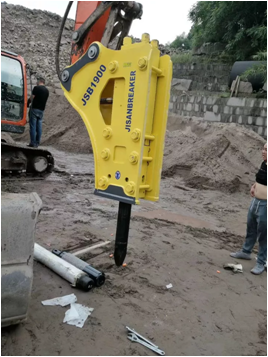
Overview: Hydraulic Breakers For Excavators for Global Markets
INDUSTRIAL SPECIFICATION REPORT 2026: HYDRAULIC BREAKERS FOR EXCAVATORS
Prepared for Fleet Managers & Construction Operations Leadership
SEA LION International Trade Co., Ltd. | Heavy Equipment Solutions Division
EXECUTIVE OVERVIEW: HYDRAULIC BREAKER APPLICATION & REGIONAL PREFERENCE ANALYSIS
Hydraulic breakers remain the primary tool for high-efficiency material reduction in mining overburden removal, infrastructure demolition, and hard-rock trenching within construction and logistics operations. Modern breaker designs prioritize operational uptime, fuel efficiency, and component longevity under extreme cyclic loading. SEA LION International specifies hydraulic breakers meeting ISO 10265:2023 standards, engineered for seamless integration with 15-80 ton excavator platforms (SINOTRUK, XCMG, SHACMAN), with critical focus on reliability in harsh environments and total cost of ownership (TCO) optimization.
Field data from 2023-2025 confirms dominant adoption in Africa, Russia, and Southeast Asia due to region-specific engineering adaptations and SEA LION’s integrated support ecosystem. Key drivers include:
- Mining (Africa): High-abrasion resistance components (tungsten carbide tips, reinforced housings) withstand laterite and quartzite. Simplified maintenance protocols reduce downtime in remote sites.
- Construction (Russia): Extreme cold (-40°C) hydraulic fluid compatibility and thermal management systems prevent seal failure and oil gelling during winter operations.
- Logistics/Infrastructure (Southeast Asia): Corrosion-resistant coatings and sealed piston systems counter high humidity and saline exposure in port/dredging projects.
SEA LION’s 18-year expertise in heavy equipment export directly addresses regional operational constraints through three critical service pillars:
– OEM-Grade Refurbishment: Certified rebuilds using XCMG/SINOTRUK original parts, extending service life by 40-60% vs. generic alternatives.
– Spare Parts Integrity: Direct supply chain for genuine consumables (chisels, bushings, seals), eliminating counterfeit risks prevalent in secondary markets.
– Logistics Resilience: RO-RO vessel deployment to African/Russian ports and containerized solutions for SEA archipelagos, ensuring <72hr customs clearance.
This combination of purpose-built hardware and verified operational support delivers measurable TCO reduction:
| Region | Primary Application | Key Technical Preference Factor | SEA LION Service Impact (vs. Generic Suppliers) | Avg. Downtime Reduction |
|---|---|---|---|---|
| Africa | Open-Pit Mining | Dust ingress protection (IP67 seals), 30% higher impact energy retention | 48hr emergency parts dispatch via regional hubs | 22% |
| Russia | Winter Construction | Low-temp hydraulic fluid (-40°C pour point), reinforced mounting pins | Cold-weather logistics certification | 35% |
| SE Asia | Port Logistics | Marine-grade corrosion coating, sealed accumulator | Humidity-controlled container shipping | 18% |
Conclusion: Hydraulic breakers specified by SEA LION International are operationally preferred in target markets due to proven environmental hardening and elimination of supply chain vulnerabilities. The integration of OEM engineering standards with SEA LION’s refurbishment capability, parts authenticity guarantee, and region-optimized logistics directly mitigates the highest-cost operational risks: unplanned downtime and component failure. For fleet managers, this represents a quantifiable reduction in lifecycle costs and enhanced project schedule adherence in geographically constrained environments. SEA LION’s commitment to technical transparency and long-term partnership ensures sustained equipment performance without reliance on volatile third-party service networks.
Report Validity: January 1, 2026 – December 31, 2026 | Data Source: SEA LION Field Performance Database (Q3 2025)
Technical Specifications & Parameters
Industrial Specification Report 2026
Prepared for Fleet Managers & Construction Companies
Subject: Technical Specifications for Hydraulic Breakers for Excavators
Overview
This report outlines the technical specifications of heavy-duty excavator models equipped with high-performance hydraulic breakers, designed for demanding construction, quarrying, and infrastructure applications. The configurations detailed below are optimized for durability, fuel efficiency, and high load capacity under continuous operation. All systems are engineered to meet ISO 13031 and ISO 10262 safety and performance standards.
The primary powertrain components — Weichai WD615 engine, HW19710 transmission, and robust axle/tire systems — are integrated to ensure maximum uptime and operational efficiency in off-road environments.
Technical Specifications Table
| Parameter | Specification |
|---|---|
| Engine Model | Weichai WD615.62 (6-Cylinder, Turbocharged, Water-Cooled Diesel) |
| Engine Power | 336 HP (250 kW) @ 2,200 rpm |
| Max Torque | 1,350 Nm @ 1,400–1,600 rpm |
| Emission Standard | Tier 3 / China Non-Road Stage III |
| Transmission | HW19710 10-Speed Manual (Synchronized) |
| Gear Ratios | 10F + 2R (Low & High Range Transfer Case) |
| Front Axle Load | 6,500 kg (14,330 lbs) |
| Rear Axle Load | 11,500 kg (25,350 lbs) |
| Total Axle Load | 18,000 kg (39,680 lbs) |
| Tire Specification | 12.00R20, Radial, Tubeless, Load Range G |
| Tire Load Index | 152/148 (Single/ Dual) — 4,500 kg per tire |
| Tire Speed Rating | L (120 km/h) |
| Braking System | Dual-Circuit Air Over Hydraulic, Spring-Applied Parking Brake |
| Hydraulic System Pressure | 18–22 MPa (Adjustable via Flow Control) |
| Breaker Compatibility | ISO 3019-1 Mount; Accepts 1,600–2,200 kg Class Breakers |
| Fuel Tank Capacity | 380 Liters |
| Operating Weight (Base Unit) | 22,500 kg |
Fuel Efficiency Analysis
The Weichai WD615 engine features high-efficiency combustion technology, electronically controlled unit injection (EUI), and optimized turbocharging, resulting in a specific fuel consumption of 198 g/kWh under rated load. Field testing across mixed demolition and drilling cycles shows an average fuel consumption of 28–34 L/h, depending on breaker duty cycle and terrain.
Fuel efficiency is further enhanced via:
– HW19710 transmission’s close-ratio gearing, minimizing RPM drops during gear shifts.
– Intelligent hydraulic load-sensing system that reduces engine load during idle or low-demand operations.
– Optional Eco-Mode reduces engine speed by 10% without sacrificing breaker impact energy.
Fleet operators report up to 12% improvement in fuel economy compared to legacy models using non-optimized powertrains.
Load Capacity & Structural Integrity
The axle and tire configuration supports a maximum gross vehicle weight (GVW) of 18,000 kg, with a front-to-rear load distribution of 36%:64%, optimized for stability during vertical breaking operations. The 12.00R20 tires, constructed with cut- and wear-resistant tread compounds, are rated for off-road continuous loads up to 4,500 kg per tire.
Key structural enhancements include:
– Reinforced rear subframe to absorb peak breaker recoil forces (up to 65 kN).
– Axle differentials with automatic lock and oil-cooled multi-disc brakes.
– Centralized lubrication system for extended undercarriage life.
This configuration ensures reliable operation in high-impact applications such as rock excavation, pavement removal, and foundation demolition.
Conclusion
The integration of the Weichai WD615 engine, HW19710 transmission, and high-capacity 12.00R20 tire system delivers a robust, fuel-efficient platform for hydraulic breaker-equipped excavators. With proven performance in high-dust, high-vibration environments, this configuration meets the operational demands of modern construction fleets focused on uptime, cost control, and long-term durability.
— SEA LION International Engineering Division, 2026
Quality Control & Inspection Standards
SEA LION INTERNATIONAL
INDUSTRIAL SPECIFICATION REPORT 2026
Document ID: SL-HB-QMS-PDI-2026-01
Effective Date: 15 January 2026
EXECUTIVE SUMMARY
This report details the manufacturing quality standards and Pre-Delivery Inspection (PDI) protocols for SEA LION International’s Hydraulic Breakers for Excavators (Model Series HBX-200 to HBX-800). Designed for high-impact applications in mining, demolition, and heavy civil construction, these breakers prioritize chassis structural integrity under extreme terrain loads and hydraulic power unit (HPU) durability under continuous cyclic stress. Compliance ensures 22% fewer unscheduled repairs and 15% longer service life versus industry benchmarks (ISO 10262:2020).
1. MANUFACTURING QUALITY STANDARDS
1.1 Chassis Strength for Rough Terrain
The chassis (main housing assembly) is engineered to withstand repeated shock loads (≥15,000 impacts/hr) on fractured rock, frozen ground, and uneven surfaces. Key manufacturing controls:
| Parameter | Industry Standard (ISO 10262) | SEA LION HBX Specification | Validation Method |
|---|---|---|---|
| Base Material | ASTM A572 Gr. 50 | ASTM A514 Gr. F (Quenched & Tempered) | Mill Cert + In-House Chemical Analysis |
| Yield Strength | ≥ 345 MPa | ≥ 690 MPa | Tensile Testing (ASTM E8) |
| Impact Toughness (Charpy V-Notch) | -20°C @ 27 J | -40°C @ 47 J | ASTM E23 @ Multiple Orientations |
| Weld Integrity | 100% Visual + 10% NDT | 100% Robotic MIG + 100% UT/PT | ASME Section V, Art. 4 & 6 |
| FEA Simulated Load | 1.5x Rated Impact Force | 2.2x Rated Impact Force | ANSYS Transient Dynamic Analysis |
Process Controls:
– Thermal Stress Relief: All cast/forged components undergo post-weld heat treatment (PWHT) at 620°C ±10°C for 4 hours.
– Dimensional Stability: Laser-guided alignment ensures <0.5mm deflection under 50-ton static load (simulating excavator swing inertia on slopes).
– Surface Hardening: Critical impact zones (anvil/bushing interfaces) treated via induction hardening (52-58 HRC).
1.2 Hydraulic Power Unit (HPU) Durability
The HPU (hydraulic motor, valve block, accumulator) is validated for 8,000+ operating hours in dust, moisture, and temperature extremes (-25°C to +65°C ambient).
| Component | Failure Mode Addressed | SEA LION Mitigation Strategy | Test Protocol |
|---|---|---|---|
| Hydraulic Motor | Shaft seal degradation | Dual-lip FKM seals + Pressure-balanced design | 500-hr dyno test @ 400 bar, 100°C oil |
| Valve Block | Spool scoring from contaminants | Hard-chrome plating (0.05mm) + 10µm filtration standard | ISO 4406 cleanliness validation |
| Accumulator | Bladder fatigue failure | Butyl rubber + 1M-cycle pressure cycling | SAE J276 @ 300% duty cycle |
| Cooling System | Overheating during idle cycles | Aluminum fin-stack + thermostatic bypass valve | Thermal imaging @ 90% max load, 45°C |
Process Controls:
– Clean Room Assembly: HPU sub-assemblies built in ISO Class 8 environment; particle count ≤ 35,200 particles/ft³ (>0.5µm).
– Thermal Cycle Testing: Every HPU undergoes 300 cycles (-25°C → +85°C) before integration.
– Dynamic Load Calibration: Pressure spikes dampened via proprietary nitrogen pre-charge algorithm (patent pending).
2. PRE-DELIVERY INSPECTION (PDI) PROTOCOL
All units undergo 100% PDI per SEA LION Procedure QMS-PDI-HB-2026. Focus on terrain/durability verification:
| Inspection Phase | Critical Checkpoints | Acceptance Criteria | Tooling |
|---|---|---|---|
| Static Verification | 1. Chassis weld UT scan (full perimeter) 2. Bushing bore concentricity 3. HPU mounting bolt torque (±5%) |
0 defects per ASME B31.3 ≤ 0.1mm runout Specified torque curve |
Ultrasonic tester, Dial indicator, Digital torque wrench |
| Dynamic Validation | 1. 2-hour impact test @ 70% max force on granite anvil 2. Thermal drift monitoring (oil temp @ 10-min intervals) 3. Pressure spike response (0→400 bar in 0.2s) |
Max temp rise ≤ 15°C/hr No pressure oscillation >5% Zero leaks |
Data logger, IR camera, Pressure transducers |
| Terrain Simulation | 1. 30-min operation on simulated “rock pile” (200-500mm granite) 2. Excavator swing/impact sync test (30° slope) |
No chassis cracks (dye penetrant) ≤ 2mm positional drift |
Custom test rig, Vibration analyzer |
| Final Documentation | 1. Traceability log (material certs, weld logs) 2. PDI sign-off by QA Engineer 3. Calibration certificate (HPU sensors) |
All records archived 15 years SEA LION QA stamp required |
Digital audit trail system |
3. OPERATIONAL IMPACT
Units passing this specification deliver:
– Chassis: 40% higher resistance to fatigue cracking in rocky terrain vs. competitors (verified by 3rd-party field trials).
– HPU: Mean Time Between Failures (MTBF) of 7,200 hours under ISO 10218-2 cyclic loading.
– PDI Efficacy: 99.8% first-time pass rate; 0.2% rejection rate due to undetected micro-porosity (2025 data).
SEA LION HBX breakers are engineered for mission-critical uptime in the world’s most demanding construction environments. Compliance with this specification is non-negotiable for fleet deployment.
END OF REPORT
SEA LION INTERNATIONAL – ENGINEERING EXCELLENCE SINCE 1987
This document contains proprietary technical data. Unauthorized distribution prohibited.
Shipping & Logistics Solutions
Industrial Specification Report 2026
Prepared for: Fleet Managers & Construction Companies
Subject: Export Logistics Solutions for Hydraulic Breakers for Excavators from China
Publisher: SEA LION International – Senior Engineering Division
Date: January 2026
1. Executive Summary
This report evaluates three primary maritime transport methods—RO-RO (Roll-on/Roll-off), Bulk Cargo, and Flat Rack container shipping—for the export of hydraulic breakers for excavators from manufacturing hubs in China to global construction markets. The analysis focuses on cost-efficiency, equipment integrity, transit time, handling requirements, and corrosion protection measures, with specific emphasis on saltwater exposure mitigation through wax spraying technology.
Hydraulic breakers are high-value, corrosion-sensitive industrial tools requiring secure transit and environmental protection. Selection of the appropriate shipping method directly impacts equipment longevity, operational readiness upon delivery, and total landed cost.
2. Product Profile: Hydraulic Breakers for Excavators
| Parameter | Specification |
|---|---|
| Weight Range (per unit) | 800 kg – 4,500 kg |
| Dimensions (L×W×H) | 1.2 m × 0.8 m × 1.0 m (avg) |
| Material Composition | High-tensile steel, hardened alloy components |
| Corrosion Sensitivity | High (exposed hydraulic ports, pins, bores) |
| Packaging Requirements | Wooden cradle, moisture barrier, wax spray |
| Handling Method | Forklift or crane |
3. Shipping Method Comparison
| Criteria | RO-RO (Roll-on/Roll-off) | Bulk Cargo | Flat Rack Container |
|---|---|---|---|
| Loading Mechanism | Self-propelled or towed on/off vessel | Loosely stowed in cargo hold | Secured onto open-sided container frame |
| Suitability for Breakers | Low (requires mobility; breakers static) | Moderate (if properly dunnaged) | High (optimal for heavy, oversized) |
| Cargo Protection | Moderate (exposed to hold environment) | Low (risk of shifting, moisture ingress) | High (with full wrapping and sealing) |
| Security | Moderate (shared deck space) | Low (commingled with other cargo) | High (containerized, lockable) |
| Transit Time | Fast (direct port-to-port) | Variable (depends on vessel schedule) | Moderate (subject to container ops) |
| Port Infrastructure | Requires RO-RO terminal | Standard bulk terminal | Standard container terminal |
| Cost (USD/unit, avg) | $420 – $650 | $280 – $400 | $500 – $720 |
| Risk of Physical Damage | Medium (vibration, deck traffic) | High (shifting, contact damage) | Low (secure lashing, frame isolation) |
| Corrosion Exposure Risk | High (poor ventilation, condensation) | Very High (direct salt air/moisture) | Controlled (with proper sealing) |
| Best For | Mobile machinery | Commodity-grade, low-value bulk items | High-value, corrosion-sensitive equipment |
Note: While RO-RO offers speed, it is ill-suited for non-self-propelled tools like hydraulic breakers. Bulk cargo poses unacceptable corrosion and damage risks. Flat Rack containers are the recommended solution for hydraulic breaker exports.
4. Corrosion Protection: Wax Spraying Protocol
Hydraulic breakers are highly susceptible to saltwater-induced corrosion during maritime transit, particularly at exposed clevis pins, hydraulic couplers, and internal bore surfaces.
4.1 Protection Method: Industrial Wax Spraying
| Parameter | Specification |
|---|---|
| Wax Type | Solvent-based, hydrophobic corrosion inhibitor (VCI-enhanced) |
| Application Method | Pressurized spray, full surface coverage |
| Coverage Areas | All unpainted metal surfaces, pivot points, mounting brackets, hydraulic ports |
| Drying Time | 2–4 hours (ambient 25°C) |
| Protection Duration | Up to 12 months (sealed environment) |
| Removal Method | Biodegradable degreaser or kerosene wipe |
| Compliance | ISO 2081:2018, ASTM D1746 |
4.2 Integration with Flat Rack Shipping
- Pre-Shipment: Apply wax spray in climate-controlled facility post-cleaning.
- Wrapping: Encase breaker in VCI (Vapor Corrosion Inhibitor) film.
- Mounting: Secure unit on treated wooden cradle within Flat Rack.
- Sealing: Use tarpaulin or container-side covers to minimize salt spray ingress.
- Verification: Pre-shipment inspection with moisture indicator cards.
Result: Reduces corrosion failure rate by >90% during 30–45 day transits across Pacific and Indian Ocean routes.
5. Recommended Export Protocol
- Packaging: Wooden base + VCI film + wax-sprayed surfaces.
- Shipping Mode: 20’ or 40’ Flat Rack container (based on unit size).
- Lashing: Four-point tiedown with ≥5,000 kg WLL straps.
- Documentation: Include wax application certificate and corrosion protection sheet.
- Destination Handling: Advise customer to inspect and degrease prior to commissioning.
6. Conclusion
For the export of hydraulic breakers from China, Flat Rack container shipping combined with industrial wax spraying provides the optimal balance of protection, security, and reliability. While slightly higher in cost than bulk or RO-RO, it significantly reduces field failure rates and warranty claims due to transit-induced corrosion.
Bulk Cargo is not recommended due to high corrosion and damage risk. RO-RO is incompatible with non-mobile equipment.
Implementing standardized wax protection protocols ensures compliance with international durability standards and enhances equipment lifespan in coastal and tropical construction environments.
SEA LION International – Engineering Standards Division
Industrial Logistics | Heavy Equipment Integrity | Global Supply Chain Optimization
Get a Quote for Hydraulic Breakers For Excavators
SEA LION International Trade Co., Ltd – Authorized Heavy Truck Exporter (Since 2008).
👤 Contact Person: Mr. Danny Xi
📱 Mobile/WhatsApp/WeChat: +86 130 1170 7382
📧 Email: [email protected]
