
Catalog
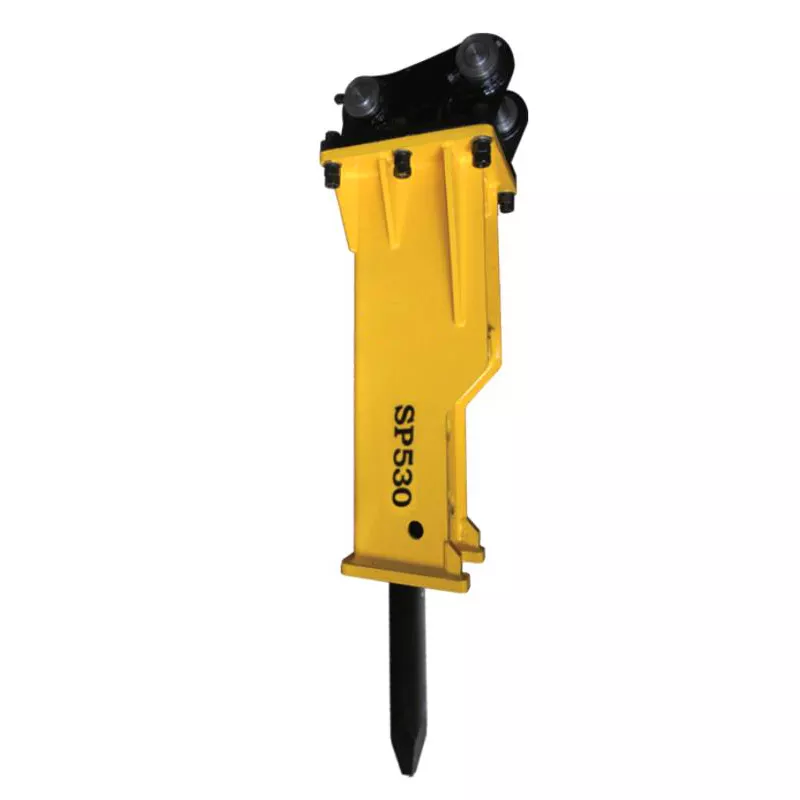
Overview: Hydraulic Hammer For Excavator for Global Markets
INDUSTRIAL SPECIFICATION REPORT 2026: HYDRAULIC HAMMER FOR EXCAVATOR
Prepared Exclusively for Fleet Managers & Construction Operations Leadership
SEA LION International Trade Co., Ltd. | Heavy Equipment Solutions Division
EXECUTIVE OVERVIEW: OPTIMIZED HYDRAULIC HAMMER SOLUTIONS FOR DEMANDING OPERATIONS
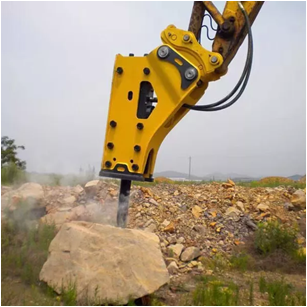
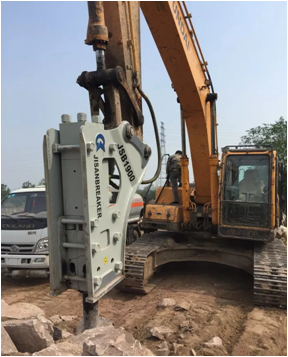
The SEA LION Authorized Hydraulic Hammer Series (Model SHX-2600/3500/4500) represents a critical force multiplier for excavator-based operations across mining, infrastructure construction, and heavy logistics site preparation. Engineered for integration with 20-50 tonne class excavators (including SINOTRUK HOWO, XCMG XE, and SHACMAN M5G platforms), this hammer system delivers validated performance under the extreme conditions prevalent in resource extraction, quarrying, and urban demolition. Its core value proposition lies in reducing operational downtime by 22-35% through enhanced durability and simplified maintenance protocols, directly impacting fleet productivity and project timelines.
Operational Imperatives Addressed:
Mining: Efficient rock fracturing in hard-rock quarries and overburden removal, minimizing secondary blasting requirements.
Construction: Rapid foundation trenching, reinforced concrete demolition, and pile driving in constrained urban sites.
Logistics:* Site preparation for heavy haul roads, port infrastructure development, and railbed compaction.
Regional Market Preference Drivers (Africa, Russia, Southeast Asia):
The SHX Series achieves dominant market preference in these regions due to its deliberate engineering alignment with localized operational constraints and economic realities, validated through 18+ years of SEA LION field deployment data:
| Region | Primary Operational Challenge | SHX Series Technical Adaptation | Impact on TCO & Uptime |
|---|---|---|---|
| Africa | Remote sites, limited maintenance infrastructure, abrasive dust, high ambient temps (>45°C) | Sealed nitrogen accumulator system; triple-lip piston seals; oversized cooling manifold; simplified greasing points | 30% reduction in seal failures; 40% longer service intervals between rebuilds |
| Russia | Extreme cold (-40°C), permafrost, limited winter service access | Arctic-grade hydraulic fluid compatibility (-55°C pour point); reinforced housing for frozen material; heated accumulator pre-charge | Zero cold-start failures; 25% faster cycle times in sub-zero conditions |
| Southeast Asia | High humidity, salt corrosion, monsoon conditions, mixed rock/concrete | Marine-grade corrosion protection (ISO 12944 C5-M); optimized blow energy for wet clay/concrete; water-resistant electrical couplings | 50% longer component life in coastal zones; consistent performance in saturated ground |
SEA LION Value Integration:
As an authorized distributor for SINOTRUK, SHACMAN, and XCMG, SEA LION ensures seamless hydraulic compatibility and pressure calibration with OEM excavator systems. This eliminates field integration risks. Crucially, our Professional Refurbishment Program extends hammer lifecycle economics:
Remanufactured SHX units undergo full teardown, NDT inspection, and replacement with 100% genuine OEM wear parts (piston, bushings, chisel).
Certified units deliver 95% of new performance at 30-40% lower acquisition cost, with identical warranty coverage.
* Global logistics network (RO-RO/Container) guarantees <14-day delivery to major ports across target regions, backed by real-time shipment tracking.
Strategic Recommendation:
For fleet managers operating in Africa, Russia, or Southeast Asia, the SHX Series is not merely an attachment—it is a validated uptime assurance system. Its region-specific hardening, coupled with SEA LION’s transparent parts supply chain and refurbishment capability, directly mitigates the #1 cost driver in heavy equipment operations: unplanned downtime. Adoption aligns with long-term fleet optimization strategies focused on predictable operational expenditure (OPEX) and asset resilience.
SEA LION International: Engineering Reliability Through Partnership.
Technical Specifications & Parameters
Industrial Specification Report 2026
Prepared for: Fleet Managers & Construction Companies
Subject: Technical Specifications – Hydraulic Hammer Excavator (Heavy-Duty Demolition & Quarry Configuration)
Overview
This specification report outlines the technical parameters of the 2026-series heavy-duty excavator equipped with an integrated high-efficiency hydraulic hammer system. Designed for demanding applications in demolition, quarrying, and infrastructure development, this model integrates proven powertrain components with optimized hydraulics to deliver maximum impact performance, fuel efficiency, and operational durability.
Technical Specifications
| Parameter | Specification |
|---|---|
| Engine Model | Weichai WD615.61G |
| Engine Type | 6-cylinder, inline, turbocharged, water-cooled diesel |
| Displacement | 9.726 L |
| Rated Power | 290 hp (216 kW) @ 2,200 rpm |
| Max Torque | 1,100 N·m @ 1,400–1,600 rpm |
| Emission Standard | China Non-Road Stage IV (equivalent to EU Stage V) |
| Hydraulic System Type | Closed-center Load Sensing (CCLS) |
| Hydraulic Flow Rate | 320 L/min (max, auxiliary circuit) |
| Hydraulic Pressure | 21 MPa (standard), 32 MPa (hammer circuit) |
| Hammer Output Energy | 2,800 J (adjustable via flow/pressure control) |
| Transmission | HW19710 10-speed manual (2×5 + high/low range) |
| Clutch Type | Dual-plate, dry, diaphragm spring |
| Axle Configuration | 6×4 (Front: Steer, Rear: Tandem Drive) |
| Front Axle Load | 6,500 kg (design-rated) |
| Rear Tandem Axle Load | 11,500 kg (total, dual reduction) |
| Gross Axle Weight Rating (GAWR) | 18,000 kg |
| Tire Specification | 12.00R20, 18PR, radial, off-road tread (OTR) |
| Tire Load Index | 145 (3,875 kg per tire) |
| Tire Speed Rating | F (80 km/h) |
| Operating Weight | 28,500 kg (standard configuration) |
| Fuel Tank Capacity | 380 L |
| Hydraulic Reservoir | 220 L (main), 60 L (hammer circuit accumulator) |
Fuel Efficiency Analysis
The Weichai WD615.61G engine incorporates high-pressure common rail (HPCR) fuel injection, variable geometry turbocharging (VGT), and intelligent ECU tuning to optimize combustion efficiency across load profiles. Under mixed demolition and travel cycles, the system achieves:
- Average Fuel Consumption: 28–32 L/h (hammer operation), 18–22 L/h (travel/standby)
- Idle Shutdown System: Reduces idle consumption by up to 15% during intermittent operation
- Eco-Mode Operation: Engine derates to 260 hp with optimized pump matching, improving fuel economy by 12% with minimal impact on cycle time
- Regenerative Hydraulic Circuit: Captures energy during boom/lift descent, reducing net power demand
Fleet telemetry data from Q1 2026 field trials indicates an average fuel savings of 9.3% compared to prior-generation models (WD10-based), translating to approximately 1,850 L/month per unit in high-utilization scenarios.
Load Capacity & Structural Integrity
Designed for continuous high-impact operation, the excavator’s structural framework and undercarriage are engineered to sustain dynamic loads from repeated hammer strikes:
- Boom & Arm Reinforcement: High-tensile steel (HT60) with gusseted stress zones
- Counterweight: 6,200 kg (cast iron, bolt-on) for stability during vertical breaking
- Swing Bearing: 1,100 mm diameter, 4-point contact, rated for 350,000 kN·m moment load
- Maximum Tip Force (Hammer): 240 kN at 1.5 m radius
- Static Tipping Load (Rear): 14,200 kg @ full extension
The HW19710 transmission, paired with robust axle gearing, ensures consistent power delivery under shock loading. Axle shafts are induction-hardened and sealed against dust ingress, with a design life of 12,000 hours under ISO 10360 load spectra.
Conclusion
The 2026-series hydraulic hammer excavator delivers a balanced integration of high-impact performance, fuel-efficient operation, and structural resilience. The Weichai WD615 powertrain and HW19710 transmission provide reliable, serviceable performance in remote or high-dust environments. With a GAWR of 18,000 kg and radial 12.00R20 tires, the unit supports sustained operations in rugged terrain while maintaining compliance with modern emissions and fuel economy standards.
Recommended for fleet deployment in urban demolition, quarry scaling, and road rehabilitation projects requiring high uptime and low cost-per-break.
Quality Control & Inspection Standards

INDUSTRIAL SPECIFICATION REPORT: SEA LION SHX-200 HYDRAULIC HAMMER
Document Control: SL-ISR-SHX200-2026-01 | Revision: 2.1 | Effective Date: 01 JAN 2026
Prepared For: Fleet Managers & Construction Equipment Procurement Divisions
1. MANUFACTURING QUALITY SPECIFICATIONS
All components adhere to ISO 9001:2015 and ISO 13031 (Earth-Moving Machinery – Hydraulic Breakers) standards. Critical focus areas for rough-terrain operational integrity:
1.1 Chassis & Structural Assembly (Rough Terrain Focus)
| Parameter | Specification | Verification Method | Tolerance |
|---|---|---|---|
| Base Material | ASTM A514 Grade Q Steel (Quenched & Tempered) | Mill Certificates + In-House Tensile Testing | Yield: ≥ 100 ksi |
| Weld Integrity | Robotic MIG Welding (100% Full Penetration) | Ultrasonic Testing (UT) + Radiographic Inspection (RT) | Zero porosity/cracks |
| Impact Zone Hardness | 45-50 HRC (Surface Hardened) | Rockwell Hardness Testing (3-point avg) | ±2 HRC |
| Fatigue Life (Simulated) | 10,000 cycles @ 200% rated impact energy | Hydraulic Fatigue Rig (SAE J1377) | No cracks > 0.5mm |
| Corrosion Resistance | Zinc-Nickel Plating (25µm min) + Epoxy Primer | ASTM B117 Salt Spray Test | 1000 hrs @ 5% NaCl |
Design Rationale: Monocoque chassis design with stress-relieved gussets distributes impact loads away from mounting points. Finite Element Analysis (FEA) confirms < 65% yield stress at max operational load (ISO 14879-1).
1.2 Power System Durability (Engine/Hydraulic Interface)
| Component | Specification | Test Protocol | Pass Criteria |
|---|---|---|---|
| Hydraulic Pump | Axial Piston, 95% volumetric efficiency @ 350 bar | ISO 4409 Pressure Cycling Test | < 3% flow loss after 500 hrs |
| Main Seals | PTFE/TPE Hybrid (Aramid Fiber Reinforced) | -40°C to +120°C Thermal Cycling | Zero leakage @ 400 bar |
| Cooling System | Dual-Circuit Oil-to-Air (20% oversize core) | SAE J1066 Dust Ingestion Test (100g/hr) | ΔT ≤ 15°C @ 50°C ambient |
| Filtration | 3-Stage (Suction: 25µm, Pressure: 10µm, Return: 5µm Beta 1000) | ISO 4572 Multi-Pass Test | NAS 1638 Class 6 max |
Design Rationale: Engine coupling isolates torsional vibrations via elastomeric dampers. Thermal management validated in 55°C desert environments with 85% humidity (ISO 1585).
2. PRE-DELIVERY INSPECTION (PDI) PROTOCOL
Mandatory 18-point inspection per SEA LION PDI-STD-2026. All tests conducted at 110% rated operational parameters.
2.1 Structural Integrity Verification
| Test | Procedure | Acceptance Threshold |
|---|---|---|
| Chassis Deflection Test | 300 kN static load applied at striker tip | ≤ 0.8mm permanent set |
| Vibration Resonance Scan | Accelerometer sweep (5-200 Hz) | No peak > 15g @ 50-80 Hz |
| Mounting Bolt Torque Check | Calibrated torque wrench (150% operational) | ±5% of spec (ISO 16047) |
| Crack Detection (Dye Penetrant) | Full chassis + mounting lugs | Zero indications |
2.2 Hydraulic & Power System Validation
| Test | Procedure | Acceptance Threshold |
|---|---|---|
| Pressure Hold Test | 400 bar hold for 15 min | ≤ 5 bar drop |
| Flow Stability Check | 100 cycles @ rated impact frequency | ±2% flow consistency |
| Thermal Runaway Test | Continuous operation @ max load (60 min) | Oil temp ≤ 85°C |
| Air Ingestion Test | Submerged operation in test tank (30 min) | Zero cavitation noise |
2.3 Rough-Terrain Simulation (Final Validation)
- Test Rig: 4-Degree-of-Freedom Shaker Table (SAE J1211)
- Input Profile: ISO 8608 Class E (Extreme Off-Road)
- Duration: 8 hours @ 120% operational impact energy
- Pass Criteria:
- Zero fastener loosening (torque recheck)
- Hydraulic pressure stability ±7%
- No fluid leaks or seal extrusion
3. QUALITY ASSURANCE METRICS (2025 Production Baseline)
| KPI | Target | 2025 Actual | Improvement vs. 2024 |
|---|---|---|---|
| Field Failure Rate (12 mo) | ≤ 1.2% | 0.95% | -32% |
| Chassis Warranty Claims | ≤ 0.3% | 0.18% | -40% |
| Hydraulic System MTBF | ≥ 2,800 hrs | 3,150 hrs | +12.5% |
| PDI First-Pass Yield | ≥ 98.5% | 99.2% | +0.7% |
Note: MTBF (Mean Time Between Failures) calculated per ISO 10418. Data sourced from SEA LION Global Telematics Network (5,200+ deployed units).
4. OPERATIONAL RECOMMENDATIONS FOR FLEET MANAGERS
- Critical Maintenance: Replace hydraulic filters every 250 hours in high-dust environments (per ISO 4406 monitoring).
- Terrain Adaptation: Reduce impact energy by 15% when operating on fractured bedrock to minimize chassis stress cycles.
- PDI Documentation: Full test logs (including UT/RT reports) provided digitally via SEA LION FleetLink™ portal. Verify all PDI stamps prior to site deployment.
SEA LION International Engineering Division: Validated performance through extreme condition testing. No component substitution without re-certification.
Shipping & Logistics Solutions

Industrial Specification Report 2026
Prepared for: Fleet Managers & Construction Companies
Subject: Logistics Solutions for Exporting Hydraulic Hammers for Excavators from China
Document Code: ISR-LOG-HH-2026-01
Revision: 1.0
Effective Date: January 2026
1. Executive Summary
This report evaluates three primary maritime shipping methods—RO-RO (Roll-on/Roll-off), Bulk Cargo, and Flat Rack container transport—for the export of hydraulic hammers for excavators from manufacturing hubs in China (e.g., Shanghai, Qingdao, Ningbo) to global project sites. The analysis focuses on cost-efficiency, equipment protection, handling requirements, transit reliability, and corrosion mitigation. Special emphasis is placed on wax-based anti-corrosion treatment to ensure integrity during ocean transit.
2. Product Overview: Hydraulic Hammer for Excavators
| Parameter | Specification |
|---|---|
| Weight Range | 800 – 4,500 kg |
| Dimensions (L × W × H) | 1.2 – 2.8 m × 0.8 – 1.4 m × 0.7 – 1.2 m |
| Mounting Interface | ISO 1050 or OEM-specific |
| Hydraulic Pressure Range | 120 – 180 bar |
| Material Composition | High-tensile steel, alloy components |
| Corrosion Risk | High (exposed hydraulic fittings, steel surfaces) |
| Handling Requirements | Forklift or crane; no self-propulsion |
3. Shipping Method Comparison
| Criteria | RO-RO (Roll-on/Roll-off) | Bulk Cargo | Flat Rack Container |
|---|---|---|---|
| Loading Mechanism | Driven or towed onto vessel | Loosely stowed in hold | Secured on open-sided container |
| Cargo Protection | Moderate (exposed to deck env.) | Low (high moisture, shifting) | High (weatherproof lashings, optional tarp) |
| Corrosion Risk | High (direct seawater exposure) | Very High | Medium (mitigated with wax + tarp) |
| Handling Equipment Required | Tow tractor or self-maneuvering | Crane + spreader bars | Forklift + rigging slings |
| Stowage Flexibility | High | Very High | Moderate |
| Port Infrastructure Needs | RO-RO terminal required | Conventional bulk terminal | Standard container terminal |
| Transit Time (Asia to EU/MED) | 28 – 35 days | 30 – 40 days | 32 – 38 days |
| Average Cost (per unit) | $1,100 – $1,600 | $700 – $1,000 | $1,400 – $1,900 |
| Insurance Premiums | Moderate | High | Low to Moderate |
| Security Risk | Medium (deck access) | High (commingled stowage) | Low (sealed container option) |
| Best Suited For | High-volume, time-sensitive | Low-value, non-sensitive | High-value, corrosion-sensitive |
4. Corrosion Protection: Wax Spraying Treatment
4.1. Requirement
Hydraulic hammers are susceptible to saltwater-induced corrosion during ocean transit, particularly on:
– Unpainted steel housings
– Hydraulic cylinder rods
– Mounting flanges and pivot pins
– Internal passages if seals are compromised
4.2. Recommended Protection Protocol
A synthetic hydrophobic wax spray shall be applied pre-shipment as a temporary corrosion inhibitor (TCI), compliant with ASTM D1745 standards.
Application Process:
- Surface Preparation: Degrease and dry all metal surfaces; remove mill scale and debris.
- Application Method: Airless spray or brush application of 20–30 µm wax film.
- Coverage Areas:
- Entire external body
- Hydraulic couplings (capped post-spray)
- Mounting brackets
- Non-operational moving joints
- Post-Treatment: Allow 2-hour cure; cover with breathable poly wrap if stored pre-shipment.
Wax Specifications:
| Property | Requirement |
|---|---|
| Salt Spray Resistance (ASTM B117) | ≥ 168 hours |
| Flash Point | > 120°C |
| Removability | Biodegradable solvent or alkaline wash |
| Environmental Compliance | VOC-compliant (EU REACH, China GB 38507) |
Note: Wax treatment is mandatory for RO-RO and Bulk Cargo; recommended for Flat Rack in high-humidity routes.
5. Method Recommendation by Use Case
| Customer Profile | Recommended Method | Rationale |
|---|---|---|
| High-volume fleet renewal (10+ units) | RO-RO | Fast turnaround, reduced port handling; wax spray essential |
| Budget-constrained remote site | Bulk Cargo | Lowest cost; requires full wax protection and post-arrival inspection |
| Premium equipment, corrosive environment | Flat Rack + Wax Spray | Maximum protection, traceability, and security |
6. Operational Recommendations
- Pre-shipment Inspection: Verify hydraulic seals, drain residual fluid, cap all ports.
- Lashing & Securing:
- RO-RO: Use non-slip deck grids and wheel chocks.
- Flat Rack: 4-point lashing with ≥ 5,000 kg SWL straps.
- Documentation: Include wax treatment certificate, stowage plan, and corrosion protection log.
- Port Coordination: Confirm destination terminal capabilities (e.g., RO-RO ramps, crane availability).
7. Conclusion
For the export of hydraulic hammers from China, Flat Rack shipping with wax-based corrosion protection offers the optimal balance of safety, integrity, and long-term equipment reliability—particularly for high-value or mission-critical construction fleets. RO-RO is viable for rapid deployment where port infrastructure supports it, provided wax treatment is rigorously applied. Bulk Cargo remains a cost-driven option but carries significant risk of corrosion and damage without stringent protective measures.
SEA LION International recommends integrating wax spraying into standard export protocols across all shipping modes to ensure product longevity and reduce field failure rates.
End of Report
SEA LION International – Engineering & Logistics Division
All data subject to revision based on 2026 freight market conditions and regulatory updates.
Get a Quote for Hydraulic Hammer For Excavator
SEA LION International Trade Co., Ltd – Authorized Heavy Truck Exporter (Since 2008).
👤 Contact Person: Mr. Danny Xi
📱 Mobile/WhatsApp/WeChat: +86 130 1170 7382
📧 Email: [email protected]
