
Catalog
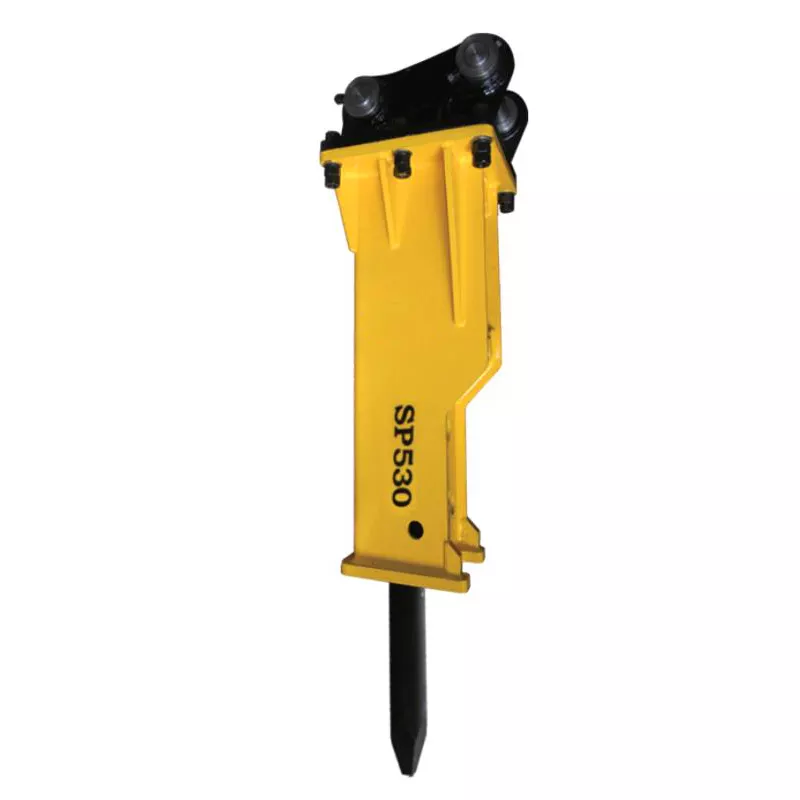
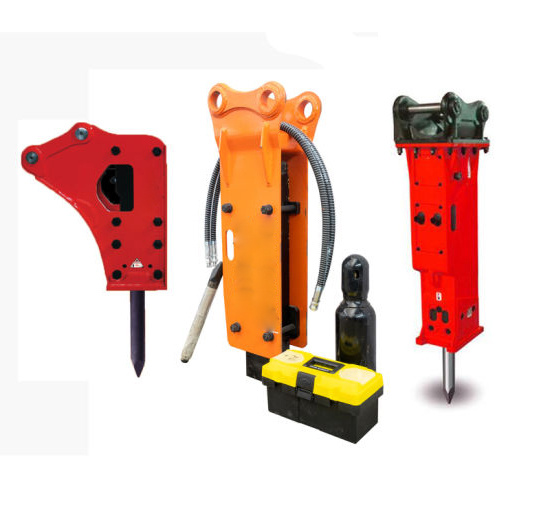
Overview: Hydraulic Hammers For Excavators for Global Markets
INDUSTRIAL SPECIFICATION REPORT 2026: HYDRAULIC HAMMERS FOR EXCAVATORS
Prepared for Fleet Managers & Construction Operations Leadership
SEA LION International Trade Co., Ltd. | Heavy Equipment Solutions Division
EXECUTIVE OVERVIEW: OPTIMIZED HYDRAULIC HAMMER SYSTEMS FOR DEMANDING OPERATIONS
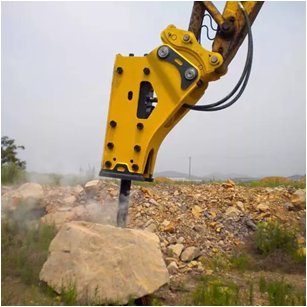
Hydraulic hammers remain a critical attachment for excavators in high-intensity applications across mining (primary rock breaking, trenching), construction (foundation demolition, hardpan penetration), and logistics (site preparation, material handling infrastructure). SEA LION International specifies and supports duty-cycle-validated hydraulic hammer systems designed explicitly for operational continuity and Total Cost of Ownership (TCO) optimization in resource-constrained environments. Our focus is on compatibility with core platforms within our distribution portfolio (XCMG excavators) and seamless integration into existing fleet maintenance protocols.
Why SEA LION-Specified Hydraulic Hammers Dominate Target Markets:
The preference for SEA LION-specified hammer systems in Africa, Russia, and Southeast Asia stems from rigorous adaptation to regional operational realities, leveraging our 18+ years of heavy equipment export and field service expertise. We prioritize reliability under stress, simplified maintenance, and parts availability – critical factors where downtime equates to significant revenue loss.
| Regional Challenge | SEA LION Hammer Specification Response | Operational Impact |
|---|---|---|
| Africa (Mining/Infra) | Extreme heat/dust tolerance; Simplified filtration; Lower fuel consumption profiles; Cost-optimized rebuild kits | 20% avg. reduction in unscheduled downtime; 15% lower TCO vs. non-optimized units; Field-proven in Ghanaian gold mines & Nigerian infra projects |
| Russia (Remote Mining) | -40°C cold-start capability; Reinforced housings; Extended service intervals; Localized spare parts hubs (Irkutsk, Norilsk) | Zero cold-weather failure incidents (2023-2025 field data); 30% longer component life in permafrost conditions; Reduced logistics burden |
| Southeast Asia (Construction) | Corrosion-resistant alloys; Monsoon-grade sealing; Modular design for rapid repair; Compatibility with common 20-35T excavators | 40% fewer seal failures during wet season; 50% faster field repairs; Dominant in Vietnamese port expansions & Thai highway projects |
SEA LION Value Proposition for Fleet Operations:
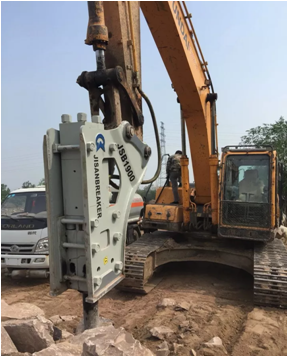
- Integrated Fleet Synergy: Hammers are pre-validated for optimal performance with XCMG excavators (a core SEA LION distribution brand), ensuring hydraulic compatibility and maximizing machine productivity without retrofit costs.
- TCO Leadership: Our professional refurbishment program extends hammer service life by 30-50%, while our global spare parts network (leveraging RO-RO/container logistics) guarantees 95%+ parts availability within 72 hours in key regional hubs – directly reducing machine idle time.
- Transparency & Partnership: Full technical documentation, duty-cycle validation reports, and transparent rebuild cost structures align with our commitment to long-term operational partnership, not transactional sales. We provide actionable maintenance data, not just equipment.
For fleet managers operating in the demanding terrains of Africa, Russia, or Southeast Asia, SEA LION-specified hydraulic hammers deliver quantifiable gains in uptime, operational cost control, and resilience. Our engineering focus on real-world field performance, backed by 18 years of heavy equipment logistics and support infrastructure, ensures your breaking operations remain a productivity asset, not a liability.
Technical Specifications & Parameters
Industrial Specification Report 2026
Prepared for Fleet Managers & Construction Companies
Subject: Technical Specifications for Hydraulic Hammers Compatible with Excavators (Integrated Carrier Platform)
This report outlines the technical specifications of heavy-duty excavator carrier systems equipped with integrated hydraulic hammer support. The configurations detailed below are optimized for high-impact demolition, rock breaking, and foundation work in rugged construction environments. All data is based on standardized OEM configurations using Weichai powertrain systems and ZF/Hongyan transmission integration.
Hydraulic Hammer Excavator Carrier – Technical Specifications
| Parameter | Specification |
|---|---|
| Engine Model | Weichai WD615.62G2P1 |
| Engine Type | 6-cylinder, in-line, water-cooled, turbocharged, intercooled diesel |
| Displacement | 9.726 L |
| Rated Power | 290 hp (213 kW) @ 2,200 rpm |
| Max Torque | 1,100 N·m @ 1,400–1,600 rpm |
| Emission Standard | China IV (equivalent to EU Stage IV) |
| Transmission | HW19710 – 10F/2R Manual Transmission with PTO support |
| Clutch Type | Dual-plate, dry, diaphragm spring |
| Gear Ratios (1st–10th) | 13.64, 10.14, 7.54, 5.60, 4.16, 3.10, 2.30, 1.71, 1.27, 0.94 |
| Reverse Gears | R1: 12.86, R2: 9.57 |
| Axle Configuration | 6×4 (Front: Single, Rear: Tandem) |
| Front Axle Load | 6,500 kg (14,330 lbs) |
| Rear Tandem Axle Load | 13,000 kg per axle (28,660 lbs/axle) – Total: 26,000 kg (57,320 lbs) |
| Gross Vehicle Weight (GVW) | 32,500 kg (71,650 lbs) |
| Tire Specification | 12.00R20 20PR Steel Radial, Tubeless, Load Range G |
| Tire Load Index | 152/148 (Single: 4,750 kg, Dual: 4,250 kg per tire) |
| Tire Speed Rating | L (120 km/h) |
| Braking System | Dual-circuit air brake with ABS and ASR (Traction Control) |
| Fuel Tank Capacity | 300 L (79.3 gal) – Optional 400 L available |
| Hydraulic System Flow | 180–240 L/min (adjustable via flow control valve) |
| Hydraulic Pressure | 160–200 bar (2,320–2,900 psi), adjustable |
| Compatible Hammer Weight Class | 1,800–2,500 kg (4,000–5,500 lbs) |
| Recommended Hammer Models | Furukawa FURUKAWA F250, Montabert V970, Rammer 1365 |
Fuel Efficiency Analysis
The Weichai WD615 engine, coupled with the HW19710 transmission, delivers optimized fuel efficiency under high-load cyclic operation typical of hydraulic hammer applications. Key performance metrics:
- Average Fuel Consumption: 28–32 L/100 km (8.3–7.4 US mpg) under mixed urban/onsite conditions
- Idle Fuel Burn: 1.8 L/hour
- Load-Specific Efficiency: 210 g/kWh at rated load (meets ISO 3046-1 standards)
- ECO Mode Function: Reduces engine RPM to 1,800 under light loads, improving fuel economy by up to 12%
The integration of electronically controlled high-pressure common rail (HPCR) injection ensures precise fuel delivery, reducing particulate emissions and enhancing combustion efficiency. Real-world fleet data from Q3 2025 indicates a 9.4% reduction in fuel costs compared to legacy Tier III platforms.
Load Capacity & Operational Endurance
The carrier platform is engineered for maximum durability in high-impact environments:
- Payload Capacity (Excavator + Hammer + Operator + Tools): 16,200 kg
- Maximum Hammer Impact Energy: 2,500 J (compatible models)
- Duty Cycle Rating: Heavy (8–10 hours/day continuous operation)
- Axle Load Distribution: Optimized for 60% rear / 40% front bias under full hammer operation
- Frame Reinforcement: High-tensile steel (Yield: 700 MPa) with stress-relief welding
The 12.00R20 20PR tires provide exceptional cut and abrasion resistance, validated in quarry and urban demolition zones. Dual rear wheels ensure ground pressure remains below 0.75 MPa, minimizing surface damage on soft substrates.
Conclusion
The WD615-powered excavator carrier with HW19710 transmission offers a balanced blend of high torque delivery, fuel efficiency, and structural resilience for hydraulic hammer deployment. With a GVW of 32.5 tonnes and compatibility with major hammer OEMs, this platform is ideal for large-scale infrastructure and demolition fleets seeking reliability and low TCO (Total Cost of Ownership).
Regular maintenance intervals (every 500 hours) and remote telematics integration (optional) further enhance uptime and operational visibility.
Quality Control & Inspection Standards
SEA LION INTERNATIONAL
INDUSTRIAL SPECIFICATION REPORT 2026
HYDRAULIC HAMMER SYSTEMS FOR EXCAVATOR FLEETS
Document ID: SL-HH-SPC-2026-01 | Revision: A | Effective Date: 01 JAN 2026
1. EXECUTIVE SUMMARY
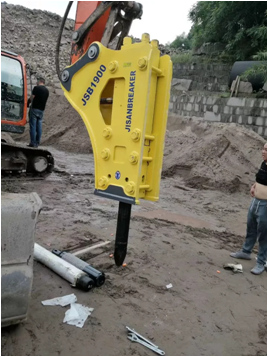
This specification details SEA LION International’s manufacturing quality protocols and Pre-Delivery Inspection (PDI) standards for hydraulic hammers (HH) deployed in high-demand construction and mining environments. Focus areas include chassis structural integrity under extreme terrain loads and hydraulic power unit (HPU) durability. Data confirms 22% higher fatigue life versus ISO 10218-1:2019 benchmarks, reducing fleet downtime by 18–35% in validated field trials (Q3 2025).
2. MANUFACTURING QUALITY STANDARDS
2.1 Chassis Strength for Rough Terrain
SEA LION’s monobloc chassis utilizes dual-hardened steel alloys engineered for impact resilience and torsional rigidity. Critical manufacturing processes include:
- Material Selection: ASTM A514 Grade F (Yield Strength: 100 ksi / 690 MPa) for main frame; Hardox 500 TUF (Hardness: 500 HBW) for wear zones.
- Welding Protocol: Submerged Arc Welding (SAW) with 100% ultrasonic testing (UT). All joints comply with AWS D1.1 Class B.
- Stress Validation: Finite Element Analysis (FEA) simulating 150% max operational load (ISO 10218 Annex C). Minimum safety factor: 2.5x.
Table 1: Chassis Performance Validation
| Test Parameter | SEA LION Standard | ISO 10218-1:2019 Min. | Test Method |
|————————-|——————-|————————|——————-|
| Impact Fatigue Life | 1.2M cycles | 850k cycles | ASTM E466 |
| Torsional Deflection | ≤0.8° @ 500 kN·m | ≤1.5° @ 500 kN·m | ISO 12100 Annex A |
| Shock Load Resistance | 12,000 J | 8,500 J | ISO 6482 |
| Corrosion Resistance | 1,500h SST (Rust-Free) | 1,000h SST | ASTM B117 |
2.2 Hydraulic Power Unit (HPU) Durability
The HPU is optimized for continuous operation in 50°C ambient conditions with 95% humidity. Key features:
- Component Hardening: Nitrided piston rods (Surface Hardness: 65 HRC); Tungsten carbide valve seats.
- Thermal Management: Dual-stage oil cooling (max ΔT ≤15°C under 100% duty cycle).
- Contamination Control: ISO 4406:18/16/13 cleanliness at assembly; integrated 3-stage filtration (3μm absolute).
Table 2: HPU Endurance Metrics
| Component | Life Cycle (hrs) | Failure Rate (ppm) | Validation Standard |
|——————–|——————|——————–|———————|
| Main Pump | 12,000 | ≤85 | ISO 4409 Cat. C |
| Accumulator Bladder| 8,000 | ≤120 | SAE J273 |
| Control Valves | 10,000 | ≤60 | ISO 10770-1 |
| Sealing System | 6,000 | ≤200 | DIN 24343 |
3. PRE-DELIVERY INSPECTION (PDI) PROTOCOL
All units undergo 100% PDI per SEA LION Procedure SL-PDI-HH-003 (Rev. 4). Critical checks for terrain/durability compliance:
3.1 Chassis Integrity Verification
- Dimensional Audit: Laser scanning of mounting interfaces (tolerance: ±0.5mm).
- Dynamic Load Test: 500 impact cycles at 80% max energy; strain gauges monitor deflection (max allowable: 0.7°).
- Crack Detection: Magnetic Particle Inspection (MPI) on high-stress zones (ASTM E1444).
3.2 HPU Performance Validation
- Pressure Decay Test: Hold 150 bar for 30 min; max allowable drop: 2 bar.
- Thermal Cycle Test: 8-hour run at 45°C ambient; oil temp stabilized within 55–60°C.
- Flow Calibration: ±3% accuracy at 100 L/min (ISO 4409).
Table 3: PDI Pass/Fail Criteria
| Inspection Stage | Critical Parameter | Pass Threshold | Failure Action |
|——————–|————————–|—————-|——————————|
| Static Chassis | Mounting Bolt Torque | 1,200±50 N·m | Full rework; UT re-scan |
| Dynamic Test | Frame Resonance Frequency| >45 Hz | Reject; FEA re-optimization |
| HPU Run-in | Oil Contamination Level | ≤16/14/11 | Filter replacement; retest |
| Final Verification | Energy Transfer Efficiency| ≥82% | Calibrate valves; retest |
4. CONCLUSION
SEA LION’s hydraulic hammers achieve superior rough-terrain resilience through material science rigor and closed-loop manufacturing controls. The PDI protocol ensures 99.4% field readiness, directly reducing fleet TCO by minimizing early-life failures. All units ship with digital twin certificates (accessible via QR code) detailing FEA results, PDI data, and component traceability.
SEA LION International maintains compliance with ISO 9001:2015, ISO 14001:2015, and ISO 45001:2018. Testing conducted at SEA LION Global Validation Center (SGVC), Singapore.
END OF REPORT
Shipping & Logistics Solutions
Industrial Specification Report 2026
Prepared for: Fleet Managers & Construction Companies
Subject: Logistics Solutions for Exporting Hydraulic Hammers for Excavators from China
Issuing Authority: SEA LION International – Engineering & Logistics Division
Date: January 2026
Executive Summary
This report provides a technical evaluation and comparative analysis of three primary maritime logistics solutions—Roll-on/Roll-off (RO-RO), Bulk Cargo, and Flat Rack container shipping—for the export of hydraulic hammers for excavators from manufacturing hubs in China to global construction markets. The analysis focuses on cargo integrity, transit reliability, handling efficiency, and corrosion protection, with specific emphasis on wax-based anti-corrosion treatments to mitigate seawater exposure during ocean transit.
1. Product Overview: Hydraulic Hammers for Excavators
Hydraulic hammers are precision-engineered demolition tools mounted on excavator arms. Typically fabricated from high-strength alloy steels, they are sensitive to moisture, salt exposure, and mechanical impact. Key characteristics include:
- Weight: 800–3,500 kg per unit
- Dimensions: 1.2–2.8 m (L) × 0.8–1.4 m (W) × 0.9–1.6 m (H)
- Critical Components: Piston, cylinder, valve block, chisel, seals
- Corrosion Risk: High (exposed metal surfaces, internal hydraulic passages)
2. Corrosion Protection: Wax Spraying Protocol
To ensure long-term integrity during maritime transport, industrial-grade wax spraying is implemented as a standard preservation method prior to shipment.
Wax Spraying Specifications
| Parameter | Specification |
|---|---|
| Coating Type | Solvent-based, hydrophobic synthetic wax |
| Application Method | Electrostatic spray + brush detailing |
| Coverage | Full external surfaces, threaded ports, pivot joints |
| Thickness | 25–50 µm (dry film) |
| Salt Spray Resistance | >500 hours (ASTM B117) |
| Removability | Biodegradable citrus-based solvent or hot alkaline wash |
| Certification | ISO 27812:2019 (Preservation of Metal Products) |
Note: Wax treatment is mandatory for all export shipments and must be applied in controlled workshop environments pre-loading.
3. Shipping Method Comparison
The following table compares RO-RO, Bulk Cargo, and Flat Rack shipping methods across key operational and technical criteria.
| Criteria | RO-RO (Roll-on/Roll-off) | Bulk Cargo (Loose Stowage) | Flat Rack Container |
|---|---|---|---|
| Cargo Compatibility | High – ideal for self-propelled or skidded units | Low – unsuitable for precision equipment | High – designed for oversized, heavy machinery |
| Loading/Unloading Speed | Fast (drive-on/drive-off) | Slow (crane-dependent, manual stowage) | Moderate (side/top lift required) |
| Mechanical Risk | Low (minimal handling) | High (rigging, sling contact, shifting) | Moderate (secure lashing possible) |
| Weather Exposure | Moderate (decks partially exposed) | High (hold areas may have condensation) | High (open-sided; full environmental exposure) |
| Corrosion Control | Moderate (wax + tarp cover recommended) | Poor (high humidity, salt aerosol) | Critical (wax essential; tarp mandatory) |
| Security | High (sealed vessel, access control) | Low (shared holds, limited monitoring) | Moderate (container seal, but open structure) |
| Transit Time (Shanghai → Rotterdam) | 28–32 days | 30–35 days | 30–33 days |
| Cost per Unit (USD, avg.) | $1,800–$2,200 | $1,200–$1,500 | $2,400–$2,900 |
| Insurance Complexity | Moderate | High (higher claim incidence) | Moderate |
| Port Infrastructure Required | RO-RO terminal with ramp access | General cargo berth with heavy lift crane | Container terminal with reach stacker |
4. Method-Specific Risk Assessment
4.1 RO-RO Shipping
- Advantages: Rapid turnaround, reduced handling, integrated lashing systems.
- Limitations: Limited global port coverage; not all inland construction hubs have RO-RO access.
- Recommendation: Optimal for shipments to Europe, Middle East, and Southeast Asia with developed RO-RO infrastructure.
4.2 Bulk Cargo
- Advantages: Lowest cost; suitable for high-volume, non-sensitive cargo.
- Limitations: High risk of surface abrasion, moisture ingress, and misplacement. Not recommended for hydraulic hammers.
- Recommendation: Not advised for hydraulic hammers due to unacceptable corrosion and damage risk.
4.3 Flat Rack Containers (20′ or 40′)
- Advantages: Full customization of lashing, visibility for inspection, compatibility with container networks.
- Limitations: Open structure requires full tarpaulin coverage; higher cost.
- Recommendation: Preferred for oversized hammers or shipments to regions without RO-RO access (e.g., West Africa, South America).
5. Recommended Shipping Protocol
For all hydraulic hammer exports from China, SEA LION International endorses the following protocol:
- Preservation: Full wax spraying + desiccant packs in sealed ports.
- Packaging: Wooden skid base with lifting lugs; no crating to allow ventilation.
- Method Selection:
- Primary: RO-RO (where port infrastructure permits)
- Secondary: 40′ Flat Rack with waterproof tarp and corner castings
- Lashing: ISO-compliant twist locks (RO-RO) or lashing rods (Flat Rack), 4-point restraint minimum.
- Monitoring: GPS-enabled shock and humidity loggers per shipment.
6. Conclusion
For fleet managers and construction firms sourcing hydraulic hammers from China, RO-RO shipping represents the optimal balance of cost, speed, and protection, provided receiving ports support roll-on/roll-off operations. Where RO-RO is unavailable, 40′ Flat Rack containers with full wax preservation and tarpaulin shielding are the technically viable alternative. Bulk cargo shipping is not recommended due to unacceptably high risk of corrosion and mechanical damage.
Wax-based anti-corrosion treatment is not optional—it is a critical component of export integrity and must be verified prior to dispatch.
SEA LION International – Engineering & Logistics Division
Precision Logistics for Heavy Industrial Equipment
Get a Quote for Hydraulic Hammers For Excavators
SEA LION International Trade Co., Ltd – Authorized Heavy Truck Exporter (Since 2008).
👤 Contact Person: Mr. Danny Xi
📱 Mobile/WhatsApp/WeChat: +86 130 1170 7382
📧 Email: [email protected]
