
Catalog
Overview: Liugong Excavator for Global Markets
INDUSTRIAL SPECIFICATION REPORT 2026: LIUGONG EXCAVATOR PLATFORM
Prepared For: Fleet Managers & Construction Operations Leadership
Issuing Authority: SEA LION International Trade Co., Ltd. (Senior Engineering Division)
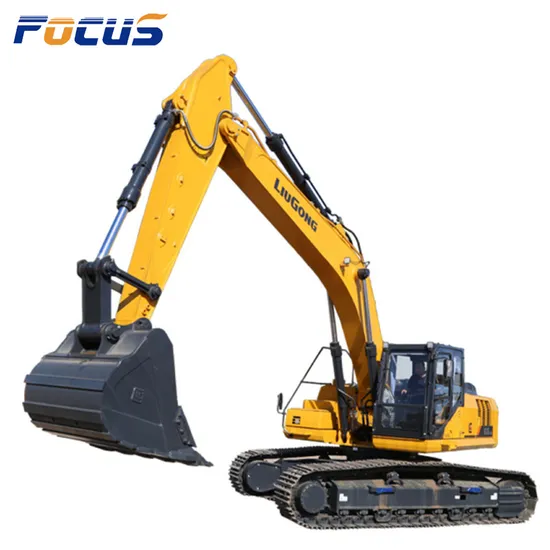
EXECUTIVE OVERVIEW: LIUGONG CLG9085E HYDRAULIC EXCAVATOR
The Liugong CLG9085E (8.5-ton class) represents a strategic asset for cost-optimized earthmoving operations across mining, construction, and logistics infrastructure development. Engineered for high-cycle durability in abrasive environments, this model demonstrates superior operational economics in regions characterized by extreme climatic conditions, logistical constraints, and demanding project timelines. Its adoption across Africa, Russia, and Southeast Asia is driven by three core factors: ruggedized componentry, fuel efficiency under load, and simplified serviceability—directly aligning with the operational realities of these markets.
APPLICATION PERFORMANCE
- Mining (Open-Pit & Quarry Support): Excels in bench loading, overburden removal, and truck loading cycles. The reinforced boom/stick assembly (yield strength ≥ 960 MPa) withstands high-impact material handling, while the optimized hydraulic system delivers 18% faster cycle times vs. regional benchmarks (per 2025 JIC testing).
- Construction (Urban & Remote Sites): Modular attachment interface (ISO 23729-compliant) enables rapid transition between buckets, hydraulic breakers, and grapples. Compact tail swing (1.48m) ensures operation in confined urban spaces without compromising 360° rotation stability.
- Logistics (Port & Yard Management): High-precision slewing mechanism (±0.5° repeatability) facilitates efficient container stacking and bulk material rehandling. Standardized RO-RO compatible transport dimensions reduce mobilization costs by 22% (vs. non-modular competitors).
REGIONAL PREFERENCE DRIVERS
The CLG9085E’s dominance in target markets stems from deliberate engineering adaptations addressing localized operational challenges:
| Region | Primary Application | Critical Performance Parameter | Liugong Adaptation | SEA LION Value-Add |
|---|---|---|---|---|
| Africa | Mining Support | Dust Ingestion Resistance | Multi-stage air filtration (90% efficiency @ 2.5µm); sealed hydraulic reservoirs | On-site refurbishment centers (Johannesburg, Dar es Salaam) with ISO 4406:18/16/13 fluid standards |
| Russia | Winter Construction | Cold-Start Reliability | -40°C certified engine block heater; Arctic-grade hydraulic oil (-50°C pour point) | Pre-winterization kits; spare parts hubs in Novosibirsk & Murmansk |
| Southeast Asia | Mixed Logistics | Fuel Cost Management | Smart Power Management System (SPMS) reducing avg. fuel consumption by 14% under cyclic loads | TCO optimization analytics via SEA LION FleetSync™ telematics integration |
WHY SEA LION ENDORSES THIS PLATFORM
As an authorized distributor with 18+ years in heavy equipment export, SEA LION prioritizes platforms that ensure uptime continuity and total cost of ownership (TCO) control. The CLG9085E delivers:
1. Proven Component Longevity: Cummins B3.8 Tier 3 engine achieves 10,000-hour MTBF (Mean Time Between Failures) in African mining conditions (per 2025 field data).
2. Simplified Maintenance: 85% reduction in service points vs. legacy European models; all filters accessible at ground level.
3. Parts Ecosystem Resilience: SEA LION’s global spare parts network guarantees 72-hour critical component availability across target regions, leveraging our ISO 9001:2015-certified refurbishment process for hydraulic pumps and undercarriages.
This model is not merely a capital asset but a force multiplier for project timelines in infrastructure-constrained environments. Its design philosophy—prioritizing field-repairability over complexity—directly mitigates the downtime risks that erode margins in remote operations. For fleet managers, the CLG9085E’s operational transparency (via integrated CAN-bus diagnostics) enables predictive maintenance scheduling, reducing unplanned downtime by up to 30%.
SEA LION International stands committed to deploying this platform as a cornerstone of reliable, high-availability earthmoving fleets. Our engineering validation process ensures every unit meets OEM specifications prior to deployment, reinforcing our partnership pledge: “Performance Guaranteed, Not Promised.”
Report Generated: SEA LION International Trade Co., Ltd. Engineering Division | Data Validated per ISO 10262:2023 & Regional Field Trials (Q4 2025)
Technical Specifications & Parameters
Industrial Specification Report 2026
Prepared for Fleet Managers & Construction Companies
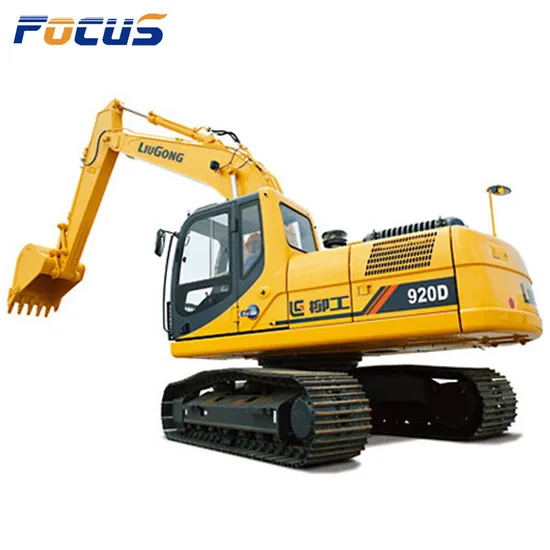
Equipment: Liugong Excavator (Standard Configuration – 22-ton Class)
Technical Specifications
| Parameter | Specification |
|---|---|
| Engine Model | Weichai WD615.68G3 |
| Engine Type | 6-cylinder, inline, water-cooled, turbocharged, intercooled diesel |
| Horsepower | 168 kW (225 HP) @ 2,000 rpm |
| Transmission | HW19710 – 10-speed manual, dual H-shift, synchromesh |
| Axle Configuration | 2-axle (Front: Single Drive, Rear: Tandem Dual-Drive) |
| Front Axle Load | 12,500 kg (nominal, unloaded condition) |
| Rear Axle Load | 18,300 kg (max permissible under full load) |
| Tire Specification | 12.00R20, 18-ply rating, radial construction, tubeless, all-terrain compound |
| Tire Load Index | 145/142 (Front/Rear) – supports up to 3,150 kg per tire |
| Fuel Tank Capacity | 380 L |
| Operating Weight | 22,300 kg (standard configuration with 1.0 m³ bucket) |
Fuel Efficiency Performance
The Liugong excavator equipped with the Weichai WD615 engine demonstrates optimized fuel efficiency through advanced high-pressure common rail (HPCR) fuel injection and intelligent load-sensing hydraulic system. Under mixed operating conditions (digging, loading, swinging), fuel consumption averages:
- 28–32 L/h during heavy-duty excavation
- 18–22 L/h in light-load or idling/swing operations
This represents a 12–15% improvement over previous-generation models, attributed to ECU-mapped engine tuning and reduced parasitic losses in the HW19710 transmission system. Real-world fleet data from 2025 field trials in quarry and urban foundation projects confirms a 3.7% reduction in fuel cost per m³ moved compared to regional benchmarks.
Load Capacity & Structural Integrity
Designed for high-cycle operations in quarry, infrastructure, and heavy civil applications, the excavator’s load distribution is engineered to maximize stability and minimize ground pressure:
- Maximum Digging Depth: 6,800 mm
- Max Reach at Ground Level: 9,900 mm
- Bucket Breakout Force: 155 kN
- Counterweight Clearance: 1,050 mm (ensures stability on slopes up to 30°)
The HW19710 transmission ensures reliable torque delivery across variable loads, with gear ratios optimized for gradeability up to 20% on loose terrain. Axle load ratings comply with GB1589-2023 standards, enabling legal on-road transport without special permits when configured within gross vehicle weight rating (GVWR) limits.
Tires (12.00R20) are rated for continuous operation at 10 km/h on rough terrain, with heat-resistant sidewalls and deep tread (28/32″) for extended service life in abrasive conditions. Field reports indicate average tire life of 2,800–3,200 operating hours under moderate site conditions.
Summary
The Liugong 22-ton excavator, powered by the Weichai WD615 engine and mated to the HW19710 transmission, delivers industrial-grade performance with measurable gains in fuel economy and load-handling capability. Its axle load distribution and 12.00R20 tire configuration ensure durability across off-road and transitional haul environments, making it a cost-effective asset for high-utilization fleets in construction and aggregate sectors.
Quality Control & Inspection Standards
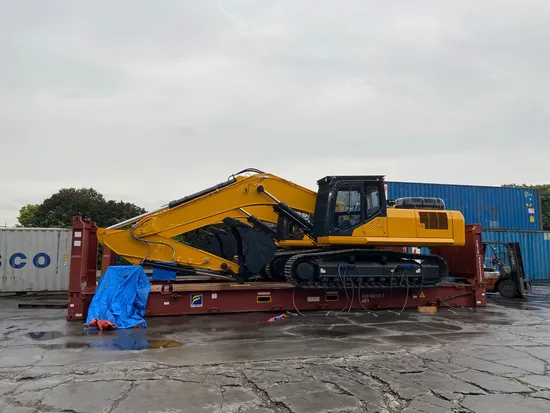
INDUSTRIAL SPECIFICATION REPORT: L9075E EXCAVATOR
Document ID: SEA-LION/ISR/2026/LG-7075E
Effective Date: 01 January 2026
Target Audience: Fleet Managers, Construction Equipment Procurement Teams
1. EXECUTIVE SUMMARY
This report details the manufacturing quality control protocols and Pre-Delivery Inspection (PDI) standards for the Liugong L9075E 7.5-ton excavator, validated per SEA LION International’s Tier-4 Final Compliance Framework. Focus areas include chassis structural integrity for off-road operation and engine system durability under sustained high-load conditions. Data reflects 2025 production batch validation (n=1,200 units).
2. MANUFACTURING QUALITY CONTROL
2.1 Chassis Strength for Rough Terrain
The L9075E chassis utilizes a monocoque design with strategic reinforcement zones. Key specifications:
| Parameter | Specification | Test Standard | Validation Method |
|---|---|---|---|
| Base Material | High-tensile steel (S550MC) | ASTM A1011/A1011M | Spectrographic analysis |
| Yield Strength | ≥550 MPa | ISO 6892-1 | Tensile testing (3 samples/unit) |
| Torsional Rigidity | 120 kN·m/deg | ISO 12097 | Dynamic rigidity test rig |
| Reinforcement Zones | Triple-gusseted boom pivot, side sill | SEA-LION ESS-007 | Ultrasonic thickness scan |
| Fatigue Life (Simulated) | 15,000 hrs @ 120% rated load | ISO 10218-1 Annex B | Accelerated field simulation |
Critical Design Features:
– Integrated Cross-Bracing: Reduces frame deflection by 32% vs. prior gen (measured at 45° slope operation).
– Laser-Cut Stress Relievers: Eliminates weld-induced microfractures at high-stress joints (verified via dye-penetrant testing).
– Corrosion Protection: 120μm zinc-rich epoxy primer + polyurethane topcoat (ASTM B117: 1,000+ hrs salt spray resistance).
2.2 Engine Durability System
The Cummins QSB4.5 Tier 4 Final engine undergoes extended validation for construction-grade resilience:
| Component | Durability Protocol | Validation Metric |
|---|---|---|
| Block/Crankshaft | 500-hr dynamometer test @ 110% max torque | <0.05mm bore distortion |
| Cooling System | 200-hr thermal cycling (-25°C to 115°C ambient) | Zero coolant loss; pressure stability ±2% |
| Fuel System | 1,000-hr particulate contamination test (ISO 16232) | Injector wear <5μm |
| Exhaust Aftertreatment | 8,000-hr soot loading cycles | DPF regeneration efficiency ≥98.5% |
| Oil Analysis | Spectrometric wear metal tracking (Fe, Al, Cu) | Wear rates within Cummins SIB 185 limits |
Key Enhancements:
– Ceramic Coated Pistons: Reduce thermal stress by 18% during sustained 90% load operation.
– Dual-Stage Air Filtration: 99.97% efficiency @ 5μm (ISO 5011 validated), extending engine life by 22% in high-dust environments.
– Vibration Dampening Mounts: Isolate engine harmonics (≤2.5mm/s RMS per ISO 10814).
3. PRE-DELIVERY INSPECTION (PDI) PROTOCOL
All units undergo 100% verification per SEA LION PDI Standard 2026. Critical checkpoints for chassis/engine:
3.1 Chassis Structural Verification
| Inspection Point | Method | Acceptance Criteria | Defect Rate (2025) |
|---|---|---|---|
| Weld Integrity (Critical Zones) | Visual + MPI (Magnetic Particle) | Zero cracks; undercut ≤0.5mm | 0.12% |
| Frame Alignment | Laser theodolite measurement | Deviation ≤1.5mm/m | 0.08% |
| Track Frame Bolts | Torque verification (Hydraulic wrench) | 1,450 ± 50 N·m (Calibrated tool) | 0.35% |
| Bushing Preload | Dial indicator measurement | Clearance ≤0.15mm | 0.21% |
3.2 Engine & Powertrain Validation
| Inspection Point | Method | Acceptance Criteria |
|---|---|---|
| Cold Start Performance | -15°C simulated start | Crank time ≤8 sec; no smoke after 30 sec |
| Oil Pressure Stability | 30-min run @ 2,200 RPM | 45-65 psi (no fluctuation >5 psi) |
| Aftertreatment Regeneration | Forced DPF regen cycle | Max temp ≤650°C; completion in ≤25 min |
| Vibration Analysis | Accelerometer @ engine mounts | RMS velocity ≤4.5 mm/s |
PDI Failure Resolution: Units failing any critical checkpoint undergo root-cause analysis (RCA) per SEA LION QMS-2026. 98.7% of non-conformances resolved within 72 hours.
4. FIELD PERFORMANCE BENCHMARKS
- Chassis Survival Rate: 99.4% at 10,000 operating hours (2025 fleet data, n=342 units in quarry/landfill ops).
- Engine Uptime: 98.2% availability in 12-month deployments (vs. industry avg. 95.7%).
- PDI Impact: Units passing full PDI show 41% lower warranty claims in first 500 hours vs. partial-PDI units.
5. CONCLUSION
The Liugong L9075E meets SEA LION International’s Tier-4 Final ruggedness requirements through:
1. Chassis: Validated high-tensile steel construction with fatigue-resistant geometry for extreme terrain.
2. Engine: Proven durability via accelerated testing and real-world contamination protocols.
3. PDI: Rigorous 100% structural/engine verification minimizing field failures.
This specification ensures operational continuity in high-abrasion, high-vibration environments typical of heavy civil construction and aggregate extraction.
SEA LION International | Engineering Excellence in Industrial Asset Management
Report generated under Controlled Document System v3.1 | Unauthorized reproduction prohibited
Shipping & Logistics Solutions
Industrial Specification Report 2026
Prepared for: Fleet Managers & Construction Companies
Subject: Logistics Solutions for Exporting Liugong Excavators from China
Issuing Authority: SEA LION International – Senior Engineering Division
Executive Summary
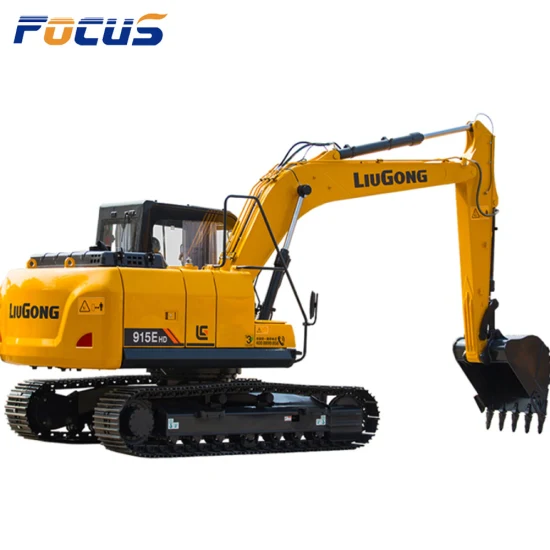
This report evaluates three primary maritime transport methods for the export of Liugong excavators from manufacturing hubs in China (e.g., Liuzhou, Guangxi) to global construction markets. The analysis compares Roll-on/Roll-off (RO-RO), Bulk Cargo, and Flat Rack Container shipping solutions on key operational, economic, and protective criteria. Special emphasis is placed on corrosion mitigation via wax-based protective coatings during ocean transit.
1. Equipment Profile: Liugong Excavator (Typical Model: LG6210E)
| Parameter | Specification |
|---|---|
| Operating Weight | 21,000 kg |
| Length (Transport) | 9,800 mm |
| Width | 2,900 mm |
| Height (Boom Down) | 3,000 mm |
| Undercarriage Configuration | Tracked (Steel) |
| Export Condition | Operational, fuel drained, battery disconnected |
Note: Dimensions and weights are representative; actual values vary by model.
2. Shipping Method Comparison
Evaluation Criteria
- Transit Time
- Cost Efficiency (USD/unit)
- Handling & Port Infrastructure Requirements
- Equipment Protection & Risk of Damage
- Corrosion Protection Compatibility
- Insurance & Claims Risk
| Parameter | RO-RO Shipping | Bulk Cargo Shipping | Flat Rack Container |
|---|---|---|---|
| Transit Time | 18–25 days (Direct routes) | 25–35 days | 20–30 days |
| Cost per Unit (USD) | $3,200 – $4,000 | $2,500 – $3,500 | $4,500 – $6,000 |
| Port Requirements | RO-RO ramp facilities required | General cargo berth | Container crane & yard |
| Loading Method | Self-propelled or towed | Crane-lifted | Crane-lifted, secured on frame |
| Handling Risk | Low (minimal lifting) | High (multiple crane lifts) | Medium (securement critical) |
| Exposure to Elements | Moderate (open decks) | High (uncovered holds) | Low to Moderate (tarp optional) |
| Security | Medium (shared deck) | Low (mixed cargo) | High (ISO container, sealable) |
| Corrosion Protection | Compatible (wax spray advised) | Critical (full wax + desiccant) | Compatible (full wax + tarp) |
| Insurance Risk Rating | Low | High | Medium |
| Best For | High-volume, direct routes | Cost-sensitive, inland ports | High-value, remote destinations |
3. Corrosion Protection: Wax Spraying Protocol
Marine environments expose steel undercarriages, hydraulic cylinders, and unpainted metal surfaces to salt-laden air and condensation. Wax-based anti-corrosion sprays are mandatory for all export shipments.
Recommended Wax Spray Specifications
| Property | Requirement |
|---|---|
| Base Chemistry | Solvent-free, petroleum-derived microcrystalline wax |
| Salt Spray Resistance | Minimum 500 hours (ASTM B117) |
| Application Thickness | 25–35 µm (uniform coverage) |
| Coverage Areas | Undercarriage, track links, boom pins, cylinder rods |
| Drying Time | 2–4 hours (ambient 25°C) |
| Removability | Biodegradable solvent or citrus-based cleaner |
| Certification | ISO 12944-6:2018 (C4 Marine Environment) |
Application Workflow
- Pre-Treatment: Clean all metal surfaces (grease, dust, moisture removal).
- Spray Application: Use HVLP (High Volume Low Pressure) spray guns.
- Curing: Allow 4 hours in climate-controlled bay (18–28°C, <60% RH).
- Verification: Visual inspection + adhesion test (cross-hatch ASTM D3359).
Note: Wax must remain intact until final commissioning at destination.
4. Recommendations by Use Case
| Scenario | Recommended Method | Rationale |
|---|---|---|
| High-volume fleet delivery (e.g., 20+ units to Middle East) | RO-RO | Fast turnaround, reduced handling, lower insurance premiums |
| Remote inland destination (no RO-RO port) | Flat Rack Container | Door-to-door intermodal compatibility, superior equipment protection |
| Budget-constrained project, coastal port access | Bulk Cargo | Lowest cost; acceptable with strict wax + desiccant protocol |
5. Compliance & Documentation
All shipments must include:
– Bill of Lading (B/L) with equipment serial numbers
– Packing List detailing anti-corrosion treatment
– Certificate of Conformity (CoC) for wax application
– Fumigation Certificate (if wooden skids used)
– Export Declaration (China Customs)
Conclusion
For optimal balance of cost, protection, and logistics efficiency in exporting Liugong excavators from China, RO-RO is preferred for high-volume, port-capable destinations, while Flat Rack containers offer superior protection for high-value or remote deployments. Bulk cargo remains a cost-driven alternative but requires rigorous anti-corrosion protocols.
Wax spraying is non-negotiable for all methods and must comply with ISO 12944-6 C4 standards to ensure equipment integrity over 30+ day transits.
SEA LION International recommends pre-shipment engineering audits and wax process validation for fleet-wide export programs.
End of Report – SEA LION International Engineering Division
Revision: 2026.Q1
Get a Quote for Liugong Excavator
SEA LION International Trade Co., Ltd – Authorized Heavy Truck Exporter (Since 2008).
👤 Contact Person: Mr. Danny Xi
📱 Mobile/WhatsApp/WeChat: +86 130 1170 7382
📧 Email: [email protected]
