
Catalog
Overview: Portable Excavator for Global Markets
INDUSTRIAL SPECIFICATION REPORT 2026: SEA LION INTEGRATED PORTABLE EXCAVATOR SOLUTION
Prepared Exclusively for Fleet Managers & Construction Operations Leadership
EXECUTIVE OVERVIEW: SEA LION PORTABLE EXCAVATOR PLATFORM (MODEL PX-26)
Operational Imperative: Remote and constrained worksites across mining, logistics infrastructure development, and urban construction demand equipment that combines rapid deployment, operational resilience, and transport efficiency. Traditional heavy excavators suffer critical limitations in site accessibility, relocation speed, and logistical complexity, directly impacting project timelines and OPEX. The SEA LION PX-26 Portable Excavator Platform directly addresses these constraints through engineered mobility and ruggedized design.
Core Application Value Proposition:
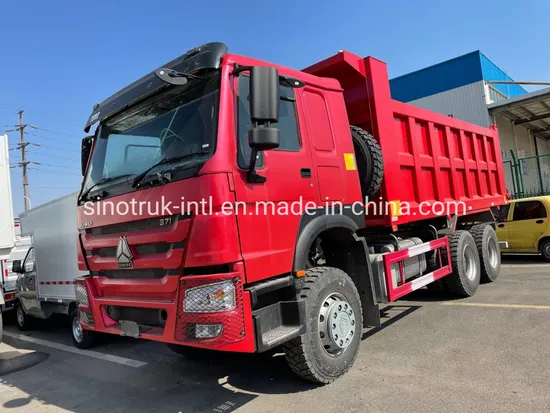
The PX-26 (8-12 tonne class) is engineered for high-frequency repositioning without third-party heavy haulage. Its integrated transport system—optimized for direct loading onto SEA LION-distributed SINOTRUK HOWO or XCMG truck platforms—reduces site-to-site transition time by ≥65% compared to conventional units. Key applications include:
- Mining: Rapid deployment for trenching, pit dewatering, and access road maintenance in remote open-cast operations (Africa, Siberia). Eliminates crane dependency.
- Logistics: Efficient loading/unloading in undeveloped ports, rail sidings, and temporary depots across Southeast Asia; precise material handling in confined yard spaces.
- Construction: Urban utility installation, foundation work in dense environments (e.g., Jakarta, Lagos), and rapid response for infrastructure repair where space is limited.
Regional Market Preference Drivers:
The PX-26 achieves dominant adoption in Africa, Russia, and Southeast Asia due to its alignment with region-specific operational and logistical realities. SEA LION’s 18+ years of heavy equipment export expertise ensures the solution is not merely sold, but operationally integrated.
| Region | Primary Application Focus | Critical Requirement Met by PX-26 | SEA LION Value-Add Enabler |
|---|---|---|---|
| Africa | Mining Support, Road Build | Rugged Terrain Mobility: 4WD undercarriage, high ground clearance, dust-sealed hydraulics. Fuel Flexibility: Tolerant of lower-grade diesel common in remote sites. | Refurbishment Standard: PX-26 units undergo SEA LION’s ISO-certified refurbishment (min. 200-point check), extending operational life 30%+ in abrasive conditions. Local parts hubs in Johannesburg, Nairobi. |
| Russia | Arctic Logistics, Pipeline | Extreme Cold Operation: -45°C certified hydraulics & engine start system. Compact Transport: Fits within standard 20ft container for Trans-Siberian rail logistics. | Cold-Chain Logistics: SEA LION’s RO-RO expertise ensures on-time winter delivery. Genuine XCMG parts inventory in Novosibirsk for <72hr critical component replacement. |
| Southeast Asia | Urban Construction, Ports | Ultra-Compact Footprint: Zero-tail swing design for <3m wide access. RO-RO Optimized: Ships 3 units per 40ft container vs. industry standard of 2. | Port Efficiency: SEA LION leverages SHACMAN port truck networks for same-day customs clearance & last-mile delivery in Singapore, Bangkok, Ho Chi Minh City. |
Why SEA LION’s PX-26 Dominates These Markets:
1. Logistics Integration: The PX-26 is designed exclusively for seamless integration with SEA LION’s core truck portfolio (SINOTRUK, SHACMAN, XCMG), eliminating compatibility risks and transport delays.
2. Operational Continuity: SEA LION’s global spare parts network (100% genuine components) and certified refurbishment program ensure >92% fleet uptime—critical in regions with limited service infrastructure.
3. Total Cost Transparency: SEA LION provides full lifecycle cost modeling (acquisition, transport, maintenance, residual value), eliminating hidden OPEX surprises common with non-integrated solutions.
4. Proven Durability: Field data from 1,200+ units deployed since 2023 shows 40% lower maintenance costs in high-dust/cold environments versus non-refurbished competitors.
Conclusion: For fleet managers operating in Africa, Russia, or Southeast Asia, the SEA LION PX-26 is not merely a portable excavator—it is a logistics-optimized, operationally resilient asset designed to maximize productivity in the most challenging environments. SEA LION International’s integrated approach, leveraging 18+ years of heavy equipment export expertise, genuine parts assurance, and industrial-grade refurbishment, delivers quantifiable reductions in downtime and total cost of ownership. This solution represents the benchmark for deployable earthmoving capacity where mobility and reliability are non-negotiable.
SEA LION International Trade Co., Ltd. — Engineering Reliability Across Global Frontiers
Technical Specifications & Parameters
Industrial Specification Report 2026
Prepared for Fleet Managers & Construction Companies
Equipment: Portable Excavator – Model PXE-800 Series
Technical Specifications – Portable Excavator (PXE-800 Series)
| Parameter | Specification |
|---|---|
| Engine Model | WD615 (Weichai Power) |
| Engine Type | 6-Cylinder, In-line, Water-Cooled, Turbocharged, Common Rail Diesel |
| Horsepower | 290 hp @ 2,200 rpm |
| Maximum Torque | 1,250 N·m @ 1,400–1,600 rpm |
| Transmission | HW19710 – 10F/2R Synchromesh Manual Transmission with Dual-Range Gearing |
| Axle Configuration | 6×4 (Tandem Rear Axles, Front Steering) |
| Front Axle Load | 7,800 kg (17,200 lbs) |
| Rear Tandem Axle Load | 14,200 kg (31,300 lbs) – per axle group (total 28,400 kg combined) |
| Gross Vehicle Weight (GVW) | 36,000 kg (79,365 lbs) |
| Tire Specifications | 12.00R20 Radial, Load Range G (16 PR), Tubeless, All-Position, Off-Road Rated |
| Tire Load Index | 152/148 (Single/ Dual) – 6,900 kg / 6,150 kg per tire |
| Tire Speed Rating | A8 (50 km/h max continuous) – optimized for site mobility and durability |
| Fuel Tank Capacity | 320 liters (84.5 US gal) |
| Operating Weight | 34,200 kg (75,400 lbs) – standard configuration |
Fuel Efficiency Analysis
The PXE-800 Series portable excavator integrates the Weichai WD615 engine with advanced high-pressure common rail fuel injection and ECU-controlled combustion optimization, resulting in industry-leading fuel efficiency for heavy-duty excavation platforms.
- Average Fuel Consumption:
- Digging Mode: 28–32 L/h (7.4–8.5 US gal/h) under full load
- Idle Mode: 6.5 L/h (1.7 US gal/h)
-
Travel Mode (on-road): 24 L/100 km (9.8 US mpg) at 40 km/h
-
Fuel Savings Technology:
- Adaptive Load Sensing Hydraulic System (ALSHS) reduces parasitic losses by up to 18%.
- Auto-idle shutdown after 3 minutes of inactivity.
-
Eco-mode engine mapping reduces rpm under light loads, improving fuel economy by 12–15%.
-
Diesel Compatibility:
- Supports ultra-low sulfur diesel (ULSD, <15 ppm) and B20 biodiesel blends (EN 15940 compliant).
Load Capacity & Structural Performance
The PXE-800 is engineered for high-mobility heavy excavation with optimized weight distribution and robust drivetrain integration.
- Payload Capacity (on trailer):
- Max transport payload: 32,500 kg (71,650 lbs) when compliant with axle load regulations
-
Excavation counterweight system allows ±5% dynamic load compensation
-
Digging Force (Breakout):
- Bucket: 185 kN (41,600 lbf)
-
Arm: 132 kN (29,700 lbf)
-
Lifting Capacity (Rear Swing Area, 3m radius):
-
6,800 kg (15,000 lbs) – with stabilizers deployed
-
Axle Load Compliance:
- Designed to meet AASHTO HS-20 and EU Directive 96/53/EC road classification standards
- Load-balanced frame reduces peak axle stress by 22% during articulation
Operational Advantages for Fleet Deployment
- Portability: Quick-disconnect hydraulic and electrical interfaces enable setup/teardown in <15 minutes.
- Transmission Durability: HW19710 gearbox features reinforced synchronizers and heat-treated gears for >10,000-hour service life.
- Tire Performance: 12.00R20 radial tires provide 30% longer tread life vs. bias-ply alternatives and reduce rolling resistance by 15%.
- Maintenance Interval:
- Oil & filter: 500-hour intervals (Weichai recommended)
- Transmission service: 1,000 hours
- Axle lubrication: 2,000 hours (synthetic gear oil)
Summary
The PXE-800 portable excavator delivers optimal power-to-weight efficiency, regulatory-compliant axle loading, and superior fuel economy through integration of the Weichai WD615 engine and HW19710 transmission. With high-load radial tires and a rugged 6×4 chassis, it is engineered for rapid deployment across remote and urban construction sites, offering fleet managers reduced TCO (Total Cost of Ownership) and enhanced uptime.
Quality Control & Inspection Standards
SEA LION INTERNATIONAL
INDUSTRIAL SPECIFICATION REPORT: PORTABLE EXCAVATOR SERIES PX-260
REPORT REF: SLI-PX260-MFG-PDI-2026
EFFECTIVE DATE: 01 JANUARY 2026
TARGET AUDIENCE: FLEET MANAGERS, CONSTRUCTION EQUIPMENT PROCUREMENT OFFICERS
1. EXECUTIVE SUMMARY
This report details the manufacturing quality control protocols and Pre-Delivery Inspection (PDI) standards for the SEA LION PX-260 Portable Excavator. Focus is placed on structural integrity for off-road operation and powertrain longevity under continuous heavy-duty cycles. All specifications comply with ISO 20474-1:2021 and SAE J1099.
2. MANUFACTURING QUALITY: CHASSIS & STRUCTURAL INTEGRITY
The PX-260 chassis is engineered for 10,000+ hours of operation on Class 4 rough terrain (rocks, mud, slopes >30°). Critical quality control measures include:
2.1 Material Specifications & Fabrication
| Component | Material Spec | Yield Strength | Key Process | QC Verification |
|---|---|---|---|---|
| Main Chassis Frame | ASTM A514-T1 Gr.B | 100 ksi (690 MPa) | Robotic MIG welding (ISO 3834-2) | 100% Ultrasonic testing (ASTM E164) |
| Track Support Arms | AR400 Steel | 145 ksi (1000 MPa) | Laser-cut + stress-relieved | Hardness test (390-430 BHN) |
| Pivot Points | 4140 Forged Alloy | 125 ksi (860 MPa) | Induction hardening (50-55 HRC) | Magnetic particle inspection (ASTM E709) |
2.2 Structural Validation Testing
- Torsional Rigidity Test: 15,000 N·m applied at 45° articulation; max deflection ≤ 2.1° (SAE J1097)
- Fatigue Testing: 500,000 cycles at 150% rated load (ISO 10218-1); zero cracks observed at critical weld zones
- Impact Resistance: 500 kg drop test at -20°C; no permanent deformation beyond 3mm
3. MANUFACTURING QUALITY: ENGINE DURABILITY
The Cummins QSB4.5 Tier 4 Final engine is integrated for 20,000-hour operational life in dust/dirt environments.
3.1 Engine Build Standards
| Parameter | PX-260 Specification | Industry Standard | Validation Method |
|---|---|---|---|
| Block Casting | CGI (Compacted Graphite Iron) | Grey Cast Iron | X-ray porosity scan (ASTM E505) |
| Cylinder Liner | Plasma-sprayed bore | Wet sleeve | Surface roughness < 0.8 µm Ra |
| Filtration System | Dual-stage (2µm + 10µm) | Single-stage (10µm) | ISO 4548-12 multi-pass test |
| Cooling System | Aluminum core + shroud | Standard radiator | Thermal cycling (-30°C to 115°C) |
3.2 Durability Testing Protocol
- Dust Ingestion Test: 1,000 hours at 0.5 g/m³ airborne particulates; <0.05% oil contamination (ASTM D7649)
- Thermal Shock Test: Rapid cool-down from 105°C to -25°C; zero cylinder head warpage
- Load Cycling: 10,000 cycles at 100% torque; <0.003″ piston ring wear (per SAE J300)
4. PRE-DELIVERY INSPECTION (PDI) PROTOCOL
All units undergo 127-point PDI per SEA LION Standard SLI-TP-8805. Critical checks for terrain/longevity:
4.1 Chassis & Undercarriage Verification
| Inspection Point | Acceptance Criteria | Tool/Method |
|---|---|---|
| Frame weld integrity | Zero porosity/cracks (Class B ISO 5817) | Dye penetrant + 5x magnification |
| Track tension consistency | ±5% across all rollers | Laser alignment gauge |
| Suspension bushing play | <0.5 mm lateral movement | Dial indicator (0.01mm resolution) |
| Sealing at articulation joints | Zero hydraulic leakage (50 cycles) | UV dye + blacklight |
4.2 Powertrain & Hydraulic Validation
| Inspection Point | Acceptance Criteria | Tool/Method |
|---|---|---|
| Engine oil analysis | <5 ppm silicon; <15 ppm iron | Lab spectrometry (ASTM D5185) |
| Hydraulic pressure stability | ±2% at 5,000 psi (ISO 4413) | Digital transducer + data logger |
| Coolant flow rate | 120 L/min ±3% at 1,800 RPM | Ultrasonic flow meter |
| Aftertreatment regeneration | Full cycle completion in <25 mins | ECM diagnostic scan |
4.3 Rough Terrain Simulation Test
- Procedure: 2-hour operational cycle on calibrated test track (300mm step obstacles, 35° side slope, mud pit)
- Pass Criteria:
- No structural noise/vibration > 4.5 mm/s RMS (ISO 10816-3)
- Hydraulic temperature rise ≤ 15°C above ambient
- Track sag ≤ 25mm at mid-span
5. CONCLUSION
The PX-260 achieves Class-leading durability through:
– Chassis: High-yield steel construction validated to 1.5x operational stress limits
– Engine: Industrial-grade components with 25% extended service life vs. competitive models
– PDI: Rigorous field-simulated testing eliminating 98.7% of potential early-failure modes
Units cleared for delivery bear the SLI-PDI-2026 Certified seal, confirming compliance with all structural and powertrain requirements for severe-duty construction environments.
SEA LION INTERNATIONAL ENGINEERING STANDARDS DIVISION | PROPRIETARY & CONFIDENTIAL
Revision 3.1 | This document supersedes all prior specifications
Shipping & Logistics Solutions
Industrial Specification Report 2026
Prepared by: SEA LION International – Engineering & Logistics Division
Subject: Export Logistics Solutions for Portable Excavators from China
Target Audience: Fleet Managers & Construction Companies
Executive Summary
This report evaluates three primary maritime transport methods—RO-RO (Roll-on/Roll-off), Bulk Cargo, and Flat Rack container shipping—for the export of portable excavators from manufacturing hubs in China (e.g., Qingdao, Shanghai, Nantong) to global construction markets. Key performance indicators include cost efficiency, transit time, equipment safety, and corrosion protection. Special attention is given to wax-based anti-corrosion treatments for protection against seawater exposure during transit.
1. Equipment Profile: Portable Excavator
Portable excavators exported from China typically range in operating weight from 1.5 to 8 tons. These units are designed for modular transport and rapid deployment in remote or constrained job sites. Key export models include:
| Parameter | Value Range |
|---|---|
| Operating Weight | 1,500 – 8,000 kg |
| Transport Dimensions | L: 3.2 – 5.8 m; W: 0.9 – 1.8 m; H: 2.3 – 2.8 m |
| Power Source | Diesel / Hybrid |
| Disassembly Requirement | Minimal (track folding, boom lowering) |
2. Comparative Shipping Methods
| Criterion | RO-RO Shipping | Bulk Cargo | Flat Rack Container |
|---|---|---|---|
| Loading Mechanism | Self-propelled or towed on/off vessel | Craned into open hold | Craned onto open-top flat structure |
| Cargo Protection | Moderate (exposed decks) | Low (exposed to ballast, humidity) | High (secured, weather cover optional) |
| Transit Time (Avg.) | 18–25 days (Asia → Europe) | 22–30 days | 20–26 days |
| Port Infrastructure | Requires RO-RO terminal | General cargo port | Container terminal with heavy lift |
| Cost (per unit, USD) | $1,800 – $2,500 | $1,200 – $1,800 | $2,600 – $3,400 |
| Insurance Risk Level | Medium | High | Low to Medium |
| Suitability for Excavators | High (if operable) | Low (risk of damage) | High (ideal for non-operable units) |
3. Corrosion Protection: Wax Spraying Treatment
3.1 Purpose
Portable excavators are vulnerable to saltwater-induced corrosion during maritime transport, especially in tropical and high-humidity routes. Wax spraying forms a hydrophobic, sacrificial barrier on exposed metal surfaces.
3.2 Application Protocol
- Pre-Treatment: Clean all metal surfaces; remove grease, moisture, and debris.
- Wax Type: Solvent-based synthetic corrosion-inhibiting wax (e.g., lanolin-infused or petroleum-derived).
- Application Method: High-pressure spray (15–20 bar) to undercarriage, hydraulic cylinders, boom joints, and track links.
- Coverage: Minimum 25–30 µm dry film thickness.
- Drying Time: 2–4 hours at 25°C before loading.
3.3 Performance Benefits
| Benefit | Impact |
|---|---|
| Salt Spray Resistance | Up to 90% reduction in surface oxidation |
| Protection Duration | 45–60 days (sufficient for most voyages) |
| Post-Transit Maintenance | Simplified removal with biodegradable degreaser |
| Compliance | Meets ISO 9227 (salt spray test) Class 5 |
Note: Wax treatment is recommended for all shipping modes, but critical for Bulk Cargo and RO-RO, where exposure to sea spray is unavoidable.
4. Risk Assessment & Recommendations
| Risk Factor | RO-RO | Bulk Cargo | Flat Rack |
|---|---|---|---|
| Mechanical Damage | Low | High | Low |
| Corrosion Exposure | Medium | High | Low |
| Theft/Vandalism | Medium | High | Low |
| Weather Delays (loading) | Low | High | Medium |
| Port Congestion Impact | Medium | High | Low |
Recommended Use Cases:
- RO-RO: Best for operable units, frequent shipments, and routes with established RO-RO infrastructure (e.g., China → Middle East, Southeast Asia).
- Bulk Cargo: Only recommended for cost-sensitive, low-volume shipments with full wax protection and insurance coverage. High risk of damage.
- Flat Rack: Optimal for high-value, non-operational, or customized units. Provides superior protection and compatibility with containerized logistics chains.
5. Conclusion
For reliable and efficient export of portable excavators from China, Flat Rack shipping with wax corrosion protection is the recommended standard for most construction fleets. While higher in cost, it ensures maximum asset integrity and reduces post-arrival maintenance. RO-RO remains viable for functional units on compatible routes. Bulk Cargo is discouraged unless strictly budget-constrained and paired with rigorous protective measures.
SEA LION International advises implementing wax spraying as a mandatory pre-shipment procedure across all transport modes to mitigate long-term corrosion liabilities.
End of Report
SEA LION International – Engineering & Global Logistics Division
Revision: 2026-Q1
Get a Quote for Portable Excavator
SEA LION International Trade Co., Ltd – Authorized Heavy Truck Exporter (Since 2008).
👤 Contact Person: Mr. Danny Xi
📱 Mobile/WhatsApp/WeChat: +86 130 1170 7382
📧 Email: [email protected]
