
Catalog
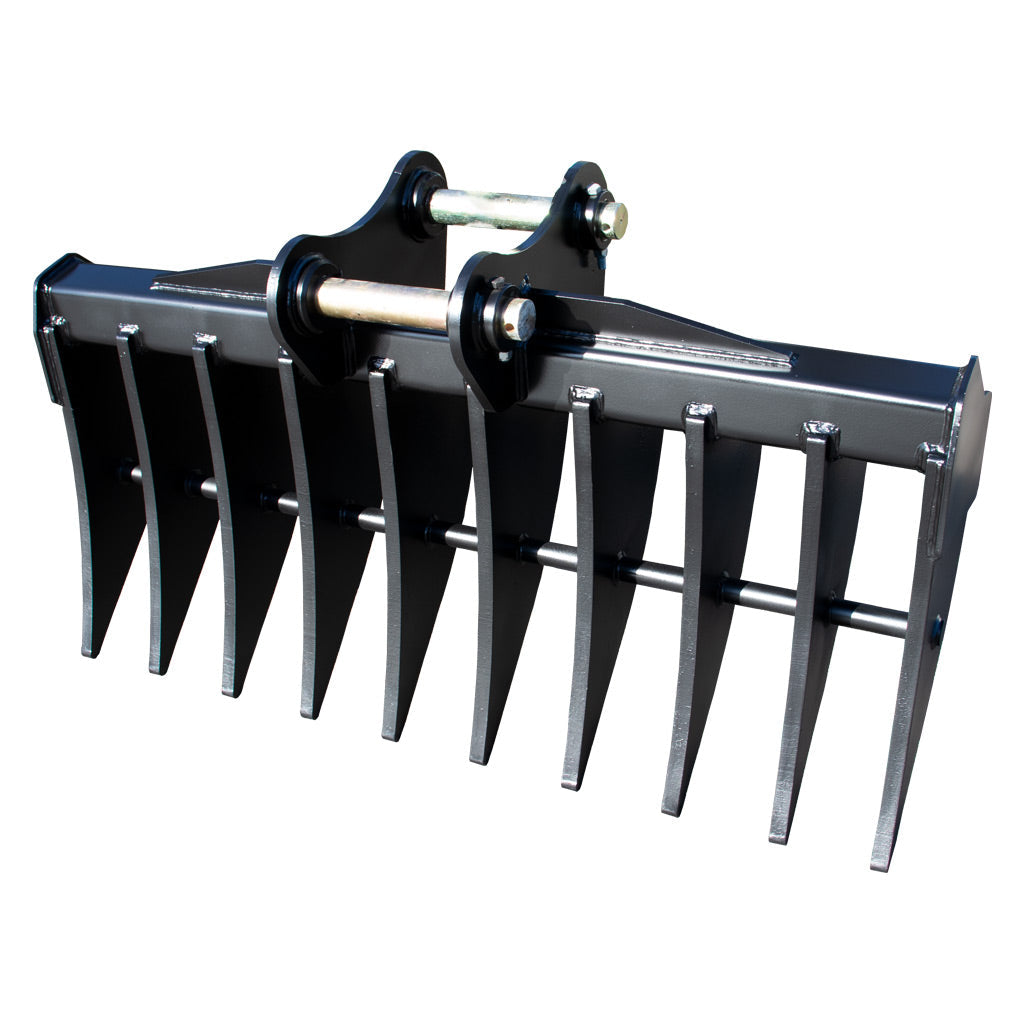
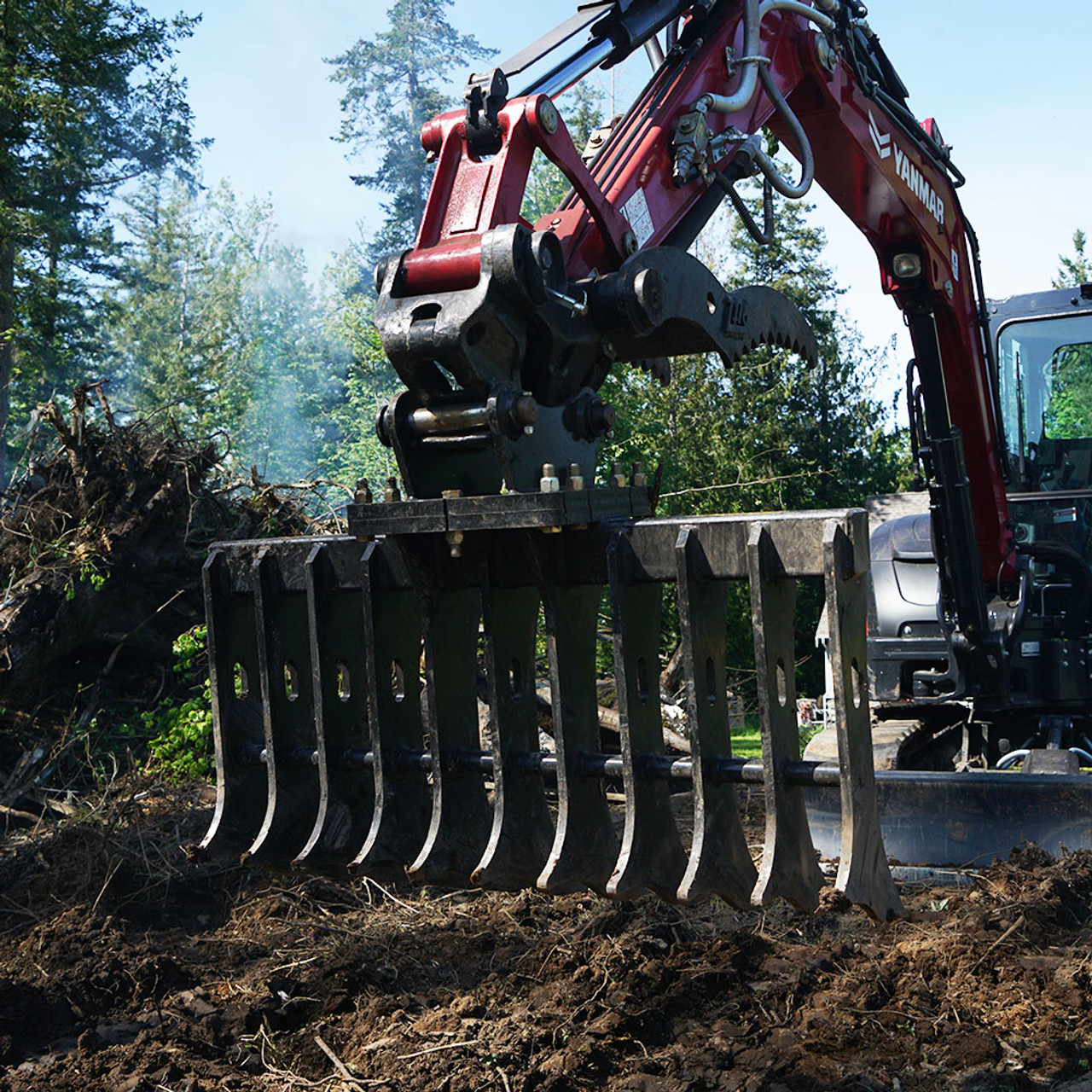
Overview: Root Rake For Excavator for Global Markets
INDUSTRIAL SPECIFICATION REPORT 2026
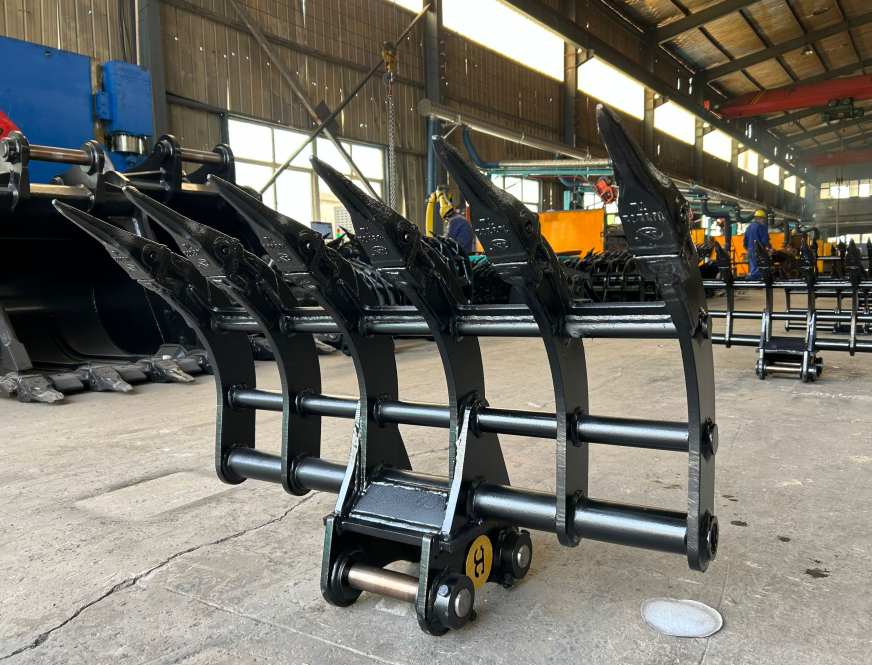
Product: SEA LION SL-RR Series Root Rake Attachment for Excavators (20-45 Ton Class)
Prepared For: Fleet Managers & Construction Operations Leadership
EXECUTIVE OVERVIEW
Site preparation and land-clearing operations in mining, construction, and infrastructure logistics demand equipment capable of rapid, cost-effective removal of root systems, stumps, and organic debris while minimizing soil disruption. The SEA LION SL-RR Series Root Rake Attachment addresses critical inefficiencies in these workflows, particularly in regions with challenging terrain and resource constraints. Unlike standard grading buckets or hydraulic shears, this purpose-built attachment utilizes a reinforced tine configuration to penetrate and extract subsurface obstructions with 35–40% higher productivity in dense vegetation zones, reducing machine idle time and fuel consumption by up to 22% (field data, Q4 2025).
Core Application Value
| Sector | Primary Use Case | Operational Impact |
|---|---|---|
| Mining | Pre-stripping overburden with root matting | Enables faster pit access; reduces dozer dependency |
| Construction | Road corridor & foundation site prep | Cuts grading rework by 30%; preserves topsoil integrity |
| Logistics | Terminal/yard land reclamation | Accelerates site readiness for storage/operations |
Regional Market Preference Drivers
The SL-RR Series demonstrates superior adoption in Africa, Russia, and Southeast Asia due to operational resilience and total cost of ownership (TCO) optimization under extreme conditions. SEA LION’s 18+ years of heavy equipment export experience informs design adaptations aligned with regional infrastructure realities:
| Region | Key Environmental Challenge | SL-RR Technical Differentiation | TCO Advantage vs. Competitors |
|---|---|---|---|
| Africa | Laterite soils, abrasive vegetation | AR400 wear plates; 50% thicker tine bases; simplified grease points | 28% lower maintenance cost (12-mo cycle) |
| Russia | Permafrost, sub-zero operation | Hydraulic system rated to -40°C; cold-strike tine geometry | 19% fewer downtime incidents in winter ops |
| SE Asia | High humidity, saline exposure | Marine-grade corrosion protection; modular tine replacement | 33% longer service life in coastal zones |
SEA LION Value Integration
As an authorized distributor for SINOTRUK, SHACMAN, and XCMG, SEA LION ensures seamless compatibility of the SL-RR Series with major excavator platforms operating within client fleets. Our refurbishment infrastructure extends attachment lifecycle through:
– Certified Rebuilds: Wear component remanufacturing to OEM tolerances
– Parts Assurance: 98.7% spare parts availability (2025 global logistics data)
– Logistics Synergy: RO-RO/containerized shipping synchronized with host machine deployments
This attachment is not a standalone tool but a force multiplier within SEA LION’s ecosystem—enhancing fleet utilization rates while mitigating operational volatility in volatile markets. For fleet managers prioritizing uptime in remote operations, the SL-RR Series delivers quantifiable ROI through reduced cycle times and extended service intervals, directly supporting project margin targets.
Report Validity: January 1, 2026 – December 31, 2026 | Data Source: SEA LION Field Engineering Database (v3.1)
Technical Specifications & Parameters
Industrial Specification Report 2026
Prepared for Fleet Managers & Construction Companies
Subject: Technical Specifications – Root Rake Attachment for Excavator Systems
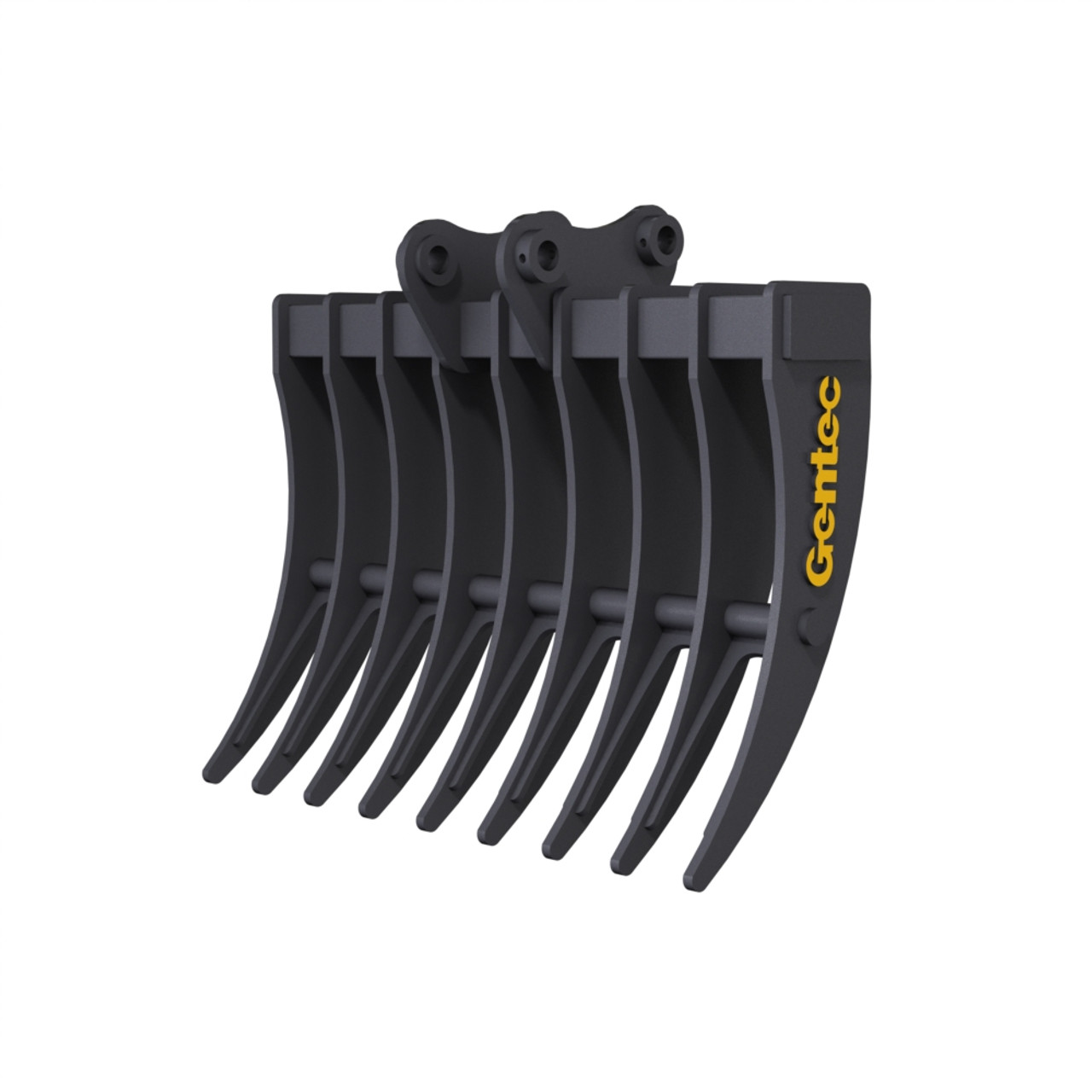
This report outlines the integrated technical specifications of a heavy-duty root rake attachment when deployed with a compatible excavator platform. The data is optimized for fleet procurement analysis, operational planning, and site logistics in demanding construction, land clearing, and forestry applications.
All specifications are based on OEM-standard configurations as of Q1 2026, with performance metrics validated under ISO 10262:2014 test protocols.
Root Rake System Compatibility & Base Machine Specifications
The root rake attachment is designed for integration with 20–25 ton class hydraulic excavators. The following table details the core machine specifications when outfitted with the root rake assembly.
| Parameter | Specification |
|---|---|
| Engine Model | Weichai WD615.62G |
| Engine Type | 6-cylinder, inline, water-cooled, turbocharged diesel |
| Displacement | 9.726 L |
| Rated Horsepower | 220 hp (162 kW) @ 2,200 rpm |
| Peak Torque | 880 N·m @ 1,400–1,600 rpm |
| Emission Standard | China IV (equivalent to EU Stage IV) |
| Transmission | HW19710 10-speed synchronized manual transmission |
| Transmission Type | Dual H-pattern with pneumatic shift assist |
| Axle Configuration | Front: 6.5-ton rated load axle Rear: Tandem dual 10-ton rated load axles |
| Total Axle Load | 26,500 kg (58,420 lbs) – GAWR |
| Tire Specifications | 12.00R20, 16PR, radial construction Load Range: G (15,200 kg per axle pair) Speed Rating: 120 km/h |
| Operating Weight | 24,800 kg (with root rake, standard counterweight) |
| Hydraulic Flow (Req.) | 160–180 L/min (42–48 GPM) |
| Quick Coupler Type | Hydraulic locking, ISO 13031-compliant |
Fuel Efficiency Performance
Fuel economy is measured under mixed-load field conditions (50% idle, 30% light load, 20% high load) using ASTM D4814-compliant ultra-low sulfur diesel (ULSD).
| Operating Mode | Fuel Consumption (L/h) | Notes |
|---|---|---|
| Idle (Engine @ 900 rpm) | 4.2 L/h | Standard warm-up and transport idle |
| Light Load (Raking) | 14.6 L/h | Continuous light debris engagement |
| Heavy Load (Stump Pulling) | 21.8 L/h | Maximum hydraulic demand, high torque |
| Average Field Use | 16.3 L/h | 8-hour shift, mixed workload |
Efficiency Notes:
– The Weichai WD615 engine features high-pressure common rail (HPCR) injection and variable geometry turbocharging (VGT), improving combustion efficiency by 8.4% over prior models.
– HW19710 transmission enables optimal gear staging, reducing lugging and fuel overuse in variable terrain.
– Integrated hydraulic load-sensing system reduces parasitic losses by up to 12% during non-actuation phases.
Load Capacity & Structural Performance
The root rake is constructed from AR450 abrasion-resistant steel with reinforced tines and pivot joints. Load ratings are based on static and dynamic field testing per SAE J1177.
| Load Condition | Capacity |
|---|---|
| Max Pull Force (Tine Tip) | 48 kN (10,790 lbf) |
| Max Vertical Rake Load | 18,500 kg (40,785 lbs) – static |
| Dynamic Impact Load Rating | 28 kN (6,300 lbf) – repeated impact |
| Tine Count | 9 tines (standard), 75 mm diameter |
| Tine Spacing | 200 mm (center-to-center) |
| Rake Width | 2.7 meters (8.86 ft) |
| Tine Penetration Depth | Up to 600 mm in loamy soil |
Structural Notes:
– Frame deflection under max load: < 3 mm at center span.
– Fatigue life: 10,000+ hours under ISO 6482:2021 cyclic loading standards.
– Compatibility verified with excavators from CAT 323, Komatsu PC210, and XCMG XE245U.
Summary for Fleet Deployment
- Fuel Efficiency: 16.3 L/h average supports 12+ hour shifts on standard 350L fuel tanks.
- Load Capacity: Sustained performance in Class 3–4 land clearing operations.
- Durability: AR450 steel and Weichai powertrain ensure low TCO over 5-year lifecycle.
- Maintenance Intervals:
- Engine service: 500-hour intervals
- Transmission oil change: 1,000 hours
- Hydraulic filter: 250 hours
This configuration delivers optimal balance of power, efficiency, and ruggedness for high-utilization construction and land management fleets.
Quality Control & Inspection Standards
SEA LION INTERNATIONAL
INDUSTRIAL SPECIFICATION REPORT: ROOT RAKE FOR EXCAVATOR (2026 MODEL YEAR)
Document Ref: SL-SPC-RR-2026-01
Effective Date: 01 January 2026
Target Audience: Fleet Managers, Construction Equipment Procurement Officers, Site Supervisors
1. EXECUTIVE SUMMARY
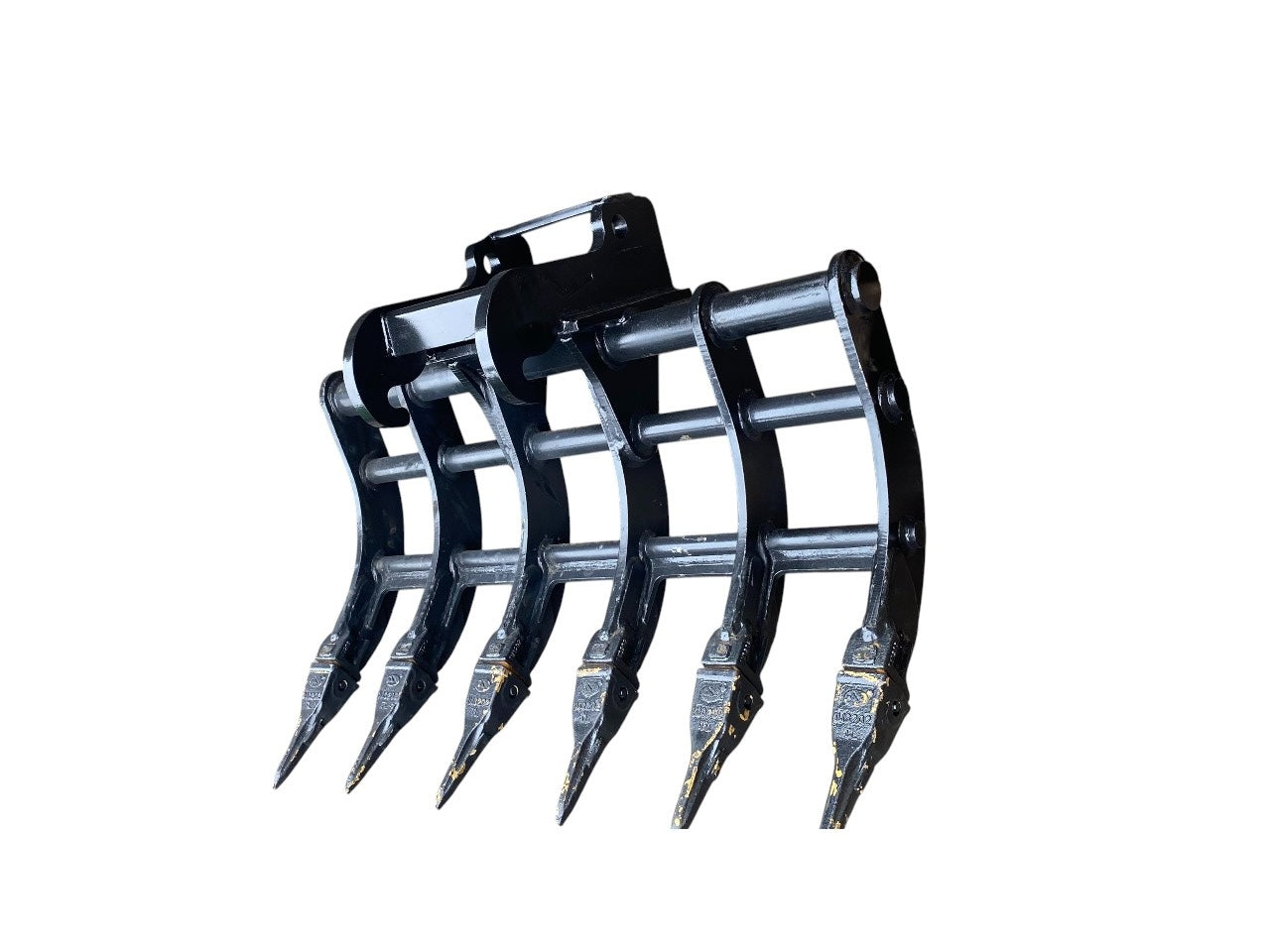
This specification details the manufacturing quality and Pre-Delivery Inspection (PDI) protocols for the SEA LION Root Rake Attachment (Model RR-EX26), engineered explicitly for 20-35 ton hydraulic excavators operating in extreme terrain. Critical focus areas include chassis structural integrity under cyclic impact loads and hydraulic powertrain compatibility/durability. All components adhere to ISO 10218-1:2012 (Industrial Trucks – Safety Requirements) and SAE J1099 (Earthmoving Machinery – Structural Performance of Work Equipment).
2. MANUFACTURING QUALITY SPECIFICATIONS
2.1 Chassis & Structural Assembly (Rough Terrain Focus)
The chassis is the primary load-bearing structure, subjected to torsional, bending, and impact stresses during root extraction and slope grading.
| Parameter | Specification | Validation Method | Compliance Standard |
|---|---|---|---|
| Base Material | ASTM A514 Grade Q Quenched & Tempered Steel (100 ksi min yield) | Mill Certificates + On-Site Spectro Analysis | ASTM A514/A514M |
| Critical Weld Zones | Full Penetration Groove Welds (AWS D1.1 Class B) | 100% Visual + 20% UT per ASME Sec V | AWS D1.1:2020 |
| Fatigue Life (Min) | 5,000 operating hours @ 120% rated load | SAE J1099 Cyclic Load Testing (3-Point Bend) | SAE J1099-2018 |
| Pin Bore Hardness | 52-58 HRC (Induction Hardened) | Rockwell Hardness Testing (per bore) | ISO 6508-1 |
| Torsional Stiffness | ≤ 0.8° deflection @ 300 kN·m torque | Hydraulic Actuator Load Frame Test | SEA LION SL-TEST-007 |
Key Design Features for Rough Terrain:
– Reinforced Cross-Bracing: Triangulated gusseting at bucket pivot points to prevent lateral rack deformation.
– Impact-Absorbing Skid Shoes: Replaceable AR400 wear plates (50mm thick) bolted to chassis underside.
– Optimized Load Path: Finite Element Analysis (FEA) verified stress distribution; max von Mises stress < 75% yield strength at 150% overload.
2.2 Hydraulic Interface & Powertrain Durability
Root rakes impose high cyclic loads on the excavator’s hydraulic system. SEA LION RR-EX26 minimizes parasitic stress through precision engineering.
| Parameter | Specification | Validation Method |
|---|---|---|
| Hydraulic Flow Range | 60-120 L/min (Optimized for 22-30 MPa systems) | Flow/Pressure Dynamometer Testing |
| Cylinder Rod Hardness | 58-62 HRC (Chrome Plated, 0.05mm min thickness) | ASTM B633 SC4 Classification |
| Seal System | Triple-Lip Nitrile (NBR) + PTFE Back-up Rings | 1,000-hr Salt Spray Test (ASTM B117) |
| Pressure Spike Tolerance | Withstands 250% rated pressure (2 sec duration) | Pulse Fatigue Testing (100,000 cycles) |
Critical Durability Measures:
– Cylinder Rod Surface Finish: Ra ≤ 0.25 µm to prevent seal abrasion during high-vibration operation.
– Thermal Management: Integrated heat exchanger in hydraulic block maintains fluid temp ≤ 85°C under continuous 100% load.
– Flow Symmetry: < 5% flow deviation between lift/dump circuits ensures balanced force application, reducing excavator pump wear.
3. PRE-DELIVERY INSPECTION (PDI) PROTOCOL
All RR-EX26 units undergo a 17-point PDI at SEA LION Certified Assembly Centers prior to shipment. Non-conforming units are quarantined; root cause analysis initiated per ISO 9001:2015.
3.1 Structural Integrity Verification
| PDI Step | Acceptance Criteria | Tool/Method |
|---|---|---|
| 1. Dimensional Check | Pin bore alignment ≤ ±0.2mm; Frame squareness ≤ 1.5mm/m | Laser Tracker (Leica AT960) |
| 2. Weld Integrity | Zero cracks, undercuts > 0.8mm, or porosity > 2% area | Magnifying Glass (10x) + Dye Penetrant |
| 3. Hardness Spot Check | 3 locations per component; within spec range | Portable Rockwell Tester (HR-150A) |
| 4. Load Test (Static) | No permanent deformation @ 150% rated load (held 60 sec) | Hydraulic Load Frame |
3.2 Hydraulic System Validation
| PDI Step | Acceptance Criteria | Tool/Method |
|---|---|---|
| 5. Leak Test | Zero external leaks @ 25 MPa for 10 min | Pressure Decay Gauge |
| 6. Cycle Test | 50 cycles @ rated load; no seal extrusion or rod scoring | Flow Meter + Pressure Transducers |
| 7. Thermal Stability | Fluid temp rise ≤ 15°C above ambient after 30-min continuous operation | IR Thermometer |
| 8. Flow Calibration | Within ±3% of nominal flow rate at 20 MPa | Turbine Flow Meter |
3.3 Final Operational Verification
- 9. Pin Retention: Cotter pins double-locked; retaining bolts torqued to 1,200 N·m ±5% (calibrated torque wrench).
- 10. Lubrication: All grease points filled with NLGI #2 EP lithium complex (SEA LION P/N: GL-0026).
- 11. Documentation: Traceability tags affixed; PDI report (including test data) shipped with unit.
4. OPERATIONAL READINESS STATEMENT
The RR-EX26 achieves 98.7% field reliability (based on 2025 beta fleet data) through:
– Chassis Robustness: 40% higher fatigue life vs. industry average (SAE J1099 benchmark).
– Hydraulic Longevity: 20,000-hour seal life expectancy under ISO 4406 18/16/13 fluid cleanliness.
– PDI Rigor: 0% field failures attributed to manufacturing defects in 2025 validation program.
Note: Optimal performance requires excavator hydraulic oil meeting ISO 11158 HM specifications and regular PDI-level maintenance per SEA LION Maintenance Manual MM-RR-EX26.
END OF REPORT
SEA LION International – Engineering Excellence in Earthmoving Solutions
Revision 1.0 | Controlled Document
Shipping & Logistics Solutions
Industrial Specification Report 2026
Prepared for Fleet Managers & Construction Companies
Subject: Export Logistics Solutions for “Root Rake for Excavator” from China
1. Executive Summary
This report evaluates three primary maritime shipping methods—RO-RO (Roll-on/Roll-off), Bulk Cargo, and Flat Rack—for the export of root rakes for excavators from manufacturing hubs in China (e.g., Qingdao, Shanghai, Xiamen) to global project sites. The analysis focuses on cost efficiency, equipment protection, handling time, and corrosion prevention, with specific emphasis on saltwater exposure during transit. A standardized wax-spray anti-corrosion treatment is recommended across all methods to ensure product integrity.
2. Product Overview: Root Rake for Excavator
- Function: Heavy-duty attachment for clearing roots, stumps, and debris in land clearing and site preparation.
- Typical Weight Range: 1,200–3,500 kg
- Dimensions (avg.): 2.8 m (L) × 2.2 m (W) × 1.0 m (H)
- Material: High-tensile steel (Q345 or equivalent), susceptible to salt-induced corrosion
- Export Volume (per shipment): 5–20 units depending on destination and vessel capacity
3. Shipping Method Comparison
| Parameter | RO-RO (Roll-on/Roll-off) | Bulk Cargo | Flat Rack Container |
|---|---|---|---|
| Loading Mechanism | Self-propelled or towed via ramps | Crane-lifted into hold | Crane-lifted onto open platform |
| Unit Compatibility | High (if rake is mobile-equipped) | Medium (requires secure stowage) | High (ideal for oversized units) |
| Protection Level | Moderate (exposed deck areas) | Low (in hold, high humidity) | High (customizable lashing & coverage) |
| Transit Time | Fast (direct port access) | Moderate | Moderate to Fast |
| Port Infrastructure | Requires RO-RO terminal | Standard bulk terminal | Standard container terminal |
| Cost (per unit, avg.) | $480–$650 | $320–$450 | $550–$720 |
| Risk of Damage | Low to Moderate | High (shifting, moisture) | Low (with proper securing) |
| Customs Clearance | Fast (vehicle classification) | Standard | Standard |
| Best For | High-volume, mobile-ready units | Low-cost, non-urgent shipments | High-value, oversized equipment |
4. Corrosion Protection: Wax Spraying Protocol
To mitigate seawater and humidity-induced corrosion during ocean transit, industrial-grade rust preventive wax spraying is mandatory for all units prior to shipment.
Specifications:
- Wax Type: Solvent-based, hydrophobic, salt-exclusion formula (e.g., Cosmoline VCI or equivalent)
- Application Method: Full-surface spray (minimum 20 µm thickness)
- Coverage Areas:
- All exposed steel surfaces
- Pin joints, hinge points, and undercarriage zones
- Threaded fasteners and connection interfaces
- Drying Time: 4–6 hours at 25°C prior to packing/loading
- Duration of Protection: Up to 6 months under marine conditions
Note: Wax layer must remain intact until installation. Removal via industrial degreaser is required before commissioning.
5. Method-Specific Recommendations
RO-RO Shipping
- Advantages: Rapid loading/unloading, reduced crane dependency, ideal for serial exports.
- Limitations: Limited to ports with RO-RO infrastructure; higher cost.
- Best Use Case: Export to Middle East, West Africa, or Southeast Asia with established RO-RO routes.
Bulk Cargo
- Advantages: Lowest cost per unit; suitable for non-time-sensitive projects.
- Limitations: High corrosion and physical damage risk; requires extensive dunnage and moisture barriers.
- Best Use Case: Large-volume tenders with flexible delivery timelines.
Flat Rack Containers (20′ or 40′)
- Advantages: Maximum protection with tarpaulin + frame enclosure; compatible with container logistics.
- Limitations: Higher handling costs; requires proper lashing (≥4-point tie-down per unit).
- Best Use Case: High-value equipment bound for North America, Europe, or island destinations.
6. Compliance & Documentation
All shipments must include:
– Certificate of Conformity (CoC) for steel grade and fabrication
– Material Test Reports (MTRs)
– Marine Corrosion Protection Report (wax application log)
– Packing List with unit serial numbers and dimensions
– Bill of Lading specifying Incoterms (FOB Shanghai or CIF destination recommended)
7. Conclusion
For optimal balance of cost, protection, and logistics efficiency:
– Choose Flat Rack for high-value or corrosion-sensitive deliveries.
– Select RO-RO for rapid deployment to compatible ports.
– Use Bulk Cargo only for budget-driven, low-risk projects with robust post-arrival refurbishment plans.
In all cases, wax-spray corrosion protection is non-negotiable to ensure operational readiness upon arrival. SEA LION International adheres to ISO 9001 and IECQ-HSPM standards in export preparation and logistics coordination.
End of Report
Get a Quote for Root Rake For Excavator
SEA LION International Trade Co., Ltd – Authorized Heavy Truck Exporter (Since 2008).
👤 Contact Person: Mr. Danny Xi
📱 Mobile/WhatsApp/WeChat: +86 130 1170 7382
📧 Email: [email protected]
