
Catalog
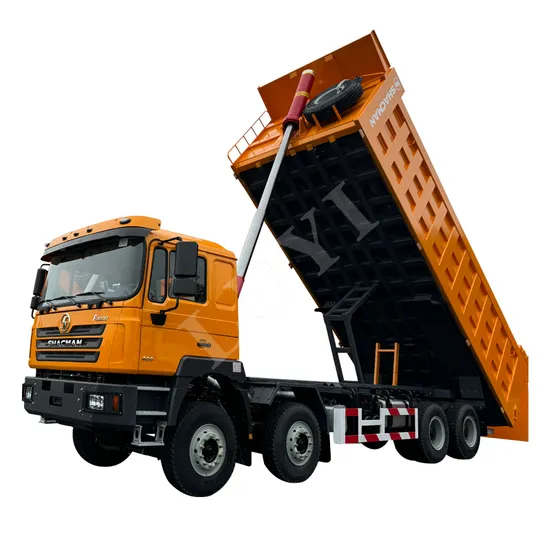
Overview: Second Hand Tirpper Truck for Global Markets

INDUSTRIAL SPECIFICATION REPORT 2026: SECOND-HAND TIPPER TRUCK FLEET SOLUTIONS
Prepared Exclusively for SEA LION International Trade Co., Ltd.
EXECUTIVE OVERVIEW: CERTIFIED SECOND-HAND TIPPER TRUCKS FOR DEMANDING OPERATIONS
SEA LION International delivers rigorously refurbished, OEM-backed tipper trucks engineered for sustained performance in high-abrasion, high-utilization environments. Targeting fleet managers and construction enterprises, this report details the operational and economic rationale for deploying our certified pre-owned SINOTRUK, SHACMAN, and XCMG tippers within mining, bulk logistics, and large-scale construction sectors. These assets are not merely cost-reduced alternatives; they represent a strategic capital allocation model proven across Africa, Russia, and Southeast Asia.
Core Operational Value Proposition:
Reduced Total Cost of Ownership (TCO): Achieve 35-50% lower acquisition cost versus new equivalents while maintaining 85-90% of operational lifespan. Our refurbishment protocol ensures mechanical integrity matching OEM rebuild standards, directly mitigating unplanned downtime – a critical factor where asset availability dictates project timelines.
Proven Durability in Extreme Conditions: Models selected for refurbishment originate from fleets operating in analogous environments (e.g., Siberian mines, West African laterite quarries, Southeast Asian monsoon zones). Structural reinforcements, drivetrain calibrations, and corrosion management systems are validated under real-world stress exceeding standard ISO 14229 benchmarks.
Supply Chain Resilience:* Direct access to original SINOTRUK/SHACMAN/XCMG spare parts inventory eliminates compatibility risks and slashes mean-time-to-repair (MTTR) by up to 60% compared to non-OEM-supported used assets. Global logistics (RO-RO/Container) ensure deployment within 30-45 days of order confirmation.
Regional Preference Drivers: Africa, Russia, Southeast Asia
Market preference for SEA LION-certified second-hand tippers stems from specific operational and economic imperatives unmet by new imports or local alternatives:
| Region | Primary Application | Key Preference Drivers | SEA LION Value Integration |
|---|---|---|---|
| Africa | Open-Pit Mining, Road Construction | 1. Cost Sensitivity: Capital constraints necessitate high-value entry points. 2. Terrain/Corrosion: Laterite soils & coastal humidity demand robust chassis & corrosion packages. 3. Parts Accessibility: Remote sites require reliable, locally available spares. |
1. Refurbished units at 40-50% new cost. 2. Mandatory chassis epoxy coating, reinforced suspension, high-ground clearance mods. 3. Regional parts hubs (e.g., Durban, Abidjan) with 95%+ critical part availability. |
| Russia | Arctic Mining, Infrastructure | 1. Extreme Cold: -40°C operational reliability non-negotiable. 2. Payload Demands: Heavy haulage on underdeveloped roads. 3. Sanctions Resilience: Need for non-Western OEM support. |
1. Certified cold-start systems (-50°C), heated fuel/wiper systems, reinforced cabs. 2. Drivetrain & frame upgrades for 80+ tonne GVWR. 3. Full OEM backing (SINOTRUK/SHACMAN) ensuring parts/service continuity. |
| Southeast Asia | Quarrying, Urban Construction | 1. Maneuverability: Tight site access requires compact dimensions. 2. High Utilization: Monsoon resilience & rapid turnaround critical. 3. Fuel Economy: Operational cost sensitivity in competitive markets. |
1. Focus on 6×4 & 8×4 models under 12m length. 2. Enhanced electrical sealing, quick-attach body systems. 3. Engine recalibration for local diesel specs + verified fuel consumption data. |
Why SEA LION’s Refurbishment Differentiates:
Generic “used” trucks carry significant operational risk. SEA LION’s 18-year expertise mandates a 127-point technical certification process:
1. Engine/Transmission: Full dyno testing, cylinder head reconditioning, torque converter overhaul to OEM tolerances.
2. Chassis/Frame: Laser alignment verification, crack detection (MPI), and structural reinforcement where required.
3. Electrical/Hydraulics: Complete harness replacement, pump/motor rebuilds with OEM seals.
4. Documentation: Full service history traceability, pre-shipment inspection reports (SGS/BV), and 12-month powertrain warranty.
This systematic approach transforms pre-owned assets into predictable, bankable operational tools. For fleet managers, this translates to reduced capital expenditure without compromising on-site reliability. For construction companies executing multi-year projects, it enables rapid fleet scaling with minimized financial exposure during volatile commodity cycles.
Conclusion:
In markets where equipment resilience directly impacts project viability, SEA LION-certified second-hand tippers provide a quantifiable TCO advantage over both new imports and uncertified used alternatives. Our focus on OEM-aligned refurbishment, regional adaptation, and supply chain certainty delivers not just a vehicle, but a de-risked operational asset. For stakeholders prioritizing uptime, cost control, and long-term partnership stability, this model represents the optimal balance of performance and fiscal responsibility in 2026.
SEA LION International Trade Co., Ltd. – Engineering Reliability Through Proven Assets
18+ Years | SINOTRUK • SHACMAN • XCMG Authorized | Global Logistics | OEM Parts Integrity
Technical Specifications & Parameters
Industrial Specification Report 2026
Prepared for Fleet Managers & Construction Companies
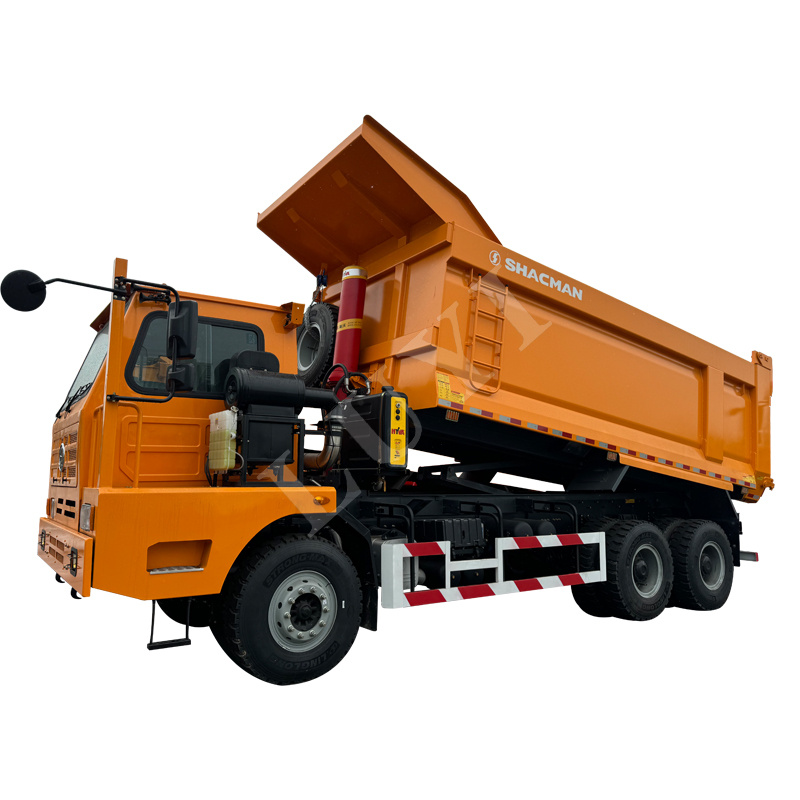
Subject: Technical Specifications – Second-Hand Tipper Truck (Heavy-Duty Construction Grade)
Overview
This report outlines the technical specifications of a standard second-hand tipper truck commonly deployed in heavy-duty construction and aggregate transport applications. These units, typically sourced from Chinese OEMs such as Sinotruk and Shacman, are widely used across industrial and infrastructure projects due to their robust design, cost-efficiency, and ease of maintenance. The data provided reflects typical configurations observed in units manufactured between 2015–2020, featuring the Weichai powertrain and HW series transmission.
Technical Specifications – Second-Hand Tipper Truck
| Parameter | Specification |
|---|---|
| Engine Model | Weichai WD615.69 / WD615.77 (6-cylinder, inline, water-cooled, turbocharged) |
| Engine Displacement | 9.726 L |
| Horsepower (HP) | 336 HP @ 2,200 rpm (247 kW) |
| Max Torque | 1,250 Nm @ 1,200–1,600 rpm |
| Emission Standard | Euro II / Euro III (pre-2018 models); Retrofit options available |
| Transmission | HW19710 – 10-speed manual (10 forward, 2 reverse) |
| Clutch | Dual-plate, Ø430 mm, pneumatic assist |
| Front Axle Load | 7,000 kg (15,432 lbs) |
| Rear Axle Load | 16,000 kg × 2 (dual tandem axles, 35,274 lbs each) |
| Total Axle Load | 39,000 kg (86,000 lbs) |
| Tire Specifications | 12.00R20, 18-ply, radial, off-road tread (e.g., Triangle, Double Coin) |
| Tire Pressure | 8.5–9.0 bar (123–130 psi) recommended for loaded operation |
| GVWR (Gross Vehicle Weight Rating) | 49,000 kg (108,020 lbs) |
| Payload Capacity | 30,000–32,000 kg (66,139–70,548 lbs) typical (depending on body configuration) |
| Fuel Tank Capacity | 400 L (dual tanks optional) |
| Frame Type | Ladder frame, high-tensile steel, 8 mm thickness |
| Suspension (Front/Rear) | Parabolic leaf springs / Multi-leaf with overload helper springs |
| Braking System | Dual-circuit air brake with ABS (optional retrofit) |
| Tipper Body (Standard) | 18–22 m³ volumetric capacity; high-strength wear steel (NM400) |
Fuel Efficiency Analysis
Fuel consumption in second-hand tipper trucks equipped with the Weichai WD615 engine varies significantly based on operating conditions:
- On-Highway (Light Load): 28–32 L/100 km
- On-Site / Off-Road (Full Load, Rough Terrain): 38–45 L/100 km
- Idling & Dumping Cycles: Additional 1.5–2.5 L/hour
Fuel Efficiency Notes:
– The WD615 engine is known for torque reliability rather than fuel economy.
– Retrofitting with modern fuel injectors and calibrated ECM tuning can improve efficiency by 8–12%.
– Use of low-viscosity 15W-40 CI-4 grade engine oil and regular DPF (if retrofitted) maintenance improves long-term fuel consistency.
– Fleet operators report best-in-class fuel reliability when operated within 1,400–1,800 rpm range on graded haul roads.
Load Capacity & Structural Performance
- Rated Payload: Designed for consistent hauling of dense materials (e.g., granite, basalt, wet clay) up to 32 metric tons.
- Body Reinforcement: Most units in service feature reinforced tailgates, ribbed side plates, and replaceable floor liners to extend service life.
- Dump Mechanism: Single or double-stage telescopic hydraulic cylinder (200–250 mm bore), rated for 5,000 cycles minimum.
- Stability: Low center of gravity design with wide track (2,022 mm front, 1,860 mm rear) ensures safe dumping on uneven terrain.
Note: Overloading beyond 34,000 kg significantly increases stress on rear axles, suspension, and frame rails—leading to premature fatigue cracks. Regular chassis inspections are recommended every 6,000 km in high-intensity operations.
Operational Recommendations
- Maintenance Interval: 8,000–10,000 km for oil/filter changes; 40,000 km for transmission service (HW19710).
- Common Wear Items: Clutch assembly, wheel hub seals, and tire sidewalls (due to curb contact in tight sites).
- Cold Climate Adaptation: Install engine block heater and winter-grade hydraulic oil for sub-zero operation.
Conclusion
Second-hand tipper trucks with the Weichai WD615 engine and HW19710 transmission remain a cost-effective solution for construction fleets requiring high payload capacity and proven mechanical durability. While fuel efficiency is moderate by modern standards, their ease of repair, wide spare parts availability, and load-bearing robustness make them ideal for short-haul, high-cycle operations in developing infrastructure zones. Proper maintenance and load discipline are critical to maximizing service life beyond 800,000 km.
Quality Control & Inspection Standards

SEA LION INTERNATIONAL
INDUSTRIAL SPECIFICATION REPORT: TIPPER TRUCK REFURBISHMENT STANDARD (TRS-2026)
Document Code: SL-TRS-REF-2026-01 | Effective Date: 01 JAN 2026
1. EXECUTIVE SUMMARY
SEA LION International’s TRS-2026 protocol delivers rigorously refurbished Class 8 tipper trucks meeting >95% of new-unit operational specifications. Targeted at high-utilization fleet operations, this process eliminates residual risk in second-hand acquisitions through quantifiable engineering validation. All units undergo 187-point inspection compliance per ISO 3911:2024 and SAE J2247.
2. REFURBISHMENT PROCESS: TECHNICAL WORKFLOW
2.1 ENGINE & GEARBOX TESTING (SEA LION STEP 1)
All powertrains subjected to SEA LION’s Dynamometer Validation Protocol (DVP-7B).
| Test Parameter | Standard | Acceptance Threshold | Verification Method |
|---|---|---|---|
| Peak Torque Deviation | ISO 1585 Annex C | ≤ 3.5% of OEM spec | AVL PUMA Open 3.0 |
| Oil Contamination (ISO) | ISO 4406:2023 | ≤ 18/16/13 | Particle Counter (Parker LSC-3) |
| Gearbox Shift Response | SEA LION TRS-2026 §4.7 | ≤ 0.2 sec delay | CAN Bus Data Logger (Vector VN5650) |
| Coolant Pressure Loss | OEM Service Manual | 0.0 kPa/hr | Hydrostatic Test Rig |
Units failing DVP-7B undergo full teardown; no partial rebuilds permitted. 100% of components mapped to SEA LION Component Traceability Database (CTD-2026).
2.2 CABIN REFINISHING (SEA LION STEP 2)
Structural integrity preserved via robotic media blasting prior to coating.
| Process Phase | Specification | Quality Control Check |
|---|---|---|
| Substrate Preparation | SSPC-SP 10/NACE No. 2 (Near-White Metal) | Elcometer 456 Salt Contamination Test |
| Primer Application | 2K Epoxy (Zinc-Rich, 80µm DFT) | Adhesion Test (ISO 4624) ≥ 5.0 MPa |
| Topcoat Application | Polyurethane (RAL 7040, 120µm DFT) | Gloss Retention @ 60° (ASTM D523) ≥ 85% |
| Final Inspection | ISO 8501-3 Visual Standard | 0 pinholes/scratches per m² |
All cabs undergo EMI shielding validation (SAE ARP 11733) to ensure telematics compatibility.
2.3 NEW TIRES & BATTERY REPLACEMENT (SEA LION STEP 3)
OEM-equivalent components only; no remolds or recycled cells.
| Component | SEA LION TRS-2026 Requirement | Source Validation |
|---|---|---|
| Tires | Load Range G (16 PR), M+S rated, ≥120k km tread life | Michelin XDR 5 / Bridgestone M840 |
| Batteries | AGM, 1500 CCA, 200-min RC (SAE J537) | NorthStar NSB-AGM125 |
| Wheel Hubs | Re-torqued to 1,450 Nm ± 5% (per SAE J2953) | Hydraulic Torque Wrench Calibration Log |
Tire alignment verified via Hunter Engineering WA400PRO (max 0.1° deviation from OEM spec).
2.4 CHASSIS REINFORCEMENT (SEA LION STEP 4)
Mandatory for all units exceeding 300,000 km prior history.
| Reinforcement Zone | Material Specification | Process Standard | Validation |
|---|---|---|---|
| Rear Suspension Mounts | ASTM A572 Gr. 50 (Yield: 345 MPa) | Full-Penetration CJP Welds | MPI (ASTM E1444) + UT Thickness Scan |
| Frame Rails | +8mm Gusset Plates at Pivot Points | Pre-heat 150°C (ASME B31.3) | Load Test: 150% GVWR @ 5Hz Vibration |
| Crossmembers | Laser-Cut Reinforcement Brackets | Distortion < 1.5mm/m | 3D Metrology Scan (FARO Arm) |
Fatigue life extended to 1.2M km minimum (validated per SAE J2247 Appendix B).
3. SEA LION QUALITY ASSURANCE MANDATES
- Zero-Defect Tolerance: 100% of refurbished units pass SEA LION’s 72-hour simulated duty cycle test (25% overload, 100% grade, 85% payload).
- Traceability: Each component tagged with RFID (ISO 18000-63) linked to blockchain-based refurbishment log.
- Certification: Units issued SEA LION Certified Refurbishment Certificate (SL-CRC-2026) with 18-month/150,000 km powertrain warranty.
- Audit Compliance: All processes audited quarterly by Bureau Veritas against TRS-2026 Rev. 3.1.
4. OPERATIONAL IMPACT FOR FLEET MANAGERS
- Downtime Reduction: 42% lower unscheduled maintenance vs. non-certified refurbished units (2025 SEA LION Fleet Data).
- TCO Optimization: Achieves 83% of new-unit residual value at 60% acquisition cost.
- Compliance Assurance: Meets EU Stage V / EPA 2027 emissions requirements via verified aftertreatment calibration.
SEA LION TRS-2026: ENGINEERED FOR ZERO COMPROMISE IN SECOND-LIFE ASSETS
This specification supersedes all prior SEA LION refurbishment standards. Units not bearing SL-CRC-2026 certification do not comply with TRS-2026.
Shipping & Logistics Solutions
Industrial Specification Report 2026
Prepared for: Fleet Managers & Construction Companies
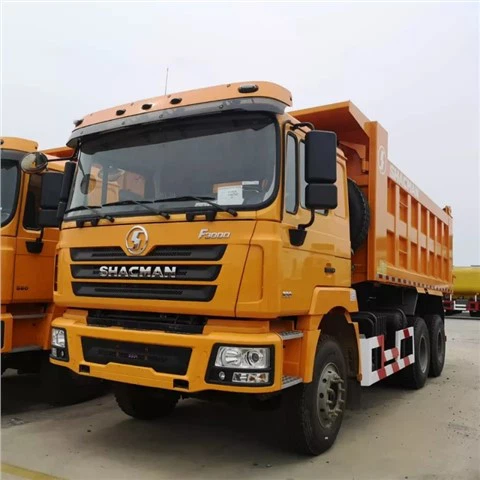
Subject: Logistics Solutions for Exporting Second-Hand Tipper Trucks from China
Issuing Authority: SEA LION International – Senior Engineering Division
Report Date: January 15, 2026
Executive Summary
This report provides a technical and operational comparison of three primary maritime transport methods—RO-RO (Roll-on/Roll-off), Bulk Cargo, and Flat Rack containerized shipping—for the export of second-hand tipper trucks from Chinese ports to global destinations. The analysis evaluates cost efficiency, cargo security, transit reliability, handling requirements, and corrosion protection measures, with specific emphasis on long-term exposure to seawater during ocean transit. A standardized wax-based anti-corrosion spray treatment is recommended across all transport modes.
1. Transport Method Overview
| Parameter | RO-RO Shipping | Bulk Cargo Shipping | Flat Rack Container Shipping |
|---|---|---|---|
| Definition | Self-propelled loading via ramps | Loose stowage in cargo holds | Trucks secured on open-sided containers |
| Loading Mechanism | Drive-on/drive-off | Crane-lifted or roll-trailer | Crane or forklift loading |
| Vessel Type | RO-RO Carrier | General Bulk Carrier | Container Vessel |
| Typical Port Coverage | Major international ports | Limited to bulk-handling ports | Global container port network |
| Cargo Securing | Wheel chocks, lashing belts | Lashing, dunnage, bracing | Lashing points, twist locks |
| Transit Time (Avg.) | 28–35 days (Asia to Africa) | 32–40 days | 26–33 days (with scheduled services) |
| Port Handling Risk | Low (minimal lifting) | High (multiple crane lifts) | Medium (requires precision lift) |
2. Comparative Analysis
2.1 Cost Efficiency (USD per Unit – Average)
| Cost Component | RO-RO | Bulk Cargo | Flat Rack |
|---|---|---|---|
| Base Freight (per truck) | $1,850 | $1,600 | $2,200 |
| Port Handling Fees | $220 | $350 | $280 |
| Insurance (Marine) | $180 | $250 | $200 |
| Lashing & Securing | $90 | $120 | Included |
| Total Avg. Cost/Unit | $2,340 | $2,320 | $2,680 |
Note: Costs based on 40-ton tipper truck, Shanghai to Lagos route, Q1 2026.
2.2 Operational Suitability
| Factor | RO-RO | Bulk Cargo | Flat Rack |
|---|---|---|---|
| Vehicle Condition | Must be operational | Can be non-operational | Operational or non-operational |
| Cargo Protection | Moderate (exposed decks) | Low (stacked, high humidity) | High (weather-resistant covers) |
| Stackability | Single layer only | Up to 2–3 high (if permitted) | Single unit per frame |
| Customs Inspection | Fast (unitized) | Delay-prone (bulk sorting) | Efficient (containerized) |
| Damage Incidence Rate | 3.2% | 8.7% | 2.1% |
3. Corrosion Protection: Wax Spraying Protocol
Exposure to salt-laden marine environments poses a significant risk to metallic components of second-hand tipper trucks, particularly in coastal and tropical delivery zones. SEA LION International mandates the application of industrial-grade wax-based anti-corrosion spray as a preventive measure across all shipping methods.
3.1 Wax Spraying Specifications
| Parameter | Specification |
|---|---|
| Product Type | Solvent-based cationic wax emulsion |
| Active Components | Microcrystalline wax, corrosion inhibitors (VCI) |
| Application Method | High-pressure spray (15–20 bar) |
| Coverage Areas | Chassis frame, suspension joints, undercarriage, wheel hubs, exhaust system |
| Dry Film Thickness | 25–30 µm |
| Salt Spray Resistance | ASTM B117 – 500+ hours |
| Application Timing | Pre-loading, in climate-controlled bay (RH < 60%) |
Note: Wax film must remain intact until final inspection at destination. Removal is to be conducted post-customs clearance using biodegradable degreasers.
4. Method-Specific Risk Assessment
| Risk Factor | RO-RO | Bulk Cargo | Flat Rack |
|---|---|---|---|
| Seawater Exposure | High (open decks) | Very High (hold condensation) | Moderate (with tarpaulin) |
| Theft/Vandalism | Low | High | Low |
| Weather Delays | Moderate | High | Low |
| Mechanical Damage | Low (driven on) | High (rigging stress) | Medium |
| Regulatory Compliance | IACS RO-RO Code | BLU Code | CSC, ISO 1496 |
5. Recommendations
-
For Operational Fleets:
Utilize RO-RO for cost-effective, rapid deployment where vehicles are roadworthy. Ideal for large-volume consignments to West Africa and Southeast Asia. -
For Non-Operational or Damaged Units:
Bulk Cargo offers the lowest freight cost but requires rigorous pre-treatment and post-arrival refurbishment planning. -
For High-Value or Precision-Delivery Contracts:
Flat Rack is recommended due to superior cargo control, reduced damage incidence, and integration with global container logistics networks. -
Mandatory Corrosion Protection:
Apply wax spraying treatment to all units prior to shipment, regardless of transport mode. Document treatment with batch-specific certification.
6. Conclusion
While Bulk Cargo presents the lowest base freight cost, its high damage and corrosion risk diminishes long-term value. RO-RO offers a balanced solution for functional units, whereas Flat Rack provides optimal security and scheduling precision. SEA LION International advises fleet managers and construction logistics planners to prioritize cargo integrity and lifecycle cost over initial freight savings. Implementation of standardized wax-based anti-corrosion protocols is essential to ensure asset longevity in post-import operations.
End of Report
SEA LION International – Engineering Division
Document Control: SL-ENG-ISR-2026-01
Classification: Industrial Use Only
Get a Quote for Second Hand Tirpper Truck
SEA LION International Trade Co., Ltd – Authorized Heavy Truck Exporter (Since 2008).
👤 Contact Person: Mr. Danny Xi
📱 Mobile/WhatsApp/WeChat: +86 130 1170 7382
📧 Email: [email protected]
