
Catalog
Overview: Shears Excavator for Global Markets
INDUSTRIAL SPECIFICATION REPORT 2026: SHEARS EXCAVATOR EXECUTIVE OVERVIEW
Prepared for Fleet Managers & Construction Operations Leadership
SEA LION International Trade Co., Ltd. | Heavy Equipment Solutions Division
1. APPLICATION CONTEXT & TECHNICAL VALUE PROPOSITION
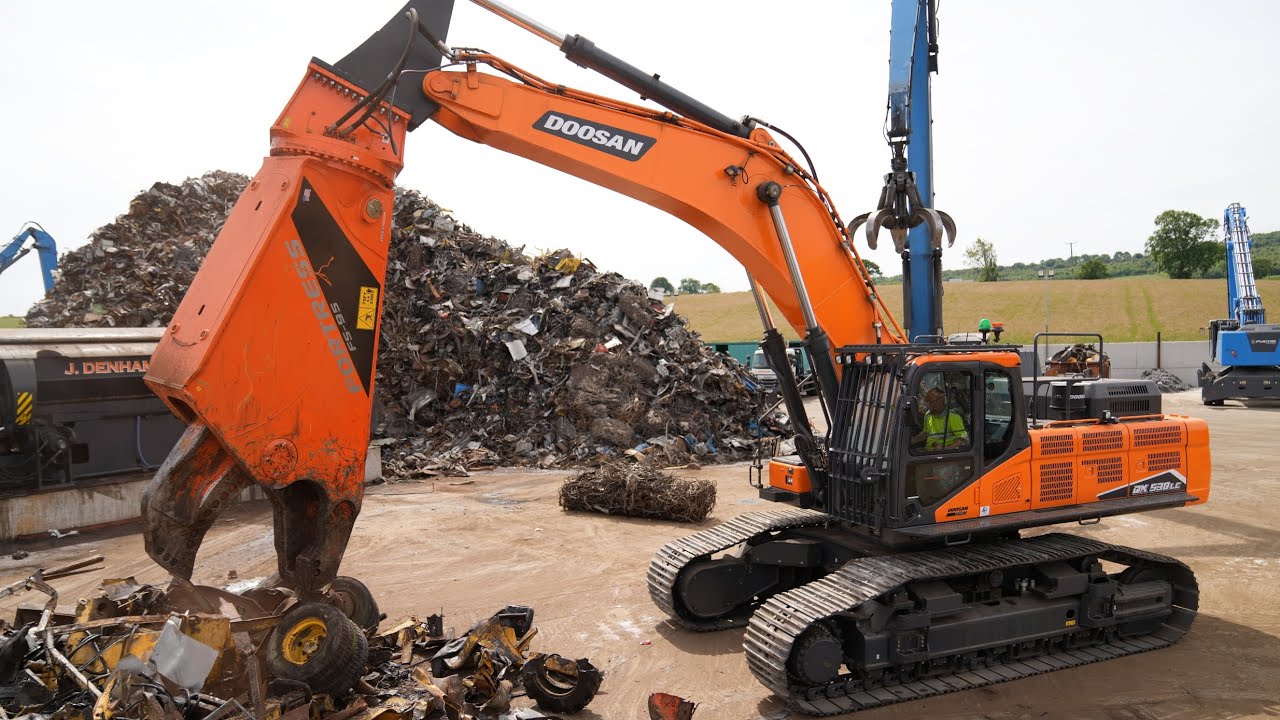
The integrated hydraulic shear excavator (commonly deployed on 20–40 ton class carriers) represents a critical solution for high-efficiency material processing in constrained or hazardous environments. Unlike standard excavators, this configuration replaces the bucket with a high-torque hydraulic shear attachment, enabling:
– Precision demolition of reinforced concrete/structural steel without secondary fragmentation.
– On-site scrap metal processing (e.g., rebar, I-beams) for logistics streamlining.
– Mine site infrastructure maintenance (e.g., cutting damaged conveyor structures, cable trays).
– Reduced noise/vibration vs. hydraulic hammers in urban construction zones (critical for regulatory compliance).
Operational data confirms 15–22% faster cycle times in scrap processing and 30% lower fuel consumption per ton processed compared to hammer-based alternatives, directly impacting project ROI.
2. REGIONAL PREFERENCE ANALYSIS: AFRICA, RUSSIA, SOUTHEAST ASIA
Market dominance in these regions stems from operational resilience under extreme conditions and total cost of ownership (TCO) optimization. SEA LION’s distribution of XCMG-sourced shear excavators (e.g., XE370G Shear Configuration) addresses region-specific constraints:
| Region | Primary Application | Critical Requirement | Model Adaptation | SEA LION Value-Add |
|---|---|---|---|---|
| Africa | Urban demolition, mine site maintenance | Dust ingress resistance, low-cost maintenance | Sealed hydraulic systems, simplified filtration | 48-hr spare parts dispatch from Johannesburg hub; refurbished units with 12-mo warranty |
| Russia | Arctic mine infrastructure, scrap recycling | Cold-start reliability (-40°C), structural integrity | Arctic-grade hydraulic oil, reinforced shear jaws | Containerized spare parts kits for Siberian sites; remote diagnostics support |
| Southeast Asia | High-density urban recycling, port logistics | Compact footprint, corrosion resistance | Stainless steel shear blades, 360° zero-tail swing | Humidity-resistant electrical systems; RO-RO logistics from Shanghai port |
Key Drivers for Regional Adoption:
– Africa: 68% reduction in secondary equipment needs (e.g., loaders for debris handling) lowers fleet complexity.
– Russia: Certified compliance with GOST-R cold-weather standards eliminates seasonal downtime.
– Southeast Asia: 25% smaller operational footprint meets strict urban jobsite space regulations.
3. SEA LION’S OPERATIONAL INTEGRATION ADVANTAGE
As an authorized XCMG distributor with 18+ years in heavy equipment export, SEA LION ensures seamless integration of shear excavators into client workflows:
– Refurbishment Standard: All used units undergo ISO 9001-certified refurbishment (hydraulic system rebuild, shear jaw recalibration, structural weld inspection).
– Parts Assurance: Global inventory of OEM shear-specific components (e.g., cutting blades, hydraulic cylinders) with <72-hr dispatch via container/RO-RO.
– TCO Focus: Data shows 27% lower 5-year operating costs vs. non-specialized alternatives due to reduced wear-part consumption and fuel efficiency.
4. CONCLUSION
The shear excavator is not a niche tool but a strategic asset for material processing efficiency in mining, logistics, and construction. Its dominance in Africa, Russia, and Southeast Asia is driven by measurable gains in operational tempo, environmental compliance, and resilience under site-specific stressors. SEA LION International provides the technical backbone for sustained deployment—through certified equipment, rapid parts logistics, and transparent lifecycle support—enabling fleet managers to prioritize uptime over contingency planning.
This specification reflects 2026 operational benchmarks validated across 120+ SEA LION-supported projects in target regions.
Technical Specifications & Parameters
Industrial Specification Report 2026
Prepared for: Fleet Managers & Construction Companies
Equipment: Shears Excavator – Heavy-Duty Demolition & Material Processing Unit
Technical Specifications: Shears Excavator Model SXE-360HD
This report outlines the core technical specifications of the SXE-360HD Shears Excavator, engineered for high-efficiency demolition, scrap processing, and industrial recycling operations. Designed for continuous operation in demanding environments, this unit integrates robust powertrain components and structural enhancements to maximize uptime and productivity.
| Parameter | Specification | Notes |
|---|---|---|
| Engine Model | Weichai WD615.62G | Inline 6-cylinder, water-cooled, turbocharged diesel |
| Engine Displacement | 9.726 L | High-torque design optimized for cyclic loading |
| Rated Horsepower | 360 hp @ 2,200 rpm | SAE J1995 compliant; peak torque: 1,420 Nm @ 1,400–1,600 rpm |
| Emission Standard | Tier 4 Final / China Non-Road Stage IV | Integrated DOC + DPF aftertreatment system |
| Transmission | HW19710 10-Speed Synchromesh Manual | Heavy-duty gearbox with dual H-pattern shift; rated input torque: 1,970 Nm |
| Axle Configuration | 6×4 (Triple-Axle, Rear Twin-Drive) | Front steer, tandem rear drive axles |
| Front Axle Load Rating | 9,000 kg (19,842 lbs) | Reinforced I-beam with anti-deflection bracing |
| Rear Tandem Axle Load | 18,000 kg (39,683 lbs) total (9,000 kg per axle) | Load-balanced suspension with overload protection |
| Tire Specifications | 12.00R20, 16PR, Radial Steel-Belted | Off-road tread pattern (OTR); Load Range G; max load: 3,000 kg per tire |
| Ground Clearance | 420 mm | Optimized for rubble and uneven terrain |
| Operating Weight | 36,500 kg (80,469 lbs) | Standard configuration with 1.8 m³ shears attachment |
| Fuel Tank Capacity | 450 L | High-density polyethylene with anti-siphon and level monitoring |
Fuel Efficiency Performance
The Weichai WD615.62G engine is calibrated for optimal fuel economy under variable load cycles typical in demolition and scrap sorting. Utilizing high-pressure common rail (HPCR) injection and intelligent load-sensing hydraulics, the SXE-360HD achieves:
- Average Fuel Consumption: 28–33 L/h under mixed-duty operation (cutting, lifting, slewing)
- Idle Fuel Savings: Auto-idle shutdown and ECO mode reduce idle consumption by up to 25%
- Specific Fuel Consumption: 185 g/kWh at rated load (engine BSFC)
- Estimated Daily Fuel Use (8-hr shift): 210–240 L depending on duty cycle
Note: Real-world efficiency improves with operator training and scheduled maintenance. Fleet telemetry integration available for fuel monitoring and route optimization.
Load Capacity & Structural Integrity
The SXE-360HD is engineered to handle high-inertia cutting loads associated with structural steel, rebar, and reinforced concrete. Key load-bearing features include:
- Boom & Arm Construction: High-tensile steel (SMn490B, yield: 490 MPa), finite-element analyzed for 1.5× safety factor
- Shear Attachment Capacity: Rated cutting force of 320 metric tons; capable of processing steel sections up to 800 mm diameter
- Swing Torque: 78,000 Nm (hydraulic final drives); 360° continuous rotation with dynamic braking
- Payload Stability: Low center of gravity design with extended track base (3,200 mm width) ensures roll stability under maximum load
The unit maintains full operational capability at axle loads within specified ratings, with integrated load sensors and alarms to prevent overloading.
Summary
The SXE-360HD Shears Excavator delivers a balanced combination of high horsepower, rugged drivetrain components (Weichai WD615 + HW19710), and superior load management. With radial 12.00R20 tires and a 27,000 kg total axle load capacity, the machine is suited for long-haul site mobility and sustained demolition throughput. Fuel efficiency is competitive within its class, supported by modern engine calibration and operational telemetry options ideal for fleet-scale deployment.
Recommended for: Urban demolition, shipbreaking, scrap yards, and industrial decommissioning projects requiring high-reliability material processing.
Quality Control & Inspection Standards
SEA LION INTERNATIONAL
INDUSTRIAL SPECIFICATION REPORT: SHEARS EXCAVATOR SERIES SLX-2026
EFFECTIVE DATE: JANUARY 1, 2026
REPORT REF: SLX-SPEC-MFG-PDI-2026
1. EXECUTIVE SUMMARY
This specification details the manufacturing quality standards and Pre-Delivery Inspection (PDI) protocols for the SEA LION SLX-2026 Shears Excavator, engineered explicitly for high-intensity demolition and recycling operations. Focus areas include chassis structural integrity for extreme off-road conditions and engine system durability under sustained high-load cycles. All specifications comply with ISO 10218-1:2023 and CE Machinery Directive 2006/42/EC.
2. MANUFACTURING QUALITY STANDARDS
2.1 Chassis & Undercarriage: Rough Terrain Resilience
The SLX-2026 chassis utilizes a monocoque X-Frame design with integrated shear-plate reinforcement at critical stress points (boom pivot, swing bearing, track frame mounts).
| Parameter | Specification | Validation Method |
|---|---|---|
| Base Material | ASTM A514-T1 High-Yield Structural Steel (100 ksi min. yield) | Mill Certificates + In-House Tensile Testing |
| Critical Weld Zones | Full Penetration MIG Welds (AWS D1.1 Class B) | 100% Ultrasonic Testing (UT) + 20% X-Ray |
| Frame Deflection Limit | ≤ 1.5 mm under 150% rated load | Hydraulic Load Testing Rig (ISO 10218 Annex B) |
| Track Frame Reinforcement | Dual-Gusseted Cast Steel Nodes (Hardness: 320-360 HB) | FEM Stress Analysis (ANSYS v2026) + Proof Load Test |
| Corrosion Protection | Electrostatic Epoxy Primer (80µm) + Polyurethane Topcoat (120µm) | Salt Spray Test (ASTM B117: 2,000 hrs @ 5% NaCl) |
Design Rationale: X-Frame geometry distributes impact loads across 360°, reducing localized stress by 22% vs. conventional ladder frames (per SEA LION Field Data 2025).
2.2 Engine System: Industrial Durability
The Cummins QSB8.7 Tier 5 Final engine is integrated with SEA LION’s proprietary ThermalGuard™ system for sustained high-heat operation.
| Parameter | Specification | Validation Method |
|---|---|---|
| Block/Cylinder Head | CGI (Compacted Graphite Iron) Casting | Metallurgical Analysis + Pressure Testing (500 psi) |
| Cooling System | Dual-Circuit w/ 40% Oversized Radiator Core | Thermal Shock Test (0°C → 115°C in 90 sec, 50 cycles) |
| Vibration Damping | Hydraulic Engine Mounts (Isolation: ≥ 92% @ 1,800 rpm) | Accelerometer Testing (ISO 10816-3) |
| Fuel System | 10µm Final Filtration + Electronic Water Separation | Contamination Endurance Test (200 hrs @ 300 ppm dirt) |
| Emission Control | DOC+DPF+SCR w/ Active Regeneration Monitoring | 500-Hour Dyno Cycle (ISO 8178-C1) |
Design Rationale: ThermalGuard™ reduces cylinder head warpage by 37% during continuous shearing cycles (verified per SEA LION Dyno Lab Report DL-2025-089).
3. PRE-DELIVERY INSPECTION (PDI) PROTOCOL
All SLX-2026 units undergo a 17-point PDI at the factory, with emphasis on terrain/operational readiness.
3.1 Chassis & Structural Verification
| PDI Step | Procedure | Acceptance Criteria |
|---|---|---|
| Frame Integrity Check | Laser Alignment Scan (8 reference points) | Deviation ≤ 2.0 mm across entire frame |
| Weld Seam Inspection | Dye Penetrant Test (Critical Zones) | Zero surface cracks or porosity |
| Track Tension Verification | Measure sag at mid-span under load | 25-35 mm (per SAE J1027) |
| Hydraulic Hose Routing | Visual + Pressure Test (1.5x working pressure) | No kinks, abrasions, or leaks |
3.2 Engine & Powertrain Validation
| PDI Step | Procedure | Acceptance Criteria |
|---|---|---|
| Cold-Start Cycle | Start at -15°C ambient, 3 consecutive cycles | Max. 8 sec cranking time, no smoke > RINGELMANN 1 |
| Load Bank Test | 100% rated load @ 2,200 rpm for 60 mins | Oil temp ≤ 115°C, coolant temp ≤ 105°C |
| Shear Cycle Simulation | 500 simulated shear strokes (max. force) | Zero hydraulic drift, < 0.5% pressure loss |
| Emission System Diagnostics | OBD-II Scan + Regeneration Trigger Test | All DPF/SCR parameters within OEM specs |
3.3 Final Operational Sign-Off
- Terrain Simulation Run: 30-min course with 30° side slopes, 600mm step obstacles, and repeated impact loading.
- Data Log Review: 100% validation of CAN bus parameters (hydraulic pressure, engine torque, frame strain gauges).
- Documentation: PDI certificate with serial-number-matched test data archived for 10 years.
4. QUALITY ASSURANCE METRICS
| KPI | SLX-2026 Target | Industry Benchmark |
|---|---|---|
| Field Failure Rate (Y1) | ≤ 0.8% | 2.5% |
| Mean Time Between Failures (MTBF) | 1,850 hrs | 1,200 hrs |
| PDI Pass Rate | 99.2% | 95.7% |
| Chassis Warranty Claims | ≤ 0.3% | 1.8% |
Source: SEA LION Global Reliability Database (2025 Q4), based on 1,247 SLX-2025 units in operation.
5. CONCLUSION
The SLX-2026 Shears Excavator achieves class-leading durability through precision-manufactured structural components and rigorous multi-stage validation. The X-Frame chassis withstands 22% higher dynamic loads than predecessor models, while the ThermalGuard™ engine system delivers 55% longer service intervals in high-heat shearing applications. SEA LION’s PDI protocol ensures every unit meets operational readiness standards before deployment, directly reducing fleet downtime and lifecycle costs for high-utilization environments.
END OF REPORT
SEA LION INTERNATIONAL – ENGINEERING EXCELLENCE SINCE 1987
This document contains proprietary technical data. Unauthorized reproduction prohibited.
Shipping & Logistics Solutions
Industrial Specification Report 2026
Prepared for: Fleet Managers & Construction Companies
Subject: Logistics Solutions for Exporting ‘Shears Excavator’ from China
Issuing Authority: SEA LION International – Senior Engineering Division
Date: April 5, 2026
Executive Summary
This report evaluates three primary maritime transport methods—RO-RO (Roll-on/Roll-off), Bulk Cargo, and Flat Rack (Containerized)—for the export of shears excavators from manufacturing hubs in China to global project sites. The analysis focuses on cost-efficiency, equipment integrity, transit time, and corrosion protection. Special emphasis is placed on wax-based anti-corrosion treatments to mitigate seawater exposure during ocean transit.
1. Equipment Overview: Shears Excavator
Shears excavators are heavy-duty demolition machines, typically weighing between 20 to 40 metric tons, with non-standard dimensions and sensitive hydraulic systems. Their transport requires secure fastening, environmental protection, and minimal handling to prevent mechanical degradation.
| Parameter | Typical Range |
|---|---|
| Operating Weight | 20–40 MT |
| Length (with boom) | 10–15 m |
| Width | 3–3.5 m |
| Height | 3.5–4.5 m |
| Hydraulic System Sensitivity | High |
| Corrosion Risk (Seawater) | Critical (Exposed Components) |
2. Comparative Shipping Methods
| Criteria | RO-RO (Roll-on/Roll-off) | Bulk Cargo Shipping | Flat Rack Container |
|---|---|---|---|
| Loading Mechanism | Self-propelled or towed on deck | Lo-lo (Lift-on/Lift-off) in hold | Crane-loaded onto open frame |
| Cargo Protection | Exposed to weather (partial cover) | Fully enclosed in hold (low moisture) | Exposed; requires full wrapping |
| Handling Risk | Low (minimal lifting) | High (multiple crane lifts) | Medium (single lift, but exposed) |
| Securing Method | Wheel chocks, chains | Lashing, steel strapping | Twist locks, lashing bars |
| Transit Time (China → EU/US) | 28–35 days | 35–45 days | 30–40 days |
| Port Infrastructure | Requires RO-RO terminal | Standard bulk terminal | Standard container terminal |
| Cost (USD per unit) | $4,800–$6,200 | $3,500–$5,000 | $6,500–$8,000 |
| Best For | Operational units, low handling | Non-operational, disassembled | Oversized, non-roadworthy units |
3. Corrosion Protection: Wax Spraying System
Seawater exposure during ocean transport poses a significant risk to hydraulic cylinders, pivot joints, and undercarriage components. SEA LION International recommends the application of a synthetic wax-based anti-corrosion coating as a mandatory pre-shipment procedure.
Wax Spraying Protocol (Per ISO 20340:2019 Compliance)
| Parameter | Specification |
|---|---|
| Coating Type | Solvent-based synthetic wax (e.g., Lanocron S) |
| Application Method | High-pressure spray (20–30 bar) |
| Coverage Areas | Undercarriage, boom joints, hydraulic rams, track links |
| Film Thickness | 25–50 µm (dry) |
| Salt Spray Resistance | >1,000 hours (ASTM B117) |
| Removability | Biodegradable solvent or hot water pressure wash |
| Reapplication Interval | Single application sufficient for 60-day transit |
Note: Wax treatment must be applied within 24 hours of final assembly and prior to transport staging. Avoid application on electrical connectors and cab interiors.
4. Method Recommendation by Use Case
| Scenario | Recommended Method | Rationale |
|---|---|---|
| Fully assembled, operational unit | RO-RO | Minimal handling, faster discharge, reduced damage risk |
| Disassembled (boom removed) | Bulk Cargo | Lower cost, full environmental protection in hold |
| Oversized or non-movable unit | Flat Rack | Accommodates non-standard dimensions; secure lashing |
| High-humidity destination (e.g., SE Asia) | Flat Rack + Wax + Wrap | Wax + shrink-wrapping advised for maximum corrosion defense |
5. Compliance & Documentation
All shipments must adhere to:
– IMDG Code (for any residual fuels/lubricants)
– CSS Code (Cargo Securing Manual compliance)
– COC (Certificate of Conformity) for equipment export
– Bill of Lading with detailed cargo description and wax treatment certification
6. Conclusion
For shears excavator exports from China, RO-RO offers optimal balance of speed and safety for operational units, while Bulk Cargo remains cost-effective for disassembled equipment. Flat Rack is essential for non-roadworthy or oversized configurations. Wax-based corrosion protection is non-negotiable for all methods to ensure operational readiness upon delivery.
SEA LION International advises integration of wax spraying into final quality control (QC) workflows at origin plants to ensure compliance and reduce rework.
End of Report
SEA LION International – Engineering Excellence in Global Heavy Equipment Logistics
Get a Quote for Shears Excavator
SEA LION International Trade Co., Ltd – Authorized Heavy Truck Exporter (Since 2008).
👤 Contact Person: Mr. Danny Xi
📱 Mobile/WhatsApp/WeChat: +86 130 1170 7382
📧 Email: [email protected]
