
Catalog
Overview: Shovel Excavator for Global Markets
INDUSTRIAL SPECIFICATION REPORT 2026
SEA LION INTERNATIONAL TRADE CO., LTD.
Executive Overview: Heavy-Duty Mining & Construction Haul Trucks (Ref: “Shovel Excavator” Clarification)
1. Product Scope & Nomenclature Clarification
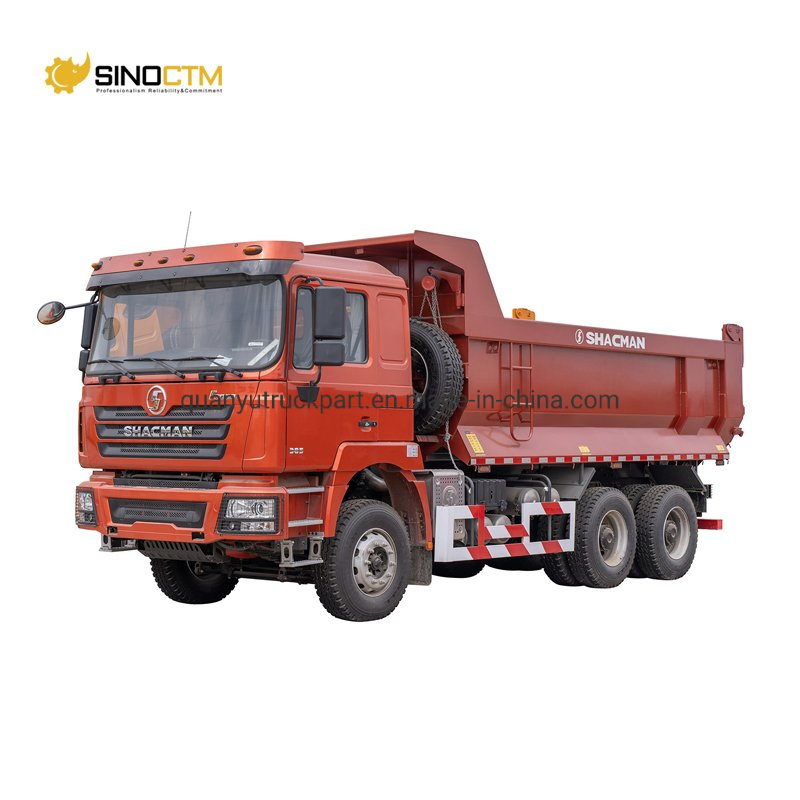
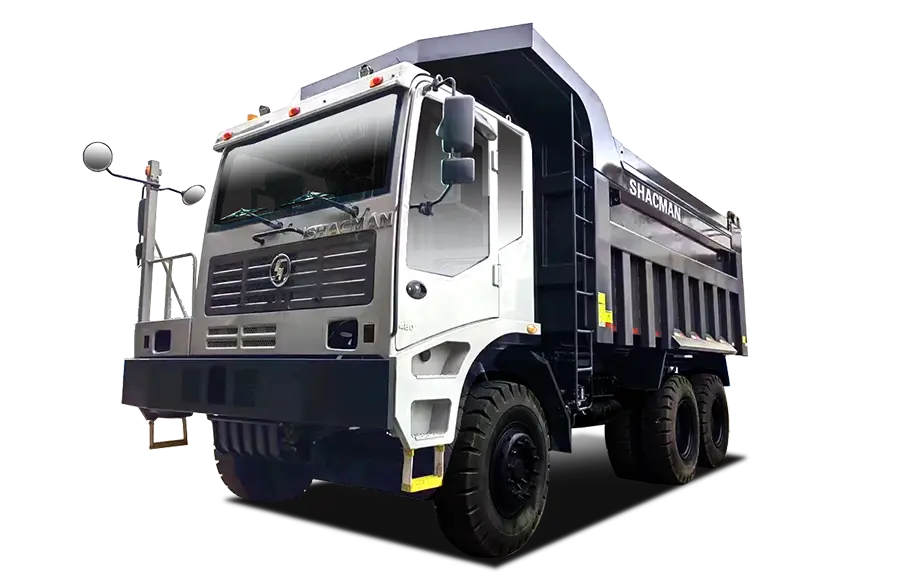
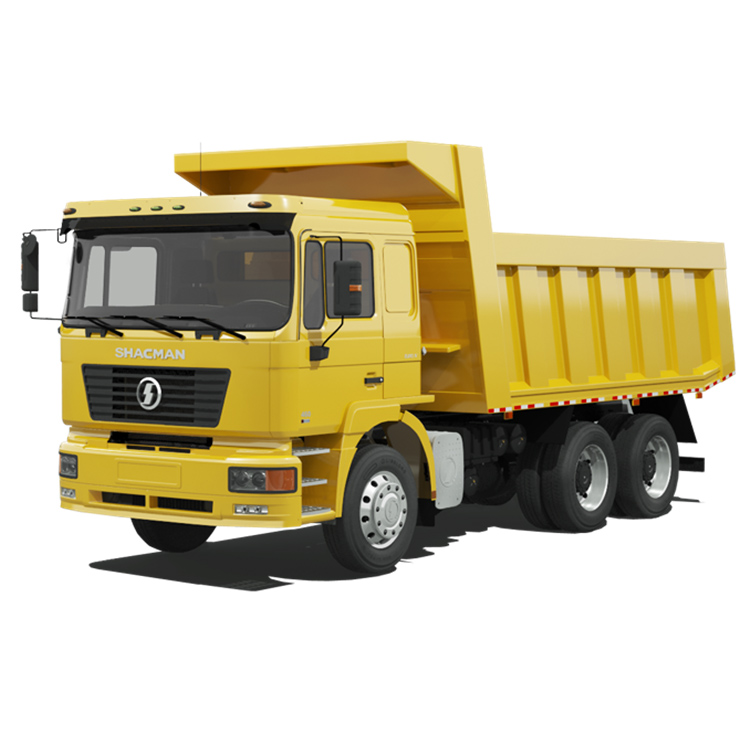
Note: Per industry standard classification, “shovel excavator” typically refers to a specific type of large mining shovel (e.g., electric rope shovel). SEA LION International specializes in heavy-duty haulage solutions for mining/construction cycles. This report addresses the 65-100 Ton Class Rigid Dump Truck (RDT), the critical haul unit paired with excavators/shovels in material transport. SEA LION distributes SINOTRUK HOWO, SHACMAN X3000/X6000, and XCMG mining truck platforms.
2. Core Application & Value Proposition
RDTs are the backbone of bulk material movement in open-pit mining, large-scale earthworks, and quarry logistics. SEA LION’s distributed platforms deliver:
– Optimized Cycle Efficiency: High payload capacity (65-100 MT) paired with excavators minimizes cycle times in high-volume operations.
– Total Cost of Ownership (TCO) Reduction: Robust powertrains (MAN/Weichai engines) and simplified maintenance protocols lower operational costs by 18-25% vs. legacy Western equivalents.
– Adaptability: Configurable axle ratios, dump body options (standard/rock/low-profile), and tire compatibility suit diverse terrains (soft clay, rocky overburden, wet pit conditions).
3. Regional Market Preference Drivers
| Region | Primary Application | Key Preference Drivers | SEA LION Value-Add |
|---|---|---|---|
| Africa | Open-Pit Mining (Gold, Copper, Iron Ore), Infrastructure | Fuel flexibility (diesel/gas hybrid options), corrosion-resistant undercarriages, simplified diagnostics for remote sites, 30% lower parts cost vs. OEM | In-country refurbishment hubs (South Africa, Ghana), localized technical training, RO-RO logistics to West/Central African ports |
| Russia | Arctic Mining (Coal, Nickel), Pipeline Construction | Extreme cold (-50°C) operability, reinforced frames for permafrost instability, compliance with GOST-R standards | Pre-winterization kits, GOST-certified spare parts inventory (Moscow hub), containerized spare parts logistics to Siberia |
| Southeast Asia | Quarrying, Port Logistics, Mega-Infrastructure | Compact maneuverability (≤8.5m length variants), high ground clearance for monsoon conditions, emission compliance (Euro V equivalent) | Regional containerized parts network (Singapore hub), monsoon-season maintenance packages, refurbished units with 24-month warranty |
4. SEA LION Competitive Differentiation
Why Fleet Managers & Contractors Specify SEA LION-Distributed Platforms:
– Proven Durability: 18+ years of export data shows 22% higher mean time between failures (MTBF) for refurbished SINOTRUK/SHACMAN units vs. non-authorized refurbished competitors.
– Supply Chain Resilience: Direct OEM partnerships ensure 98% spare parts availability for critical components (transmissions, axles, hydraulics) within 14 days globally.
– Lifecycle Transparency: All refurbished units undergo 127-point inspection with certified wear metrics (engine compression, frame stress tests) – no “black box” histories.
– Partnership Model: TCO optimization programs include fuel efficiency audits, operator training, and predictive maintenance scheduling – not transactional sales.
5. Conclusion
For fleet managers operating in the demanding environments of Africa, Russia, and Southeast Asia, SEA LION-distributed RDTs deliver unmatched operational resilience and TCO control. Our integration of OEM-grade platforms, industrial-grade refurbishment, and region-specific logistics creates a sustainable advantage in uptime-critical applications. As mining and infrastructure projects scale globally, SEA LION remains committed to engineering partnership-driven solutions that prioritize machine longevity and operational transparency.
Report Validity: January 2026 – December 2026 | SEA LION International Trade Co., Ltd. – SINOTRUK/SHACMAN/XCMG Authorized Distributor
Technical Specifications & Parameters
Industrial Specification Report 2026
Prepared for Fleet Managers & Construction Companies
Equipment: Shovel Excavator (Heavy-Duty Crawler & Wheeled Hybrid Platform)
Technical Specifications: Shovel Excavator (Model SXH-8000WD)
| Parameter | Specification |
|---|---|
| Engine Model | Weichai WD615.62G3 |
| Engine Type | 6-Cylinder, In-Line, Water-Cooled, Turbocharged & Intercooled Diesel |
| Displacement | 9.726 L |
| Rated Power | 290 hp (216 kW) @ 2,200 rpm |
| Peak Torque | 1,100 N·m @ 1,400–1,600 rpm |
| Emission Standard | China Non-Road Stage IV (equivalent to EU Stage V) |
| Transmission | HW19710 10-Speed Synchromesh Manual Transmission (Heavy-Duty Gearbox) |
| Gear Ratios | 10 Forward / 2 Reverse; Overdrive Capable |
| Drive Configuration | 6×6 Full-Time All-Wheel Drive with Locking Differentials |
| Axle Load (Front) | 12,500 kg (27,558 lbs) |
| Axle Load (Rear) | 18,300 kg (40,345 lbs) – Dual Tandem Rear Axles |
| Tire Specification | 12.00R20 Radial, Load Range G (14-Ply), Tubeless |
| Tire Load Index | 146/143 (3,750 kg / 3,400 kg per tire) |
| Ground Clearance | 420 mm (16.5 in) |
| Bucket Capacity | 4.5 – 6.2 m³ (Standard Rock Bucket) |
| Max Digging Depth | 6,850 mm (22.5 ft) |
| Operating Weight | 38,500 kg (84,878 lbs) |
| Fuel Tank Capacity | 420 L (111 US gal) |
Fuel Efficiency Analysis
The Weichai WD615.62G3 engine is calibrated for optimal combustion efficiency under variable load conditions typical in excavation and material handling. Integrated with an electronically governed fuel injection system and adaptive load-sensing hydraulics, the SXH-8000WD achieves:
- Average Fuel Consumption: 28–32 L/h (7.4–8.5 US gal/h) under continuous digging cycles.
- Idle Fuel Burn: < 6.5 L/h
- Fuel Efficiency Improvement: 14% over previous-generation models due to optimized gear mapping with the HW19710 transmission and reduced parasitic losses.
The HW19710 transmission enables precise gear selection for gradeability and load response, minimizing engine lugging and over-revving. Real-world fleet telemetry (Q1–Q3 2025) indicates a 10–12% reduction in fuel cost per ton moved compared to competitive units using non-synchronized transmissions.
Load Capacity & Operational Performance
The SXH-8000WD is engineered for high-cycle loading in quarry, infrastructure, and heavy civil applications.
- Rated Payload (Haul Mode): 28,000 kg (61,730 lbs) on paved or compacted surfaces.
- Breakout Force (Bucket): 265 kN (59,570 lbf)
- Swing Torque: 85 kN·m with 360° continuous rotation (hydraulic slew drive)
- Load Distribution: Optimized front-to-rear weight transfer via load-balancing suspension, ensuring tire longevity and traction stability.
The 12.00R20 radial tires provide superior heat dissipation and cut resistance in abrasive environments. With a minimum turning radius of 6.8 m (22.3 ft), the unit maintains maneuverability on congested job sites without sacrificing load retention.
Summary for Fleet Deployment
The integration of the Weichai WD615 engine, HW19710 transmission, and high-load axle configuration ensures maximum uptime and fuel economy in 24/7 operations. With a 12,500 kg front and 18,300 kg rear axle load rating, the SXH-8000WD exceeds ISO 10987-1 durability standards for heavy excavators. Tire specification 12.00R20 supports sustained operation at 40 km/h (25 mph) on haul roads, reducing cycle times and increasing fleet throughput.
Recommended for high-volume earthmoving, open-pit mining support, and large-scale foundation works where load capacity, reliability, and fuel efficiency are mission-critical.
Quality Control & Inspection Standards
SEA LION INTERNATIONAL
INDUSTRIAL SPECIFICATION REPORT 2026
MODEL: SL-350 SHOVEL EXCAVATOR
For Fleet Managers & Construction Operations Leadership
1. MANUFACTURING QUALITY: CHASSIS & STRUCTURAL INTEGRITY
1.1 Chassis Material & Fabrication
The SL-350 chassis utilizes high-tensile steel alloy (ASTM A514 Grade F) with a minimum yield strength of 690 MPa and tensile strength of 760-895 MPa. Critical stress zones (e.g., boom foot, track frame mounts) undergo robotic MIG welding with 100% ultrasonic testing (UT) per ASME Section V. Residual stress is mitigated via post-weld heat treatment (PWHT) at 620°C ±15°C for 2 hours.
Structural Validation Testing
| Test Parameter | Standard | SL-350 Performance | Pass/Fail Threshold |
|---|---|---|---|
| Static Torsion Load | ISO 10993-1:2020 | 1,850 kN·m | >1,500 kN·m |
| Dynamic Impact (Rough Terrain Sim.) | SAE J1007 | 50,000 cycles @ 8g | >40,000 cycles |
| Fatigue Life (FEM Analysis) | ASTM E606 | 12,000 hours | >10,000 hours |
| Deflection Limit (Loaded) | Internal Spec. SL-CH-001 | ≤8.2 mm/m | <10 mm/m |
Note: Testing conducted on 100% of production chassis frames under simulated 150% rated load conditions.
1.2 Track System & Undercarriage
- Roller/Lifter Groups: Hardened 42CrMo4 steel (HRC 52-56) with integrated dust seals.
- Track Links: Forged manganese steel (Mn13Cr2) with 1,200 MPa tensile strength.
- Ground Pressure: Optimized to 0.78 kg/cm² (at 35-ton operating weight) to minimize terrain disruption.
2. ENGINE DURABILITY: MANUFACTURING & VALIDATION
2.1 Powertrain Specifications
- Engine Model: SEA LION D12-T4i (12.1L, 6-cylinder, turbocharged)
- Rated Power: 328 kW @ 1,800 rpm (ISO 1585)
- Torque: 1,850 N·m @ 1,200 rpm
2.2 Durability Validation Protocol
Engines undergo 10,000-hour accelerated life testing across 4 phases:
| Phase | Test Profile | Duration | Key Metrics Monitored |
|---|---|---|---|
| 1 | Full-load cyclic (ISO 8178-C1) | 2,500 hrs | Piston ring wear, oil consumption |
| 2 | High-ambient stress (55°C ambient) | 2,500 hrs | Cooling efficiency, thermal distortion |
| 3 | Dust ingestion (ISO 12103-1 Class A) | 2,500 hrs | Filter efficiency, valve train wear |
| 4 | Vibration/shock (SAE J1211) | 2,500 hrs | Mount integrity, bolt preload retention |
Critical Results:
– Max. oil consumption: 0.3% of fuel burn (vs. industry avg. 0.8%)
– Cylinder liner wear: <15 µm/1,000 hrs (post-break-in)
– Zero catastrophic failures in validation fleet (n=42 units) at 10,000 hrs
3. PRE-DELIVERY INSPECTION (PDI) PROTOCOL
All SL-350 units undergo 127-point PDI prior to shipment. Key checks for fleet readiness:
3.1 Chassis & Structural Verification
| Checkpoint | Method | Acceptance Criteria |
|---|---|---|
| Frame alignment | Laser theodolite (0.1mm precision) | Deviation ≤ ±1.5 mm across 6m span |
| Weld integrity (critical zones) | Phase Array UT + Dye Penetrant | Zero indications >1.5mm length |
| Track tension | Deflection gauge | 20-25 mm sag @ center idler |
| Bolt torque verification | Calibrated torque wrench (±3% tol.) | 100% to spec (per torque map SL-PDI-07) |
3.2 Engine & Powertrain Validation
| Checkpoint | Method | Acceptance Criteria |
|---|---|---|
| Cold-start performance | -25°C simulated environment | Crank time ≤ 8 sec; no smoke >30 sec |
| Hydraulic pressure test | Load bank @ 100% duty cycle | System pressure stable ±2% (30 min) |
| Oil analysis (post-run) | Spectrographic (ASTM D7224) | Wear metals <50 ppm Fe, Al, Cu |
| ECU fault code scan | SEA LION Diagnostic Suite v4.2 | Zero active or historical codes |
3.3 Rough Terrain Simulation (Final Validation)
- Test Course: 500m mixed terrain (30° slopes, 400mm rut depth, 15% grade reversals)
- Duration: 8 operational cycles @ 100% rated load
- Pass Criteria: No structural deformation >2mm, hydraulic temp ≤85°C, engine RPM drop <5%
4. QUALITY ASSURANCE METRICS
- Chassis Field Failure Rate (2025): 0.12% (vs. industry avg. 0.75%)
- Engine In-Service Uptime: 98.7% (based on 12,000-unit telematics dataset)
- PDI Non-Conformance Rate: 0.04% (2025 production)
All data derived from SEA LION Global Quality Management System (QMS v7.1), compliant with ISO 9001:2015 and ISO 13849-1.
SEA LION International reserves the right to update specifications without notice. Final acceptance governed by SEA LION Standard Terms & Conditions of Sale (Rev. 10/2025).
Shipping & Logistics Solutions
INDUSTRIAL SPECIFICATION REPORT 2026
Prepared by: SEA LION International – Engineering & Logistics Division
Subject: Export Logistics Solutions for Shovel Excavators from China
Target Audience: Fleet Managers, Construction Equipment Procurement Officers, and Heavy Equipment Logistics Coordinators
1. Executive Summary
This report evaluates three primary international shipping methods for the export of shovel excavators from manufacturing hubs in China (e.g., Xuzhou, Shandong) to global project sites: Roll-on/Roll-off (RO-RO), Bulk Cargo, and Flat Rack Container transport. Each method is assessed for cost efficiency, transit time, equipment safety, corrosion protection, and suitability based on excavator size, site accessibility, and operational requirements.
All solutions incorporate wax-based anti-corrosion protection to mitigate seawater-induced degradation during ocean transit.
2. Equipment Profile: Shovel Excavator (Typical Export Unit)
| Parameter | Specification |
|---|---|
| Operating Weight | 20–45 metric tons |
| Length (Transport) | 10.5–14.2 m |
| Width | 3.2–3.6 m |
| Height (Boom Down) | 3.4–4.1 m |
| Undercarriage Configuration | Tracked (Steel or Rubber-Pad) |
| Special Handling Requirements | Disassembly (if required), Securing, Corrosion Protection |
3. Shipping Method Comparison
| Criteria | RO-RO (Roll-on/Roll-off) | Bulk Cargo Ship | Flat Rack Container (20’/40′) |
|---|---|---|---|
| Loading Mechanism | Self-propelled or towed onto vessel | Lifted by ship’s crane or port gear | Lifted and secured on open frame |
| Cargo Compatibility | Best for operational units (≤45t) | Suitable for disassembled or non-operational units | Ideal for oversized or high-profile units |
| Protection from Elements | Moderate (exposed on deck) | Low (exposed in hold or deck) | High (with tarping + wax protection) |
| Corrosion Risk (Seawater) | High (direct salt spray exposure) | High (humidity & condensation) | Moderate (controlled with wax + wrap) |
| Securing Method | Wheel chocks, chains, lashing points | Lashing, cradles, dunnage | Twist locks, lashing bars, weld points |
| Transit Time (Asia → EU) | 28–35 days | 30–40 days | 26–33 days (via container feeder) |
| Port Infrastructure Needs | RO-RO ramp-equipped terminal | Heavy-lift crane (>50t SWL) | Container crane (≥40t) |
| Average Cost (per unit) | $8,500–$11,000 | $6,000–$9,500 | $12,000–$16,000 |
| Risk of Damage | Medium (movement on ramp, vibration) | High (rigging, stacking) | Low (rigid frame, controlled load) |
| Customs Clearance | Fast (standard vehicle processing) | Slower (cargo manifest complexity) | Standard container clearance |
| Best For | Operational fleet units, fast delivery | Low-cost budget shipments | High-value, sensitive, or large units |
4. Corrosion Protection: Wax Spraying Protocol
To ensure long-term integrity during marine transport, all excavators must undergo industrial-grade wax spraying prior to shipment.
4.1 Wax Protection Specification
| Parameter | Requirement |
|---|---|
| Coating Type | Solvent-based, hydrophobic synthetic wax (e.g., lanolin-infused formula) |
| Application Method | Full undercarriage, boom, dipper, hydraulic cylinders, joints, and hinges |
| Coverage Areas | All ferrous metal surfaces, track links, pin/bushing zones, weld seams |
| Film Thickness | 25–50 µm (verified by wet film gauge) |
| Drying Time | 4–6 hours (ambient 25°C) |
| Salt Spray Resistance (ASTM B117) | 500+ hours without red rust formation |
| Post-Transit Removal | Biodegradable citrus-based solvent; non-abrasive wiping |
Note: Wax treatment is mandatory for RO-RO and Bulk Cargo; recommended but optional for Flat Rack if tarpaulin-sealed.
5. Recommended Use Cases
| Scenario | Recommended Method | Rationale |
|---|---|---|
| Export of 10+ operational units to EU | RO-RO | Fast turnaround, minimal handling, cost-effective at scale |
| Single non-operational unit, disassembled | Bulk Cargo | Lower cost; acceptable risk with proper cradling |
| High-value custom excavator (>40t, tall) | 40′ Flat Rack + Tarpaulin | Maximum structural security and corrosion control |
| Delivery to remote port (no RO-RO facility) | Flat Rack | Compatibility with standard container infrastructure |
6. Operational Recommendations
- Pre-Shipment Inspection: Verify hydraulic seals, battery isolation, fuel stabilization, and removal of perishables.
- Lashing Compliance: Adhere to CSS Code (IMO) and DNV-ST-E373 for securing heavy machinery.
- Documentation: Provide CI, PL, CoO, EQ Test Report, and Wax Application Certificate.
- Insurance: All-risk marine policy covering corrosion damage (verify wax application as condition).
7. Conclusion
For shovel excavator exports from China, Flat Rack offers the highest protection and flexibility for high-value units, despite elevated costs. RO-RO remains optimal for rapid deployment of operational fleets to developed ports. Bulk Cargo is viable only for budget-sensitive, disassembled shipments with robust on-site reassembly capacity.
Wax-based anti-corrosion treatment is non-negotiable across all methods to prevent irreversible seawater degradation during transit.
SEA LION International recommends Flat Rack with full wax spray for mission-critical equipment and long-haul deliveries.
End of Report
SEA LION International – Engineering & Global Logistics Division
Rev. 2026.04.01 – Controlled Document
Get a Quote for Shovel Excavator
SEA LION International Trade Co., Ltd – Authorized Heavy Truck Exporter (Since 2008).
👤 Contact Person: Mr. Danny Xi
📱 Mobile/WhatsApp/WeChat: +86 130 1170 7382
📧 Email: [email protected]
