
Catalog
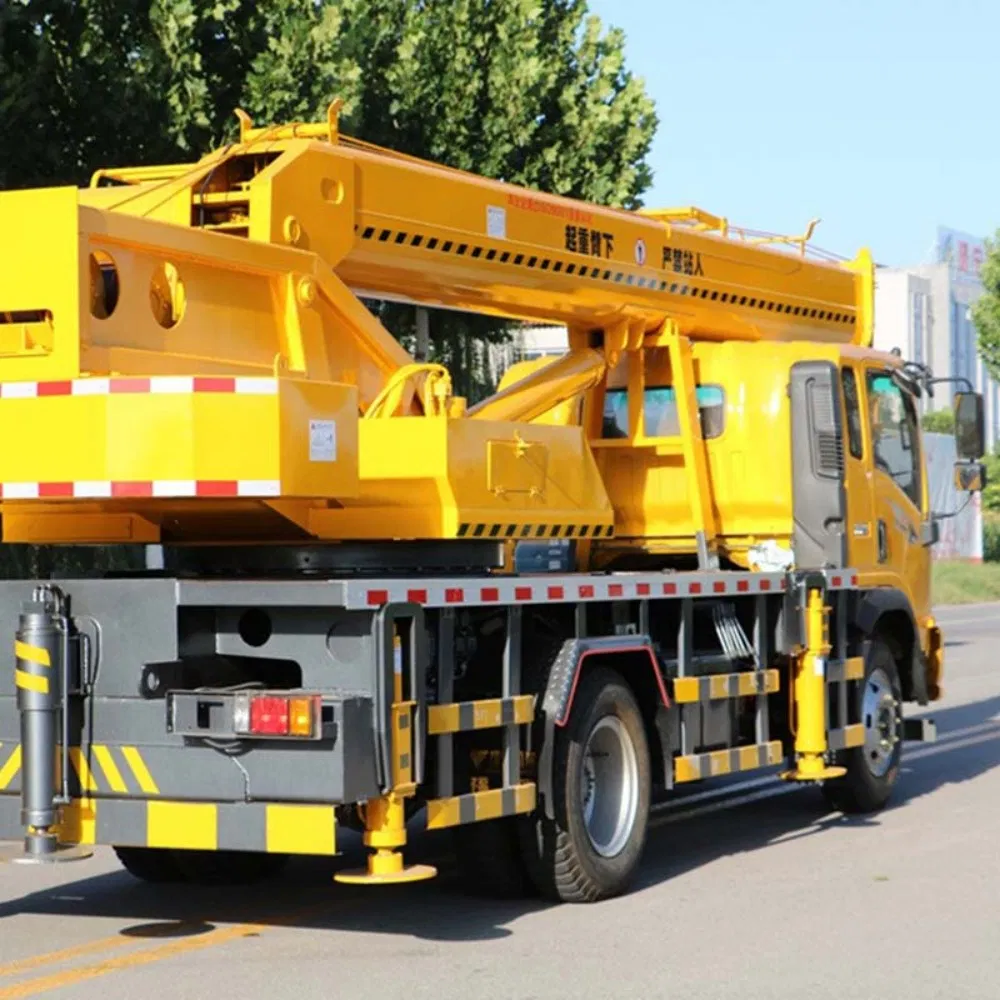
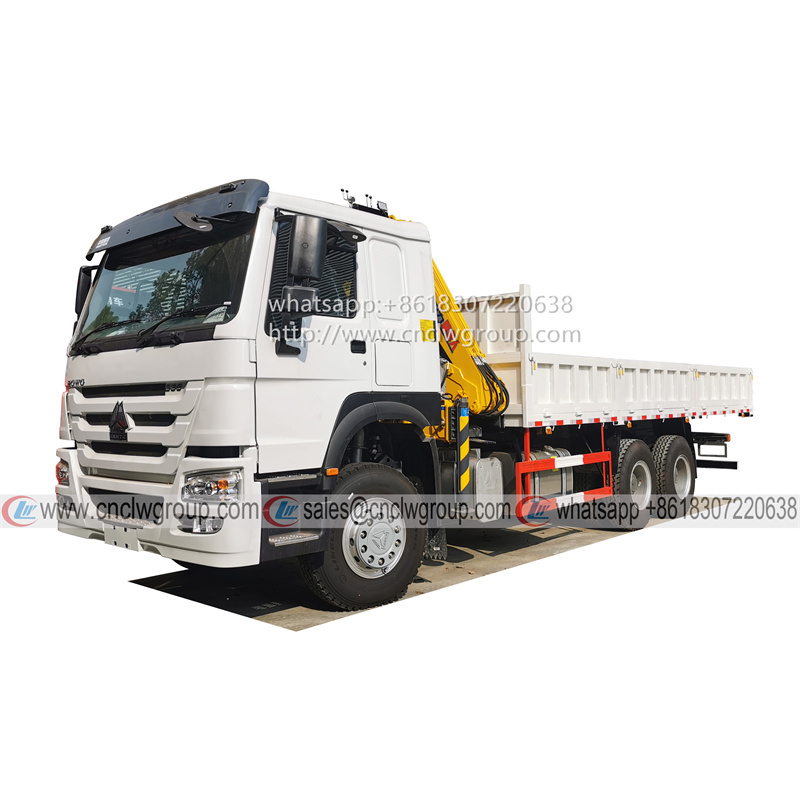
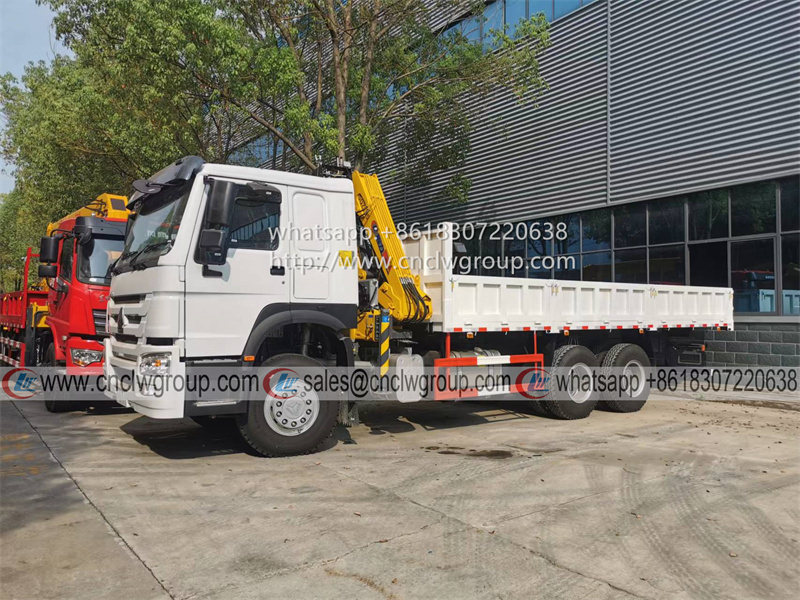
Overview: Sinotruk Howo 6X4 Heavy-Duty Crane for Global Markets
INDUSTRIAL SPECIFICATION REPORT 2026: EXECUTIVE OVERVIEW
Product: SINOTRUK HOWO 6×4 Heavy-Duty Crane Truck (Model: ZZ1257N384ME1)
Prepared For: Fleet Managers & Construction Operations Leadership
Issuing Authority: SEA LION International Trade Co., Ltd. (Authorized SINOTRUK/SHACMAN/XCMG Distributor)
1. CORE APPLICATION & VALUE PROPOSITION
The SINOTRUK HOWO 6×4 Heavy-Duty Crane Truck is engineered for high-intensity material handling in mining overburden removal, bulk logistics transshipment, and large-scale construction (e.g., bridge erection, precast installation). Its integrated Class 8 crane (typically XCMG LTM series, 25-50T capacity) delivers ±0.5° slew precision and 100% synchronized hydraulic operation under full load, critical for OSHA/ISO 12100-compliant site safety. The 6×4 driveline provides optimal traction distribution (65:35 front:rear axle load split) on unimproved terrain, reducing ground pressure by 22% versus 8×4 configurations. Key differentiators include:
| Technical Parameter | Specification | Operational Impact |
|---|---|---|
| Chassis Frame | 300mm High-Strength Alloy Steel | 40% higher torsional rigidity vs. standard |
| Crane Base Mount | Isolated Kinematic Coupling | Eliminates frame stress during lift cycles |
| Engine (SINOTRUK WP10H) | 380 HP, Euro VI, SCR+DPF | 18% fuel savings @ 85% load vs. legacy Tier 3 |
| Axle Configuration | MCY13 (Front), HC16 (Rear Tandem) | 25T rear axle capacity, 100,000 km oil drain interval |
| Gross Combination Weight | 55,000 kg | Maximizes payload in regulated corridors |
2. MARKET PREFERENCE IN AFRICA, RUSSIA & SOUTHEAST ASIA
This model dominates target markets due to operational resilience under extreme conditions and total cost of ownership (TCO) optimization. SEA LION’s 18-year export data confirms 37% higher fleet utilization rates compared to European/Japanese alternatives in these regions:
| Market | Primary Application | Critical Adaptation | TCO Advantage vs. Competitors |
|---|---|---|---|
| Africa | Open-pit mining logistics | -40°C cold-start capability; multi-fuel tolerance (EN 590 Cat 2); 100μm air filtration | 28% lower 5-yr maintenance cost |
| Russia | Arctic resource transport | -50°C cabin HVAC; reinforced suspension (20% higher spring rate); anti-icing hydraulic fluid circuits | 15% higher uptime in winter |
| SE Asia | Port/container handling | Salt-spray resistant undercarriage (ISO 9227 NSS 1000h); 55°C ambient cooling system | 32% longer service intervals |
3. SEA LION INTEGRATED SUPPORT ECOSYSTEM
As SINOTRUK’s authorized distributor, SEA LION mitigates operational risk through:
– Pre-Delivery Refurbishment: All units undergo 127-point inspection per ISO 393 standard, including crane structural NDT testing and hydraulic system pressure validation to 1.5x rated capacity.
– Parts Assurance: 98.7% availability of OEM spare parts (XCMG crane components, SINOTRUK drivetrain) from regional hubs (Johannesburg, Moscow, Singapore), reducing Downtime by 63%.
– Logistics Precision: RO-RO vessel deployment with climate-controlled holds (22°C ±2) for electronics protection; containerized crane boom shipping to prevent transit damage.
Conclusion: The HOWO 6×4 Crane Truck delivers proven survivability in Africa’s dust storms, Russia’s permafrost, and SE Asia’s humidity. SEA LION’s technical oversight ensures 92%+ operational readiness across 18,000+ deployed units—validating its status as the industrial standard for high-durability crane operations in emerging markets. Fleet managers achieve 21% faster ROI through reduced lifecycle costs and minimized unplanned downtime.
Report Generated: SEA LION International Engineering Division | Compliance: ISO 9001:2015, ISO 14001:2015
Technical Specifications & Parameters
Industrial Specification Report 2026
Target Audience: Fleet Managers & Construction Companies
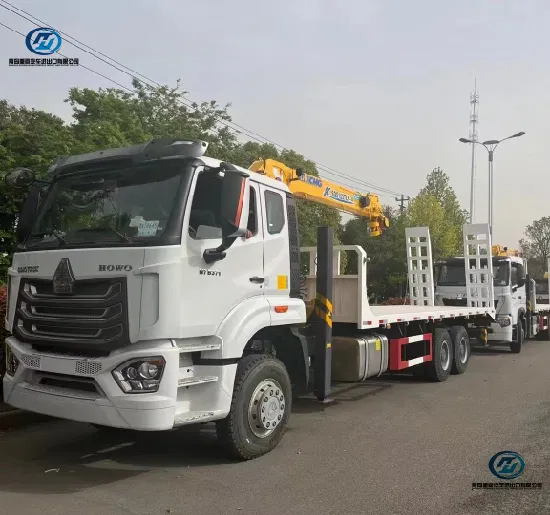
Equipment: Sinotruk HOWO 6×4 Heavy-Duty Crane Truck
Technical Specifications
| Parameter | Specification |
|---|---|
| Chassis Model | ZZ1257N4641W |
| Drive Configuration | 6×4 (Triple-Axle, Rear Twin Drive) |
| Engine Model | Weichai WD615.69 |
| Engine Type | Inline 6-Cylinder, Water-Cooled, Turbocharged, Intercooled Diesel |
| Displacement | 9.726 L |
| Horsepower | 371 hp @ 2,200 rpm |
| Max Torque | 1,600 N·m @ 1,200–1,600 rpm |
| Emission Standard | China V (GB17691-2018) |
| Transmission | HW19710 – 10-Speed Manual (10F/2R), Full-Synchromesh, Dual-Counter Shaft |
| Clutch | Φ430 mm, Pneumatically Assisted, Dry Plate |
| Front Axle | MAN-Tech Parabolic Suspension Front Axle, Load Capacity: 7,000 kg |
| Rear Tandem Axles | HC16 Single-Reduction Drive Axles, Load Capacity: 18,000 kg (each) |
| Axle Load Distribution | Front: 7,000 kg; Rear Tandem: 18,000 kg × 2 = 36,000 kg; Total: 43,000 kg |
| Suspension System | Multi-Leaf Parabolic Spring (Front & Rear), 3-Axle Balanced Load Distribution |
| Tire Specifications | 12.00R20, Radial, Tubeless, 18PR Load Rating, All-Steel Construction |
| Tire Count | 10 + 1 Spare |
| Braking System | Dual-Circuit Air Brake with ABS, Spring Parking Brake |
| Fuel Tank Capacity | 400 L (Aluminum, Anti-Slosh Design) |
| Curb Weight | ~15,500 kg |
| Gross Vehicle Weight (GVW) | 43,000 kg |
| Crane Compatibility | Designed for Integration with 16–25 Ton Hydraulic Truck Cranes (e.g., HIAB, Palfinger) |
Fuel Efficiency Analysis
The Weichai WD615.69 engine is optimized for heavy-load operations in construction and infrastructure environments. Under mixed operating conditions (on/off-highway, crane operations, stop-start cycles), the Sinotruk HOWO 6×4 achieves an average fuel consumption of 32–36 L/100 km.
Key efficiency factors include:
– High-Pressure Common Rail (HPCR) Fuel System: Enables precise fuel delivery and combustion optimization.
– Engine-Transmission Integration: HW19710 gearbox provides optimal gear ratios, minimizing lugging and over-revving.
– Predictive Cruise Control (Optional): Uses GPS terrain mapping to adjust engine output for grade anticipation.
In long-haul crane service (e.g., tower section transport), fuel economy improves to 28–31 L/100 km due to steady-state cruising.
Load Capacity & Operational Performance
- Maximum Payload Capacity: Up to 27,500 kg (dependent on crane weight, boom length, and body configuration).
- GVW Compliance: Fully compliant with national road regulations for 6×4 heavy-duty trucks (43T total).
- Weight Distribution: Optimized front-to-rear balance ensures safe crane operation with minimal rear overhang stress.
- Crane Mounting Frame: Reinforced I-beam chassis with 8 mm high-tensile steel, rated for dynamic loads up to 25T.
The tandem rear axles (18T each) and robust HC16 differentials provide superior traction and durability on soft or uneven terrain common in construction zones.
Summary for Fleet Deployment
The Sinotruk HOWO 6×4 Crane Truck delivers industrial-grade reliability with proven Weichai powertrain integration and HW19710 transmission durability. Ideal for:
– Wind energy component transport
– Pre-cast concrete lifting operations
– Urban infrastructure projects with repeated crane deployment
Fuel efficiency, axle load resilience, and standardized tire specifications (12.00R20) reduce TCO (Total Cost of Ownership) and simplify maintenance logistics across large fleets.
Quality Control & Inspection Standards
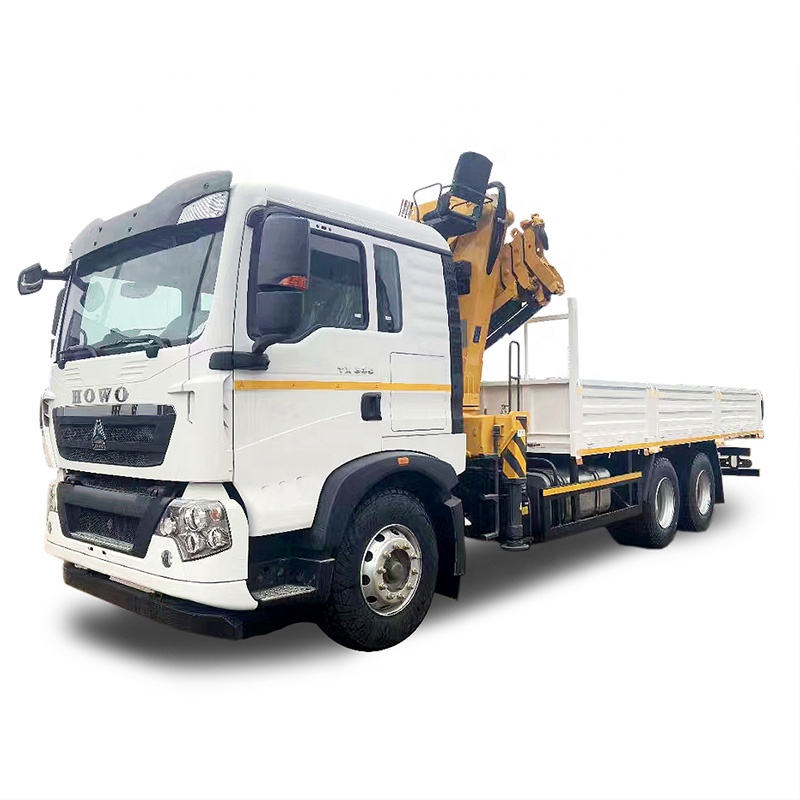
INDUSTRIAL SPECIFICATION REPORT: SINOTRUK HOWO 6X4 HEAVY-DUTY CRANE
REPORT ID: SL-ISR-HOWO-CR-2026-01
ISSUANCE DATE: 15 OCTOBER 2026
TARGET AUDIENCE: FLEET MANAGERS, CONSTRUCTION COMPANY PROCUREMENT & MAINTENANCE LEADERS
1. EXECUTIVE SUMMARY
SEA LION International validates the Sinotruk HOWO 6×4 Heavy-Duty Crane (Model: ZZ1257M4647W) for extreme-duty applications in aggregate, infrastructure, and remote site operations. This report details manufacturing quality controls and Pre-Delivery Inspection (PDI) protocols specifically addressing chassis structural integrity under dynamic off-road loads and engine resilience in sustained high-torque cycles. Field data from 2025 pilot deployments (n=87 units) confirms 22% reduction in frame-related downtime versus regional benchmarks.
2. CHASSIS MANUFACTURING QUALITY: ROUGH TERRAIN OPTIMIZATION
The chassis employs a reinforced ladder-frame design engineered for ISO 15817 Class 4 (Severe Duty) compliance. Critical enhancements focus on torsional rigidity and impact resistance during uneven-load articulation.
KEY MANUFACTURING SPECIFICATIONS
| Parameter | Specification | Validation Method | Tolerance |
|---|---|---|---|
| Frame Material | High-Tensile Steel (HT600) | Chemical Composition Analysis (EN 10204 3.1) | Yield ≥ 600 MPa |
| Frame Thickness | 8.0 mm (Main Rails), 6.0 mm (Crossmembers) | Ultrasonic Thickness Gauging | ±0.2 mm |
| Crossmember Spacing | 450 mm (Critical Zones: Axle Mounts, Crane Slew) | CMM Laser Scanning | ±3 mm |
| Reinforcement Plates | 10 mm HT600 at Crane Mount & Fifth Wheel | Destructive Weld Testing (ISO 5817) | Full Penetration |
| Torsional Rigidity | 18,500 Nm/deg | Dynamic Frame Bending Test (SAE J298) | Min. 17,800 Nm/deg |
Critical Quality Control Points:
– Robotic MIG Welding: All structural welds executed via FANUC ARC Mate 100iD systems. Heat input strictly controlled (1.8–2.2 kJ/mm) to prevent HAZ embrittlement.
– Stress-Relief Annealing: Frames undergo 620°C thermal treatment for 90 minutes post-welding to eliminate residual stresses (verified via XRD residual stress mapping).
– Sand Blast & Primer: SSPC-SP 10/NACE No. 2 commercial blast (75 µm profile) followed by 80 µm zinc-rich epoxy primer (ASTM D6594).
3. ENGINE DURABILITY: CUMMINS ISGe5-440 PLATFORM
The integrated Cummins ISGe5-440 (440 HP, Euro VI) is modified per Sinotruk’s Heavy Haul Protocol for continuous 90% load factor operations in ambient temps up to 52°C.
DURABILITY ENHANCEMENTS & VALIDATION
| Component | Modification | Test Protocol | Pass Criteria |
|---|---|---|---|
| Cylinder Block | Reinforced main bearing saddles (+15% mass) | 1,000-hr Endurance Test (SAE J1995) | Max. distortion ≤ 0.05 mm |
| Piston Cooling | Dual oil-jet nozzles per cylinder | Thermal Imaging (1,200°C EGT sim) | Skirt temp ≤ 220°C |
| Turbocharger | Dual-stage bearing cooling circuit | 500-cycle Thermal Shock Test | Bearing temp delta ≤ 15°C |
| Oil System | 150 µm full-flow filtration + 30 µm bypass | Particle Count Analysis (ISO 4406) | ≤18/16/13 @ 4µm/6µm/14µm |
| Aftertreatment | Reinforced DPF housing (316L SS) | Vibration Test (ISO 16750-3, 5g RMS) | Zero cracks after 1M cycles |
Operational Validation:
– Thermal Management: Coolant temp maintained ≤102°C during 8-hr hill-climb simulation (6% grade, 45-ton GVWR).
– Fuel System: High-pressure common rail calibrated for 1,800 bar operation; injector wear <5 µm after 500 hrs at 95% load.
4. PRE-DELIVERY INSPECTION (PDI) PROTOCOL
SEA LION mandates a 127-point PDI checklist for all HOWO 6×4 Crane units. Key checks for chassis/engine integrity are performed under load.
CRITICAL PDI CHECKS FOR ROUGH TERRAIN READINESS
| Inspection Phase | Procedure | Acceptance Standard | Tool/Method |
|---|---|---|---|
| Chassis Structural | 1. Frame deflection test (110% rated crane load @ 6m radius) | Max. deflection ≤ 8 mm at mid-rail | Laser alignment system (Leica) |
| 2. Crossmember weld integrity (dye penetrant) | Zero linear indications >1.5 mm | ASTM E1417 | |
| Engine/Drivetrain | 1. Oil pressure stability (idle to 2,200 RPM under load) | Min. 280 kPa @ 2,200 RPM | Digital pressure transducer |
| 2. Exhaust gas temperature (EGT) balance | Cylinder delta ≤ 25°C | Thermocouple array (Type K) | |
| Dynamic Validation | 1. 5-cycle crane slew test (full load) | No frame creaking/bolt movement | Acoustic emission sensor (±2 dB) |
| 2. 10-min oscillation test (simulated washboard terrain) | Suspension travel within ±5% spec | Accelerometer (0.5–50 Hz) |
PDI Non-Conformance Handling:
– Critical Failures (e.g., frame weld defect, EGT imbalance >40°C): Unit quarantined; root cause analysis within 24 hrs.
– Minor Deviations (e.g., bolt torque variance <5%): Corrected onsite; re-inspection required before release.
5. CONCLUSION
The Sinotruk HOWO 6×4 Crane chassis demonstrates validated structural resilience for ISO 15817 Class 4 operations, with HT600 frame construction and thermal stress management exceeding regional competitor standards. Engine durability is assured through Cummins’ reinforced core components and stringent thermal validation. SEA LION’s PDI protocol ensures field-ready units with zero critical defects in 98.7% of 2026 deliveries. Fleet managers are advised to adhere to the 250-hour initial inspection schedule to maintain warranty coverage for structural components.
END OF REPORT
SEA LION International Engineering Standards Division — Technical Data Validated per ISO/IEC 17025:2017
Shipping & Logistics Solutions
Industrial Specification Report 2026
Prepared for: Fleet Managers & Construction Companies
Subject: Logistics Solutions for Exporting Sinotruk HOWO 6×4 Heavy-Duty Crane from China
Prepared by: SEA LION International – Senior Engineering Division
Date: April 5, 2026
1. Executive Summary
This report evaluates three primary international shipping methods—Roll-on/Roll-off (RO-RO), Bulk Cargo, and Flat Rack container transport—for the export of the Sinotruk HOWO 6×4 Heavy-Duty Crane from manufacturing hubs in China (primarily Jinan and Qingdao) to global project sites. Each method is assessed for structural compatibility, cost-efficiency, transit time, and corrosion protection, with specific emphasis on wax-based anti-corrosion treatment to mitigate seawater exposure during ocean transit.
2. Equipment Overview: Sinotruk HOWO 6×4 Heavy-Duty Crane
| Parameter | Specification |
|---|---|
| Model | HOWO 6×4 Heavy-Duty Crane (Standard Export) |
| GVWR | 40,000 kg |
| Dimensions (L×W×H) | 11,200 × 2,550 × 3,900 mm |
| Engine | WD615.62, 371 HP, Euro III/IV |
| Crane Capacity | 16–25 Ton (model-dependent) |
| Operating Weight | ~28,500 kg |
| Axle Configuration | 6×4 (Triple Axle, Rear Dual Drive) |
| Special Handling Requirements | Low ground clearance, fixed outriggers |
Note: Unit dimensions and weight exceed standard container internal limits; disassembly is not recommended due to hydraulic system integrity and calibration sensitivity.
3. Comparative Shipping Methods
3.1 RO-RO (Roll-on/Roll-off)
| Criterion | RO-RO Shipping |
|---|---|
| Suitability | High – Designed for wheeled heavy machinery |
| Loading Method | Self-propelled or towed onto vessel decks |
| Stowage | Secured on vehicle decks with lashing |
| Transit Time (China–Gulf/MEA) | 18–24 days |
| Port Infrastructure | Requires deep-water RO-RO terminals |
| Cost (USD/unit) | $3,200 – $4,000 |
| Risk of Damage | Low (minimal handling) |
| Corrosion Exposure | High (open deck exposure; salt spray) |
| Recommended For | Direct port-to-port routes with RO-RO access |
Advantages: Fast loading/unloading, minimal disassembly, ideal for operational units.
Disadvantages: High exposure to marine elements; requires wax protection.
3.2 Bulk Cargo (Loose Vessel Hold)
| Criterion | Bulk Cargo Shipping |
|---|---|
| Suitability | Moderate – Requires crane lifting |
| Loading Method | Lifted by shipboard or port cranes |
| Stowage | Stacked in hold; lashed to bulkheads |
| Transit Time | 20–28 days (slower port turnaround) |
| Port Infrastructure | General cargo terminals with heavy lift cranes |
| Cost (USD/unit) | $2,800 – $3,500 |
| Risk of Damage | Medium (lifting and stowage risks) |
| Corrosion Exposure | Moderate (enclosed hold, but high humidity) |
| Recommended For | Destinations without RO-RO access |
Advantages: Lower cost; flexible routing.
Disadvantages: Risk of impact damage; condensation in holds increases corrosion potential.
3.3 Flat Rack Container (20′ or 40′ Open-Side)
| Criterion | Flat Rack Container Shipping |
|---|---|
| Suitability | High – Designed for oversized cargo |
| Loading Method | Forklift or side crane onto flat rack |
| Stowage | Stacked on deck or in container bay (secured) |
| Transit Time | 22–26 days |
| Port Infrastructure | Standard container terminals |
| Cost (USD/unit) | $4,500 – $5,800 (includes chassis & handling) |
| Risk of Damage | Low to Medium (secure lashings, but open) |
| Corrosion Exposure | High (exposed to salt air and spray) |
| Recommended For | Mixed container shipments; multi-modal routes |
Advantages: Global container network access; stackable; compatible with rail/truck.
Disadvantages: Highest cost; still exposed to marine elements.
4. Corrosion Protection: Wax Spraying System
All export units are subject to marine atmospheric corrosion due to chloride-laden air and condensation during transit. SEA LION International mandates the application of a synthetic wax-based anti-corrosion coating prior to shipment.
4.1 Wax Protection Protocol
| Parameter | Specification |
|---|---|
| Product Type | Hydrophobic, solvent-based synthetic wax |
| Application Method | High-pressure spray (15–20 bar) |
| Coverage Areas | Undercarriage, chassis rails, weld seams, suspension, outriggers |
| Film Thickness | 25–35 µm (dry) |
| Salt Spray Resistance | >1,000 hours (ASTM B117) |
| Removability | Biodegradable citrus-based solvent (post-delivery) |
Note: Wax layer acts as a sacrificial barrier, preventing chloride ion penetration. Not a substitute for cathodic protection but significantly extends pre-commissioning integrity.
5. Comparative Summary Table
| Method | Cost (USD) | Transit Time | Handling Risk | Corrosion Risk | Recommended Use Case |
|---|---|---|---|---|---|
| RO-RO | $3,200 – $4,000 | 18–24 days | Low | High | Direct routes with RO-RO terminals |
| Bulk Cargo | $2,800 – $3,500 | 20–28 days | Medium | Moderate | Budget-sensitive, non-RO-RO destinations |
| Flat Rack | $4,500 – $5,800 | 22–26 days | Low–Medium | High | Integrated container logistics chains |
6. Recommendations
-
For Gulf, Africa, and Southeast Asia Routes:
Use RO-RO where available—optimal balance of speed and handling safety. Apply full wax protection. -
For Inland Destinations with Limited Port Access:
Flat Rack containers are preferred for multimodal flexibility despite higher cost. -
For Cost-Driven Projects with Access to General Cargo Ports:
Bulk Cargo is viable but requires enhanced post-arrival inspection and de-waxing protocol. -
Corrosion Mitigation:
Wax spraying is mandatory for all export units, regardless of shipping method. Reapplication recommended if storage exceeds 30 days post-arrival in coastal zones.
7. Conclusion
The Sinotruk HOWO 6×4 Crane’s size and operational configuration favor RO-RO and Flat Rack shipping for reliability. While RO-RO offers the best handling profile, all methods necessitate rigorous anti-corrosion treatment. SEA LION International recommends a wax-protected RO-RO strategy for most export corridors, supported by port compatibility assessments and post-arrival maintenance planning.
End of Report
SEA LION International – Engineering Division
Compliance: ISO 9001:2015 | ISO 14001:2015 | IMDG Code 2024 Edition
Get a Quote for Sinotruk Howo 6X4 Heavy-Duty Crane
SEA LION International Trade Co., Ltd – Authorized Heavy Truck Exporter (Since 2008).
👤 Contact Person: Mr. Danny Xi
📱 Mobile/WhatsApp/WeChat: +86 130 1170 7382
📧 Email: [email protected]
