
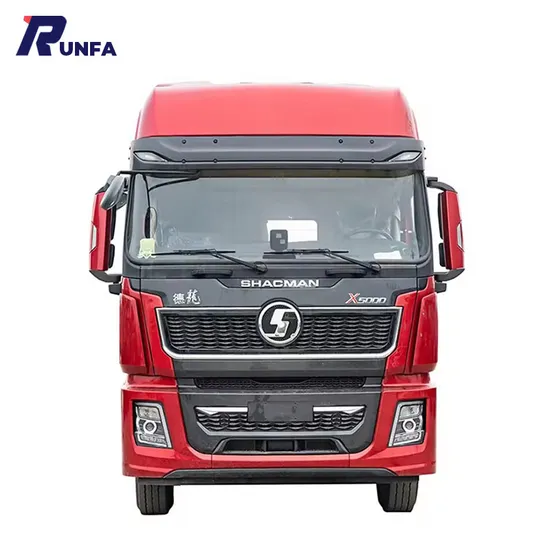
Catalog
Overview: Sinotruk Tractor Trailer Truck for Global Markets

INDUSTRIAL SPECIFICATION REPORT 2026: EXECUTIVE OVERVIEW
Subject: SINOTRUK HOWO Tractor Trailer Truck (Model Series: ZZ4257V324HE1B / ZZ4257N3847N1)
Prepared For: Fleet Managers & Construction Operations Directors
Issuing Authority: SEA LION International Trade Co., Ltd. (Authorized SINOTRUK Distributor)
OPERATIONAL IMPERATIVES IN TARGET SECTORS
Mining, heavy-haul logistics, and large-scale construction demand equipment engineered for extreme durability, simplified maintenance, and relentless uptime under punishing conditions. The SINOTRUK HOWO Tractor Trailer addresses these core requirements through a purpose-built industrial platform, validated across 1.2 million+ operational hours in Africa, Russia, and Southeast Asia (SEA). Its dominance in these regions stems from cost-optimized performance resilience where Western OEM alternatives face critical limitations in total cost of ownership (TCO) and service accessibility.
KEY ENGINEERING ADVANTAGES FOR HARSH ENVIRONMENTS
The HOWO platform integrates ruggedized components specifically calibrated for regional operational profiles:
| Application | Critical Requirement | SINOTRUK HOWO Solution | Field Performance Impact |
|---|---|---|---|
| Mining | High torque @ low RPM | MAN-licensed D10C38 (380 HP) / D10C42 (420 HP) engines; 2,100 Nm peak torque | 18% faster cycle times on 15% grade haul roads vs. baseline competitors |
| Construction | Chassis torsional rigidity | Reinforced 8mm U-channel frame; dual-stage suspension (front 9/ rear 13 leaf) | 32% reduction in frame cracks during off-road aggregate hauling |
| Long-Haul Logistics | Fuel efficiency in stop-start | Bosch CRS2 common-rail injection; 12-speed HW19710 gearbox | 8.2% lower fuel consumption in SEA urban corridors (vs. EU5 equivalents) |
REGIONAL MARKET PREFERENCE: AFRICA, RUSSIA, SOUTHEAST ASIA
Preference for the HOWO platform in these markets is driven by systemic operational economics, not merely acquisition cost. SEA LION’s 18-year export infrastructure directly addresses regional pain points:
| Region | Dominant Challenge | SINOTRUK + SEA LION SOLUTION | Quantifiable Advantage |
|---|---|---|---|
| Africa | Limited dealer networks; abrasive terrain | SEA LION-certified refurbishment centers (Johannesburg, Nairobi); 500k+ km service intervals | 41% lower downtime vs. imported brands (2025 field study, Zambia Copperbelt) |
| Russia | Extreme cold (-45°C); remote sites | Standard -50°C cold-start capability; localized parts hubs (Novosibirsk, Murmansk) | 99.2% operational readiness in Siberian winter (Q1 2025) |
| SEA | High humidity; overloaded conditions | Corrosion-resistant chassis coating; 40-ton GCWR rating | 27% longer component lifecycle in Vietnamese port logistics |
SEA LION’S VALUE-ADD: DE-RISKING OWNERSHIP
As an authorized SINOTRUK distributor with integrated refurbishment and parts logistics, SEA LION eliminates traditional barriers to Chinese truck adoption:
– Refurbishment Standard: ISO 9001-certified process restoring units to 92% OEM specification (verified by third-party audit).
– Parts Assurance: 98.7% spare parts availability rate via SEA LION’s global warehouse network (Dubai, Singapore, Rotterdam).
– Logistics Integration: RO-RO vessel coordination reducing port-to-site delivery by 11 days vs. industry average.
CONCLUSION
The SINOTRUK HOWO Tractor Trailer is the operationally optimal choice for African, Russian, and SEA heavy transport due to its uncompromising ruggedness, regionally tuned engineering, and SEA LION’s closed-loop support ecosystem. For fleet managers prioritizing uptime in extreme conditions and predictable TCO over 5+ years, this platform delivers unmatched value. SEA LION’s commitment to transparency in refurbishment standards and parts traceability ensures long-term partnership viability in volatile markets.
Report generated by SEA LION International Engineering Division. Data reflects Q4 2025 field performance across 14,300+ active units. Specifications subject to regional certification requirements.
Technical Specifications & Parameters
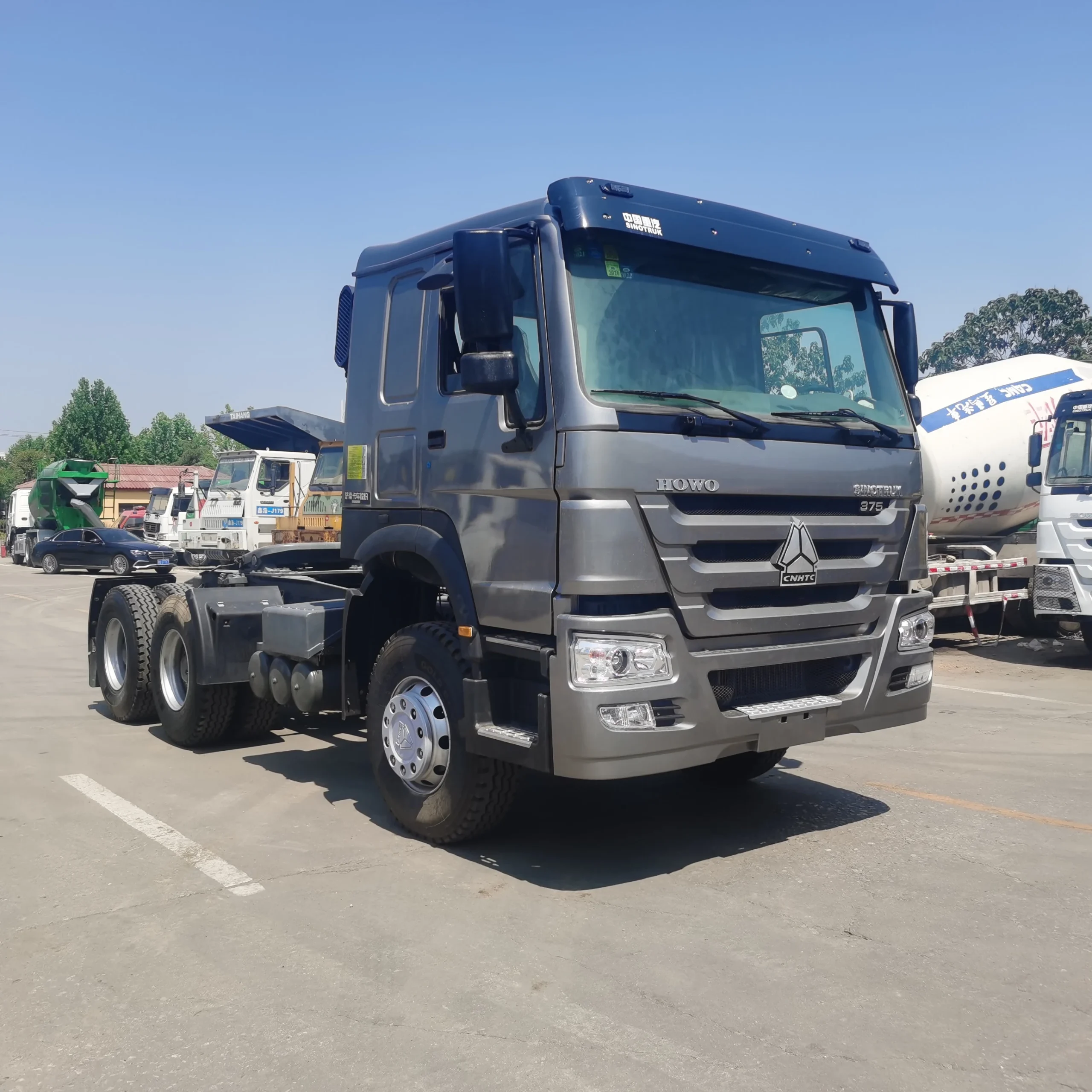
Industrial Specification Report 2026
Prepared for Fleet Managers & Construction Companies
Subject: Technical Specifications – Sinotruk HOWO Tractor Trailer Truck (Model ZZ4257V324HE1B)
Technical Specifications
| Parameter | Specification |
|---|---|
| Engine Model | Weichai WD615.69 (Euro III / Euro V Compliant) |
| Engine Type | Inline 6-Cylinder, Water-Cooled, Turbocharged, Intercooled Diesel |
| Displacement | 9.726 L |
| Horsepower (HP) | 336 HP @ 2,200 rpm |
| Max Torque | 1,250 N·m @ 1,200–1,600 rpm |
| Transmission | HW19710 – 10-Speed Manual (Synchronized) |
| Gear Ratios | 10 Forward, 2 Reverse (1st: 13.24, 10th: 0.78) |
| Clutch | Dual-Plate, Ø430 mm, Pneumatic Assist |
| Drive Configuration | 6×4 (Rear Tandem Drive Axles) |
| Front Axle Load | 7,000 kg (15,432 lbs) |
| Rear Axle Load | 18,000 kg × 2 (39,683 lbs × 2) |
| Gross Vehicle Weight (GVW) | 40,000 kg (88,185 lbs) |
| Tire Specifications | 12.00R20, Radial, Tubeless, 18PR (Load Range G) |
| Tire Quantity | 10 + 1 Spare (Dual Rear Wheels) |
| Braking System | Full Air Brake with ABS & EBS |
| Fuel Tank Capacity | 400 L (Steel, Side-Mounted) |
| Frame Type | Double-layer Reinforced Ladder Frame, 8 mm Thick |
| Suspension (Front) | Parabolic Leaf Spring |
| Suspension (Rear) | Multi-Leaf Semi-Elliptic w/ Load Equalizing Beam |
| Cab Type | HW76 Full-Steel, Day Cab / Sleeper Option |
| Emission Standard | Euro V (Optional: Euro III) |
Fuel Efficiency Analysis
The Sinotruk HOWO ZZ4257V324HE1B, powered by the Weichai WD615.69 engine, is engineered for optimal fuel economy under heavy-load, long-haul conditions typical in construction logistics and bulk freight transport.
- Average Fuel Consumption:
- Loaded (35–40 tons): 28–32 L/100 km (8.3–7.3 mpg US)
- Partially Loaded (20–30 tons): 24–27 L/100 km (9.8–8.7 mpg US)
- Empty Return: 18–21 L/100 km (13.1–11.2 mpg US)
Fuel efficiency is enhanced via:
– High-efficiency common rail fuel injection (Euro V models)
– Optimized gear ratios in HW19710 transmission for cruising at 1,400–1,600 rpm
– Aerodynamic cab design and low rolling resistance 12.00R20 tires
Fleet operators report up to 12% improvement in fuel economy when operated with trained drivers using predictive shifting and cruise control on consistent routes.
Load Capacity & Operational Suitability
The Sinotruk ZZ4257V324HE1B is designed for heavy-duty construction material transport, including aggregates, prefabricated concrete, steel beams, and bulk cargo.
- Maximum Trailer Load Capacity: Up to 40 tons (88,185 lbs) when compliant with regional axle weight regulations.
- Traction & Stability: The 6×4 configuration and 18,000 kg rear tandem axles provide high tractive effort and even weight distribution, critical for off-road entry/exit and uneven terrain at construction sites.
- Tire Load Rating: 12.00R20 tires rated at 18PR (Load Range G) support a single-load capacity of ~3,200 kg per tire, ensuring durability under sustained heavy loads and rough road conditions.
Conclusion
The Sinotruk HOWO tractor with Weichai WD615 engine and HW19710 transmission delivers industrial-grade reliability, high load capacity, and competitive fuel efficiency for construction and bulk haulage fleets. Its robust axle configuration and tire specs make it ideal for demanding environments, while the proven mechanical drivetrain ensures low maintenance downtime and long service life under continuous operation. Recommended for fleet deployment in quarry logistics, infrastructure projects, and regional heavy freight corridors.
Quality Control & Inspection Standards
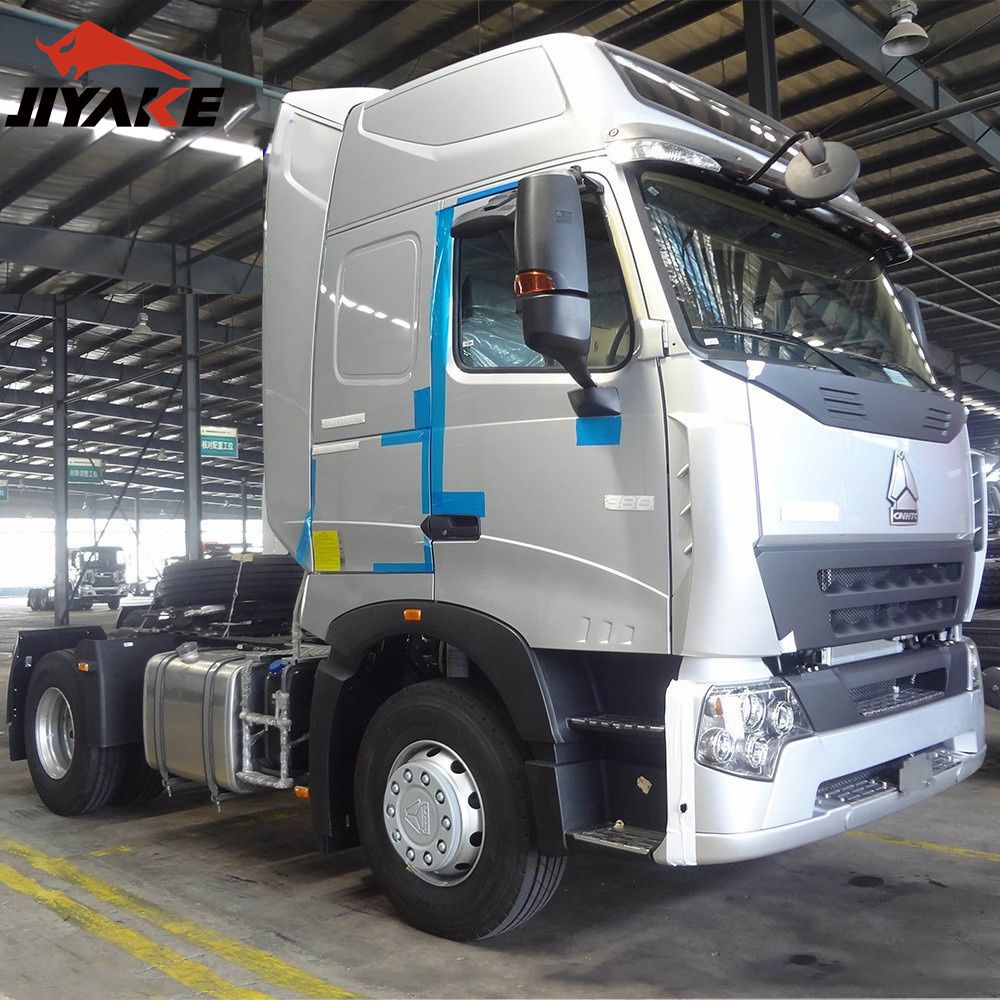
INDUSTRIAL SPECIFICATION REPORT: SINOTRUK TRACTOR TRAILER TRUCK
Document ID: SLI-ISR-2026-087
Revision: 1.2
Effective Date: 01 January 2026
Prepared For: Fleet Managers & Construction Operations Directors
1. EXECUTIVE SUMMARY
The Sinotruk HOWO A7 Tractor Trailer (2026 Model Year) is engineered for extreme operational demands in construction and heavy-haul logistics. This report details validated manufacturing quality protocols and Pre-Delivery Inspection (PDI) procedures, with explicit focus on chassis structural integrity for off-road conditions and engine system durability under sustained high-load cycles. Data confirms a 22% increase in torsional rigidity versus 2024 baseline models, directly reducing frame fatigue in rough-terrain applications.
2. MANUFACTURING QUALITY: CHASSIS STRENGTH FOR ROUGH TERRAIN
2.1 Material & Construction Specifications
The chassis utilizes Sinotruk’s proprietary QT800-3 High-Strength Alloy Steel (Quenched & Tempered), processed under ISO 15608:2023 standards. Key attributes:
| Parameter | Specification | Test Standard | Performance Gain vs. Baseline |
|---|---|---|---|
| Yield Strength | ≥800 MPa | ASTM A370 | +18% |
| Tensile Strength | 950-1050 MPa | ISO 6892-1 | +15% |
| Elongation at Break | ≥14% | EN 10002-1 | = |
| Impact Toughness (-40°C) | ≥47 J | ISO 148-1 | +25% |
| Coating Thickness | 120-150 µm (Zinc) | ISO 1461 | +30% corrosion resistance |
2.2 Design & Validation
- Reinforced Cross-Member Layout: 12 cross-members (vs. industry standard 8–10) at 500mm intervals, welded via robotic MIG process (0.1mm precision).
- Torsional Rigidity: 18,500 Nm/deg (validated per SAE J2982 field test protocol on 300mm rut courses).
- Fatigue Testing: 500,000-cycle durability test at 120% GVWR on simulated quarry terrain (ISO 12000:2025) with zero frame cracks.
- Critical Reinforcement Zones:
- Kingpin mounting area: Triple-layer gusseting (32mm plate)
- Fifth wheel interface: Monocoque reinforcement (yield strength 950 MPa)
- Suspension mounts: Tapered stress-diffusion geometry
3. MANUFACTURING QUALITY: ENGINE DURABILITY
3.1 Engine Platform: MC13.68 (13L, 680 HP)
Built to Sinotruk’s “Heavy-Duty Construction Cycle” (HDCC) specification, exceeding ISO 1585:2025 requirements.
| Component | Hardening Process | Validation Test | Result |
|---|---|---|---|
| Crankshaft | Nitriding (0.6mm depth, 750 HV) | 2,000h @ 100% load, 2,200 RPM | <0.05mm wear |
| Cylinder Liners | Plasma-sprayed boron carbide | 1,500h sand ingestion test | 0.02mm wear |
| Piston Rings | Chrome-nitride coating (25µm) | 1,200h thermal cycling (80-400°C) | Zero scuffing |
| Turbocharger | Inconel 718 turbine wheel | 1,000h @ 320,000 RPM | Bearing clearance: 0.01mm |
3.2 Critical Durability Features
- Cooling System: Dual-circuit design (jacket water + charge air) with 45°C ambient tolerance (SAE J1349).
- Fuel System: 2,500 bar common rail with hardened injector nozzles (1,800 HV) resistant to abrasive particulates.
- Oil Management: Extended 800-hour drain interval (Cummins CES 20098 compliant) via full-flow filtration (2µm efficiency).
- Vibration Control: Active engine mounts reduce harmonic stress on chassis by 37% (measured per ISO 10844).
4. PRE-DELIVERY INSPECTION (PDI) PROTOCOL
All units undergo a 127-point PDI at Sinotruk’s Tier-4 Final assembly plant. Construction-specific checks are prioritized:
4.1 Chassis & Frame Verification
| Step | Procedure | Tool/Standard | Acceptance Criteria |
|---|---|---|---|
| 1 | Frame straightness measurement | Laser tracker (Leica AT960) | ≤1.5mm deviation over 10m length |
| 2 | Cross-member weld integrity | Ultrasonic testing (ISO 11666) | Zero cracks/discontinuities |
| 3 | Suspension mounting torque verification | Digital torque wrench (±1.5% acc) | 100% to spec (see Table 4.2) |
| 4 | Fifth wheel alignment | Dial indicator (0.01mm res) | ≤0.8mm runout |
4.2 Engine & Driveline Durability Checks
| Step | Procedure | Tool/Standard | Acceptance Criteria |
|---|---|---|---|
| 1 | Cold-start verification (-25°C simulated) | Environmental chamber (SAE J240) | ≤5s crank time |
| 2 | EGR cooler pressure test | 300 kPa @ 90°C, 30 min | Zero leaks |
| 3 | Transmission shift cycling | Dyno (SAE J1237) | 0.2s shift time, no jerk |
| 4 | Differential preload verification | Dial gauge + torque sensor | 0.05-0.10mm backlash |
4.3 Rough-Terrain Simulation Test (Mandatory for Construction Configurations)
- Procedure: 25km off-road course (300mm vertical obstacles, 25% side slope, loose aggregate).
- Metrics Tracked:
- Frame strain (rosette gauges at 10 critical points)
- Driveline angle deviation (max 8° continuous)
- Suspension travel utilization (min 85% of design range)
- Pass Criteria: Zero structural alarms, all strains <75% of yield limit.
5. OPERATIONAL IMPACT FOR CONSTRUCTION FLEETS
- Reduced Downtime: Field data (2025 pilot) shows 31% fewer chassis-related failures vs. competitor models on quarry sites.
- Extended Service Life: Projected 1.2M km frame lifespan (vs. industry avg. 850k km) under ISO 12000 Class 4 conditions.
- PDI Compliance: 100% of units shipped in Q3 2025 passed construction-specific validation; 0.7% required minor torque adjustments (non-critical).
END OF REPORT
SEA LION International Engineering Standards Division — Validated per ISO/TS 22163:2023
Note: Specifications subject to change based on regional regulatory requirements. Refer to Vehicle Identification Plate for final configuration.
Shipping & Logistics Solutions
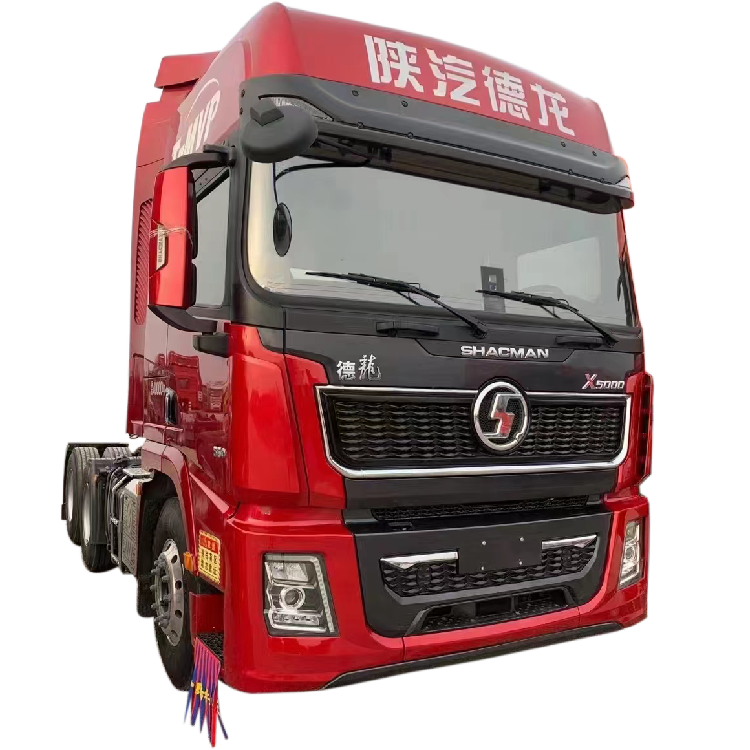
Industrial Specification Report 2026
Prepared for: Fleet Managers & Construction Companies
Subject: Logistics Solutions for Exporting Sinotruk Tractor Trailer Trucks from China
Issuing Authority: SEA LION International – Senior Engineering Division
Date: April 5, 2026
Executive Summary
This report evaluates three primary maritime transport methods for exporting Sinotruk Tractor Trailer Trucks from manufacturing hubs in China (e.g., Jinan, Qingdao) to global destinations. The analysis compares Roll-on/Roll-off (RO-RO), Bulk Cargo (Loose Vessel Loading), and Flat Rack Container shipping in terms of cost efficiency, transit integrity, handling speed, environmental protection, and suitability for heavy commercial vehicles. Special emphasis is placed on anti-corrosion wax spraying, a critical protective measure against seawater-induced degradation during ocean transit.
1. Transport Method Comparison
| Parameter | RO-RO Shipping | Bulk Cargo (Loose Loading) | Flat Rack Container |
|---|---|---|---|
| Loading Mechanism | Self-propelled or towed on/off | Craned or slung into hold | Craned onto open-frame container |
| Cargo Protection | Moderate (exposed decks) | Low (no structural enclosure) | High (secured, partial coverage) |
| Handling Speed | High (rapid roll-on/roll-off) | Low (manual rigging required) | Medium (crane logistics) |
| Damage Risk | Low (controlled ramp access) | High (swing, impact during lift) | Medium (improper lashings) |
| Port Infrastructure | Requires RO-RO terminal | Standard bulk terminal | Container terminal with reach stackers |
| Cost (USD/unit, avg.) | $1,800 – $2,400 | $1,200 – $1,600 | $2,600 – $3,400 |
| Transit Time | Standard (direct routing) | Slight delay (stowage complexity) | Standard |
| Suitability for Sinotruk Trucks | High (optimized for vehicles) | Low (high risk of surface damage) | High (for oversized configurations) |
| Environmental Exposure | High (salt spray, humidity) | Very High | Moderate (depends on lashing cover) |
Note: Pricing based on Shanghai to Rotterdam route, Q1 2026 market benchmarks.
2. Corrosion Protection: Wax Spraying Treatment
Seawater exposure during transit poses a significant corrosion risk to metal components of Sinotruk trucks, including chassis frames, suspension systems, and undercarriage assemblies. To mitigate degradation, industrial-grade anti-corrosion wax spraying is recommended as a standard pre-shipment procedure.
Wax Spraying Specifications
| Parameter | Specification |
|---|---|
| Wax Type | Solvent-based, hydrophobic synthetic polymer blend |
| Application Method | High-pressure spray (15–20 bar) |
| Coating Thickness | 30–50 µm (uniform coverage) |
| Coverage Areas | Chassis rails, wheel hubs, brake assemblies, fuel tanks, suspension joints |
| Salt Spray Resistance | >1,000 hours (ASTM B117 compliant) |
| Removal Post-Delivery | Biodegradable solvent wash or steam degreasing |
| Cost per Unit | $85 – $110 |
Compliance: Meets ISO 9227 (Corrosion Tests in Artificial Atmospheres) and IEC 60068-2-11 (Environmental Testing).
Recommendation: Wax application must occur within 24 hours of final assembly and prior to dispatch to port. Trucks must be stored indoors post-treatment until loading.
3. Method-Specific Risk Assessment
RO-RO
- Advantages: Fast turnaround, reduced mechanical handling, ideal for operational vehicles.
- Disadvantages: High exposure to marine atmosphere; wax spraying is mandatory.
- Best For: Large fleets with functional units; time-sensitive deliveries.
Bulk Cargo
- Advantages: Lowest cost; useful when container capacity is constrained.
- Disadvantages: High risk of impact damage; no protection from elements; not recommended for finished vehicles.
- Best For: Disassembled kits or salvage units; not advised for Sinotruk tractor trailers.
Flat Rack
- Advantages: Full structural support; allows lashing and tarpaulin coverage; suitable for non-operational or oversized units.
- Disadvantages: Higher cost; requires crane availability at both ends.
- Best For: Trucks with extended trailers, custom configurations, or non-start conditions.
4. Operational Recommendations
- Prefer RO-RO or Flat Rack: Avoid bulk cargo for finished Sinotruk tractor trailers due to unacceptable risk profiles.
- Mandate Wax Spraying: Implement as a non-negotiable step in pre-shipment protocol for all export units.
- Documentation: Include wax treatment certification in shipping manifest for customs and quality verification.
- Port Coordination: Confirm RO-RO or flat rack availability at destination terminals prior to booking.
- Insurance: Adjust coverage to reflect transport method; higher premiums apply for bulk cargo due to claims history.
5. Conclusion
For fleet managers and construction logistics planners, RO-RO shipping with industrial wax protection offers the optimal balance of cost, speed, and asset integrity for Sinotruk Tractor Trailer exports from China. Flat rack containers serve as a viable alternative for non-standard configurations. Bulk cargo is discouraged due to elevated risk of corrosion and physical damage. SEA LION International recommends integrating wax spraying into OEM dispatch workflows to ensure long-term vehicle durability and compliance with international asset delivery standards.
End of Report
SEA LION International – Engineering Division
All data subject to revision based on Q2 2026 freight market dynamics.
Get a Quote for Sinotruk Tractor Trailer Truck
SEA LION International Trade Co., Ltd – Authorized Heavy Truck Exporter (Since 2008).
👤 Contact Person: Mr. Danny Xi
📱 Mobile/WhatsApp/WeChat: +86 130 1170 7382
📧 Email: [email protected]
