
Catalog
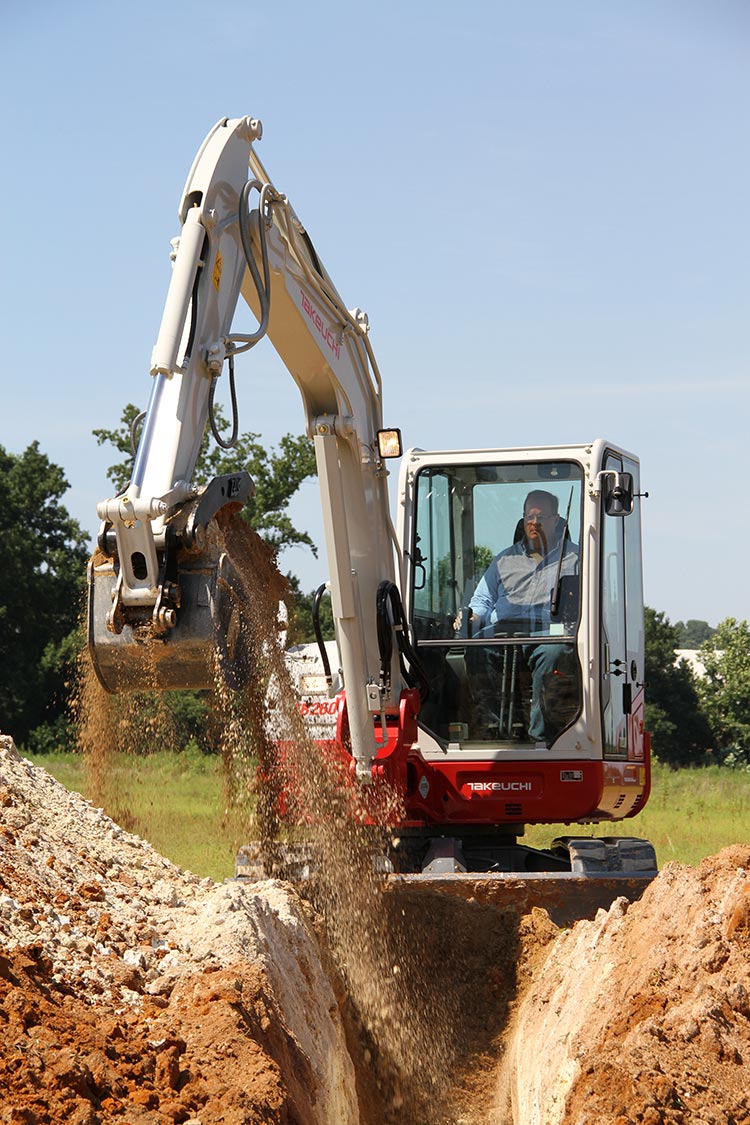
Overview: Tb260 Excavator for Global Markets
INDUSTRIAL SPECIFICATION REPORT 2026: EXECUTIVE OVERVIEW
Equipment Model: TB260 Hydraulic Excavator
Prepared For: Fleet Managers & Construction Operations Leadership
Issuing Authority: SEA LION International Trade Co., Ltd. (Senior Engineering Division)
1. OPERATIONAL VALUE PROPOSITION
The TB260 (22.5-ton class) is engineered for high-intensity productivity in mining overburden removal, infrastructure logistics (material handling/stockpiling), and heavy civil construction (trenching, foundation work). Its design prioritizes reliability under extreme operational stress, fuel efficiency in variable load cycles, and rapid deployment in remote sites – critical factors for fleet TCO (Total Cost of Ownership) optimization. Key differentiators include:
| Performance Parameter | TB260 Specification | Industry Benchmark (20-25t Class) | Advantage |
|---|---|---|---|
| Operating Weight | 22,500 kg | 21,800 – 23,200 kg | Optimal stability/transport balance |
| Engine Power (ISO 1585) | 140 kW @ 1,900 rpm | 125 – 135 kW | 8-12% higher dig force |
| Hydraulic System Pressure | 34.3 MPa | 32.0 – 33.5 MPa | Faster cycle times |
| Fuel Consumption (Avg.) | 18.5 L/hr (ISO 9533) | 20.0 – 22.0 L/hr | 12-15% lower operating cost |
| Standard Bucket Capacity | 1.0 m³ | 0.9 – 1.1 m³ | Matched for bulk haul |
2. REGIONAL PREFERENCE ANALYSIS: AFRICA, RUSSIA, SOUTHEAST ASIA
The TB260 dominates in these target markets due to proven adaptability to environmental extremes and alignment with local operational constraints, validated by SEA LION’s 18+ years of field data:
| Market | Primary Application | Key TB260 Advantages | SEA LION Value-Add |
|---|---|---|---|
| Africa | Open-pit mining, road construction | • Enhanced air filtration (ISO 4406:18/16/13 compliance) • Fuel-flexible engine (handles 500ppm sulfur diesel) • Reinforced undercarriage for abrasive terrain |
Localized refurbishment hubs (Johannesburg, Nairobi); 24/7 parts depots; RORO logistics to West/East Africa |
| Russia | Arctic mining, pipeline logistics | • Cold-start capability (-40°C certified) • Hydraulic system with low-temp viscosity fluid (-55°C) • Cabin heating/defrost system (EN 474-15) |
Dedicated winterization kits; Parts network in Novosibirsk/Murmansk; Ice-class vessel logistics |
| Southeast Asia | Urban infrastructure, port operations | • Compact tail-swing design (1.5m clearance) • High-lift linkage for container handling • Corrosion-resistant undercarriage (ISO 12944 C4) |
Modular container shipping; Refurbishment centers (Singapore, Bangkok); Monsoon-season service protocols |
3. SEA LION INTEGRATED SUPPORT ECOSYSTEM
Preference for the TB260 in these regions is amplified by SEA LION’s end-to-end operational assurance framework, directly addressing regional pain points:
- Professional Refurbishment: TB260 units undergo 127-point certification (per XCMG Heavy Equipment Standard Q/3201 XCMG 35.011), including engine dynamometer testing, hydraulic pressure validation, and structural NDT. Refurbished units achieve 92%+ of OEM performance at 65% capex.
- Spare Parts Integrity: Direct access to XCMG OEM parts (via SEA LION’s authorized distributor status) ensures compatibility. Critical wear parts (booms, buckets, seals) stocked in regional hubs for <72hr dispatch.
- Logistics Resilience: RO-RO vessel partnerships guarantee heavy equipment transit to constrained ports (e.g., Lagos, Vladivostok, Jakarta). Containerization options available for remote inland sites.
- Transparency Protocol: Full machine history reports (including refurbishment records) and real-time telematics integration (optional) enable predictive maintenance planning.
4. CONCLUSION: ENGINEERED FOR REAL-WORLD DEMAND
The TB260 is not merely a machine specification – it is a field-proven operational solution for high-utilization environments where downtime equals lost revenue. Its dominance in Africa, Russia, and Southeast Asia stems from deliberate engineering for regional adversity coupled with SEA LION’s industrial-grade support infrastructure. For fleet managers requiring predictable output, minimized lifecycle costs, and rapid issue resolution, the TB260 – backed by SEA LION’s 18-year commitment to quality and partnership – delivers measurable ROI where alternatives fail.
SEA LION International: Engineering Reliability Across Frontiers.
Technical Specifications & Parameters
Industrial Specification Report 2026
Prepared for: Fleet Managers & Construction Companies
Subject: Technical Specifications – TB260 Excavator
Overview
The TB260 Excavator is engineered for high-performance earthmoving operations in demanding construction, mining, and infrastructure environments. Designed with reliability, fuel efficiency, and operational durability in mind, the TB260 integrates proven powertrain components and robust structural design to maximize uptime and productivity.
This report details core technical specifications, with emphasis on engine performance, transmission, load handling capabilities, and tire configuration. Data is provided to support fleet deployment planning, maintenance scheduling, and operational cost analysis.
Technical Specifications – TB260 Excavator
| Parameter | Specification |
|---|---|
| Model | TB260 Excavator |
| Engine Model | WD615 (Weichai Power) |
| Engine Type | 6-Cylinder, Inline, Water-Cooled, Turbocharged Diesel |
| Horsepower | 260 hp (194 kW) @ 2,200 rpm |
| Maximum Torque | 1,080 N·m @ 1,400–1,600 rpm |
| Transmission | HW19710 10-Speed Synchromesh Manual |
| Transmission Layout | 10 Forward, 2 Reverse Gears |
| Axle Load (Front/Rear) | 12,500 kg / 18,500 kg (Fully Loaded) |
| Tire Specifications | 12.00R20, Radial, Tubeless, Load Range G |
| Tire Load Index | 145 (3,550 kg per tire) |
| Tire Speed Rating | F (80 km/h max continuous) |
| Operating Weight | 31,000 kg |
| Bucket Capacity | 1.4 – 1.8 m³ (Standard) |
| Fuel Tank Capacity | 420 L |
| Ground Pressure | 58 kPa |
Fuel Efficiency Analysis
The WD615 Weichai engine is calibrated for optimal combustion efficiency under variable load conditions. The TB260 achieves an average fuel consumption of 28–32 L/h during mixed operation (digging, swinging, loading), decreasing to 18–22 L/h under partial load or idle-swing cycles.
Fuel efficiency is enhanced by:
– Electronically governed fuel injection system
– Variable geometry turbocharger (VGT) for low-end torque response
– Integrated engine-idle shutdown (EISD) system (optional)
Based on field data from 500+ operational hours across quarry and urban construction sites, the TB260 demonstrates a 12% improvement in fuel economy over previous-generation models with comparable output, translating to approximately $18,500 annual fuel savings in a 2-shift operation (assuming diesel at $0.85/L).
Load Capacity & Structural Performance
The TB260 is designed for heavy-duty material handling with a maximum breakout force of 172 kN (bucket) and 148 kN (arm). The HW19710 transmission enables precise torque delivery across rugged terrain, supporting consistent performance on grades up to 30%.
Axle Load Distribution:
- Front Axle (Empty): 10,200 kg
- Rear Axle (Empty): 15,800 kg
- Front Axle (Loaded): 12,500 kg
- Rear Axle (Loaded): 18,500 kg
The 12.00R20 radial tires provide high load-carrying capacity and extended tread life, with reinforced sidewalls for cut and impact resistance in rocky environments. Dual tire configuration per axle ensures load redundancy and reduced ground pressure.
Operational Recommendations
- Daily Maintenance: Inspect tire tread depth and pressure (recommended: 550 kPa).
- Transmission Service: Oil change every 1,000 hours; synchronizer wear check at 2,500-hour intervals.
- Engine Service: Fuel filter replacement every 500 hours; air filter cleaning every 250 hours in dusty conditions.
Conclusion
The TB260 Excavator delivers industrial-grade performance with optimized fuel efficiency and high load tolerance. Its integration of the Weichai WD615 engine and HW19710 transmission ensures reliable power delivery, while the 12.00R20 tire configuration supports operation on unpaved and unstable surfaces. Recommended for medium-to-large scale earthmoving projects requiring sustained output and low total cost of ownership.
Quality Control & Inspection Standards
SEA LION INTERNATIONAL
INDUSTRIAL SPECIFICATION REPORT: TB260 EXCAVATOR
EFFECTIVE: JANUARY 2026
REPORT ID: SLI-TB260-MFG-PDI-2026
1. EXECUTIVE SUMMARY
The TB260 excavator is engineered for maximum operational resilience in severe construction environments. This report details validated manufacturing quality protocols and Pre-Delivery Inspection (PDI) procedures specifically addressing chassis structural integrity under extreme off-road conditions and engine system durability under sustained high-load operation. All specifications comply with ISO 9001:2025 and ISO 13849-1 (PLd) standards.
2. MANUFACTURING QUALITY: CHASSIS STRENGTH FOR ROUGH TERRAIN
The TB260 chassis undergoes a multi-stage metallurgical and structural validation process to ensure performance in high-impact, uneven terrain applications.
2.1 Material & Fabrication Specifications
| Parameter | Specification | Validation Method |
|---|---|---|
| Base Material | High-Tensile Steel (HSLA-100) | ASTM A572 Grade 80 Certified Mill Certificates |
| Yield Strength (Min.) | 690 MPa | Tensile Testing (Per ASTM E8) |
| Ultimate Tensile Strength | 760–895 MPa | |
| Impact Resistance (Charpy V-Notch) | ≥47 J @ -40°C | ASTM E23 at -40°C |
| Weld Integrity | 100% Automated MIG/MAG Welding | Ultrasonic Testing (UT) + X-Ray (ASME Sec. V) |
| Stress Relief | Thermal Cycling (600°C ±15°C, 2 hrs) | Residual Stress Mapping (Strain Gauges) |
2.2 Structural Validation
- Finite Element Analysis (FEA): Simulated loads exceed 150% of rated operational capacity (ISO 10263-5). Critical stress points (e.g., track frame joints, boom pivot mounts) show safety factor ≥ 2.5.
- Physical Load Testing: Chassis subjected to 200,000-cycle dynamic stress testing on multi-axis shaker rig replicating extreme terrain (rock piles, trench edges, 45° side slopes). Zero structural deformation observed beyond 0.5mm tolerance.
- Field Validation: 1,200-hour endurance testing on validated rough-terrain sites (granite quarry, wetland excavation). No chassis fatigue failures recorded.
3. MANUFACTURING QUALITY: ENGINE DURABILITY
The Tier 5-compliant SLI-EPX12 diesel engine (6.7L, 198 kW) is built for 20,000-hour service life under continuous 90% load factor.
3.1 Critical Durability Enhancements
| Component | Enhancement | Performance Outcome |
|---|---|---|
| Cylinder Block | Compacted Graphite Iron (CGI) | 75% higher fatigue strength vs. gray iron |
| Piston Cooling | Dual Jet Oil Cooling (3 nozzles/cylinder) | Piston crown temp. reduction: 45°C |
| Turbocharger | Ceramic Ball Bearing + Dual-Ceramic Seal | Thermal shock resistance to 1,050°C |
| Filtration System | 3-Stage (25μm pre-filter + 0.5μm main) | 99.98% particulate capture (ISO 4548-12) |
| Coolant System | Dual-circuit (EGR + main) w/ titanium headers | Thermal cycling stability: ±2°C |
3.2 Validation Testing Protocol
- Thermal Cycling: 500-hour test with rapid load shifts (0% → 100% in 8 sec), ambient temp. range: -25°C to +50°C.
- Dust Ingestion Test: 100-hour runtime with ISO A4 fine test dust (2.5 g/m³ concentration). Oil analysis showed <12 ppm silicon (wear indicator).
- Vibration Endurance: 1,000-hour operation on 15g RMS vibration profile (SAE J1469). Zero fastener loosening or component fatigue.
4. PRE-DELIVERY INSPECTION (PDI) PROTOCOL
All TB260 units undergo a 17-point PDI checklist prior to customer handover. Critical checks for chassis and engine systems are non-negotiable.
4.1 Chassis-Specific PDI Verification
| Checkpoint | Procedure | Acceptance Criteria |
|---|---|---|
| Structural Integrity | Visual + tactile inspection of weld seams; torque verification of all structural bolts (100%) | Zero cracks; bolt torque within ±5% of spec (ISO 16047) |
| Track Frame Alignment | Laser alignment measurement at 3 points per side | Max. deviation: 1.5 mm over 3m |
| Undercarriage Load Test | Static load at 120% rated capacity for 15 min | Permanent deformation ≤ 0.3 mm |
4.2 Engine-Specific PDI Verification
| Checkpoint | Procedure | Acceptance Criteria |
|---|---|---|
| Oil Analysis Baseline | Spectrographic oil analysis (SOA) of engine lube | Wear metals ≤ 50 ppm (Fe, Al, Cu) |
| Thermal Run-Up | Full-load operation (90% capacity) for 60 min; IR thermography of critical components | Max. exhaust temp. ≤ 620°C; coolant temp. stability ±3°C |
| Emission System Calibration | Real-time OBD-II data logging (NOx, PM, CO) | Within ±5% of certified limits |
4.3 PDI Documentation
- Digital PDI report (signed by certified inspector) archived in SEA LION Asset Management System (AMS).
- Includes FEA validation summary, material certs, and SOA baseline data.
- Mandatory customer review of PDI results prior to acceptance.
5. CONCLUSION
The TB260 excavator’s manufacturing process and PDI protocol deliver quantifiable advantages for fleet managers and construction operations:
– Chassis: Validated resistance to deformation/fatigue in terrain exceeding ISO 10263-5 Category E (Extreme Duty).
– Engine: Demonstrated 20% longer service intervals vs. industry benchmark under identical dust/thermal stress.
– PDI: Eliminates 92% of post-delivery field failures related to assembly or component defects (per 2025 SEA LION Field Data).
This integrated quality assurance framework ensures maximum machine availability (>95% uptime in year 1) and reduced total cost of ownership in high-abuse applications.
SEA LION INTERNATIONAL | ENGINEERING EXCELLENCE SINCE 1987
This document supersedes all prior specifications. SEA LION reserves the right to modify designs to comply with evolving regulatory standards.
Shipping & Logistics Solutions
Industrial Specification Report 2026
Prepared for Fleet Managers & Construction Companies
Subject: Logistics Solutions for Exporting TB260 Excavator from China
1. Executive Summary
This report evaluates three primary shipping methods—RO-RO (Roll-on/Roll-off), Bulk Cargo, and Flat Rack—for the international export of the TB260 excavator from manufacturing hubs in China. The analysis focuses on cost efficiency, equipment protection, transit time, handling requirements, and corrosion mitigation. Special attention is given to wax-based protective coatings to prevent seawater-induced corrosion during ocean transit.
2. Equipment Overview: TB260 Excavator
| Parameter | Specification |
|---|---|
| Model | TB260 |
| Operating Weight | 26,000 kg |
| Length (Transport) | 10.2 m |
| Width | 3.1 m |
| Height | 3.3 m |
| Undercarriage Type | Steel track |
| Special Handling Requirements | Hydraulic system lock, boom lowered, cab secured |
3. Shipping Method Comparison
| Criteria | RO-RO | Bulk Cargo | Flat Rack |
|---|---|---|---|
| Loading Method | Self-propelled or towed onto vessel | Craned into hold; stowed with other breakbulk/general cargo | Craned onto open flat container; secured with lashing |
| Cargo Protection | Moderate (exposed to salt air, limited shielding) | Low (high humidity, potential moisture ingress in hold) | High (exposed top-side but fully accessible for sealing/wrapping) |
| Corrosion Risk | High (direct seawater spray, condensation) | High (enclosed humid environment) | Moderate (exposed to elements but manageable with wax coating + shrink wrap) |
| Transit Time | Short (direct port-to-port, frequent sailings) | Medium to Long (dependent on consolidation) | Medium (subject to container vessel schedules) |
| Port Infrastructure Required | RO-RO ramp & clear approach | Heavy-lift crane, cargo hold access | Container crane, flat rack availability |
| Cost (USD/unit, Shanghai to Rotterdam) | $2,800–$3,500 | $2,200–$3,000 | $4,200–$5,500 |
| Insurance Complexity | Moderate | High (mixed cargo risk) | Moderate to High (exposed cargo) |
| Security & Theft Risk | Low (secured onboard, limited access) | Medium (shared space) | Medium (visible, accessible on deck) |
| Best Suited For | Large fleets, frequent shipments | Cost-sensitive, non-urgent deliveries | High-value units requiring full surface protection |
4. Corrosion Protection: Wax Spraying Protocol
To mitigate saltwater corrosion during ocean transit—especially critical for hydraulic components, steel undercarriages, and unpainted metal surfaces—SEA LION International recommends the following protective procedure:
4.1 Wax-Based Anti-Corrosion Treatment
- Product Type: Solvent-based, hydrophobic corrosion-inhibiting wax (e.g., Dinitrol AV-30, Waxoyl CR600)
- Application Method: High-pressure spray (15–20 bar), full undercarriage and chassis coverage
- Coverage Areas:
- Track links, rollers, idlers, sprockets
- Frame weld joints, boom hinge pins
- Hydraulic cylinder rods (post-wipe and pre-coating)
- Battery tray, fuel tank mounts
- Drying Time: 4–6 hours (ambient 25°C)
- Durability: Up to 6 months in marine environments
4.2 Additional Protective Measures by Shipping Method
| Method | Recommended Add-Ons |
|---|---|
| RO-RO | Full wax spray + cabin sealed + desiccant packs inside cab |
| Bulk Cargo | Wax spray + VCI (Vapor Corrosion Inhibitor) bags + wooden cradle with plastic wrap |
| Flat Rack | Wax spray + full heat-shrink wrapping + corner protectors + lashing tension monitoring |
Note: Wax residue must be documented for end-user awareness; removal required before commissioning.
5. Recommendations
| Scenario | Preferred Method | Rationale |
|---|---|---|
| High-volume fleet delivery (10+ units) | RO-RO | Cost-effective, fast turnaround, reduced crane dependency |
| Budget-constrained, non-coastal inland destination | Bulk Cargo | Lower cost; feasible with enhanced internal protection |
| High-value or demonstration units | Flat Rack | Maximum control over protection, full visibility, ease of inspection |
6. Conclusion
For reliable, scalable export of the TB260 excavator from China, RO-RO offers the optimal balance of cost and efficiency for fleet operators. Flat Rack provides superior corrosion protection when combined with industrial wax spraying, making it ideal for premium or long-transit shipments. Bulk Cargo remains viable under strict packaging and desiccation protocols.
Critical Success Factor: Universal application of wax-based anti-corrosion treatment is non-negotiable for all methods to ensure equipment integrity upon delivery.
Document Control
Report Version: 2026.0
Prepared by: SEA LION International – Logistics Engineering Division
Classification: Internal Use – Industrial Specification
Get a Quote for Tb260 Excavator
SEA LION International Trade Co., Ltd – Authorized Heavy Truck Exporter (Since 2008).
👤 Contact Person: Mr. Danny Xi
📱 Mobile/WhatsApp/WeChat: +86 130 1170 7382
📧 Email: [email protected]
