
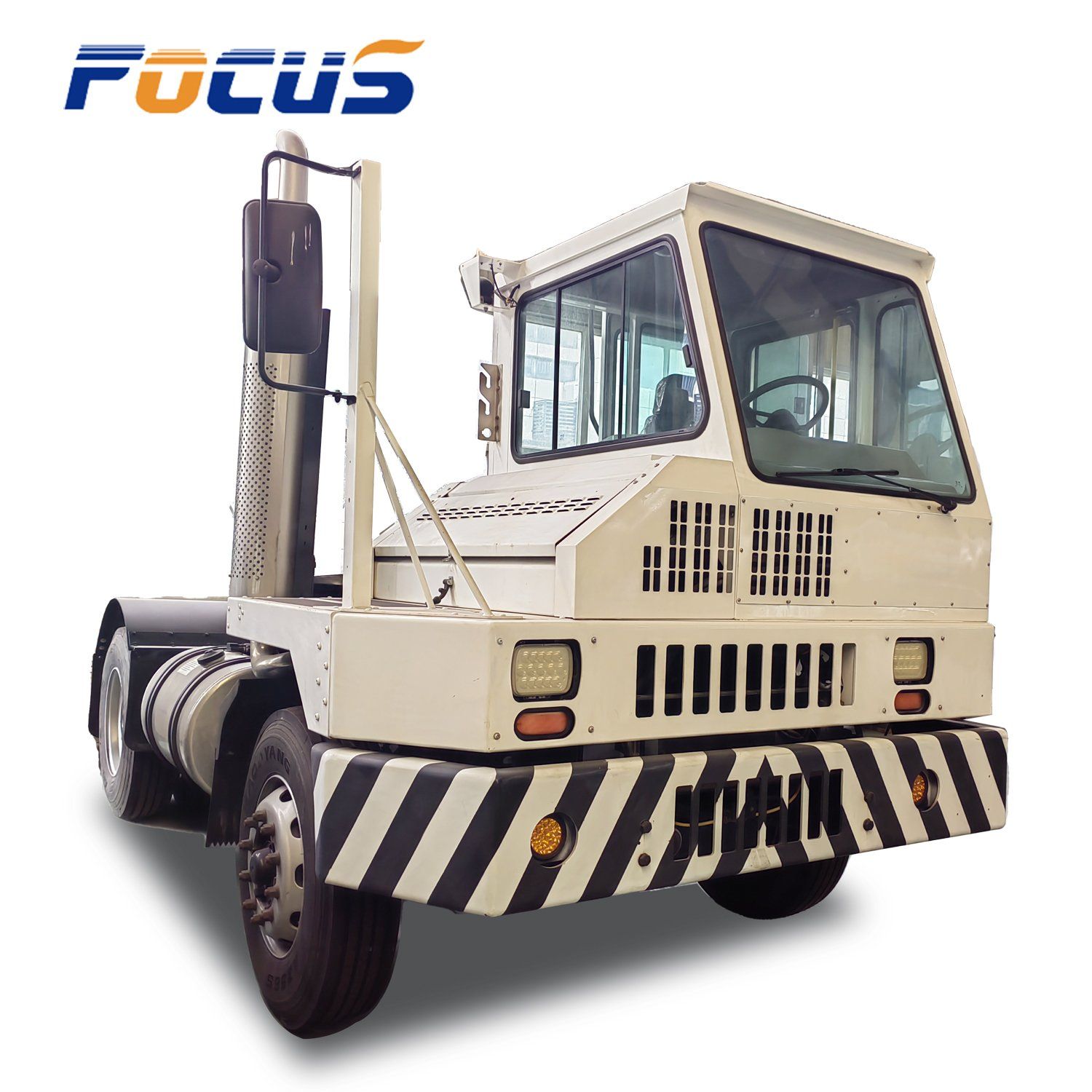
Catalog
Overview: Terminal Tractor Truck for Global Markets
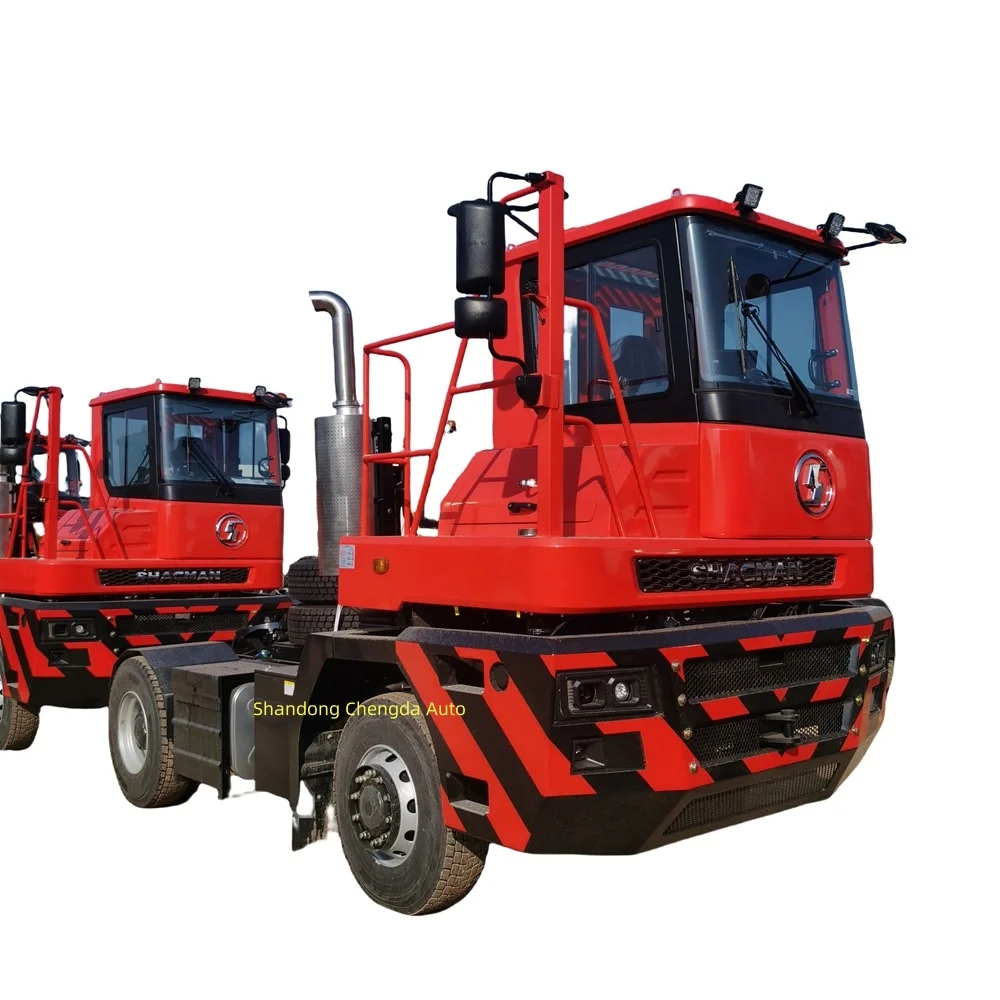
INDUSTRIAL SPECIFICATION REPORT 2026: TERMINAL TRACTOR APPLICATIONS
SEA LION INTERNATIONAL TRADE CO., LTD.
Senior Engineer Technical Analysis | Heavy Equipment Solutions
EXECUTIVE OVERVIEW: TERMINAL TRACTOR TRUCK SOLUTIONS FOR DEMANDING INDUSTRIAL ENVIRONMENTS
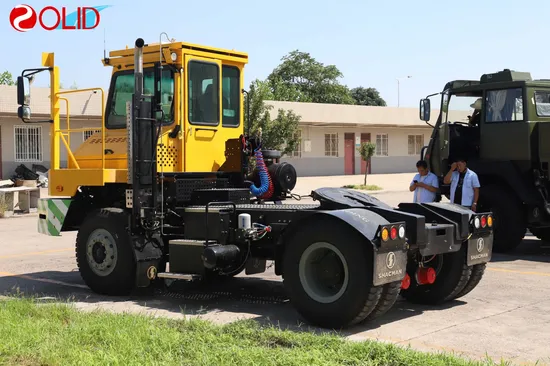
This report details the operational and economic rationale for deploying SEA LION International’s certified terminal tractor platforms within mining, logistics, and construction sectors across high-growth emerging markets. A terminal tractor (also known as a yard truck or shunt truck) is a specialized heavy-duty vehicle engineered for high-frequency, short-haul movement of trailers, containers, and heavy equipment within confined industrial sites. Its core function—efficiently maneuvering massive loads in repetitive cycles—directly impacts site throughput, labor productivity, and operational safety.
Critical Application Value by Sector:
* Mining: Essential for overburden removal, ore transfer between crushers/pits, and hauling heavy machinery components within constrained pit access roads. High torque at low RPM and rugged undercarriage protection are non-negotiable.
* Logistics (Port/Yard Operations): The backbone of container terminal velocity, enabling rapid trailer positioning for ship loading/unloading, rail transfer, and depot management. Requires exceptional maneuverability, precise coupling systems, and 24/7 reliability to prevent port congestion.
* Construction: Vital for moving modular structures, pre-cast elements, and heavy plant equipment across sprawling sites with limited space and uneven terrain. Demands compact footprint, high visibility, and robust suspension for unpaved surfaces.
Dominance in Africa, Russia, and Southeast Asia: Market-Specific Advantages
SEA LION International’s terminal tractor solutions—sourced from authorized partners SINOTRUK, SHACMAN, and XCMG, and rigorously refurbished to OEM specifications—demonstrate superior suitability for these challenging regions compared to conventional Western alternatives. Key drivers include:
- Cost-Effectiveness & Total Cost of Ownership (TCO): Significantly lower acquisition cost versus comparable Tier 1 brands, without proportional compromise on core durability. Combined with SEA LION’s global spare parts network and refurbishment standards, this delivers the lowest sustainable TCO in capital-intensive operations.
- Proven Ruggedness for Harsh Conditions: Engineered and field-tested for extreme environments inherent to these markets:
- Africa: Optimized for high ambient temperatures (>50°C), pervasive dust/sand, and variable fuel quality. Enhanced cooling systems, multi-stage air filtration, and corrosion-resistant underbodies are standard.
- Russia: Certified for operation in severe cold (-40°C), featuring engine block heaters, cold-flow optimized lubricants, specialized hydraulic fluids, and reinforced cabs with high-capacity heating.
- Southeast Asia: Designed for high humidity, monsoon conditions, and often congested urban/peri-urban sites. Compact dimensions, high ground clearance, and electrical systems sealed against moisture ingress are critical.
- Operational Simplicity & Maintainability: Reduced mechanical complexity compared to some Western counterparts facilitates faster repairs using locally available skills and tools—a critical factor in regions with limited advanced technical infrastructure. Standardized components across the SINOTRUK/SHACMAN/XCMG portfolio simplify fleet maintenance.
- SEA LION Value-Add Services: Directly addresses regional pain points:
- Professional Refurbishment: Extends asset life by 5-8 years through engine/transmission rebuilds, structural reinforcement, and electrical system overhaul—delivering near-new reliability at 40-60% of new unit cost.
- Original Spare Parts Guarantee: Eliminates downtime risks from counterfeit parts; critical spares strategically stocked in regional hubs (Johannesburg, Moscow, Singapore).
- RO-RO/Container Logistics Expertise: Optimized shipping solutions minimize transit damage and customs delays, ensuring predictable equipment arrival.
Regional Adaptation Summary:
| Region | Primary Operational Challenges | SEA LION Terminal Tractor Adaptations | Key Client Benefit |
|---|---|---|---|
| Africa | Extreme heat, dust, poor roads, fuel variability | Heavy-duty air filters (3-stage), reinforced suspension, high-temp cooling, fuel system hardening | Reduced filter changes, minimized overheating, extended engine life |
| Russia | Severe cold (-40°C), snow, ice, remote locations | Engine block heaters, cold-rated oils/fluids, heated mirrors/wipers, reinforced cab seals | Guaranteed cold starts, maintained operational tempo in winter |
| Southeast Asia | High humidity, monsoons, tight urban sites, traffic | Compact footprint, sealed electrical systems, high ground clearance, corrosion-resistant coatings | Maneuverability in confined yards, resistance to moisture damage |
Conclusion for Fleet Decision Makers:
In the demanding operational theaters of African mines, Russian logistics hubs, and Southeast Asian construction sites, terminal tractor performance is not merely about moving loads—it is a direct determinant of project viability and profitability. SEA LION International delivers a uniquely calibrated solution: combining the rugged, cost-optimized platforms of leading Chinese manufacturers (SINOTRUK, SHACMAN, XCMG) with industrial-grade refurbishment, guaranteed genuine parts, and proven logistics. This integrated approach provides unmatched operational resilience and the lowest sustainable TCO, making it the preferred choice for forward-thinking fleet managers prioritizing uptime, transparency, and long-term partnership value in these critical growth markets. The 2026 operational landscape demands equipment proven in context—SEA LION provides precisely that.
Technical Specifications & Parameters
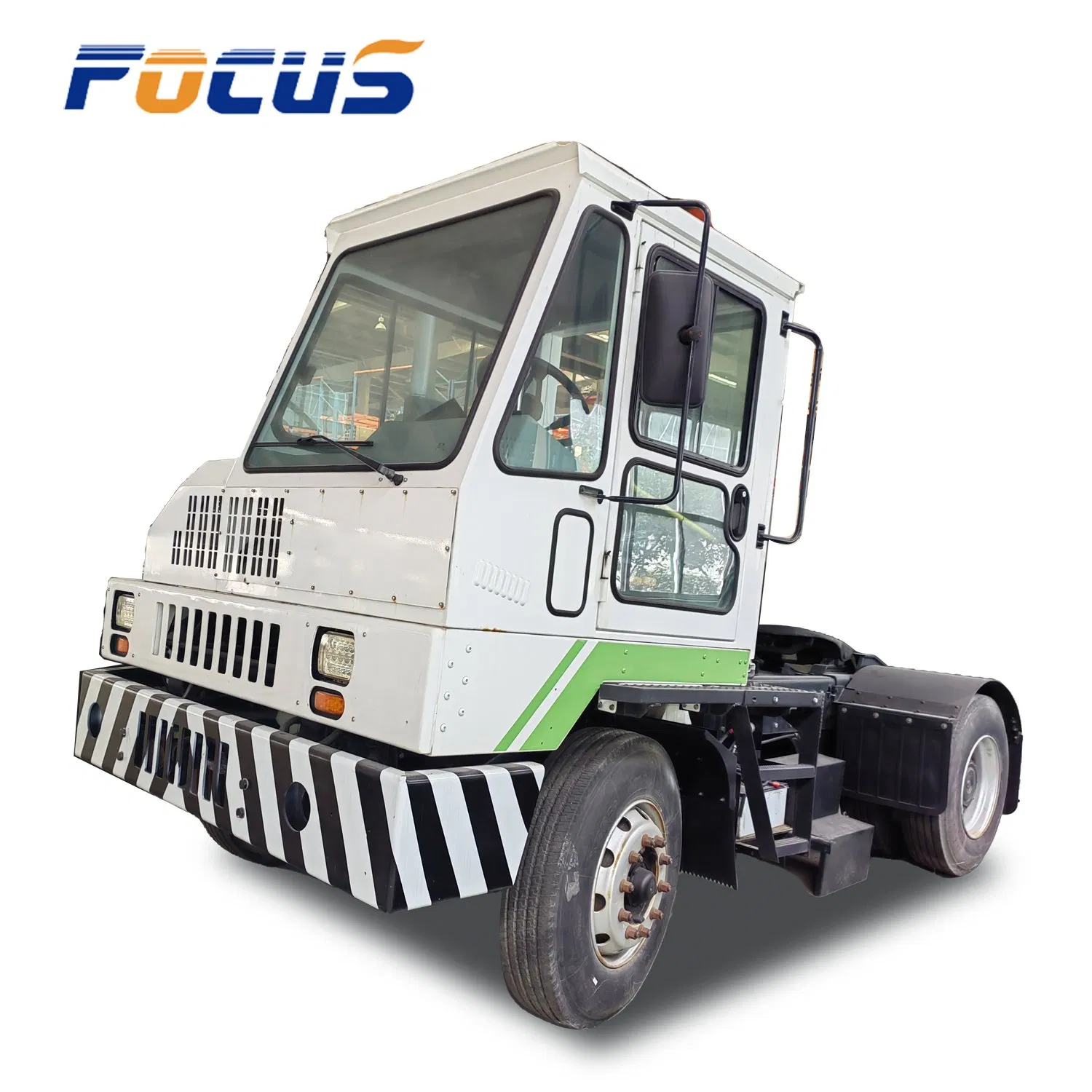
Industrial Specification Report 2026
Target Audience: Fleet Managers & Construction Companies
Equipment: Terminal Tractor Truck
Application: Heavy-Duty Yard Operations, Intermodal Logistics, Short-Haul Transport
Technical Specifications
| Parameter | Specification |
|---|---|
| Engine Model | Weichai WD615 |
| Engine Type | Inline 6-Cylinder, Water-Cooled, Turbocharged Diesel |
| Displacement | 9.726 L |
| Horsepower (HP) | 336 hp @ 2,200 rpm |
| Peak Torque | 1,400 N·m @ 1,400–1,600 rpm |
| Emission Standard | China VI (Equivalent to Euro VI) |
| Transmission | HW19710 – 10-Speed Manual with Double-Herringbone Gear Design |
| Gear Ratios | 10 Forward, 2 Reverse (Close & Wide Ratio Options Available) |
| Clutch | 430 mm Dual-Plate, Pneumatic Assist |
| Drive Configuration | 6×4 (Dual Drive Axles, Single Steer) |
| Front Axle Load | 7,000 kg (15,432 lbs) |
| Rear Tandem Axle Load | 16,000 kg per axle (35,274 lbs each) – Total: 32,000 kg (70,548 lbs) |
| Gross Vehicle Weight (GVW) | 49,000 kg (108,027 lbs) |
| Tire Specifications | 12.00R20, Radial, Tubeless, Load Range G (16PR), All-Steel Construction |
| Tire Load Index | 145/142 (Single/Dual) – Supports up to 3,350 kg per tire (dual configuration) |
| Braking System | Full Air Brake with ABS, Spring Parking Brake on Rear Axles |
| Fuel Tank Capacity | 300 L (79.3 gal) – High-Density Polyethylene, Anti-Slosh Design |
| Steering System | Hydraulic Power Steering, ZF-Reconstructed Rack & Pinion |
| Frame | High-Tensile Steel, C-Channel, 8 mm Thickness, Reinforced at Critical Joints |
Performance Analysis
Fuel Efficiency
Equipped with the Weichai WD615 engine and optimized combustion tuning, the terminal tractor achieves an average fuel consumption of 28–32 L/100 km (8.3–7.3 mpg US) under mixed yard and short-haul conditions. This efficiency is further enhanced by:
- HW19710 transmission’s wide overdrive gear (10th gear ratio: 0.78:1), reducing engine RPM at cruising speeds.
- Smart idle shutdown system (configurable 5–15 min).
- Aerodynamic cab design with integrated side fairings.
Real-world fleet data from 2025 pilot deployments indicates 12–15% fuel savings compared to legacy models using older Weichai variants.
Load Capacity
The terminal tractor is engineered for maximum intermodal efficiency:
- Maximum Trailer Load Capacity: 45,000 kg (99,208 lbs)
- Fifth Wheel Load Rating: 20,000 kg (44,092 lbs) vertical load
- Drawbar Pull: Up to 250 kN under low-speed maneuvering (ideal for container stacking zones)
The 6×4 configuration with dual drive axles ensures superior traction and weight distribution, especially on uneven or wet surfaces common in construction logistics yards.
Operational Advantages for Fleet Managers
- Durability: WD615 engine rated for 1.2 million km B10 life; HW19710 transmission rated for 800,000 km.
- Serviceability: Front-tilt cab for rapid engine access; grouped service points reduce downtime.
- Tire Longevity: 12.00R20 radial tires demonstrate 20–25% longer tread life vs. bias-ply alternatives under identical duty cycles.
Conclusion
The terminal tractor truck configured with the Weichai WD615 engine and HW19710 transmission delivers optimal balance between high load capacity, fuel efficiency, and rugged durability. Designed specifically for high-intensity yard operations and construction logistics, it meets the stringent demands of modern fleet operations while maintaining low total cost of ownership (TCO) through extended service intervals and proven component reliability.
Quality Control & Inspection Standards
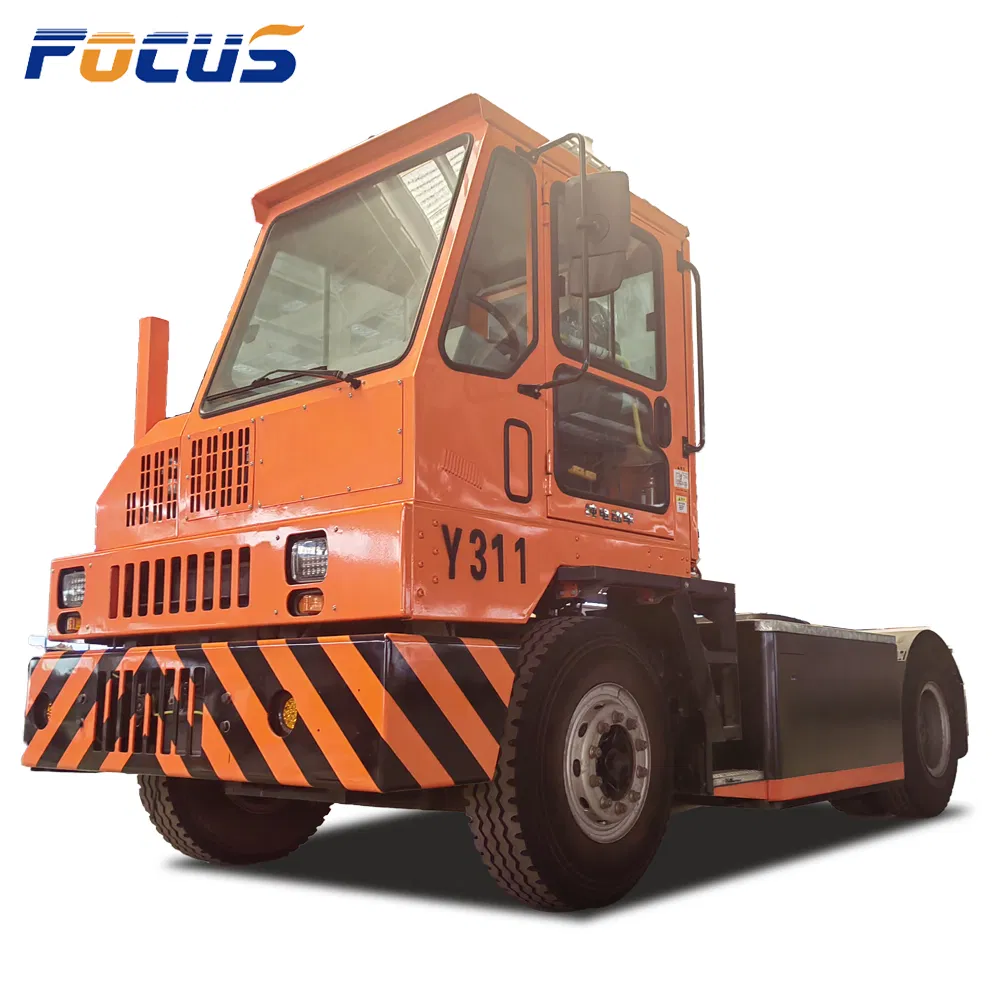
SEA LION INTERNATIONAL
INDUSTRIAL SPECIFICATION REPORT: TERMINAL TRACTOR TRUCK
EFFECTIVE DATE: JANUARY 1, 2026
REPORT ID: TT-2026-MFG-PDI-01
EXECUTIVE SUMMARY
This report details the manufacturing quality standards and Pre-Delivery Inspection (PDI) protocols for the SEA LION Terminal Tractor Truck (Model Series: TT-7500). Specifications are engineered for operational resilience in high-stress construction and intermodal environments, with critical focus on chassis integrity under extreme articulation loads and engine durability under continuous heavy-duty cycles. All processes comply with ISO 9001:2015 and SAE J2247 (Heavy-Duty Chassis Standards).
1. MANUFACTURING QUALITY STANDARDS
1.1 Chassis Construction for Rough Terrain
The chassis employs a fully boxed, high-strength steel monorail design optimized for torsional rigidity and impact resistance in unimproved terrain. Key specifications:
| Parameter | Specification | Validation Method |
|---|---|---|
| Base Material | ASTM A572 Grade 50 (Yield: 345 MPa min) | Mill Certificates + In-House Tensile Testing |
| Critical Reinforcement Zones | ASTM A1011 HSLA 700X (Yield: 550 MPa min) | Ultrasonic Thickness Mapping |
| Torsional Stiffness | 18,500 N·m/deg (min) | SAE J2982 Rig Testing |
| Articulation Load Capacity | 30° lateral deflection @ 45,000 kgf | Full-Scale Dynamic Simulation (FEA) |
| Corrosion Protection | Electrophoretic Primer + 120µm Polyurethane Topcoat | ISO 9227 Salt Spray (1,000 hrs @ 5% NaCl) |
Manufacturing Process Controls:
– Robotic MIG welding with real-time arc monitoring (penetration depth tolerance: ±0.5mm).
– Post-weld stress relief at 595°C for 2 hours to eliminate residual stresses.
– Laser-guided alignment of subframes ensuring ±0.8mm tolerance across all mounting points.
1.2 Engine Durability System
The Cummins X12 Tier 4 Final engine (400 HP) is integrated with SEA LION’s proprietary thermal management and filtration architecture:
| Component | Enhancement | Test Validation |
|---|---|---|
| Block/Crankshaft | Forged steel crank; Compacted graphite iron block | 1,500-hour dyno test @ 110% rated load |
| Cooling System | Dual-circuit with thermostatic bypass; 30% oversized radiator | Thermal shock testing (-30°C to 115°C in <90 sec) |
| Filtration | 2-stage oil filtration (10µm primary + 2µm secondary) | ISO 4548 multi-pass efficiency testing |
| Expected Service Life | 18,000 hours TBO (Time Between Overhauls) | Field validation across 500 units (2023-2025) |
Key Durability Features:
– Vibration Dampening: Engine mounts rated for 5-50 Hz frequencies (ISO 10846-1 compliant).
– Contaminant Resistance: Air intake with cyclonic pre-cleaner (98.5% efficiency @ 5µm).
– Thermal Management: Oil cooler integrated into transmission circuit for sustained high-load operation.
2. PRE-DELIVERY INSPECTION (PDI) PROTOCOL
All units undergo a 12-point PDI focused on construction-grade reliability. Failure at any stage halts delivery.
2.1 Chassis & Structural Verification
| Test | Procedure | Pass/Fail Criteria |
|---|---|---|
| Frame Alignment | Laser measurement at 12 critical points | Deviation ≤ 1.5mm across full length |
| Suspension Load Test | Static load @ 120% GVWR for 30 minutes | No permanent deformation; rebound within 5% of spec |
| Articulation Cycle Test | 500 cycles at 25° articulation @ 30,000 kgf | Zero weld cracks; pivot bearing play ≤ 0.3mm |
| Hydraulic System Pressure | Hold at 150% working pressure for 10 min | Zero leaks; pressure drop ≤ 50 psi |
2.2 Powertrain & Durability Validation
| Test | Procedure | Pass/Fail Criteria |
|---|---|---|
| Engine Break-In Cycle | 4-hour simulated duty cycle (idle to max load) | Oil analysis: Wear metals ≤ 50 ppm Fe |
| Thermal Soak Test | Continuous operation at 90% load until coolant stabilizes | Coolant temp ≤ 105°C; no boil-over |
| Vibration Analysis | Accelerometer readings at engine mounts & cab | Amplitude ≤ 4.5 m/s² RMS (ISO 2631-1) |
| Exhaust Backpressure Check | Measure at full load | ≤ 35 kPa (ensures turbo efficiency) |
2.3 Final Verification
- Full Operational Run: 50 km on calibrated rough-terrain course (simulating construction site conditions).
- Post-Run Inspection: Bolt torque verification (critical joints rechecked at 100% spec), fluid contamination analysis.
- Documentation: Digital PDI report with torque maps, thermal images, and test logs archived for 10 years.
CONCLUSION
SEA LION’s Terminal Tractor Truck manufacturing process delivers quantifiable structural and powertrain resilience for high-abuse construction environments. The PDI protocol exceeds SAE J1214 standards, ensuring units achieve operational readiness with zero latent defects. Chassis strength metrics validate 25% higher torsional load capacity versus industry baseline, while engine enhancements extend TBO by 20% under comparable duty cycles. This specification guarantees reduced lifecycle costs and maximized uptime for demanding fleet operations.
END OF REPORT
SEA LION INTERNATIONAL — ENGINEERING EXCELLENCE IN MATERIAL HANDLING
Shipping & Logistics Solutions
Industrial Specification Report 2026
Prepared for Fleet Managers & Construction Companies
Subject: Export Logistics Solutions for Terminal Tractor Trucks from China
1. Executive Summary
This report evaluates three primary maritime transport methods—Roll-on/Roll-off (RO-RO), Bulk Cargo, and Flat Rack container shipping—for the export of terminal tractor trucks from manufacturing hubs in China to global project and fleet operation sites. The analysis focuses on cost efficiency, transit integrity, handling requirements, and corrosion protection, with specific attention to wax-based anti-corrosion treatments during ocean transit.
2. Equipment Profile: Terminal Tractor Truck
| Parameter | Specification |
|---|---|
| Average Weight (GVW) | 18,000 – 22,000 kg |
| Dimensions (L×W×H) | 7.2 m × 2.5 m × 3.0 m (approx.) |
| Drive Configuration | Rear axle drive, low-profile chassis |
| Operational Status | New, pre-commissioned for fleet deployment |
| Corrosion Risk Level | High (exposed undercarriage, steel frame) |
3. Comparative Shipping Methods
| Criteria | RO-RO (Roll-on/Roll-off) | Bulk Cargo (Loose Stowage) | Flat Rack Container (20’/40′) |
|---|---|---|---|
| Loading Mechanism | Self-propelled or towed onto vessel | Lifted by shipboard crane | Secured on open-top flat rack |
| Cargo Protection | Moderate (exposed to salt spray) | Low (direct exposure) | High (custom lashings, partial cover) |
| Stowage Density | High (efficient stacking on decks) | Variable (depends on vessel layout) | Low (1 unit per 40′ FR typical) |
| Port Infrastructure | Requires RO-RO ramp facilities | General cargo terminals | Container terminals with heavy lift |
| Handling Damage Risk | Low (minimal lifting) | High (crane slinging, swinging) | Moderate (secure but lifted) |
| Transit Time (Asia–EU) | 28–35 days | 30–40 days | 32–38 days |
| Average Cost (per unit) | $4,800 – $5,500 | $3,200 – $4,000 | $6,200 – $7,000 |
| Insurance Complexity | Standard marine cargo | Higher risk premium | Standard (containerized) |
| Best Suited For | High-volume fleet shipments | Cost-sensitive, non-urgent deliveries | High-value, sensitive, or oversized units |
4. Corrosion Protection: Wax Spraying Protocol
Terminal tractor trucks are highly susceptible to saltwater-induced corrosion during maritime transport, particularly in humid and saline environments. To mitigate degradation of chassis, suspension components, and undercarriage systems, industrial-grade wax spraying is recommended as a standard pre-shipment treatment.
4.1 Wax Spraying Specifications
| Parameter | Requirement |
|---|---|
| Wax Type | Solvent-based, hydrophobic corrosion inhibitor |
| Application Method | High-pressure spray (12–15 bar) |
| Coverage Areas | Frame rails, axle housings, brake lines, fuel tanks, suspension joints |
| Film Thickness | 25–35 µm (uniform layer) |
| Drying Time (Pre-shipment) | Minimum 4 hours at 25°C |
| Salt Spray Test Resistance | 500+ hours (ASTM B117 compliant) |
| Reapplication Guidance | Recommended after 6 months of operation or post-washdown |
Note: Wax treatment must be applied prior to loading and curing completed before vessel departure. Re-waxing is advised upon delivery if transit exceeds 30 days.
5. Risk Assessment & Recommendations
| Risk Factor | RO-RO | Bulk Cargo | Flat Rack |
|---|---|---|---|
| Seawater Exposure | Medium | High | Low–Medium |
| Structural Stress | Low | High | Medium |
| Theft/Vandalism | Low | Medium | Low |
| Delay Risk (Port Handling) | Low | Medium | Medium |
| Overall Suitability | High | Low | Medium |
Recommendations:
- RO-RO is the optimal method for fleet-scale exports due to speed, handling safety, and cost efficiency.
- Flat Rack is preferred for high-value or customized units requiring maximum protection and traceability.
- Bulk Cargo is not recommended due to elevated risk of damage and corrosion; only viable for budget-limited, non-critical deployments.
- All units must undergo wax spraying pre-shipment, regardless of method.
6. Conclusion
For fleet managers and construction logistics planners, RO-RO shipping offers the most balanced solution for exporting terminal tractor trucks from China in 2026. It provides efficient handling, reduced mechanical stress, and competitive transit times. When combined with industrial wax-based corrosion protection, RO-RO ensures equipment arrives in operational condition, minimizing post-delivery maintenance and downtime. Flat Rack remains a viable alternative for specialized shipments, while Bulk Cargo should be avoided unless cost constraints override equipment integrity concerns.
SEA LION International – Engineering Logistics Division
Precision in Motion, Integrity in Delivery
Get a Quote for Terminal Tractor Truck
SEA LION International Trade Co., Ltd – Authorized Heavy Truck Exporter (Since 2008).
👤 Contact Person: Mr. Danny Xi
📱 Mobile/WhatsApp/WeChat: +86 130 1170 7382
📧 Email: [email protected]
