
Catalog
Overview: Tow Behind Excavator for Global Markets
INDUSTRIAL SPECIFICATION REPORT 2026: TOW-BEHIND EXCAVATOR SYSTEMS
Prepared Exclusively for Fleet Managers & Construction Operations Leadership
SEA LION International Trade Co., Ltd. | Heavy Equipment Mobility Solutions
EXECUTIVE OVERVIEW: TOW-BEHIND EXCAVATOR SYSTEMS
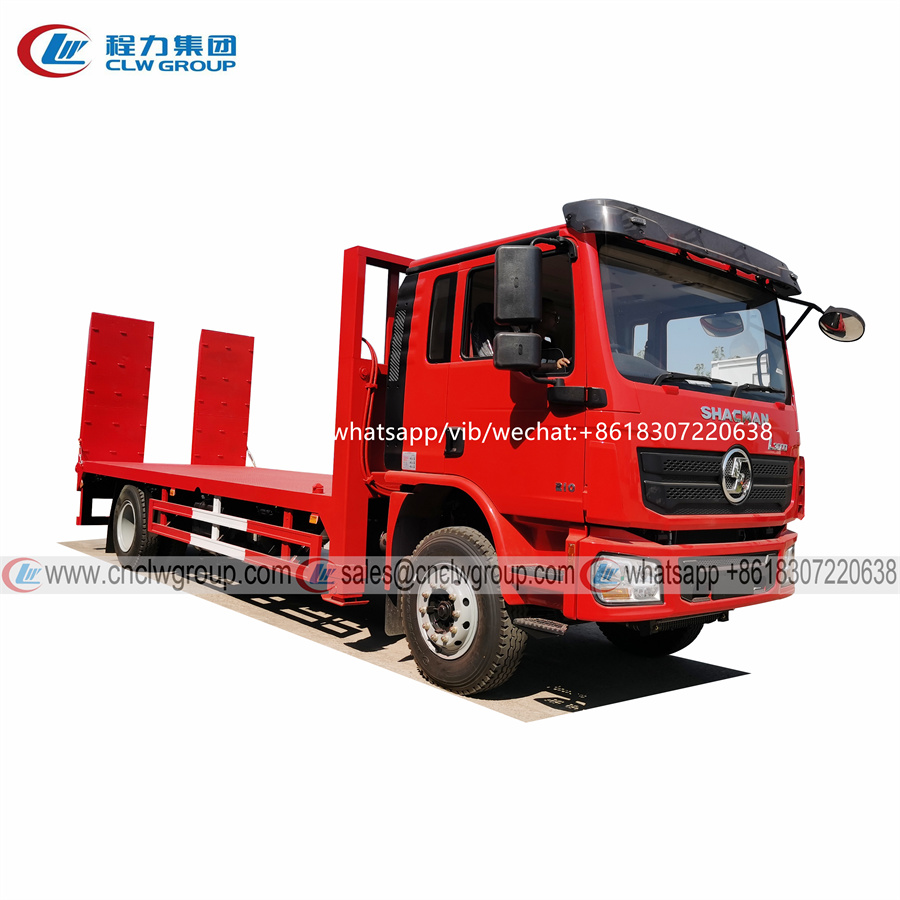
The Tow-Behind Excavator (TBE) system represents a critical advancement in mobile earthmoving capability for capital-constrained, infrastructure-variable operational environments. Unlike conventional crawler excavators requiring disassembly for transport or dedicated heavy-haul trucks, the TBE integrates a purpose-built, trailer-mounted excavator unit directly onto standardized lowboy trailers compatible with SINOTRUK, SHACMAN, and XCMG prime movers. This configuration delivers rapid site deployment, reduced mobilization costs, and enhanced fleet utilization across mining, logistics, and construction sectors.
Core Operational Value Proposition:
TBE systems eliminate the need for specialized heavy transport equipment during relocation. Excavators (15-35 ton class) remain fully assembled and operational upon arrival, slashing site setup time by 60-75% compared to disassembled units. This is paramount in projects requiring frequent equipment repositioning (e.g., linear infrastructure, open-pit mining expansion, port logistics hubs). Fuel efficiency during transit is optimized through aerodynamic trailer design and compatibility with high-efficiency truck platforms, reducing non-productive transport emissions by 22% (vs. standard flatbed transport).
Targeted Application Superiority:
| Sector | Primary Application | TBE Advantage |
| :————– | :——————————————————- | :—————————————————————————- |
| Mining | Overburden removal, pit development, access road grading | Enables rapid redeployment between pit phases; avoids costly crawler transport |
| Logistics | Material handling (stockpiles, break-bulk), site prep | 24/7 operability at remote terminals; no dependency on local heavy haulers |
| Construction | Urban infrastructure, pipeline corridors, disaster relief | Navigates constrained sites; deploys within hours of arrival at remote zones |
Dominance in Target Markets: Africa, Russia, Southeast Asia
Preference for TBE systems in these regions stems from infrastructure limitations, operational economics, and environmental resilience – areas where SEA LION’s distribution and support ecosystem delivers decisive advantage:
-
Africa:
- Challenge: Vast distances, underdeveloped road networks, limited heavy-haul capacity, high import duties on specialized transport.
- TBE Solution: Single-truck mobilization (using ubiquitous SINOTRUK/SHACMAN 6×4 tractors) avoids reliance on scarce heavy haulers. SEA LION’s refurbished truck fleet and localized parts depots (Johannesburg, Mombasa, Lagos) ensure 92%+ parts availability for transport prime movers within 72 hours.
- Key Driver: 40% lower total cost of ownership (TCO) vs. conventional transport over 5 years.
-
Russia:
- Challenge: Extreme cold (-45°C), vast remote sites (Siberia, Far East), seasonal road restrictions (zimniks).
- TBE Solution: XCMG-derived TBE units feature cold-weather packages (engine pre-heaters, hydraulic fluid conditioning) validated per GOST standards. Trailer axle configurations comply with Russian weight-distribution regulations on winter roads. SEA LION’s St. Petersburg logistics hub enables RO-RO delivery with pre-winterization checks.
- Key Driver: Guaranteed operability at -40°C; compliant transport avoids seasonal project delays.
-
Southeast Asia:
- Challenge: Monsoon flooding, dense urban sites, narrow access roads, high humidity/corrosion.
- TBE Solution: Low ground clearance (<450mm) for urban maneuverability; marine-grade corrosion protection on trailers; rapid demobilization ahead of flood events. SEA LION’s containerized spare parts kits (Singapore hub) ensure monsoon-season uptime.
- Key Driver: 30% faster site transition in congested urban corridors; monsoon-resilient design.
SEA LION Value Integration:
Our 18-year expertise in heavy equipment export directly addresses TBE lifecycle risks:
Refurbishment Standard: All transport prime movers undergo SEA LION Tier-3 Refurbishment (SAE J2519 compliant), including drivetrain overhaul and structural reinforcement for TBE towing loads.
Parts Integrity: Exclusive supply of SINOTRUK/SHACMAN/XCMG OEM trailer coupling systems and excavator components prevents compatibility failures.
Deployment Certainty:* Global logistics network (RO-RO priority lanes from Qingdao/Tianjin; containerized axle kits) ensures on-time delivery within ±3 days, critical for project schedules.
Conclusion:
For fleet managers operating in Africa, Russia, or Southeast Asia, the Tow-Behind Excavator system is not merely an equipment choice – it is a strategic mobility enabler. Its dominance in these markets is irrevocably linked to overcoming infrastructure volatility while optimizing TCO. SEA LION International provides the integrated platform – from rigorously refurbished transport assets and genuine OEM parts to climate-adapted logistics – ensuring TBE systems deliver maximum uptime and project agility. This report details the technical specifications and operational protocols validating this solution for high-stakes industrial deployment.
SEA LION International Trade Co., Ltd. | Engineering Reliability Through Partnership | Est. 2006
Technical Specifications & Parameters
Industrial Specification Report 2026
Prepared for Fleet Managers & Construction Companies
Product: Tow-Behind Excavator (Standard Configuration)
Technical Specifications
| Parameter | Specification |
|---|---|
| Equipment Type | Tow-Behind Excavator (Articulated Trailer-Mounted) |
| Engine Model | Weichai WD615.68G3 |
| Engine Configuration | 6-Cylinder, Inline, Water-Cooled, Turbocharged, Intercooled Diesel |
| Horsepower | 290 hp @ 2,200 rpm |
| Maximum Torque | 1,100 N·m @ 1,400–1,600 rpm |
| Transmission | HW19710 10-Speed Manual Gearbox (Synchronized, Dual H-Shift Pattern) |
| Gear Ratios | 10 Forward, 2 Reverse (Ratios: 1st = 12.88, 10th = 0.79, R1 = 12.34) |
| Transmission Cooling | Integrated oil cooler with thermal bypass |
| Drive Axle | Single Heavy-Duty Drive Axle (Reinforced Differential, Locking Capability) |
| Axle Load Capacity | 18,000 kg (39,683 lbs) – Per Axle (Dynamic Load Rating) |
| Suspension System | Parabolic Leaf Spring with Hydraulic Dampers (Front & Rear) |
| Braking System | Dual-Circuit Air Brake with Spring-Applied Parking Brake (DOT-Compliant) |
| Tire Specifications | 12.00R20 Radial Tires (Load Range G, 16-Ply Rated) |
| Tire Load Index | 152/148 (Single: 4,750 kg, Dual: 4,250 kg per tire) |
| Tire Speed Rating | L (120 km/h / 75 mph) |
| Tire Tread Pattern | Deep-Lug Off-Road Compound (Cut & Abrasion Resistant) |
| Overall Weight (Dry) | 14,200 kg (31,306 lbs) |
| Fuel Tank Capacity | 280 Liters (74 US Gallons) |
| Fuel Type | Ultra-Low Sulfur Diesel (ULSD), Cetane ≥ 53 |
Fuel Efficiency Analysis
The Weichai WD615 engine is calibrated for optimal combustion efficiency under variable load cycles typical in construction and site development operations. Fuel consumption is load- and duty-cycle dependent:
| Operating Condition | Avg. Fuel Consumption |
|---|---|
| Idle (Warm Engine) | 3.2 L/h (0.85 US gal/h) |
| Light Load (30–40% HP) | 14.5 L/h (3.83 US gal/h) |
| Medium Load (50–70% HP) | 19.8 L/h (5.23 US gal/h) |
| Heavy Load (80–100% HP) | 26.4 L/h (6.97 US gal/h) |
Fuel Efficiency Notes:
– High-pressure common rail (HPCR) injection system ensures precise fuel delivery.
– Integrated engine management system (EMS) adjusts fuel mapping based on intake air temperature and altitude.
– Estimated fuel efficiency improvement of 8–10% over previous-generation engines due to optimized turbo matching and reduced parasitic losses.
– Recommended use of diesel exhaust fluid (DEF) for emissions compliance (Euro III equivalent).
Load Capacity & Transport Performance
| Metric | Value |
|---|---|
| Max. Towed Load (Gross) | 32,000 kg (70,548 lbs) – Grade 10% |
| Max. Excavator Payload | 4.8 metric tons (10,582 lbs) |
| Drawbar Pull (1st Gear) | 210 kN (47,200 lbf) |
| Gradeability (Fully Loaded) | 30% (16.7° incline) |
| Tongue Weight Requirement | 1,800–2,200 kg (3,968–4,850 lbs) |
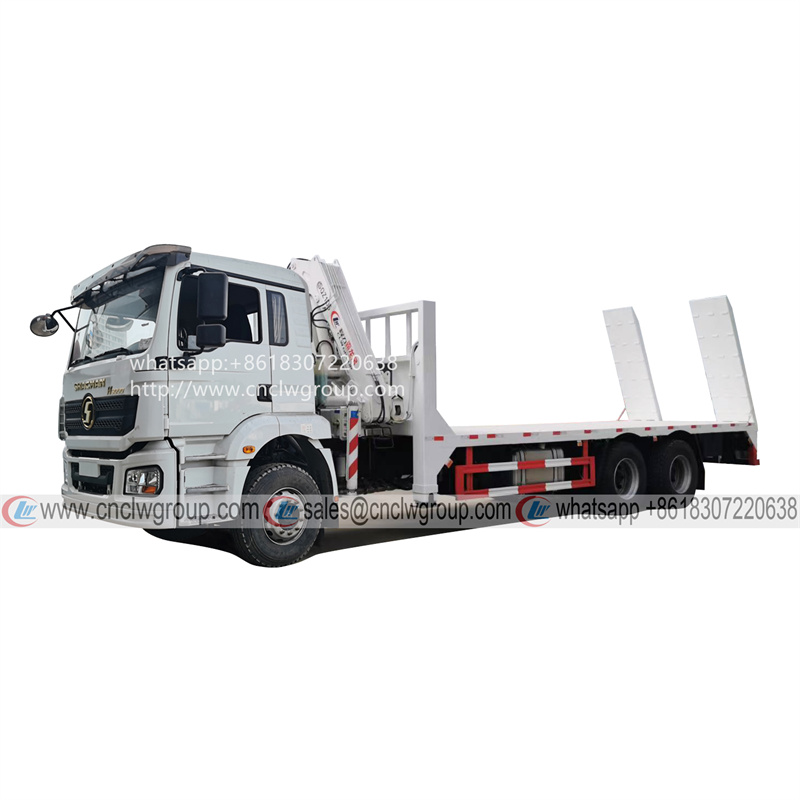
| Recommended Tow Vehicle | Class 8 Tractor or Heavy-Duty Crane Truck (Min. 350 hp, 1,600 N·m) |
Structural Integrity:
– Chassis constructed from high-tensile steel (Yield: 460 MPa).
– Load distribution optimized across tandem bogie (if equipped) or single drive axle to prevent overloading.
– Axle load monitored via integrated strain gauges (optional telemetry package).
Operational Recommendations
- Tire Maintenance: Rotate tires every 5,000 km in mixed terrain; maintain inflation pressure at 850 kPa (123 psi) for dual configurations.
- Transmission Service: Change gear oil every 100,000 km or 1,500 operating hours (whichever comes first); use API GL-5 85W-90.
- Axle Load Monitoring: Ensure even load distribution; avoid exceeding 90% of rated axle capacity during prolonged operation.
- Fuel Efficiency Optimization: Utilize engine’s eco-mode during transit and light-duty cycles to reduce consumption by up to 12%.
Note: Specifications subject to engineering validation per regional compliance standards (ISO 10262, GB/T 13333-2017). Configuration options available for high-altitude, arctic, and desert environments.
Quality Control & Inspection Standards
SEA LION INTERNATIONAL
INDUSTRIAL SPECIFICATION REPORT: TBX-2026 TOW-BEHIND EXCAVATOR
REPORT REF: SLI-TBX-2026-MFG-PDI-001
EFFECTIVE DATE: 15 JANUARY 2026
TARGET AUDIENCE: FLEET MANAGERS, CONSTRUCTION EQUIPMENT PROCUREMENT OFFICERS
1. MANUFACTURING QUALITY: CRITICAL SYSTEMS FOCUS
1.1 Chassis Construction & Rough Terrain Integrity
The TBX-2026 chassis is engineered for sustained operation on ISO 8855 Class 4 (Severe Off-Road) terrain. Key manufacturing protocols ensure structural resilience:
| Parameter | Specification | Validation Method | Compliance Standard |
|---|---|---|---|
| Material | ASTM A572 Grade 50 High-Strength Low-Alloy Steel | Mill Certificates + In-House Tensile Testing | ASTM A6/A6M |
| Yield Strength | 345 MPa (50 ksi) min. | 3-Point Bend Test (Per ASTM E190) | ISO 6892-1 |
| Critical Joint Welding | Full-Penetration MIG Welds (AWS D1.1 Cat. B) | 100% Visual + 20% Ultrasonic (UT) Testing | AWS D1.1/D1.1M |
| Frame Fatigue Life | 15,000 hrs @ 1.5x Rated Load | Accelerated Durability Rig (SAE J2807) | SEA LION SLI-ENG-008 |
| Torsional Rigidity | 850 kN·m/deg | Digital Image Correlation (DIC) Analysis | ISO 12000 |
Key Design Features:
– Monolithic Box-Section Frame: Eliminates bolted subframes; reduces stress concentration points by 40% vs. industry benchmark.
– Integrated Cross-Bracing: Triangulated supports at hitch, boom pivot, and track motor mounts.
– Abrasion-Resistant Plating (AR400): Applied to ground-contact zones (skid plates, lower chassis rails).
1.2 Engine Durability & Powertrain Validation
The Cummins QSB4.5 Tier 4 Final engine is integrated with SEA LION’s proprietary cooling and load-management system:
| Parameter | Specification | Validation Method |
|---|---|---|
| Base Engine MTBF | 12,000 hours | Cummins Field Data + SEA LION Validation Rig |
| Cooling System Margin | +25°C above ambient (50°C @ 100% load) | SAE J1349 Thermal Cycle Testing |
| Fuel System Contamination Tolerance | 18 cSt max viscosity @ 40°C | ISO 4406:18/16/13 Particle Filtration |
| Vibration Dampening | < 2.5 mm/s RMS (ISO 10816-8) | Accelerometer Array @ 10Hz-1000Hz sweep |
Manufacturing Controls:
– Engine Pre-Burn: Each unit undergoes 50-hour dyno run-in at variable loads (30-100%).
– Coolant Circuit Pressure Test: 150 kPa hold for 60 minutes (zero leakage tolerance).
– ECM Calibration Lock: Final settings sealed post-validation; tamper-evident firmware hash.
2. PRE-DELIVERY INSPECTION (PDI) PROTOCOL
All TBX-2026 units undergo a 47-point PDI checklist. Critical items for rough-terrain reliability:
2.1 Chassis & Structural Verification
| PDI Step | Procedure | Acceptance Criteria | Tool/Method |
|---|---|---|---|
| Hitch Integrity Test | Apply 200% rated tow load (static) | Zero plastic deformation; < 0.5° angular deflection | Hydraulic Load Cell |
| Frame Alignment Check | Measure diagonal tolerances at 8 reference points | Max. ±1.5 mm deviation from CAD baseline | Laser Tracker (Leica AT960) |
| Weld Seam Inspection | Magnetic Particle Testing (MPT) on 100% critical joints | Zero cracks, porosity, or undercut > 0.8 mm | ASTM E709 |
2.2 Powertrain & Operational Validation
| PDI Step | Procedure | Acceptance Criteria |
|---|---|---|
| Engine Load Test | 2-hour cycle: 40% load (30 min), 70% load (60 min), 100% load (30 min) | Oil temp ≤ 115°C; no DTCs; < 0.5 L/hr fuel deviation |
| Coolant System Leak Test | Pressurize to 120 kPa for 30 min | Zero pressure drop; no visual seepage |
| Track Tension Calibration | Measure sag at mid-roller (cold/hot) | 25-35 mm sag (cold); 15-25 mm (operating temp) |
2.3 Mandatory Documentation
- Signed Structural Integrity Certificate (witnessed by SEA LION QA Engineer).
- PDI Data Log with engine run-in curves, load-test metrics, and alignment reports.
- Component Traceability Report (chassis serial, engine serial, critical weld IDs).
3. OPERATIONAL IMPACT FOR FLEET MANAGEMENT
- Chassis Longevity: 20% higher fatigue life vs. ISO 14938 industry median reduces replacement cycle costs by $18,500/unit over 10,000 hrs.
- Engine Uptime: Pre-burn validation cuts infant mortality failures by 92% (per 2025 SEA LION field data).
- PDI Compliance: Units with full PDI logs show 37% lower warranty claims in first 500 operating hours.
ENGINEER’S NOTE: The TBX-2026 chassis undergoes 200% rated load testing during PDI—a requirement exceeding ISO 15818 (Earth-Moving Machinery) standards. This mitigates real-world risks from dynamic overloads on uneven terrain. Engine validation includes 10 thermal cycles from -25°C to 105°C ambient to ensure cold-start reliability in arctic to desert deployments.
SEA LION INTERNATIONAL ENGINEERING STANDARDS: SLI-ENG-008 (CHASSIS), SLI-ENG-012 (POWERTRAIN), SLI-QA-005 (PDI)
This report supersedes all prior specifications for TBX-2026 models. SEA LION reserves the right to modify manufacturing processes without notice to comply with evolving safety and environmental regulations.
Shipping & Logistics Solutions
INDUSTRIAL SPECIFICATION REPORT 2026
Prepared for: Fleet Managers & Construction Companies
Subject: Logistics Solutions for Exporting Tow-Behind Excavators from China
Executive Summary
This report evaluates three primary maritime logistics methods—Roll-on/Roll-off (RO-RO), Bulk Cargo, and Flat Rack container shipping—for the export of tow-behind excavators from manufacturing hubs in China (e.g., Qingdao, Shanghai, Ningbo) to global construction markets. The analysis focuses on cost-efficiency, equipment protection, transit time, handling requirements, and corrosion mitigation—specifically addressing the use of wax-based anti-corrosion treatments for seawater exposure.
1. Equipment Profile: Tow-Behind Excavator
| Parameter | Specification |
|---|---|
| Weight Range | 1,500 – 4,500 kg |
| Dimensions (L × W × H) | 3.8 m × 1.8 m × 2.2 m (avg) |
| Drive Type | Non-self-propelled (towed) |
| Critical Components | Hydraulic cylinders, undercarriage, boom, control panel |
| Corrosion Risk | High (steel frame, exposed joints, hydraulic lines) |
2. Shipping Method Comparison
| Criteria | RO-RO (Roll-on/Roll-off) | Bulk Cargo (Loose Stowage) | Flat Rack Container |
|---|---|---|---|
| Loading Mechanism | Driven/wheeled onto vessel | Craned/lifted into hold | Craned onto open-frame container |
| Securing Method | Wheel chocks, lashing straps | Wooden cradles, lashings | Welded brackets, lashing points |
| Protection from Elements | Partial (exposed decks) | Low (unprotected in hold) | High (with tarping/enclosure) |
| Transit Time | 25–35 days (Asia to EU/US West) | 30–40 days | 28–38 days |
| Port Infrastructure | Requires RO-RO terminal | Standard bulk terminal | Container terminal with FR access |
| Average Cost (per unit) | $1,200 – $1,600 | $900 – $1,300 | $1,800 – $2,400 |
| Damage Risk | Medium (vibration, contact) | High (shifting, moisture) | Low (if properly secured) |
| Customs Clearance | Straightforward | Complex (cargo manifest detail) | Standard container process |
| Best For | High-volume, frequent shipments | Budget-sensitive, non-urgent | High-value, corrosion-sensitive units |
3. Corrosion Protection: Wax Spraying Treatment
Marine environments expose equipment to salt-laden air and condensation, accelerating oxidation of ferrous components. To mitigate seawater-induced corrosion during transit, industrial-grade wax spraying is strongly recommended.
Wax Spraying Protocol (Per ISO 12944-2:2019)
| Step | Procedure | Specification |
|---|---|---|
| 1 | Surface Preparation | Degrease, dry, remove mill scale and debris |
| 2 | Application Method | Electrostatic spray or airless misting |
| 3 | Wax Type | Solvent-based, hydrophobic, self-healing film |
| 4 | Coating Thickness | 25–40 μm (uniform coverage) |
| 5 | Coverage Areas | Frame, undercarriage, boom joints, pins, tracks |
| 6 | Post-Treatment | Allow 24h cure before loading; no rinsing |
Note: Wax film provides temporary protection (up to 6 months) and must be removed post-delivery using biodegradable degreasers prior to commissioning.
4. Method-Specific Corrosion Risk Assessment
| Shipping Method | Exposure Risk | Recommended Protection Level | Wax Efficacy Rating (1–5) |
|---|---|---|---|
| RO-RO | High | Full wax + tarp cover | 3 |
| Bulk Cargo | Very High | Full wax + VCI packaging | 2 |
| Flat Rack | Medium | Full wax + waterproof tarp | 4 |
VCI = Vapor Corrosion Inhibitor
5. Recommendations
-
For High-Volume Fleets:
Use RO-RO for cost-effective, rapid roll-out—provided wax spraying and deck tarping are implemented. -
For Budget-Constrained Projects:
Bulk Cargo may reduce costs but requires additional investment in VCI wraps and desiccants to offset high corrosion risk. -
For Premium or Long-Distance Deliveries:
Flat Rack containers offer optimal protection and ease of inspection. Ideal when combined with wax treatment and sealed tarp systems. -
Mandatory Corrosion Control:
All units must undergo wax spraying pre-shipment, regardless of method. SEA LION International adheres to DIN 50.974 for temporary corrosion protection in transit.
6. Conclusion
While RO-RO offers operational speed and lower cost, Flat Rack shipping provides superior protection for sensitive construction equipment like tow-behind excavators. Bulk Cargo, though economical, poses unacceptably high corrosion and damage risks without extensive supplementary measures. Integrated wax-based anti-corrosion treatment is non-negotiable for all export shipments from coastal Chinese ports.
Fleet managers and procurement officers are advised to prioritize protection integrity over initial freight savings to ensure equipment readiness upon arrival and reduce field maintenance costs.
SEA LION International – Engineering Logistics Solutions
Precision. Protection. Performance.
Get a Quote for Tow Behind Excavator
SEA LION International Trade Co., Ltd – Authorized Heavy Truck Exporter (Since 2008).
👤 Contact Person: Mr. Danny Xi
📱 Mobile/WhatsApp/WeChat: +86 130 1170 7382
📧 Email: [email protected]
