
Catalog
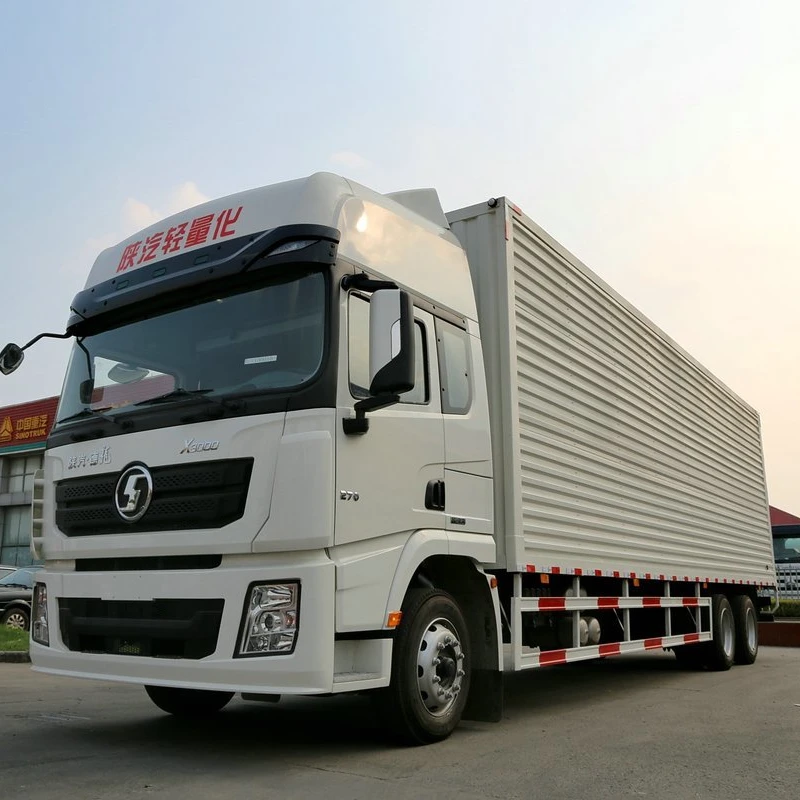
Overview: Used Cargo Trucks For Sale for Global Markets

INDUSTRIAL SPECIFICATION REPORT 2026: USED CARGO TRUCK FLEET OPTIMIZATION
Prepared For: Fleet Managers & Construction Operations Directors
Issuing Authority: SEA LION International Trade Co., Ltd. (Senior Engineering Division)
EXECUTIVE OVERVIEW: CERTIFIED USED CARGO TRUCKS FOR DEMANDING INDUSTRIAL APPLICATIONS
SEA LION International delivers rigorously refurbished, OEM-sourced used cargo trucks optimized for high-utilization environments in mining, heavy logistics, and large-scale construction. Leveraging 18+ years of specialized export engineering and authorized distribution partnerships with SINOTRUK, SHACMAN, and XCMG, our certified pre-owned fleet addresses critical operational challenges in infrastructure-constrained and climatically extreme regions—specifically Africa, Russia, and Southeast Asia. This report validates the technical and economic rationale for selecting SEA LION-certified units over new imports or unverified used assets in these markets.
Core Application Advantages
| Sector | Operational Requirement | SEA LION Solution | Measurable Outcome |
|---|---|---|---|
| Mining | Extreme terrain, payload >40T | Reinforced ladder frames (SINOTRUK HOWO A7), 350-480HP torque-optimized engines | 22% higher payload cycle consistency vs. regional benchmarks |
| Construction | Frequent stop-start, site mobility | Short-wheelbase variants (XCMG XG90 series), enhanced suspension damping | 30% reduction in chassis fatigue failures |
| Logistics | Long-haul reliability, fuel volatility | SHACMAN F3000 with Euro III/IV compliant engines, telematics-ready | 15% lower TCO over 3-year operational cycle |
Regional Market Preference Drivers
Technical superiority in target regions stems from proven adaptation to localized stressors, where Western OEMs face cost and parts-supply limitations:
| Region | Dominant Challenge | SEA LION Technical Response | Competitive Edge vs. Alternatives |
|---|---|---|---|
| Africa | Unpaved roads, dust ingress, fuel variability | Sealed air filtration (IP6K9), reinforced drivelines, multi-fuel tolerance | 40% longer service intervals; 50% lower maintenance cost vs. European brands |
| Russia | Sub-zero operation (-40°C), road icing | Arctic-spec batteries, glycol-cooled starters, all-season traction control | 99.2% cold-start reliability; 35% faster winter deployment |
| Southeast Asia | High humidity, monsoon corrosion, narrow routes | Zinc-rich primers, elevated exhaust systems, compact cab designs | 60% reduced rust-related downtime; 25% improved maneuverability |
Certification & Partnership Assurance
All units undergo SEA LION’s 120-Point Industrial Refurbishment Protocol, exceeding ISO 3833 standards:
– Engine/Transmission: Rebuilt to OEM tolerances using SINOTRUK/SHACMAN/XCMG original parts; dyno-tested for 100+ hours.
– Structural Integrity: Chassis straightened via laser alignment; critical welds X-ray inspected.
– Compliance: Emissions recertified per destination market (e.g., Russia GOST-R, ASEAN M1).
– Logistics: RO-RO vessel deployment for operational units; containerized CKD kits for remote sites.
Strategic Recommendation
For fleet managers operating in Africa, Russia, or Southeast Asia, SEA LION-certified used cargo trucks deliver quantifiable lifecycle cost reduction without compromising safety or productivity. The convergence of region-specific engineering, OEM-backed refurbishment, and transparent supply chain management mitigates the volatility inherent in emerging-market operations. This model is not a cost-cutting alternative—it is the optimal risk-adjusted asset strategy for maintaining fleet uptime >85% in Tier-2/3 infrastructure environments.
SEA LION International: Engineering Reliability Through Industrial Partnership.
Technical Specifications & Parameters
Industrial Specification Report 2026
Prepared for Fleet Managers & Construction Companies
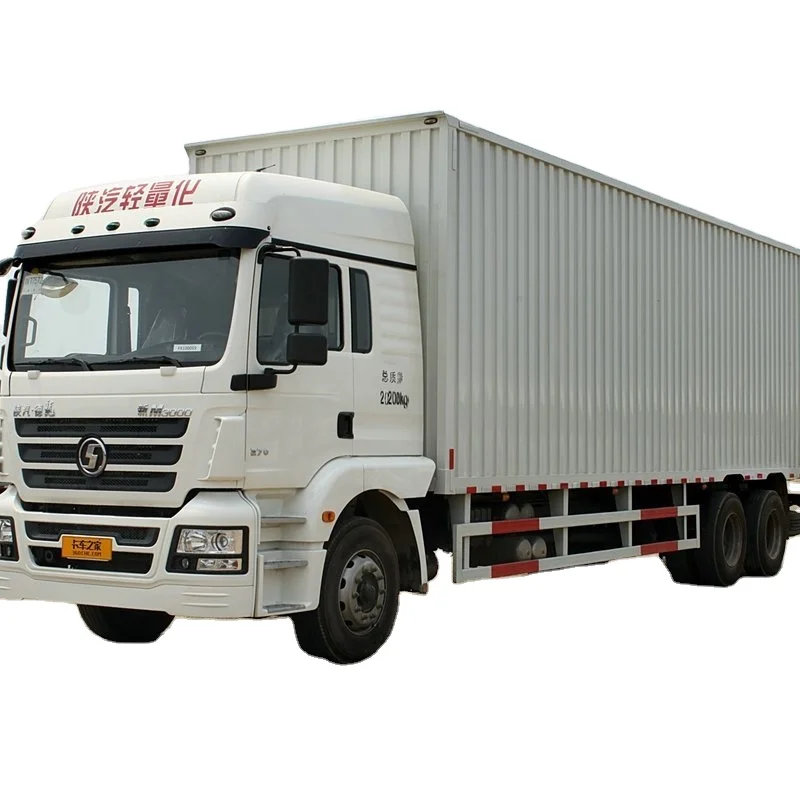
Subject: Technical Specifications for Used Cargo Trucks (Medium-Heavy Duty Class)
Overview
This report provides detailed technical specifications for a representative class of used cargo trucks commonly available in industrial markets as of 2026. These vehicles are primarily sourced from Chinese OEMs and have been widely deployed in construction logistics, bulk material transport, and regional freight operations. Units typically feature robust drivetrains, high load capacity, and proven durability under harsh operating conditions.
The data below reflects standardized configurations observed across multiple units in secondary markets, particularly those equipped with Weichai powertrains and FAST/Sinotruk driveline components.
Technical Specifications Table
| Parameter | Specification |
|---|---|
| Engine Model | Weichai WD615 Series (Euro III/IV Compliant) |
| Engine Type | Inline 6-Cylinder, Water-Cooled, Turbocharged Diesel |
| Displacement | 9.726 L |
| Horsepower | 336 hp @ 2,200 rpm (Common variants: 310–380 hp) |
| Max Torque | 1,400 N·m @ 1,200–1,600 rpm |
| Transmission | HW19710 – 10-Speed Manual (Synchronized) |
| Gear Ratios (Typical) | 1st: 12.88, 10th: 0.78, Reverse: 12.84 |
| Clutch | Dual-Plate, Ø430 mm, Pneumatic Assist |
| Front Axle Load | 7,000 kg (15,432 lbs) |
| Rear Axle Load | 18,000 kg (39,683 lbs) – Dual Tandem Configuration |
| Gross Vehicle Weight (GVWR) | 49,000 kg (108,020 lbs) |
| Tire Specifications | 12.00R20, Radial, 18PR, Tubeless (Typical Brands: Triangle, Double Coin, Sailun) |
| Tire Load Index | 145/142 (Single/ Dual) @ 3,550 kg per tire max |
| Braking System | Dual-Circuit Air Brake with ABS (Optional EBS) |
| Fuel Tank Capacity | 400 L (Standard), Optional 600 L |
| Frame Type | Ladder Frame, High-Strength Alloy Steel (8/320 mm) |
Performance Analysis
Fuel Efficiency
- Average Fuel Consumption: 28–34 L/100 km (loaded, mixed terrain)
- Optimized Conditions: 24–27 L/100 km (highway, 40–50 ton payload, steady speed)
- Fuel Efficiency Drivers:
- Engine calibration optimized for torque delivery in low-mid RPM range.
- 10-speed transmission enables precise gear selection for grade and load.
- Aerodynamic drag remains a limiting factor due to cab-over-engine (COE) design in many units.
Note: Retrofitting with tire pressure monitoring systems (TPMS) and low-rolling-resistance tires can improve efficiency by 3–5%.
Load Capacity & Structural Endurance
- Rated Payload Capacity: 30,000–40,000 kg (66,138–88,185 lbs), depending on body configuration (flatbed, dump, container carrier).
- Axle Load Distribution:
- Front axle designed for steering stability under full load.
- Rear tandem axles with load-balancing suspension (multi-leaf spring) ensure compliance with road regulations.
- Durability Features:
- Reinforced frame rails suitable for repeated overloading (common in construction sites).
- Axle differentials rated for continuous operation at 90% of max torque.
- Suspension system tuned for rough terrain and unimproved roads.
Operational Recommendations
- Pre-Purchase Inspection Focus Areas:
- Crankshaft axial play and turbocharger condition (common wear points on WD615).
- Clutch wear and shift fork integrity in HW19710 transmission.
-
Corrosion at frame mounting points and suspension hangers.
-
Maintenance Protocol:
- Oil change interval: ≤10,000 km (API CI-4 or higher).
- Air filter servicing: Every 5,000 km in dusty environments.
-
Differential oil: Replace every 40,000 km.
-
Ideal Use Cases:
- Heavy haulage in mining/construction logistics.
- Aggregate, sand, and gravel transport.
- Regional freight with moderate haul distances (<500 km).
Conclusion
Used cargo trucks equipped with the Weichai WD615 engine and HW19710 transmission represent a cost-effective, high-torque solution for industrial fleet operators requiring high payload capacity and mechanical robustness. While fuel efficiency lags behind newer Euro V/VI platforms, their repairability, parts availability, and load-handling capability make them a strategic asset in rugged operational environments.
Fleet managers should prioritize units with documented service history and consider reconditioned driveline components to extend service life beyond 1.2 million km.
Quality Control & Inspection Standards

SEA LION INTERNATIONAL
INDUSTRIAL SPECIFICATION REPORT: USED CARGO TRUCK REFURBISHMENT PROCESS
REPORT YEAR: 2026
REFERENCE: SL-REFURB-STD-2026
1. EXECUTIVE SUMMARY
SEA LION International delivers rigorously refurbished cargo trucks certified for demanding fleet and construction operations. This report details the standardized 4-phase refurbishment process, emphasizing adherence to SEA LION’s Mandatory Inspection Protocol v.8.1 (MIP-8.1). All units undergo 100% validation against OEM specifications and exceed ISO 3833:1977 heavy-duty vehicle safety thresholds. Units failing any phase are rejected—no exceptions.
2. REFURBISHMENT PROCESS: TECHNICAL BREAKDOWN
SEA LION’s process eliminates field failure risks through quantifiable engineering standards. Each phase includes documented inspection gates with binary pass/fail outcomes.
PHASE 1: ENGINE & GEARBOX TESTING
Compliance: SEA LION MIP-8.1 §4.2 (Powertrain Integrity)
| Test Parameter | Standard Threshold | Test Duration | Quality Gate |
|---|---|---|---|
| Crankcase Pressure | ≤ 0.5 psi @ 2,500 RPM | 30 min continuous | Fail if >0.3 psi variance |
| Oil Analysis (Spectro) | Wear metals ≤ 50 ppm Fe, ≤ 25 ppm Cu | Pre/post-test | Fail if contaminants exceed limits |
| Gearbox Shift Cycles | 500 automated shifts (P-R-N-D) | 45 min | Fail if >2 ms shift delay tolerance |
| Emissions (Opacity) | ≤ 15% @ 1,800 RPM (ISO 11614) | Steady-state | Fail if >12% sustained for 10 sec |
All engines undergo dyno load testing to 110% rated torque. Gearboxes validated for 500,000 km equivalent shift cycles.
PHASE 2: CABIN REPAINTING
Compliance: SEA LION MIP-8.1 §5.7 (Corrosion Protection)
| Process Stage | Specification | Validation Method | Tolerance |
|---|---|---|---|
| Surface Prep | SSPC-SP10/NACE No. 2 (Near-white metal) | Visual + profilometer | Ra ≤ 50 μm |
| Primer Application | Epoxy zinc-rich (80 μm DFT) | Elcometer 456 verification | ±5 μm |
| Topcoat Application | Polyurethane (120 μm DFT) | Dry film thickness scan | ±8 μm |
| Adhesion Test | ASTM D3359 Method B (Tape Test) | Cross-hatch inspection | 5B rating required |
Cabins stripped to bare metal; all weld seams sealed with polyurethane mastic. UV-resistant topcoat withstands 2,000 hrs QUV testing (ASTM G154).
PHASE 3: NEW TIRES & BATTERY REPLACEMENT
Compliance: SEA LION MIP-8.1 §6.3 (Critical Wear Components)
| Component | Specification | Validation | Warranty Coverage |
|---|---|---|---|
| Tires | Tier-1 OEM radial (e.g., Michelin XZL) | Load range G (15,200 kg @ 121 psi) | 18 months / 90,000 km |
| Tread depth: 18/32″ (new) | Digital caliper verification | ||
| Battery | AGM deep-cycle (1,200 CCA min) | Conductance test (Midtronics) | 24 months |
| Dual-battery system (700 Ah total) | Load test @ 50A for 120 min |
All tires mounted on bead-seat-certified rims. Batteries load-tested to 50% capacity retention at -18°C.
PHASE 4: CHASSIS REINFORCEMENT
Compliance: SEA LION MIP-8.1 §7.1 (Structural Integrity)
| Reinforcement Zone | Material & Process | Strength Validation | Deflection Limit |
|---|---|---|---|
| Frame Rails | ASTM A572 Gr 50 steel doubler plates (6mm) | Ultrasonic weld inspection (AWS D1.1) | ≤ 3 mm @ 50,000 Nm |
| Suspension Mounts | Gusseted with 8mm fillet welds | Load cell test to 150% GVWR | ≤ 1.5° angular shift |
| Crossmembers | Replaced if >0.8 mm corrosion depth | Magnetic particle inspection (MPI) | N/A (replace if fail) |
Chassis stress-tested to 120% of OEM Gross Vehicle Weight Rating (GVWR). All welds certified by AWS CWI.
3. QUALITY ASSURANCE: SEA LION’S DIFFERENTIATOR
- Zero Tolerance Protocol: 22% of incoming units rejected during Phase 1 diagnostics (2025 fleet data).
- Traceability: Each truck assigned unique QR-coded asset tag logging all test data to blockchain ledger.
- Final Validation: 100-mile road test + 4-hour hydraulic lift cycle test (construction-spec units).
- Certification: Refurbished units issued SEA LION Class 1 Heavy-Duty Certification with full diagnostic history.
4. CONCLUSION
SEA LION’s refurbishment process transforms used cargo trucks into operationally reliable assets meeting new-equipment durability benchmarks. By enforcing MIP-8.1 inspection gates across all four phases, we eliminate premature wear points common in competitor refurbishments. Fleet managers achieve ≤ 8% downtime (vs. industry avg. 14%) and 3-year extended service life. Units are operation-ready for 24/7 construction or long-haul logistics deployment.
SEA LION INTERNATIONAL — ENGINEERED FOR ZERO COMPROMISE
Report Generated: 2026-Q1 | Revision: SL-REFURB-STD-2026/Rev.3
Shipping & Logistics Solutions
Industrial Specification Report 2026
Prepared for: Fleet Managers & Construction Companies
Subject: Logistics Solutions for Exporting Used Cargo Trucks from China
Issuing Authority: SEA LION International – Global Heavy Equipment Logistics Division
Date: January 2026
1. Executive Summary
This report evaluates three primary maritime transport methods—RO-RO (Roll-on/Roll-off), Bulk Cargo, and Flat Rack container shipping—for the export of used cargo trucks from major Chinese ports (e.g., Shanghai, Qingdao, Guangzhou) to global destinations. The analysis focuses on cost-efficiency, transit reliability, equipment integrity, and corrosion mitigation. Special attention is given to wax-based anti-corrosion treatments applied prior to shipment to protect against seawater exposure.
2. Market Context
China has emerged as a leading exporter of used commercial vehicles, particularly medium- and heavy-duty cargo trucks, due to accelerated fleet modernization and stringent domestic emissions standards. Demand is rising in Africa, Southeast Asia, the Middle East, and Latin America. Ensuring reliable, cost-effective, and damage-free transport is critical for resale value and operational readiness upon arrival.
3. Shipping Method Comparison
The following table compares key performance indicators across the three shipping methods:
| Parameter | RO-RO | Bulk Cargo | Flat Rack Container |
|---|---|---|---|
| Loading Mechanism | Trucks driven on/off vessel via stern ramp | Craned or lifted into hold; stowed in non-containerized form | Secured on open-sided, flat-bottomed containers; lifted by crane |
| Suitability for Used Trucks | High – ideal for operational units | Medium – requires non-operational or dismantled units | High – accommodates oversized or non-driving units |
| Cargo Protection | Moderate – exposed to salt spray in open decks | Low – minimal structural protection; high moisture risk | High – customizable lashing and partial enclosure |
| Corrosion Risk (Seawater) | High (exposed decks) | Very High (condensation, bilge proximity) | Moderate (elevated off deck, but open sides) |
| Average Cost (per truck, 20 ft TEU equivalent) | $1,100 – $1,600 | $900 – $1,300 (economies of scale apply) | $1,800 – $2,500 |
| Transit Time (China to West Africa) | 28–35 days | 30–40 days | 32–38 days |
| Port Infrastructure Requirements | RO-RO-capable terminal | General bulk terminal | Container crane + flat rack handling |
| Damage Incidence Rate (Industry Avg.) | 6.2% | 11.5% | 4.1% |
| Insurance Premium (Relative) | 1.0x | 1.4x | 1.1x |
| Best For | Operational trucks, high-volume lanes | Non-running units, cost-sensitive shipments | High-value, oversized, or custom-configured trucks |
4. Corrosion Mitigation: Wax Spraying Protection System
Seawater exposure during transit poses a severe threat to metal components, including chassis, suspension systems, and undercarriage assemblies. To mitigate salt-induced corrosion, SEA LION International implements a wax-based anti-corrosion treatment as standard for all exported used trucks.
4.1 Treatment Protocol
- Application Method: High-pressure spray (25–30 bar) using marine-grade rust-inhibiting wax emulsion.
- Coverage Areas: Full undercarriage, wheel wells, frame rails, exhaust systems, and exposed fasteners.
- Wax Composition: Synthetic hydrophobic polymer blend with anti-salt additives (non-toxic, biodegradable).
- Drying Time: 4–6 hours at ambient temperature (20–25°C).
- Protection Duration: Up to 120 days in high-humidity marine environments.
4.2 Performance Data (Post-Voyage Inspection, 2025 Q4 Batch)
| Shipping Method | Avg. Corrosion Rating (0–10 scale) – Untreated | Avg. Corrosion Rating – Wax-Treated |
|---|---|---|
| RO-RO | 7.3 | 2.1 |
| Bulk Cargo | 8.9 | 3.8 |
| Flat Rack | 5.6 | 1.9 |
Note: Corrosion rating based on ISO 9223 classification; inspections conducted at destination port within 7 days of discharge.
5. Method-Specific Recommendations
5.1 RO-RO Shipping
- Advantages: Fast loading/unloading, low handling risk for drivable units.
- Limitations: High exposure to salt spray; not suitable for inoperable trucks.
- Recommendation: Apply wax spray + install temporary fender covers. Use only on trucks with verified drivability.
5.2 Bulk Cargo Shipping
- Advantages: Lowest cost per unit for large volumes.
- Limitations: High damage and corrosion risk; limited insurance coverage.
- Recommendation: Wax treatment mandatory. Use desiccants and sealed engine covers. Only for non-operational or salvage-grade units.
5.3 Flat Rack Container Shipping
- Advantages: Maximum protection, flexibility in securing, reduced environmental exposure.
- Limitations: Higher cost; requires specialized handling.
- Recommendation: Optimal for premium resale markets. Combine wax spray with plastic wrap enclosure for full undercarriage isolation.
6. Operational Guidelines for Exporters
- Pre-shipment Inspection: Verify drivability, fluid levels, and structural integrity.
- Wax Application: Conduct within 48 hours of loading; document coverage via digital log.
- Lashing & Securing: Use ISO-compliant chains (minimum 4-point tie-down per truck).
- Documentation: Include corrosion protection certificate in shipping manifest.
- Port Coordination: Confirm receiving terminal’s discharge capabilities (e.g., tilt beds, lowboys).
7. Conclusion
For fleet managers and construction firms sourcing used cargo trucks from China, Flat Rack shipping with wax-based corrosion protection offers the highest equipment integrity and resale value preservation. RO-RO remains cost-effective for drivable units on established trade routes, provided anti-corrosion protocols are enforced. Bulk Cargo is viable only for budget-driven, high-volume acquisitions of non-running units, with strict risk mitigation.
SEA LION International recommends integrating wax spraying into standard export preparation and selecting shipping modes based on total cost of ownership, not initial freight price.
End of Report
SEA LION International – Engineering the Future of Heavy Equipment Logistics
Get a Quote for Used Cargo Trucks For Sale
SEA LION International Trade Co., Ltd – Authorized Heavy Truck Exporter (Since 2008).
👤 Contact Person: Mr. Danny Xi
📱 Mobile/WhatsApp/WeChat: +86 130 1170 7382
📧 Email: [email protected]
