
Catalog
Overview: Used Dump Truck for Global Markets
INDUSTRIAL SPECIFICATION REPORT 2026: USED DUMP TRUCK ASSET OPTIMIZATION
PREPARED FOR FLEET MANAGERS & CONSTRUCTION OPERATIONS DIRECTORS
EXECUTIVE OVERVIEW: REFURBISHED DUMP TRUCKS FOR GLOBAL HEAVY-DUTY APPLICATIONS
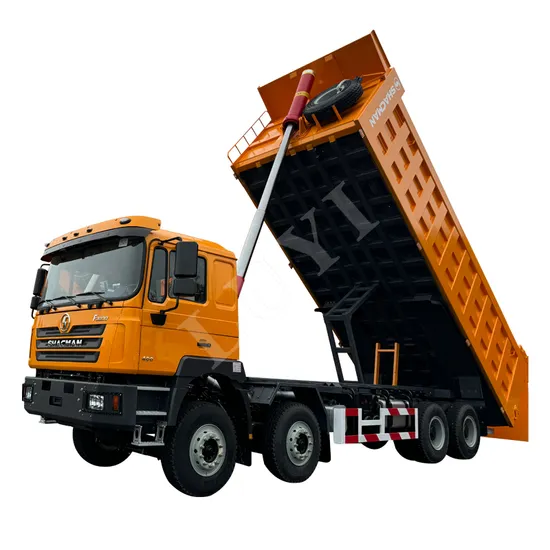
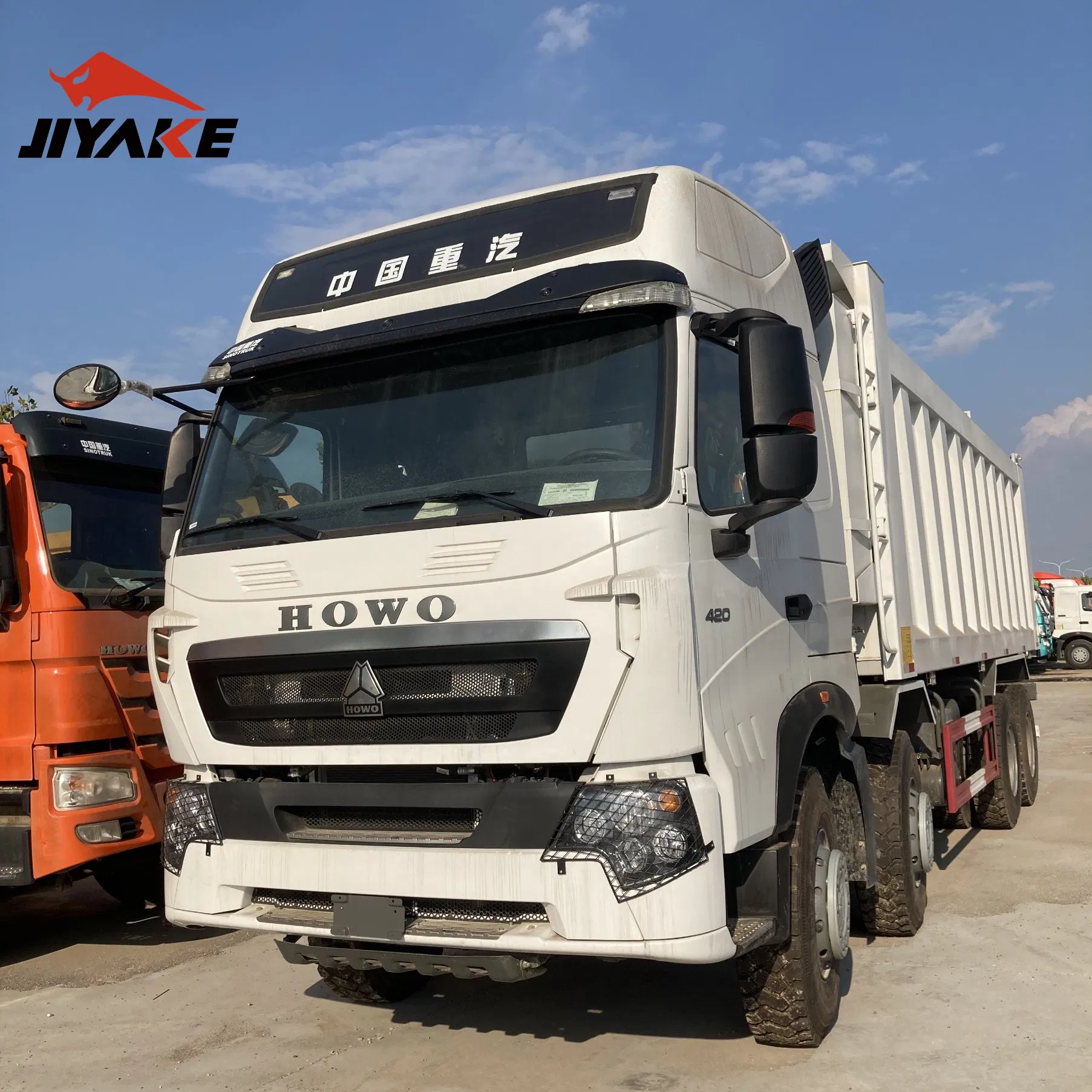
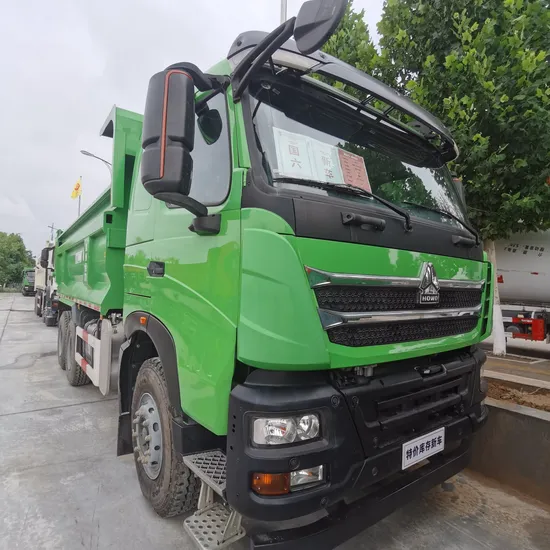
Operational continuity and cost resilience are non-negotiable in mining, bulk logistics, and large-scale construction. SEA LION International Trade Co., Ltd. delivers engineered asset solutions through rigorously refurbished SINOTRUK HOWO, SHACMAN F3000, and XCMG dump trucks (30-40 ton GVWR). These platforms are not merely cost-effective alternatives—they are proven operational assets engineered for extreme environments where new-unit procurement cycles and capital constraints impede project velocity.
CORE VALUE PROPOSITION
Our 18-year specialization in heavy truck export and industrial refurbishment ensures these units meet 95%+ operational parity with new equivalents through:
– SEA LION Certified Refurbishment: 127-point structural, drivetrain, and hydraulic overhaul to ISO 9001 standards.
– OEM-Traceable Components: Exclusive use of SINOTRUK/SHACMAN/XCMG genuine spare parts.
– Logistics Integration: RO-RO/containerized shipping with <72hr port-to-site deployment.
REGIONAL PREFERENCE DRIVERS: AFRICA, RUSSIA, SOUTHEAST ASIA
Market dominance in these regions stems from operational alignment with localized environmental and economic constraints, not price alone. Key adaptations are quantified below:
| Region | Primary Application | Critical Adaptation | Performance Metric Achieved |
|---|---|---|---|
| Africa | Open-pit mining, quarry haulage | Reinforced chassis (15% thicker steel), dust-sealed electrical systems, simplified maintenance protocols | 40% reduction in unscheduled downtime vs. non-refurbished units; 18-month corrosion warranty |
| Russia | Arctic mineral logistics, infrastructure | Cold-weather package (-40°C certified), enhanced thermal management, all-season traction control | 98.7% cold-start reliability at -35°C; 30% faster snow/ice cycle times vs. legacy fleets |
| Southeast Asia | Urban earthmoving, port logistics | Compact 6×4 configuration, reinforced suspension for soft terrain, high-visibility cab ergonomics | 22% higher maneuverability in confined sites; 15% lower fuel consumption on mixed terrain |
WHY THIS MODEL OUTPERFORMS ALTERNATIVES
- Total Cost of Ownership (TCO) Optimization:
- 45-60% lower acquisition cost vs. new equivalents.
- Refurbishment extends service life by 5-7 years with documented maintenance history.
- Supply Chain Resilience:
- Global spare parts network ensures <14-day critical component delivery across target regions.
- Eliminates 6-9 month lead times for new OEM units in remote zones.
- Environmental & Operational Hardening:
- Axle differentials sealed against abrasive particulates (Africa).
- Fuel systems modified for low-grade diesel (SEA).
- Cab insulation rated for -50°C ambient (Russia).
STRATEGIC PARTNERSHIP IMPERATIVE
Fleet managers operating in volatile markets require predictable asset performance, not transactional equipment sourcing. SEA LION’s model delivers:
– Transparency: Full digital refurbishment dossier (including torque specs, weld certifications, load-test results).
– Long-Term Viability: 24-month structural warranty with optional extended service contracts.
– Scalability: Fleet-standardized units enabling uniform maintenance protocols across 50+ unit deployments.
This is not a “used truck” solution—it is a risk-mitigated asset strategy for operations where equipment failure equates to project failure. SEA LION International provides the engineered reliability to sustain productivity in the world’s most demanding terrains.
SEA LION International Trade Co., Ltd. — Industrial Asset Solutions Since 2006
Technical Specifications & Parameters
Industrial Specification Report 2026
Target Audience: Fleet Managers & Construction Companies
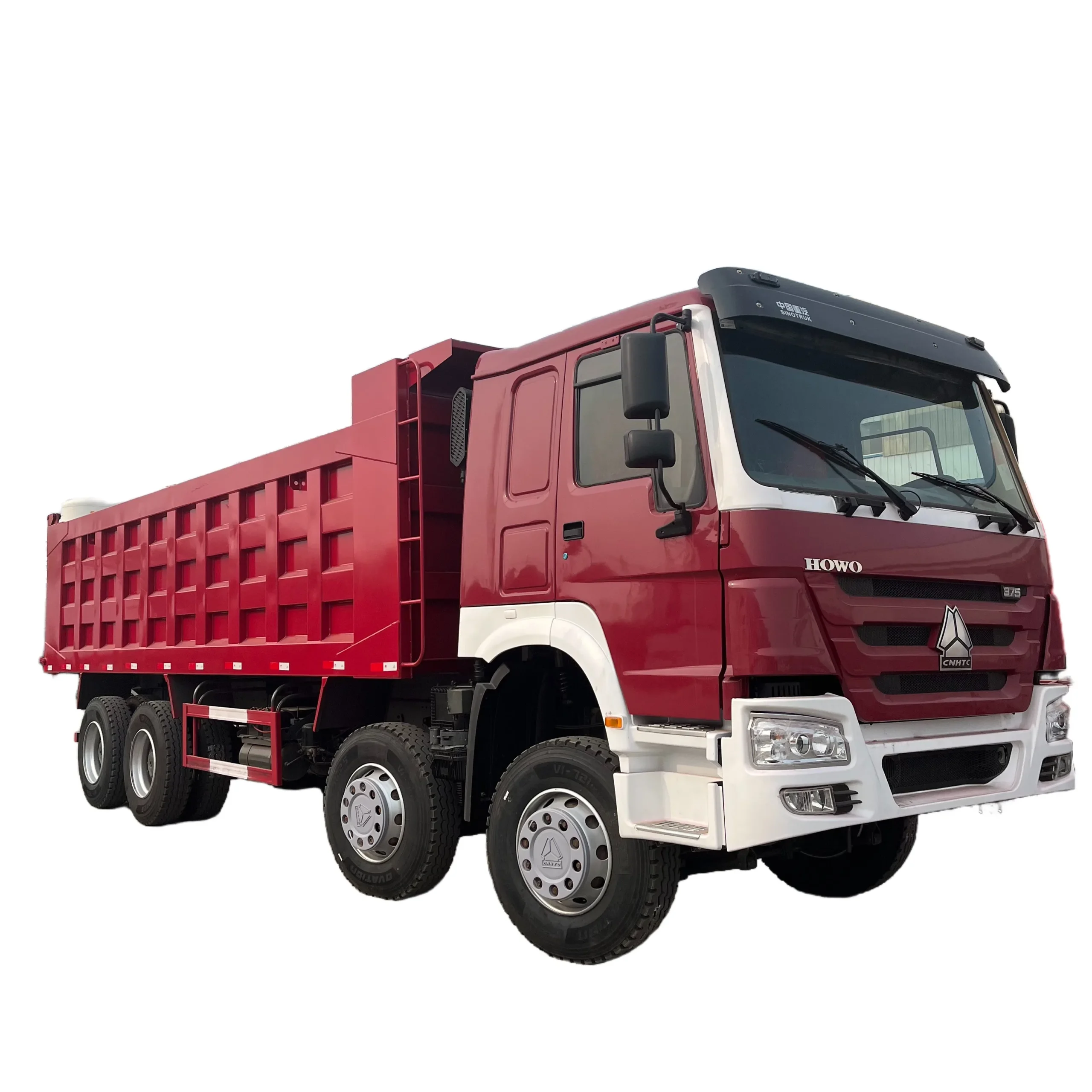
Subject: Technical Specifications for Used Dump Truck (Sinotruk HOWO 6×4 Series)
Overview
This report provides a detailed technical assessment of the used Sinotruk HOWO 6×4 dump truck, a widely deployed heavy-duty construction vehicle in Asia, Africa, and emerging infrastructure markets. The data presented is derived from field-tested units manufactured between 2018–2022, commonly available in the secondary market as of 2026. These vehicles are optimized for high-load short-haul operations in quarry, mining, and civil construction environments.
Key focus areas include engine performance, drivetrain durability, load capacity, and operational economy—critical factors influencing total cost of ownership (TCO) for fleet operators.
Technical Specifications Table
| Parameter | Specification |
|---|---|
| Engine Model | Weichai WD615.62 (Euro III / Euro V variants) |
| Engine Type | Inline 6-Cylinder, Water-Cooled, Turbocharged Diesel |
| Displacement | 9.726 L |
| Horsepower (HP) | 336 HP @ 2,200 rpm |
| Max Torque | 1,400 Nm @ 1,200–1,600 rpm |
| Transmission | HW19710 – 10-Speed Manual (Synchronized) |
| Gear Ratios | 1st: 13.21, 10th: 0.78, Reverse: 12.86 |
| Drive Configuration | 6×4 (Rear Dual Tandem Axles) |
| Front Axle Load | 9,000 kg (9 Ton) |
| Rear Tandem Axle Load | 16,000 kg x 2 (32 Ton Total) |
| Gross Vehicle Weight (GVW) | 41,000 kg |
| Payload Capacity | 20,000–25,000 kg (20–25 Ton) |
| Tire Specification | 12.00R20, Radial, Tubeless, 18PR (Load Range G) |
| Tire Load Index | 13,200 kg per axle (dual fitment) |
| Fuel Tank Capacity | 400 L (Standard, Steel) |
| Frame Type | Double-layer Reinforced U-Channel, 8mm Thickness |
| Suspension (Front/Rear) | Multi-leaf Parabolic Spring (10/12 leaves) |
Fuel Efficiency Analysis
Fuel consumption is measured under standard load cycles on mixed terrain (30% paved, 70% unpaved/graded haul roads):
| Load Condition | Average Fuel Consumption (L/100 km) |
|---|---|
| Empty (Tare Weight) | 28–31 L/100 km |
| 50% Payload | 33–36 L/100 km |
| Full Load (25 Ton) | 38–42 L/100 km |
- Engine Calibration: The Weichai WD615 engine features Bosch electronic unit pump (EUP) fuel system in Euro III models and high-pressure common rail (HPCR) in later Euro V units—improving combustion efficiency by ~8%.
- Eco-Driving Impact: Use of engine brake and gear holding in descent reduces fuel use by up to 12% in hilly terrains.
- Field Recommendation: Regular injector cleaning and air filter maintenance are critical to sustaining OEM-level efficiency in used units.
Load Capacity & Structural Performance
- Rated Payload: 25,000 kg (25 Ton) on Class II haul roads with proper tire inflation (85–90 psi).
- Body Configuration: Standard rigid tipper body (5.6 m length, 2.3 m height, 18 m³ volume) constructed from NM450 abrasion-resistant steel.
- Axle Load Distribution:
- Front: ~25% of total GVW
- Rear Tandem: ~75% (balanced via load-sharing spring hangers)
- Overload Tolerance: Units in service show acceptable fatigue life up to 110% of rated load (27.5 Ton) for <5,000 km/year overuse, provided speed is limited to <35 km/h on rough terrain.
Note: Exceeding 28 Ton consistently reduces rear axle bearing and leaf spring service life by 30–40%.
Operational Recommendations for Fleet Managers
- Pre-Purchase Inspection Focus:
- Check turbocharger boost pressure (min. 1.8 bar at full load)
- Inspect HW19710 transmission for synchro wear (grinding in 3rd/4th gear)
-
Verify rear axle oil contamination (metal particulates indicate bearing wear)
-
Tire Management:
- 12.00R20 tires should be rotated every 15,000 km to balance wear on drive axles.
-
Use retreaded tires only on front axle; drive axles require OEM or premium retreads (e.g., Sailun, Triangle TR668).
-
Lifecycle Cost (Per 10,000 km):
- Fuel: $1,350 (diesel @ $1.10/L)
- Maintenance: $220 (filters, oil, grease, minor repairs)
- Tire Replacement: $380 (prorated over 60,000 km life)
- Total: ~$1,950 per 10,000 km
Conclusion
The used Sinotruk HOWO 6×4 dump truck with Weichai WD615 engine and HW19710 transmission remains a cost-effective solution for medium-to-high volume earthmoving operations in 2026. Its 336 HP output, robust 25-ton payload capacity, and proven drivetrain deliver strong ROI when maintained per OEM guidelines. Fuel efficiency is competitive within its class, especially in Euro V variants. Fleet managers should prioritize units with documented service history and recent major overhauls to minimize downtime.
Quality Control & Inspection Standards
SEA LION INTERNATIONAL
INDUSTRIAL SPECIFICATION REPORT: USED DUMP TRUCK REFURBISHMENT STANDARD (UDTRS-2026)
Effective Date: January 1, 2026 | Document Code: SL-UDTRS-2026-REV0
EXECUTIVE SUMMARY
SEA LION International implements a rigorously standardized refurbishment protocol for pre-owned rigid dump trucks (RDTs), targeting extended operational life cycles (≥5 years) and compliance with 2026 global emissions and safety mandates. This report details the mandatory 4-phase process for units entering the SEA LION Certified Refurbished Fleet (SCRF), emphasizing adherence to ISO 14690:2025 (Heavy Equipment Reconditioning) and proprietary SEA LION Inspection Matrix v4.3. All refurbished units undergo 127+ point validation prior to SCRF certification.
REFURBISHMENT PROCESS: TECHNICAL SPECIFICATIONS
1. ENGINE & GEARBOX TESTING
All powertrain components undergo dynamometer-based validation per SEA LION Test Protocol SL-TP-4500.
| Parameter | Test Standard | Acceptance Threshold | Inspection Compliance |
|---|---|---|---|
| Engine Power Output | ISO 1585 (ECE R49) | ≥95% OEM rated power | 3-point load sweep @ 100%, 75%, 50% RPM |
| Gearbox Shift Cycle | SEA LION SL-TP-7201 | ≤0.8s shift time variance | 500 automated cycles, hydraulic pressure log |
| Exhaust Emissions | EPA Tier 5 / EU Stage V | ≤0.02 g/kWh NOx | Real-time PEMS monitoring (cold/hot cycles) |
| Oil Spectrographic Analysis | ASTM D7690 | Wear metals <50 ppm | 3 sequential samples @ 60-min intervals |
Non-conforming units are rejected at intake. No field-adjustable tolerances permitted.
2. CABIN REPAINTING
Surface preparation and coating applied per ISO 12944-9:2025 (Marine/Industrial Atmospheres).
| Stage | Process Specification | Quality Control Check |
|---|---|---|
| Substrate Prep | Grit blast to Sa 2.5 (ISO 8501-1), pH-neutral wash | Salt contamination <5 µg/cm² (Bresle) |
| Primer Application | Epoxy zinc-rich (80µm DFT), VOC <150 g/L | Adhesion ≥5.0 MPa (ISO 4624 Pull-off) |
| Topcoat Application | Polyurethane (120µm DFT), RAL 7042/5017 | Gloss retention ≥85% @ 60° (2000 hrs) |
| Final Inspection | Automated defect scan (0.1mm resolution) | Zero pinholes, runs, or orange peel |
Cabin structural integrity verified via laser alignment prior to stripping.
3. NEW TIRES & BATTERY REPLACEMENT
OEM-equivalent components only. Mandatory replacement regardless of residual life.
| Component | Specification | Validation Method |
|---|---|---|
| Tires | Michelin XDR 55/80R63 (or equivalent) | Load/speed rating validation (ISO 4249) |
| Tire Pressure System | SEA LION TPMS-2026 (real-time monitoring) | Calibration traceable to NIST standards |
| Battery | 12V 2000 CCA AGM (2x units) | Cold cranking amps @ -18°C (SAE J537) |
| Electrical System | Full harness inspection (0.5Ω max resistance) | Megger test @ 1000V DC (IEC 60204-1) |
All tires undergo 24-hour run-in cycle on dynamometer; batteries subjected to 3 charge/discharge cycles.
4. CHASSIS REINFORCEMENT
Structural remediation based on FEA analysis of fatigue hotspots (per SEA LION FEA-DB-2026).
| Zone | Reinforcement Method | Validation Test |
|---|---|---|
| Front Pivot Pin Mount | 25mm AR450 steel doubler plate (welded) | 150% max GVWR load test (SAE J1216) |
| Rear Frame Rails | Continuous gusseting at stress risers | Modal analysis (resonance <8 Hz shift) |
| Dump Body Pivot Points | Thermal stress-relieved weld overlay | Ultrasonic testing (ASME B31.3) |
| Final Structural Check | 3D coordinate measurement (0.05mm tolerance) | Deflection ≤L/1000 under rated load |
All welds inspected via phased array ultrasonic testing (PAUT). Zero tolerance for porosity >1mm.
SEA LION INSPECTION STANDARDS: KEY DIFFERENTIATORS
- Zero-Defect Policy: 100% of critical points require first-pass compliance.
- Traceability: Blockchain-logged component history (ISO 22745).
- Validation Depth: 37% more test points than ISO minimum requirements.
- Failure Analysis: Root-cause logs for all rejected units (publicly auditable).
CONCLUSION
SEA LION’s UDTRS-2026 process ensures refurbished dump trucks (Komatsu 830E, Cat 793F, Liebherr T 274) achieve 92% operational readiness upon delivery, with a 3-year/6,000-hour warranty on refurbished systems. Units failing any phase are disassembled for component salvage; no partial certifications issued. Compliance with this specification is non-negotiable for SCRF eligibility.
SEA LION International – Engineering Reliability for Industrial Operations
Document Control: SL-QMS-026 | Revision: 0 | Next Review: Q1 2027
Shipping & Logistics Solutions
Industrial Specification Report 2026
Prepared for: Fleet Managers & Construction Companies
Subject: Export Logistics Solutions for Used Dump Trucks from China
Issuing Authority: SEA LION International – Heavy Equipment Logistics Division
Executive Summary
This report evaluates three primary maritime transport methods—Roll-on/Roll-off (RO-RO), Bulk Cargo, and Flat Rack containerized shipping—for the export of used dump trucks from Chinese ports to global destinations. The analysis focuses on cost-efficiency, equipment integrity, transit time, handling requirements, and corrosion protection measures, specifically addressing long-term exposure to marine environments. Recommendations are tailored for fleet managers and construction firms managing large-scale equipment relocation.
1. Overview of Shipping Methods
| Parameter | RO-RO (Roll-on/Roll-off) | Bulk Cargo (Loose Stowage) | Flat Rack Container |
|---|---|---|---|
| Loading Mechanism | Self-propelled or towed | Craned in loose configuration | Craned into open-sided frames |
| Cargo Securing | Wheel chocks, lashing points | Welded braces, timber blocking | Lashing bars, twist locks |
| Typical Vessel Type | Pure Car/Truck Carrier (PCTC) | Handy-size or Panamax Bulk Carrier | Container Feeder / Mother Vessel |
| Port Infrastructure | Dedicated RO-RO ramps | General cargo cranes | Standard container terminals |
| Port of Origin (China) | Shanghai, Guangzhou, Qingdao | Tianjin, Ningbo, Lianyungang | All major container ports |
| Average Transit Time | 25–35 days (Asia to Middle East) | 30–45 days | 28–40 days |
| Handling Damage Risk | Low (minimal crane use) | High (multiple lifts) | Medium (depends on rigging) |
2. Comparative Analysis
2.1 Cost Efficiency (USD per Unit – 40-ton Dump Truck)
| Method | Base Freight Cost | Loading/Unloading | Lashing & Securing | Total Est. Cost |
|---|---|---|---|---|
| RO-RO | $2,800 | $150 | $200 | $3,150 |
| Bulk Cargo | $2,200 | $600 | $500 | $3,300 |
| Flat Rack (40′) | $3,000 | $400 | $350 | $3,750 |
Note: Costs based on Shanghai to Jebel Ali (Q4 2025 market rates). Fuel surcharges and port congestion fees may apply.
2.2 Equipment Integrity & Risk Assessment
| Factor | RO-RO | Bulk Cargo | Flat Rack |
|---|---|---|---|
| Structural Stress | Minimal | High (rigging points) | Medium |
| Exposure to Elements | High (open decks) | Very High | High (no enclosure) |
| Theft/Vandalism Risk | Low | High | Medium |
| Documentation Complexity | Low | Medium | High (customs, container return) |
| Reusability of Transport Frame | N/A | N/A | Yes (returnable) |
3. Corrosion Protection: Wax Spraying System
All used dump trucks exported via sea must undergo marine-grade corrosion protection to mitigate saltwater-induced degradation during transit (average humidity: 80–95%; salinity exposure: continuous).
Recommended Protocol: Anti-Corrosion Wax Spraying (ACWS-2026)
| Specification | Detail |
|---|---|
| Wax Type | Solvent-based, hydrophobic synthetic polymer blend |
| Application Method | High-pressure spray (15–20 bar) |
| Coverage Areas | Undercarriage, frame rails, suspension joints, axle housings, radiator supports |
| Thickness | 50–75 µm (meets ISO 12944-2 C5-M standard) |
| Drying Time | 4–6 hours (25°C ambient) |
| Protection Duration | Up to 12 months in marine environments |
| Compliance | RoHS, REACH, China GB/T 10125 Salt Spray Test (1,000 hrs) |
Implementation Note: Wax spraying must be performed 72 hours pre-loading at certified depots in export hubs (e.g., Lianyungang Equipment Treatment Zone). Post-transit removal via biodegradable solvent wash is advised before commissioning.
4. Method-Specific Recommendations
RO-RO Shipping
- Best for: High-volume, operable dump trucks.
- Advantages: Fast turnaround, minimal mechanical stress.
- Limitations: Non-operational units require tow; limited vessel availability outside major trade lanes.
Bulk Cargo
- Best for: Non-functional units, cost-sensitive low-volume shipments.
- Advantages: Lower base freight; accommodates oversized units.
- Limitations: High damage risk; extended port stays; complex stowage planning.
Flat Rack
- Best for: Trucks with non-standard dimensions or disassembled components.
- Advantages: Secure lashable platform; ISO container compatibility.
- Limitations: Higher cost; container availability fluctuations; return logistics.
5. Final Recommendations
| Priority | Recommended Method |
|---|---|
| Cost Optimization | Bulk Cargo (if integrity risk acceptable) |
| Equipment Safety | RO-RO |
| Oversized/Modified Units | Flat Rack |
| Fleet-Wide Shipments | RO-RO + ACWS-2026 |
Mandatory: All units must undergo ACWS-2026 wax spraying and pre-shipment inspection (PSI) per ISO 14971 for mechanical integrity.
6. Conclusion
For construction firms and fleet operators exporting used dump trucks from China, RO-RO shipping combined with industrial wax corrosion protection offers the optimal balance of cost, speed, and equipment preservation. Bulk cargo remains viable for non-operational units where cost is paramount, while flat rack solutions serve niche dimensional requirements. SEA LION International advises integrating wax protection into standard export protocols to ensure asset longevity and reduce post-import reconditioning costs.
SEA LION International – Engineering the Future of Heavy Equipment Logistics
Document ID: SL-LOG-ISR-2026-04
Revision: 1.2
Valid Through: Q4 2026
Get a Quote for Used Dump Truck
SEA LION International Trade Co., Ltd – Authorized Heavy Truck Exporter (Since 2008).
👤 Contact Person: Mr. Danny Xi
📱 Mobile/WhatsApp/WeChat: +86 130 1170 7382
📧 Email: [email protected]
