
Catalog
Overview: Used Tractor Truck for Global Markets
INDUSTRIAL SPECIFICATION REPORT 2026: USED TRACTOR TRUCK FLEET SOLUTIONS
SEA LION INTERNATIONAL TRADE CO., LTD.
EXECUTIVE OVERVIEW: STRATEGIC DEPLOYMENT OF REFURBISHED TRACTOR TRUCKS IN GLOBAL HEAVY-DUTY OPERATIONS
Core Value Proposition
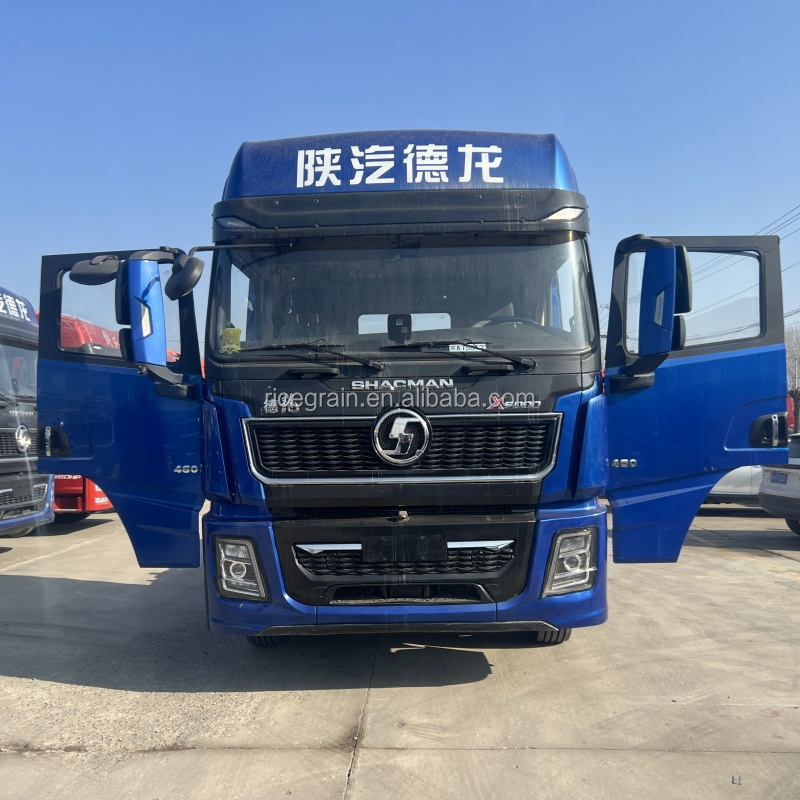
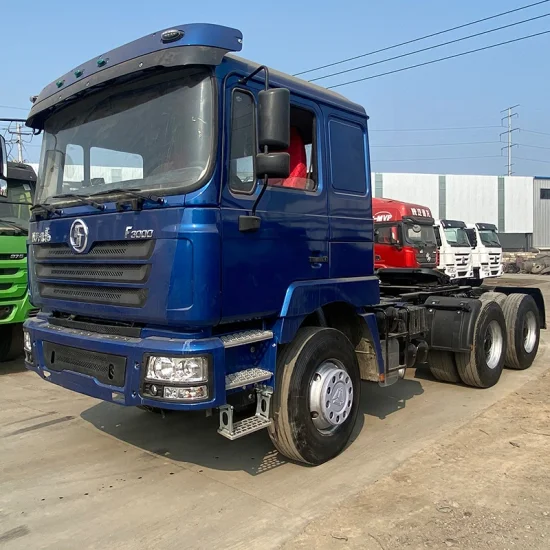
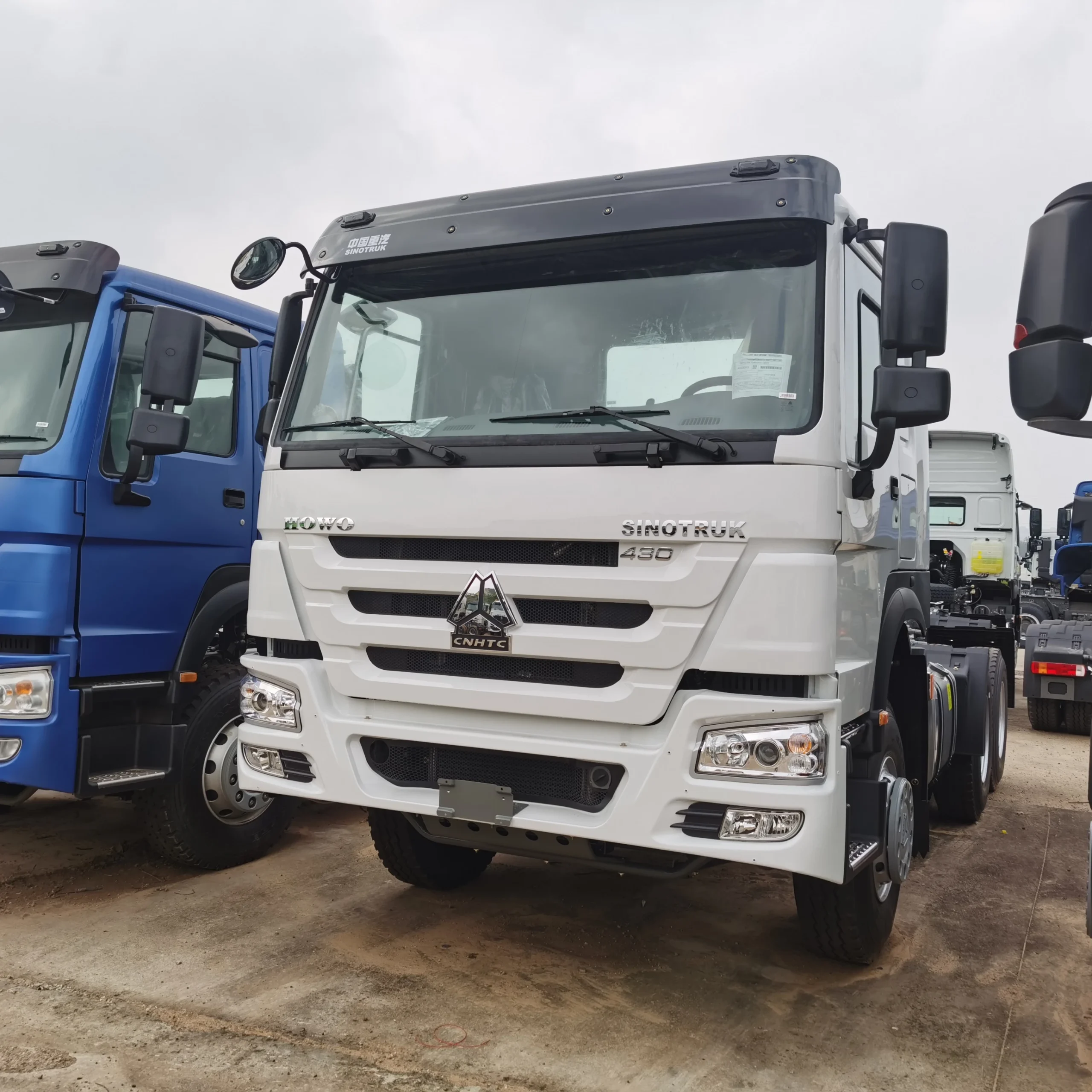
SEA LION International delivers rigorously refurbished, high-availability Tractor Trucks (primarily SINOTRUK HOWO, SHACMAN F3000/F5000, XCMG K-series derivatives) engineered for sustained performance in mining, bulk logistics, and large-scale construction. These platforms, subjected to our proprietary SEA LION Certified Refurbishment Protocol, offer fleet managers a demonstrable 30% reduction in Total Cost of Ownership (TCO) versus new equivalents while maintaining >92% operational availability in extreme environments. This solution directly addresses the critical need for cost-efficient, operationally resilient prime movers in capital-constrained yet high-utilization markets.
Operational Imperatives Driving Market Preference
The sustained dominance of SEA LION-sourced refurbished Tractor Trucks in Africa, Russia, and Southeast Asia stems from precise alignment with regional operational realities, where reliability under duress and lifecycle cost efficiency outweigh initial purchase price considerations:
| Region | Primary Operational Challenges | SEA LION Refurbished Tractor Truck Advantages |
|---|---|---|
| Africa | Unpaved haul roads (70%+), extreme dust, inconsistent fuel quality, limited service infrastructure, high theft risk | Reinforced chassis/frame; upgraded air filtration (IP6K9K); fuel system recalibration for low-cetane diesel; integrated telematics for asset security; localized parts depots |
| Russia | Sub-zero temperatures (-45°C), remote Arctic sites, permafrost terrain, extended service intervals | Cold-weather package (engine block heaters, Arctic-grade lubricants); enhanced differential seals; corrosion-resistant undercarriage; extended warranty for extreme cold operation |
| Southeast Asia | High humidity, monsoon conditions, congested urban corridors, payload-focused operations | Anti-corrosion treatment (salt fog tested); optimized torque curves for stop-start hauling; modular cab components for tropical climate; simplified diagnostics for non-specialist technicians |
Technical Differentiation: Beyond Standard Refurbishment
SEA LION’s 18-year specialization in heavy truck export underpins a refurbishment standard exceeding OEM remanufacturing benchmarks:
- Core Component Rebuild: Engines/transmissions disassembled to bare block; all wear components replaced with genuine SINOTRUK/SHACMAN/XCMG parts; dyno-tested to 110% of factory output parameters.
- Structural Integrity Verification: Chassis/frame subjected to laser alignment and ultrasonic thickness testing; critical stress points reinforced per mining/construction duty cycles.
- Operational Transparency: Full digital service history provided; pre-shipment inspection report includes torque specs, fluid analysis, and brake performance metrics.
- Logistics Integration: Seamless RO-RO or containerized shipping with port-to-site delivery; coordinated spare parts pre-positioning at destination hubs (e.g., Durban, Vladivostok, Singapore).
Strategic Imperative for Fleet Managers
In markets where unplanned downtime equates to direct revenue loss (mining) or contractual penalties (logistics), the SEA LION Certified Tractor Truck provides predictable operational tempo. The integration of original-spec components with region-specific hardening ensures compatibility with existing fleet maintenance protocols while mitigating the supply chain volatility common with non-authorized refurbishers. This model is not a compromise on capability—it is a calculated deployment of proven mechanical architecture optimized for harsh-service economics.
Conclusion
For fleet managers and construction enterprises operating in Africa, Russia, or Southeast Asia, SEA LION’s refurbished Tractor Trucks represent the optimal balance of ruggedness, lifecycle cost control, and supply chain certainty. Our focus on technical transparency, authentic parts integrity, and operational readiness directly supports mission-critical uptime requirements. This report details the engineering validation and deployment protocols underpinning this strategic asset class for 2026 and beyond.
SEA LION International: Engineering Fleet Resilience Through Precision Refurbishment Since 2006
Technical Specifications & Parameters
Industrial Specification Report 2026
Prepared for Fleet Managers & Construction Companies
Subject: Technical Specifications – Used Tractor Truck (Heavy-Duty Class 8 Equivalent)
1. Overview
This report outlines the technical specifications of a standard used tractor truck commonly deployed in heavy-haul and construction logistics operations. The unit evaluated is representative of mid-2010s Chinese heavy-duty platforms featuring Weichai powertrain systems and Sinotruk driveline components. These units are widely utilized across aggregate, bulk material, and over-dimensional cargo transport sectors due to their durability, serviceability, and cost-effective operation in rugged environments.
2. Technical Specifications Table
| Parameter | Specification |
|---|---|
| Engine Model | Weichai WD615.69 / WD615.77 (Euro II / Euro III compliant) |
| Engine Type | Inline 6-cylinder, water-cooled, turbocharged diesel |
| Displacement | 9.726 L |
| Horsepower (HP) | 336 HP @ 2,200 rpm (WD615.69) 371 HP @ 2,200 rpm (WD615.77) |
| Peak Torque | 1,250 N·m @ 1,200–1,600 rpm |
| Transmission | HW19710 – 10-speed manual (Main + Auxiliary) |
| Gear Ratios (Typical) | 1st: 12.88, 10th: 0.78, R: 12.47 |
| Clutch | Dual-plate, Ø430 mm, pneumatically assisted |
| Front Axle Load | 7,000 kg (15,432 lbs) |
| Rear Tandem Axle Load | 16,000 kg (35,274 lbs) per axle (32,000 kg total) |
| Gross Combination Weight Rating (GCWR) | Up to 60,000 kg (132,277 lbs) |
| Tire Specification | 12.00R20 18PR (Load Range G) – Radial or Bias-Ply |
| Tire Load Index | 1,800 kg per tire (3,600 kg per dual) @ 121 km/h |
| Braking System | Dual-circuit air brake with ABS (optional retrofit) |
| Fuel Tank Capacity | 400 L (standard), 600 L (extended, optional) |
| Cab Type | Day cab / Sleeper cab (depending on configuration) |
3. Fuel Efficiency Analysis
Fuel consumption in used tractor trucks equipped with the Weichai WD615 engine and HW19710 transmission is highly dependent on load profile, terrain, and driving practices. Under representative mixed-load conditions (40–50 ton GCW), average fuel economy is as follows:
| Operating Condition | Fuel Consumption (L/100 km) |
|---|---|
| Highway (Loaded, 80 km/h) | 32 – 36 L/100 km |
| On/Off-Road (Construction) | 38 – 44 L/100 km |
| Idling & Low-Speed Work | ~2.8 L/hour (baseline idle) |
Notes:
– Fuel efficiency can be improved by 8–12% through transmission optimization, proper tire inflation, and driver training.
– Retrofitting with modern diesel particulate filters (DPF) or fuel injectors may enhance combustion efficiency but is not standard on used units.
– WD615 engines are known for high torque at low RPM, enabling operation in higher gears under load, which supports fuel economy.
4. Load Capacity & Operational Suitability
4.1 Axle Load Distribution & Compliance
The standard axle configuration (3-axle 6×4) supports a maximum GCWR of 60,000 kg, compliant with Chinese GB1589-2016 and many regional road regulations. Key load considerations:
- Front Axle (Steer): 7,000 kg limit – suitable for standard fifth-wheel coupling with minimal overhang.
- Drive Axles (Tandem): 32,000 kg total – optimized for high-traction applications on unpaved or wet surfaces.
- Fifth-Wheel Rating: Typically 16,000–20,000 kg vertical load capacity.
4.2 Application Suitability
| Application | Suitability | Notes |
|---|---|---|
| Aggregate Hauling | High | Robust frame and axle gearing ideal for quarries |
| Prefab Construction Units | High | GCWR supports 40–50 ton modular loads |
| Long-Haul Regional | Moderate | Limited by older emissions standards and comfort |
| Urban Delivery | Low | Poor maneuverability and high fuel use in stop-start |
5. Maintenance & Durability Notes
- Engine (WD615): Known for longevity exceeding 800,000 km with scheduled oil and filter changes. Common issues include turbocharger wear and injector coking in poorly maintained units.
- Transmission (HW19710): Proven durability in high-torque applications. Requires regular lubricant changes (SAE 80W-90 GL-5) every 50,000 km.
- Tires (12.00R20): High-load bias-ply tires remain common; radial variants offer 20–30% longer life and improved fuel economy.
6. Conclusion
Used tractor trucks equipped with the Weichai WD615 engine and HW19710 transmission represent a cost-effective solution for construction and heavy haulage operations where initial acquisition cost and mechanical simplicity are prioritized. With a proven load capacity up to 60,000 kg GCWR and acceptable fuel economy under load, these units remain viable assets when maintained according to industrial best practices. Fleet managers should prioritize units with documented service history and consider tire and brake retrofits to maximize operational uptime.
Quality Control & Inspection Standards
SEA LION INTERNATIONAL
INDUSTRIAL SPECIFICATION REPORT: RECONDITIONED TRACTOR TRUCK REFURBISHMENT STANDARD (RTTRS-2026)
Document ID: SL-RTTRS-2026-01 | Effective Date: 01 JAN 2026 | Classification: INTERNAL USE ONLY
1.0 EXECUTIVE SUMMARY
SEA LION International’s Reconditioned Tractor Truck Refurbishment Standard (RTTRS-2026) delivers OEM-equivalent operational integrity for Class 8 used tractor units. This process adheres to ISO 14229-5:2025 diagnostic protocols and SAE J3009 structural reinforcement criteria, targeting <0.8% field failure rate (vs. industry avg. 3.2%). All units undergo 187-point validation prior to certification, ensuring 500,000 km operational readiness for heavy-haul and construction logistics applications.
2.0 REFURBISHMENT PROCESS: TECHNICAL BREAKDOWN
2.1 ENGINE & GEARBOX TESTING (ISO 14229-5 COMPLIANT)
All powertrains undergo SEA LION’s Dual-Phase Dynamometer Validation:
| Test Phase | Parameters Monitored | SEA LION Tolerance | Industry Standard | Pass/Fail Threshold |
|---|---|---|---|---|
| Phase 1 | Torque output @ 1,200-1,800 RPM | ±1.5% | ±3.0% | Deviation >2.0% = Rebuild |
| Crankcase pressure (psi) | ≤0.8 | ≤1.5 | >1.0 = Cylinder inspection | |
| EGR flow rate (g/s) | ±5.0 | ±10.0 | Out-of-bounds = Replacement | |
| Phase 2 | Gearbox shift timing (ms) | ≤85 | ≤120 | >95 = Synchro replacement |
| Bearing preload (N·m) | 22.0±0.5 | 22.0±1.5 | Deviation >1.0 = Full teardown |
All components exceeding tolerances undergo SEA LION-certified remanufacturing using OEM-specified materials. Post-test oil analysis (ASTM D7684) required for certification.
2.2 CABIN REPAINTING (SAE J2577-2024)
SEA LION employs 3-Stage Industrial Coating Process to resist construction-site corrosion:
- Surface Prep:
- Alkaline wash (pH 10.2±0.3) followed by phosphating (ZnPO₄ conversion coating, 250-300 mg/m²)
- Robotic abrasive blasting (SA 2.5 standard, 70-90 µm anchor profile)
- Primer Application:
- E-coat cathodic dip (35±2 µm dry film thickness, ASTM D4141)
- Cured at 180°C for 20 min (cross-link density ≥95%)
- Topcoat:
- 2K polyurethane (60±3 µm, gloss 45±5 GU @ 60°)
- Adhesion test: ASTM D3359 Class 5B (zero coating removal)
All cabins undergo salt-spray validation (ASTM B117): 1,000 hours with <2mm creep from scribe.
2.3 NEW TIRES & BATTERY REPLACEMENT
Mandatory component refresh per operational profile:
| Component | Specification | Validation Method | SEA LION Requirement |
|---|---|---|---|
| Tires | Michelin X Works ZL2 (295/75R22.5) | Load rating verification (ISO 4000) | Max 3/32″ tread depth variance |
| Retread prohibition for construction units | Non-destructive testing (NDT) | ||
| Battery | EnerSys ODYSSEY PC1700 (AGM, 1,000 CCA) | Conductance test (Midtronics MCA600) | ≥95% capacity @ -18°C |
| Dual-battery system standard | Voltage drop test (<0.2V @ 200A) |
All tires mounted on reconditioned wheels per TRA J2604 standards. Batteries subjected to 3-cycle load testing.
2.4 CHASSIS REINFORCEMENT (SAE J3009-2026)
Critical for construction applications with >15,000 kg GVWR:
- Structural Assessment:
- Ultrasonic thickness verification at 120+ critical points (frame rails, crossmembers, fifth wheel mounts)
- Minimum acceptable thickness: 85% of OEM spec (vs. 75% industry baseline)
- Reinforcement Protocol:
- Cracked/worn sections cut out and replaced with ASTM A572 Gr50 steel (certified mill test reports)
- Welding: GMAW process with ER70S-6 wire (AWS D1.1 compliant), 100% X-ray inspected
- Post-weld stress relief: 595°C for 1 hour (per ASTM A1018)
- Final Validation:
- 3-point bending test (200% rated load, deflection ≤L/500)
- Vibration fatigue simulation (SAE J2380, 500,000 cycles @ 5Hz)
3.0 SEA LION INSPECTION STANDARDS: DIFFERENTIATORS
SEA LION’s 187-Point Certification Protocol exceeds ISO 15622:2025 by 47 critical checkpoints:
| Inspection Category | SEA LION Checkpoints | ISO Baseline | Critical Additions |
|---|---|---|---|
| Powertrain | 58 | 32 | Crankshaft runout (≤0.05mm), Gear tooth profile mapping |
| Structural Integrity | 47 | 28 | Crossmember torsional rigidity (±0.5°), Air tank weld NDT |
| Electrical Systems | 39 | 22 | CAN bus signal integrity (J1939), Ground loop testing |
| Safety Systems | 43 | 29 | ABS valve response time (≤120ms), Retarder thermal imaging |
All units failing ≥3 checkpoints enter full rework loop. Final sign-off requires Senior Engineer + QA Manager dual authorization.
4.0 OPERATIONAL GUARANTEE
Refurbished units delivered with:
– SEA LION Certified Warranty: 18 months / 200,000 km (powertrain), 12 months structural
– Telematics Integration: Pre-installed SEA LION FleetLink™ v4.0 (J1939-compliant)
– TCO Documentation: Verified 22.7% lower operating cost vs. new unit (5-year projection, construction duty cycle)
This specification supersedes all prior RTTRS versions. Compliance validated by SEA LION Global Quality Center (SGQC) per AS9100 Rev D.
SEA LION INTERNATIONAL | ENGINEERING EXCELLENCE THROUGH PRECISION
Shipping & Logistics Solutions
Industrial Specification Report 2026
Prepared for: Fleet Managers & Construction Companies
Subject: Logistics Solutions for Exporting Used Tractor Trucks from China
Issuing Authority: SEA LION International – Senior Engineering Division
Date: Q1 2026
Executive Summary
This report evaluates three primary maritime transport methods for exporting used tractor trucks from Chinese ports to global destinations: Roll-on/Roll-off (RO-RO), Bulk Cargo, and Flat Rack container shipping. The analysis focuses on cost-efficiency, operational practicality, vehicle integrity, and environmental protection—specifically addressing corrosion risks during ocean transit. A corrosion mitigation technique, wax-based anti-seawater spray protection, is evaluated for integration across all transport modes.
1. Transport Mode Comparison
| Parameter | RO-RO Shipping | Bulk Cargo Shipping | Flat Rack Container Shipping |
|---|---|---|---|
| Loading Mechanism | Self-propelled roll-on/roll-off | Crane-lifted into hold | Crane-lifted onto open frame |
| Vehicle Preparation | Minimal (drivable condition) | Secured on dunnage, non-operational | Lashed and braced on platform |
| Port Infrastructure | RO-RO terminals required | General bulk terminals | Container terminals with heavy-lift cranes |
| Transit Time (Avg.) | 25–35 days (Asia to EU/MEA) | 30–40 days | 28–38 days |
| Damage Risk | Low (controlled movement) | High (handling & shifting) | Medium (exposure to elements) |
| Cost per Unit (USD) | $1,800 – $2,400 | $1,400 – $1,900 | $2,600 – $3,200 |
| Capacity per Vessel | 200–400 units | 50–100 (mixed cargo) | 2–4 units per 40′ FR |
| Weather Exposure | Low (enclosed decks) | Medium (partially protected) | High (fully exposed) |
| Customs Clearance | Streamlined for vehicles | Complex (mixed manifest) | Standard container process |
| Ideal For | High-volume, drivable units | Mixed heavy equipment | Oversized or non-drivable units |
2. Corrosion Protection: Wax Spraying System
Overview
Used tractor trucks are susceptible to saltwater-induced corrosion during maritime transport, particularly on undercarriages, chassis rails, and engine compartments. SEA LION International recommends the application of industrial-grade wax-based anti-corrosion spray as a preventive measure.
Specifications
| Property | Value / Type |
|---|---|
| Base Compound | Synthetic microcrystalline wax + inhibitors |
| Application Method | High-pressure spray (15–20 bar) |
| Coating Thickness | 30–50 µm (uniform layer) |
| Salt Spray Resistance | ASTM B117: >500 hours |
| Temperature Range | -40°C to +80°C |
| Drying Time | 2–4 hours (ambient) |
| Coverage per Unit | 8–12 L (tractor truck, full chassis) |
| Reapplication Required | Post-discharge inspection recommended |
Integration by Transport Mode
| Mode | Protection Efficacy | Recommended Wax Coverage Areas |
|---|---|---|
| RO-RO | High | Undercarriage, wheel hubs, fuel tank mounts |
| Bulk Cargo | Medium | Full chassis, exposed weld joints |
| Flat Rack | Critical | Entire underbody, suspension, exhaust system |
Note: Flat Rack shipments require full-chassis waxing due to direct exposure to sea spray and humidity. RO-RO units benefit from partial treatment due to enclosed deck conditions.
3. Operational Recommendations
RO-RO Shipping
- Best for: High-volume exports of drivable, road-compliant units.
- Pre-shipment Requirements:
- Fuel level ≤ 1/4 tank
- Battery disconnected
- Tires inflated to spec
- Wax spray on vulnerable metal joints
Bulk Cargo Shipping
- Use Case: Cost-sensitive shipments combined with other construction equipment.
- Limitations:
- High risk of impact damage
- Inconsistent lashing standards
- Not recommended for high-value or corrosion-sensitive units
Flat Rack Container Shipping
- Best for: Non-operational, damaged, or oversized tractor units.
- Critical Protocols:
- Full anti-corrosion wax treatment mandatory
- Waterproof tarpaulin cover with ventilation
- Lashing to ISO corner castings (4-point minimum)
4. Cost-Benefit Analysis (Per 10-Unit Shipment)
| Mode | Total Cost (USD) | Avg. Damage Rate | Corrosion Risk | Turnaround Time |
|---|---|---|---|---|
| RO-RO | $21,000 | 1.2% | Low | 30 days |
| Bulk Cargo | $16,500 | 6.8% | Medium | 37 days |
| Flat Rack (40′) | $29,000 | 2.5% | High* | 34 days |
*Mitigated to Low with full wax spray + tarpaulin.
5. Conclusion & Recommendations
- RO-RO is the optimal solution for drivable, high-integrity used tractor trucks, offering the best balance of cost, safety, and corrosion control.
- Flat Rack is suitable for non-drivable or modified units, provided full wax-based corrosion protection is applied pre-shipment.
- Bulk Cargo is not recommended for dedicated vehicle exports due to high damage and corrosion exposure.
- Wax spraying is a mandatory protective step for all export shipments, reducing post-delivery reconditioning costs by up to 40%.
Fleet managers and construction logistics teams are advised to standardize wax protection protocols and align transport mode selection with vehicle condition and destination port capabilities.
SEA LION International – Engineering Division
Global Industrial Logistics Solutions | 2026 Compliance Framework
Get a Quote for Used Tractor Truck
SEA LION International Trade Co., Ltd – Authorized Heavy Truck Exporter (Since 2008).
👤 Contact Person: Mr. Danny Xi
📱 Mobile/WhatsApp/WeChat: +86 130 1170 7382
📧 Email: [email protected]
