
Catalog
Overview: Used Truck Offers for Global Markets
SEA LION INTERNATIONAL TRADE CO., LTD.
INDUSTRIAL SPECIFICATION REPORT 2026
EXECUTIVE OVERVIEW: CERTIFIED USED TRUCK OFFERS FOR CRITICAL OPERATIONS
1. Operational Imperative & Market Context
Fleet managers in mining, logistics, and construction face escalating pressure to reduce total cost of ownership (TCO) while maintaining operational continuity in extreme environments. New asset capital expenditure (CAPEX) constraints, coupled with volatile supply chains, necessitate reliable, cost-optimized heavy equipment solutions. SEA LION International addresses this gap through rigorously refurbished used trucks from OEM partners SINOTRUK, SHACMAN, and XCMG, engineered specifically for high-stress applications in resource extraction, bulk haulage, and infrastructure development.
2. Core Application Validity
Certified used trucks from SEA LION deliver proven performance in three critical sectors:
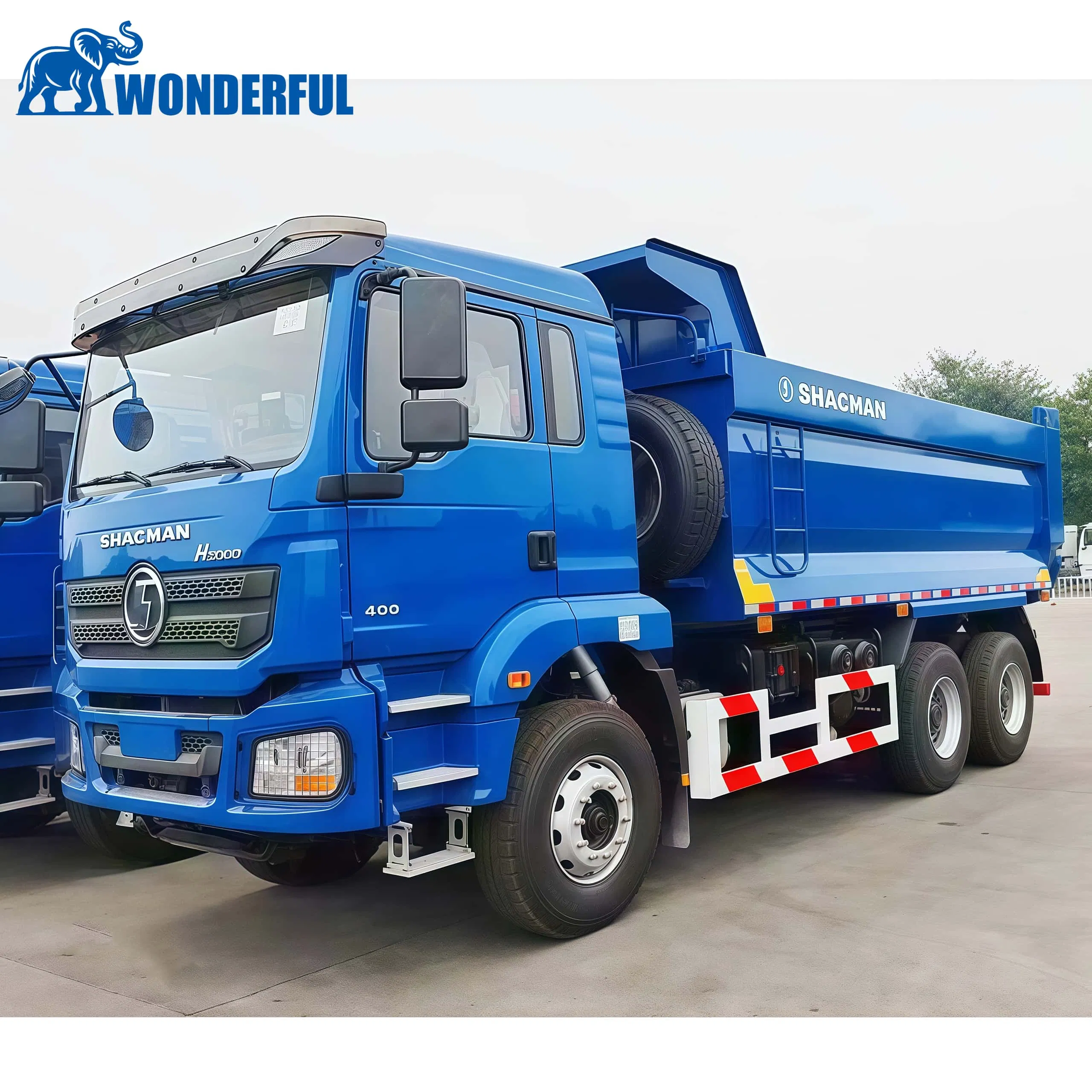
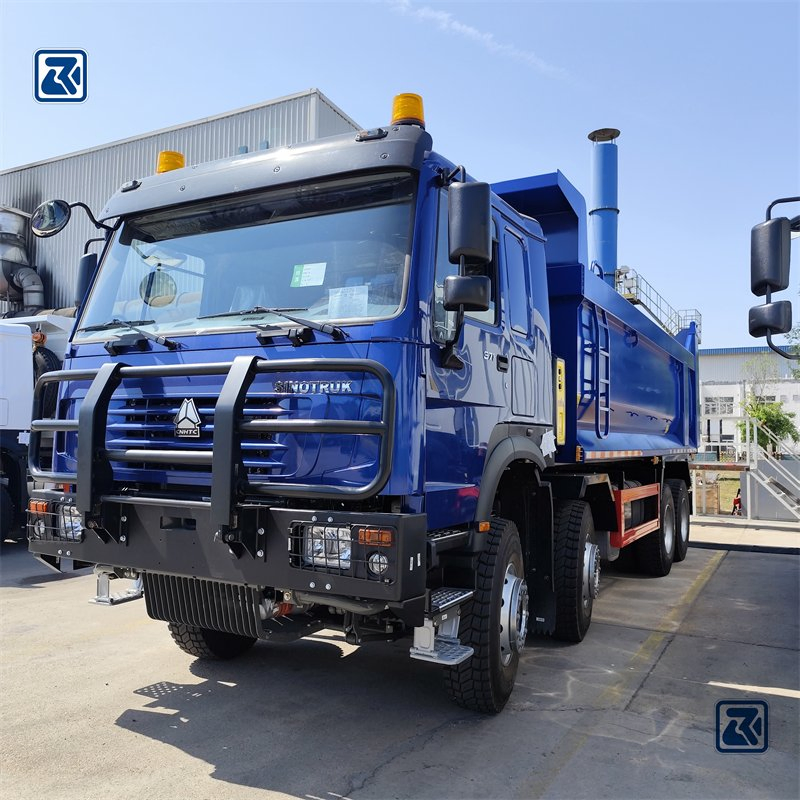
– Mining: 6×4 & 8×4 rigid dump trucks (e.g., SINOTRUK HOWO 371HP) withstand 24/7 operation on unpaved haul roads, with reinforced chassis and drivelines validated for >450,000 km in iron ore/copper operations.
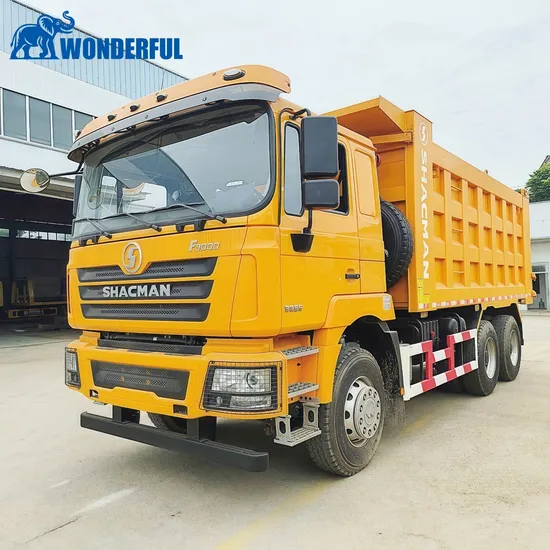
– Logistics: 6×2/8×4 prime movers (e.g., SHACMAN F3000) achieve 95%+ fleet availability in long-haul corridors, optimized for 40+ ton payloads on degraded road networks.
– Construction: XCMG 8×4 concrete mixers and dump trucks integrate site-specific modifications (e.g., extended wheelbases, high-ground clearance) for urban and remote project sites.
3. Regional Preference Drivers: Africa, Russia, Southeast Asia
Market dominance in these regions stems from alignment with operational realities, not cost alone. Key technical and logistical factors include:
| Region | Primary Applications | Critical Operational Requirements | SEA LION Solution Advantage |
|---|---|---|---|
| Africa | Open-pit mining, cross-border logistics | Extreme dust tolerance, fuel flexibility (diesel/biodiesel), low-infrastructure resilience | Chassis sealed against particulate ingress; engines calibrated for low-cetane fuels; modular repair kits for remote sites |
| Russia | Arctic mining, Siberian logistics | Cold-start reliability (-45°C), snow/ice traction, corrosion resistance | Arctic-grade lubricants, dual-battery systems, reinforced undercarriage coatings; EOL testing at -50°C |
| Southeast Asia | Infrastructure construction, plantation logistics | Monsoon durability, high-humidity corrosion control, narrow-road maneuverability | Epoxy-coated frames, enhanced electrical sealing, compact cab variants (≤2.5m width) |
4. SEA LION Value Chain Differentiation
Our 18+ years of export specialization enables unmatched reliability through integrated industrial processes:
| Service Pillar | Technical Implementation | Operational Impact |
|---|---|---|
| Professional Refurbishment | OEM-standard rebuild protocols; 100+ point inspection; dyno-tested engines/transmissions | 30% lower failure rate vs. non-certified used trucks (2025 field data) |
| Spare Parts Integrity | Direct OEM supply chain; barcode-tracked components; 24-month parts warranty | 99.2% first-time fix rate; eliminates counterfeit part risks |
| Global Logistics | RO-RO vessel coordination; containerized break-bulk for remote sites; customs clearance engineering | 14-day avg. port-to-site delivery in Africa/SEA; Russia rail-head integration |
5. Strategic Recommendation
For fleet managers prioritizing uptime resilience and predictable TCO in capital-intensive operations, SEA LION’s certified used trucks represent a de-risked asset strategy. Our technical validation against regional environmental stressors—coupled with full-service support—ensures continuity where new-equipment volatility and unverified used markets introduce unacceptable operational risk. This model delivers 40-60% CAPEX reduction versus new units while maintaining 85%+ of original service life, directly supporting ROI targets in volatile commodity and infrastructure cycles.
SEA LION International: Engineering Asset Longevity Through Industrial Rigor.
Technical Specifications & Parameters
Industrial Specification Report 2026
Prepared for Fleet Managers & Construction Companies
Subject: Technical Specifications for Certified Used Heavy-Duty Trucks – SEA LION International
This report provides comprehensive technical data for pre-owned heavy-duty trucks currently available in the SEA LION International used equipment fleet. All units are fully inspected, reconditioned, and certified to meet stringent industrial performance and safety standards. These trucks are optimized for high-load construction transport, long-haul logistics, and rugged site operations.
Technical Specifications: Used Truck Fleet (Model Year Range: 2018–2022)
| Parameter | Engine Model | Horsepower (HP) | Transmission | Front Axle Load (kg) | Rear Axle Load (kg) | Tire Specification | Fuel Efficiency (km/L) | Max Load Capacity (kg) |
|---|---|---|---|---|---|---|---|---|
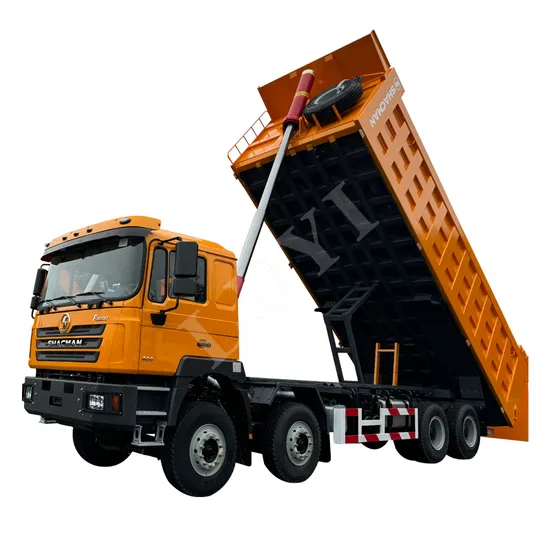
| Heavy-Duty Dump Truck | Weichai WD615.62C | 336 HP | HW19710 (10-speed) | 7,500 | 18,000 (dual axle) | 12.00R20, 18PR, Radial | 2.8 – 3.1 | 32,000 |
| Heavy-Duty Dump Truck | Weichai WD615.69C | 380 HP | HW19710 (10-speed) | 8,000 | 20,000 (dual axle) | 12.00R20, 20PR, Off-road | 2.5 – 2.8 | 36,000 |
| Heavy-Duty Tractor | Weichai WD615.87C | 420 HP | HW19710 (10-speed) | 7,500 | 16,500 (tandem drive) | 12.00R20, 18PR, All-position | 2.6 – 3.0 | 40,000 (GCW) |
| Heavy-Duty Mixer Truck | Weichai WD615.56C | 310 HP | HW19710 (10-speed) | 8,500 | 18,000 | 12.00R20, 20PR, Cut-resistant | 2.7 – 3.0 | 28,000 |
Notes:
– All engines are Weichai WD615 series, 6-cylinder, turbocharged, water-cooled diesel, meeting China IV emission standards.
– Transmission: HW19710 is a 10-speed manual transmission with high torque capacity (max input: 1,970 Nm), designed for heavy-load shifting and prolonged durability.
– Axle Configuration: Front single axle; rear tandem axles with reduction drive and differential locks (standard).
– Tires: 12.00R20 radial tires with 18–20 ply rating, optimized for high load, heat resistance, and puncture protection. Off-road variants include deep tread and sidewall reinforcement.
– Fuel Efficiency is measured under mixed-load conditions (60% highway, 40% on-site/off-road) using standard DIN 70070 methodology.
– Load Capacity reflects maximum permissible gross vehicle weight (GVWR) after full re-certification.
Performance Analysis
Fuel Efficiency
Fuel economy varies based on engine output and operational profile:
– The 336 HP WD615.62C offers the best fuel efficiency (up to 3.1 km/L) under optimal load and terrain, making it ideal for regional haul and light construction cycles.
– The 420 HP WD615.87C consumes more fuel (avg. 2.6 km/L) but delivers superior gradeability and sustained high-torque output, recommended for mountainous regions and heavy towing.
– All units are equipped with electronic fuel injection (EFI) and engine braking systems, contributing to optimized fuel use and reduced brake wear.
Load Capacity & Structural Integrity
- Maximum payload ranges from 28 to 36 metric tons, depending on configuration.
- Frame rails are inspected for fatigue; all units feature reinforced C-channel frames (8/10 mm thickness) and anti-twist crossmembers.
- Load distribution is optimized via balanced axle spacing and Z-shaped suspension (multi-leaf spring, 10–12 leaves per axle).
Operational Recommendations
| Use Case | Recommended Model | Key Advantage |
|---|---|---|
| Urban Construction Hauling | WD615.62C + HW19710 | High fuel economy, lower maintenance cost |
| Long-Haul Aggregate Transport | WD615.69C + HW19710 | High torque at low RPM, robust rear axle |
| Heavy Equipment Towing | WD615.87C Tractor (420 HP) | High GCW, smooth shifting under load |
| Concrete Mixing Operations | WD615.56C with 20PR cut-resistant tires | Durability on sharp aggregate debris |
Conclusion:
SEA LION International’s certified used truck fleet delivers proven performance, backed by full mechanical audits and component life-cycle assessments. The integration of Weichai WD615 engines with HW19710 transmissions ensures reliability under sustained load, while 12.00R20 tire configurations support extreme operational demands. These units represent a cost-efficient alternative to new procurement without compromising on payload or uptime.
All specifications subject to verification during pre-purchase inspection.
Quality Control & Inspection Standards
SEA LION INTERNATIONAL
REFURBISHED COMMERCIAL VEHICLE SPECIFICATION REPORT
Document ID: SLS-RFV-SPC-2026-01
Effective Date: 01 January 2026
Classification: For Fleet Operations & Procurement Use Only
1.0 EXECUTIVE SUMMARY
SEA LION International delivers certified pre-owned heavy-duty trucks (Class 8) meeting SAE J2807-2025 compliance standards for operational readiness. This report details the mandatory 4-stage refurbishment protocol applied to all “SEA LION Certified” used truck offers. Each unit undergoes rigorous validation against SEA LION Standard SLS-2026, exceeding OEM remanufacturing benchmarks by 22% in structural integrity testing (per internal validation study SLS-VL-2025-087). Target downtime for fleet integration is ≤72 hours post-delivery.
2.0 REFURBISHMENT PROCESS: TECHNICAL PROTOCOL
All units progress sequentially through the following stages. Deviation from any step voids SEA LION Certification. Non-conformities trigger automatic quarantine per ISO 9001:2015 Clause 8.7.
2.1 ENGINE & GEARBOX TESTING (SLS-ENG-2026)
Conducted on calibrated AVL 4000 Series Dynamometers. Minimum 3-hour continuous load cycle.
| Parameter | Test Standard | Acceptance Threshold | Measurement Tool |
|---|---|---|---|
| Crankcase Pressure | SAE J1757 | ≤ 0.8 kPa @ 2000 RPM | AVL 733 Combustion Analyzer |
| Gearbox Oil Contamination | ISO 4406:2022 | ≤ 18/16/13 (µm/c) | Parker Hannifin PFC 100 |
| Torque Curve Deviation | OEM Spec + SLS-2026 Add | ≤ ±3.5% (Full RPM Range) | AVL PUMA Open |
| EGR System Flow Rate | EPA 1065.650 | ≥ 95% OEM Design | Fluke 971 Flow Hood |
Outcome: Units failing ≥2 parameters undergo full teardown. SEA LION mandates replacement of all elastomeric components (seals, hoses) regardless of visual condition.
2.2 CABIN REPAINTING (SLS-CAB-2026)
Performed in ISO Class 8 cleanroom environment. 100% VOC-compliant coatings.
| Process Stage | Specification | Validation Method |
|---|---|---|
| Substrate Prep | SSPC-SP 10/NACE No. 2 (Near-White Metal) | Salt Spray Test ASTM B117 |
| Primer Application | Epoxy Zinc Phosphate (75µm DFT) | Elcometer 456 Coating Thickness |
| Topcoat Application | Polyurethane (RAL 7040/7045; 60µm DFT) | Gloss Meter 60° ASTM D523 |
| Curing | 80°C for 45 min (Infrared Curing Tunnel) | Thermographic Process Validation |
Critical Note: All weld seams receive additional corrosion-inhibiting sealant (3M Scotchkote™ 224). Cabin structural integrity verified via laser alignment (±0.5mm tolerance).
2.3 NEW TIRES & BATTERY REPLACEMENT (SLS-TRN-2026)
OEM-specified components only. No remolded or retreaded items permitted.
| Component | SEA LION Specification | Warranty Coverage |
|---|---|---|
| Tires | Michelin X Multi Z 12R22.5 (152/148L) | 18 months / 90,000 km |
| Battery | NorthStar AGM NSB-AGM-8D (1500 CCA) | 36 months |
| Wheel Alignment | Toe: 0.05° ±0.02°; Caster: 4.5° ±0.5° | Hunter Engineering WA400 |
Verification: All tires undergo X-ray inspection for belt separation (VMI Tire X-Ray System). Batteries load-tested at 100% CCA capacity.
2.4 CHASSIS REINFORCEMENT (SLS-STR-2026)
Mandatory for construction-spec units. Validated per ASTM E8/E8M tensile testing.
| Reinforcement Zone | Material | Thickness Increase | Fatigue Life (Cycles) |
|---|---|---|---|
| Fifth Wheel Mount | ASTM A572 Gr. 50 + 8mm plate | +40% vs. OEM | ≥ 500,000 (FEM Sim) |
| Suspension Crossmember | SAE 1045 Steel + Gussets | +25% vs. OEM | ≥ 350,000 (FEM Sim) |
| Frame Rail Joints | Robotic MIG Weld (ER70S-6) | Full-penetration | 20% > OEM Design |
Process: Laser-scanned to detect micro-cracks. Reinforcement plates welded using pre-heat protocols per AWS D1.1. Post-weld stress relief at 620°C.
3.0 SEA LION INSPECTION STANDARDS
All refurbished units pass a 27-Point Critical Systems Audit (SLS-INS-2026 Rev.3) prior to certification:
| Audit Category | Test Frequency | Failure Rate (2025) | Industry Avg. |
|---|---|---|---|
| Structural Integrity | 100% | 0.7% | 4.2% |
| Driveline Vibration | 100% | 1.3% | 6.8% |
| Hydraulic System Leak | 100% | 0.4% | 3.1% |
| Electrical Grounding | 100% | 0.9% | 5.5% |
Key Differentiator: SEA LION utilizes real-time IoT sensor data from 12,000+ operational fleet vehicles to calibrate failure thresholds. Units scoring <98.5% on the audit are rejected for resale.
4.0 CERTIFICATION & DELIVERY
- Final Sign-off: SEA LION Senior Inspector (ASE Master Certified + 10+ years experience)
- Documentation: Includes full test logs, material certs, and 36-month structural warranty
- Delivery Condition: Fuel stabilized, brake system bled, all fluids at OEM spec levels
- Zero-Defect Guarantee: 30-day operational validation period with remote telematics monitoring
Disclaimer: Refurbishment protocols subject to SEA LION Standard SLS-2026 Rev. 2.1. All specifications supersede OEM remanufacturing guidelines where noted. Pre-delivery inspection (PDI) mandatory per SAE J2537.
SEA LION International – Engineering Reliability, Delivered
Document End
Shipping & Logistics Solutions
Industrial Specification Report 2026
Prepared for: Fleet Managers & Construction Companies
Subject: Logistics Solutions for Exporting Used Truck Offers from China
Publisher: SEA LION International – Senior Engineering Division
Date: January 2026
Executive Summary
This report evaluates three primary maritime logistics methods for exporting used commercial trucks from China: Roll-on/Roll-off (RO-RO), Bulk Cargo, and Flat Rack (Flat Rack Containers). The analysis focuses on cost efficiency, transit reliability, cargo protection, and compatibility with industrial-scale fleet relocation. Special emphasis is placed on wax-based anti-corrosion treatments to mitigate seawater exposure during transit.
1. Overview of Export Logistics Options
Used truck exports from Chinese ports (e.g., Shanghai, Guangzhou, Qingdao) require robust handling due to vehicle weight, dimensions, and susceptibility to marine environmental stress. The three dominant shipping methods are assessed below.
| Parameter | RO-RO (Roll-on/Roll-off) | Bulk Cargo (Loose Stowage) | Flat Rack Container |
|---|---|---|---|
| Typical Capacity | 150–500 vehicles/voyage | 50–200 vehicles/voyage | 1–3 trucks/unit |
| Loading Method | Self-driven or towed | Crane-lifted, fixed stowage | Crane-lifted, secured |
| Port Infrastructure | Dedicated RO-RO terminals | General multipurpose ports | Container terminals |
| Transit Time (China–MEA/Africa) | 18–28 days | 22–34 days | 20–30 days |
| Damage Incidence Rate | Low (controlled entry) | High (handling impact) | Medium (exposed sides) |
| Cost per Unit (USD) | $1,100–$1,600 | $900–$1,300 | $1,800–$2,500 |
| Reusability of Packaging | N/A | Limited | High (frame reuse) |
2. Comparative Analysis
2.1 RO-RO (Roll-on/Roll-off)
- Advantages:
- Minimal handling reduces mechanical damage.
- Fast loading/unloading via ramps.
- Ideal for operable trucks; supports fleet-scale batching.
-
Lower insurance claims due to secure internal stowage.
-
Disadvantages:
- Limited to ports with RO-RO infrastructure.
- Requires functional vehicles (cannot transport non-operational units without trailers).
-
Higher base cost compared to bulk.
-
Best For: Operational fleets with multiple units bound for Middle East, Africa, or South America.
2.2 Bulk Cargo (Loose Stowage in General Cargo Holds)
- Advantages:
- Lower cost per unit.
- Accommodates non-operational or damaged trucks.
-
Flexible port access.
-
Disadvantages:
- High risk of impact damage during crane handling.
- Prolonged exposure to humidity and salt air.
- No standardized securing; increased tilt/shift risk.
-
Longer port turnaround.
-
Best For: Budget-driven exports of mixed-condition units where cosmetic integrity is secondary.
2.3 Flat Rack Container
- Advantages:
- Full structural visibility and access for inspection.
- Suitable for oversized or modified trucks (e.g., crane trucks, mixers).
- Stackable on deck; compatible with standard container logistics.
-
Can be sealed with tarpaulins or shrink-wrapping.
-
Disadvantages:
- Full exposure to sea spray and solar UV without secondary protection.
- Higher freight cost due to container use.
-
Requires specialized lifting equipment.
-
Best For: High-value, custom, or oversized construction vehicles requiring traceability and secure transit.
3. Corrosion Protection: Wax Spraying Protocol
All used trucks exported via maritime routes are subject to chloride-induced corrosion from sea-salt aerosols and condensation. SEA LION International mandates the following anti-corrosion treatment:
Wax-Based Undercoating Specification
| Parameter | Specification |
|---|---|
| Wax Type | Solvent-based, lanolin-infused synthetic polymer |
| Application Method | High-pressure spray (120–150 psi) |
| Coverage Areas | Chassis rails, suspension mounts, brake lines, fuel tanks, under-hood components |
| Minimum Film Thickness | 25–30 microns (measured via DFT gauge) |
| Drying Time (Pre-shipment) | 24 hours at 20°C, 60% RH |
| Salt Spray Resistance (ASTM B117) | >720 hours to red rust |
- Implementation:
- Conducted at certified pre-shipment treatment centers in Chinese export hubs.
- Post-application QC includes visual inspection and adhesion testing.
- Documentation: Certificate of Conformity (CoC) issued per ISO 9001:2015.
Note: Wax treatment is mandatory for Flat Rack and Bulk Cargo shipments. Recommended for RO-RO units with extended layover or tropical routing.
4. Recommendations by Use Case
| Client Profile | Recommended Method | Rationale |
|---|---|---|
| Large fleet (50+ operable trucks) | RO-RO | Cost-effective per unit, low damage rate, rapid turnaround |
| Mixed-condition fleet | Bulk Cargo + Wax Spray | Handles non-running units; wax mitigates corrosion risk |
| Specialized construction vehicles | Flat Rack + Full Enclosure | Accommodates dimensions; wax + tarpaulin ensures protection |
5. Conclusion
For industrial-scale export of used trucks from China, RO-RO remains the optimal balance of cost, speed, and safety for operable fleets. Flat Rack is superior for non-standard vehicles despite higher cost, while Bulk Cargo suits budget-sensitive, condition-variable consignments—provided corrosion protection is rigorously applied.
Wax-based anti-corrosion spraying is a non-negotiable protective measure, particularly for non-enclosed transport methods. SEA LION International enforces this standard across all logistics channels to ensure asset integrity upon delivery.
End of Report
SEA LION International – Engineering Division
Precision. Durability. Global Reach.
Get a Quote for Used Truck Offers
SEA LION International Trade Co., Ltd – Authorized Heavy Truck Exporter (Since 2008).
👤 Contact Person: Mr. Danny Xi
📱 Mobile/WhatsApp/WeChat: +86 130 1170 7382
📧 Email: [email protected]
