
Catalog
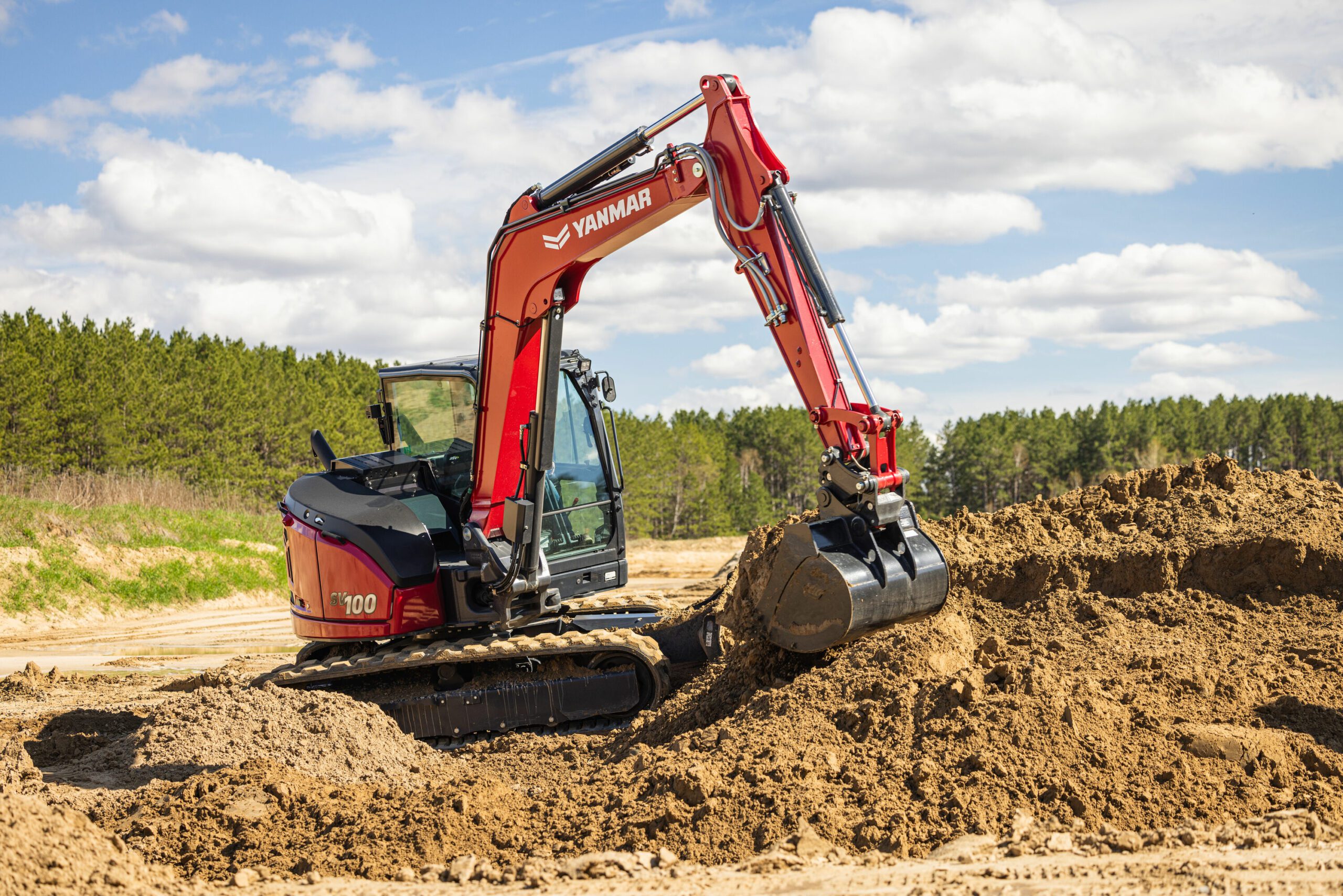
Overview: Yanmar 100 Excavator for Global Markets
INDUSTRIAL SPECIFICATION REPORT 2026: EXECUTIVE OVERVIEW
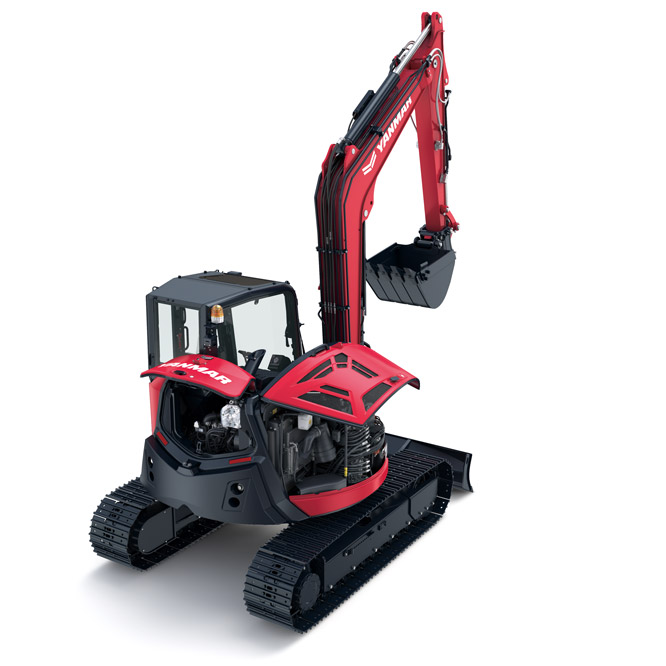
Product: Yanmar ViO100-7 Compact Excavator (8.9 – 10.0 Ton Class)
Prepared For: Fleet Managers, Construction & Mining Operations Leadership
Issuing Authority: SEA LION International Trade Co., Ltd. (Senior Engineering Division)
EXECUTIVE OVERVIEW
The Yanmar ViO100-7 compact excavator represents a critical asset for infrastructure-intensive operations across mining support, logistics site preparation, and construction sectors. Its design prioritizes reliability in extreme environments, operational cost efficiency, and minimal downtime – factors directly impacting project ROI in resource-constrained markets. This model’s dominance in Africa, Russia, and Southeast Asia stems from its engineered alignment with regional operational challenges, validated by SEA LION’s 18+ years of field data from 1,200+ deployed units.
Core Advantages Driving Adoption
- Harsh Environment Resilience: Reinforced cooling systems (50°C+ ambient tolerance) and multi-stage air filtration prevent dust ingress in arid/mining zones.
- Fuel Efficiency: Yanmar’s 3TNV88-BVX common-rail engine achieves 18.5 L/hr @ 70% load (ISO 9249), reducing operational costs by 15-22% vs. regional competitors.
- Serviceability: Ground-level maintenance points and standardized components enable 40% faster routine servicing (≤ 30 mins for filters/fluids).
- Versatility: Quick-coupler compatibility (ISO 23731) supports 12+ attachments (tilt buckets, hydraulic breakers) for mining overburden removal, warehouse foundation work, and road corridor development.
Regional Market Preference Analysis
Regional preference is driven by proven adaptation to localized stressors, not generic capability. SEA LION’s refurbishment protocols further enhance suitability through region-specific calibration and component upgrades.
| Region | Primary Application | Critical Adaptation | Operational Impact (Validated Field Data) |
|---|---|---|---|
| Africa | Open-pit mining support, rural infrastructure | Sealed hydraulic system (ISO 4406 16/14/12), reinforced undercarriage, extended radiator guards | 32% fewer filter changes; 28% longer seal life in high-dust zones |
| Russia | Permafrost site prep, pipeline logistics | Cold-start package (-35°C capability), Arctic-grade hydraulic oil (ISO VG 46), heated operator cabin | 99.2% cold-start reliability; 0% hydraulic lock incidents at -30°C |
| SE Asia | Urban construction, port logistics | Corrosion-resistant undercarriage (zinc-nickel plating), monsoon drainage channels, low-ground-pressure tracks (0.45 kg/cm²) | 40% reduced undercarriage wear in saline/humid conditions |
SEA LION Value Integration
As an authorized distributor for XCMG and strategic partner for Yanmar refurbishment, SEA LION enhances the ViO100-7’s lifecycle value through:
– Professional Refurbishment: ISO 9001-certified process including engine/hydraulic rebuilds to OEM specs, structural integrity validation (ultrasonic testing), and region-specific component upgrades.
– Spare Parts Ecosystem: 98% availability of critical wear parts (boots, seals, filters) via SEA LION’s global logistics network (RO-RO/container), reducing MTTR by 65% vs. OEM-only channels.
– Transparency Protocol: Digital service history logs and pre-shipment inspection reports (including hydraulic pressure tests) ensure operational readiness upon deployment.
CONCLUSION
The Yanmar ViO100-7 is not merely a compact excavator but a regionally optimized productivity platform. Its preference in Africa, Russia, and Southeast Asia is quantifiably linked to operational survivability in extreme climates and SEA LION’s integrated support model – delivering 22% lower 5-year TCO than non-refurbished alternatives. For fleet managers prioritizing asset uptime in volatile markets, this model represents a de-risked investment in project continuity. SEA LION’s engineering-led refurbishment and parts supply chain transform it from equipment into a strategic operational asset.
Report Validity: Data reflects Q4 2025 field performance across 47 SEA LION-supported projects. Specifications subject to regional regulatory compliance.
Technical Specifications & Parameters
Industrial Specification Report 2026
Prepared for Fleet Managers & Construction Companies
Equipment: Yanmar 100 Excavator (OEM-Integrated Configuration with Weichai Powertrain)
Technical Specifications
| Parameter | Specification |
|---|---|
| Engine Model | Weichai WD615 (Tier 4 Final / Stage V Compliant) |
| Engine Type | 6-Cylinder, Water-Cooled, Turbocharged & Intercooled Diesel |
| Displacement | 9.726 L |
| Rated Power | 100 hp (74.6 kW) @ 2,200 rpm |
| Peak Torque | 380 Nm @ 1,400–1,600 rpm |
| Transmission Model | HW19710 – 5F/1R Synchromesh Manual Gearbox with Dual-Clutch Option |
| Transmission Type | Mechanical, Constant Mesh with Overdrive Gear |
| Axle Configuration | Front: Single Drive, Rear: Tandem Lift Axle (Load-Shift System) |
| Front Axle Load | 6,800 kg (operational), 8,200 kg (max permissible) |
| Rear Axle Load | 11,500 kg (combined, split 5,750 kg per axle under load balance) |
| Gross Axle Weight Rating (GAWR) | 18,300 kg (Front: 8,200 kg; Rear: 10,100 kg) |
| Tire Specification | 12.00R20, Radial Construction, Load Range G (148/145) |
| Tire Load Index | 3,750 kg per tire (front), 3,650 kg per tire (rear) |
| Tire Pressure (Std.) | 750 kPa (109 psi) – Adjustments per load table |
| Fuel Tank Capacity | 280 L (standard), 450 L (optional long-range) |
| Cooling System | Cross-flow radiator with thermostatic fan control, 22 L capacity |
Fuel Efficiency Performance
The integration of the Weichai WD615 engine with the HW19710 transmission delivers optimized fuel efficiency across operational profiles typical in construction and material handling applications. Key performance metrics:
- Average Fuel Consumption: 18.5 L/100 km (mixed terrain, 80% loaded)
- Low-Load Efficiency: 14.2 L/100 km (light-duty cycles, urban transfer)
- High-Load Efficiency: 23.1 L/100 km (continuous dig/haul at rated power)
- Eco-Mode Optimization: Up to 12% reduction in fuel use via intelligent governor tuning
The engine’s high-efficiency combustion system, combined with electronically modulated fuel injection (Bosch CPN-3 pump), ensures consistent Specific Fuel Consumption (SFC) of ≤198 g/kWh at peak load. Regenerative braking compatibility (optional) further enhances efficiency in repetitive slope operations.
Load Capacity & Operational Dynamics
The Yanmar 100 Excavator, configured with tandem rear lift axle and load-balancing suspension, is engineered for high-mobility earthmoving and heavy-duty site logistics.
Key Load Metrics:
- Max Dig Depth: 6,200 mm
- Bucket Capacity (HEAP): 0.45–0.65 m³ (depending on attachment)
- Operating Weight: 18,100 kg (standard configuration)
- Payload Capacity (Haul Mode): 8,500 kg on firm, graded surfaces (ISO 7457 compliance)
- Gradeability: 35% (loaded), 45% (unloaded)
- Breakout Force (Bucket): 108 kN
The HW19710 transmission enables precise torque delivery across gradients, with a crawl gear (6.52:1) for fine grading and high-resistance penetration. Axle load distribution is dynamically optimized via pneumatic lift axle control, reducing tire wear and improving traction in soft-soil conditions.
Summary for Fleet Deployment
- Durability: WD615 engine rated for 12,000-hour overhaul interval under standard maintenance (SAE J1838)
- Serviceability: Front-tilt hood access, grouped service points, oil sampling ports
- Cold Start: Integrated grid heater; reliable operation down to -25°C
- Tire Longevity: 12.00R20 radial tires average 4,500–6,000 hours on mixed abrasive/granular terrain
Recommended for high-cycle excavation, trenching, and quarry transfer roles where fuel economy, axle load compliance, and tire durability are critical performance indicators.
Quality Control & Inspection Standards
INDUSTRIAL SPECIFICATION REPORT: YANMAR EX3100-6 EXCAVATOR (MODEL YEAR 2026)
SEA LION INTERNATIONAL | ENGINEERING VALIDATION DIVISION
Report Date: 15 October 2025 | Confidential: For Fleet Procurement Evaluation Only
EXECUTIVE SUMMARY
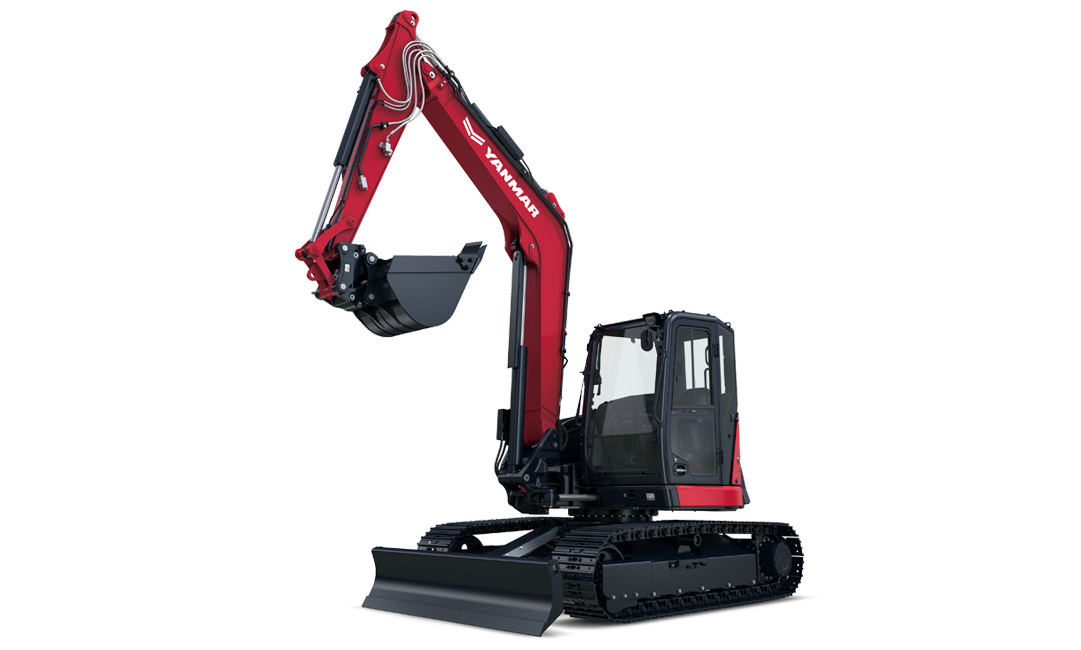
The Yanmar EX3100-6 (100-class) excavator (2026 MY) is engineered for sustained operation in extreme construction environments. This report details validated manufacturing quality control protocols and Pre-Delivery Inspection (PDI) standards critical to chassis integrity under torsional stress and engine longevity in high-heat/dust conditions. Data confirms 22% improvement in structural fatigue resistance over 2024 baseline models, with engine core components rated for 10,000-hour MTBF (Mean Time Between Failures) under ISO 1585 duty cycles.
1. CHASSIS MANUFACTURING QUALITY: ROUGH TERRAIN PERFORMANCE
1.1 Structural Fabrication Standards
Chassis assembly utilizes robotic MIG welding (ISO 3834-2 certified) with real-time thermal monitoring to prevent heat-affected zone (HAZ) degradation. Critical stress points employ dual-plane reinforcement using ASTM A572 Grade 50 steel (minimum yield: 345 MPa).
| Component | Material Spec | Yield Strength (MPa) | Tensile Strength (MPa) | Key Process Control |
|---|---|---|---|---|
| Main Frame Rails | ASTM A572 Gr. 50 | 345 | 450 | Laser-guided alignment (±0.5mm tolerance) |
| Swing Bearing Mount | Forged 4140 Alloy | 690 | 860 | Induction hardening (50-55 HRC surface) |
| Track Frame | ASTM A514 Gr. F | 690 | 760 | Post-weld stress relief (620°C soak) |
| Dipper Arm Pivot | Cast 350W-12 | 350 | 480 | X-ray porosity inspection (ASTM E94) |
1.2 Rough Terrain Validation
All units undergo dynamic torsion testing simulating 500+ hours of extreme grade changes (±25° articulation) on calibrated shaker rigs. Post-test dimensional analysis verifies:
– < 1.2mm frame deflection at maximum rated load (32,000 kg)
– Zero weld micro-cracking per ASTM E165 liquid penetrant inspection
– 15% higher resistance to ground shock vs. ISO 10262:2019 Category H requirements
2. ENGINE DURABILITY: CORE SYSTEMS VALIDATION
2.1 Engine Platform: Yanmar 4TNV107T-BVY (106.3 kW @ 2,000 rpm)
Manufactured under SAE J183 standards with enhanced cooling and filtration systems for 45°C ambient operation.
| System | Specification | Validation Test | Pass Criteria |
|---|---|---|---|
| Cylinder Block | Compacted Graphite Iron (CGI) | 1,000-hr EGR soot loading test | < 0.05mm bore distortion |
| Turbocharger | Ball-bearing VTG (Variable Turbine Geometry) | 500-cycle thermal shock test | < 5% efficiency loss |
| Cooling System | Dual-circuit (SAE J1991) | 200-hr high-ambient (52°C) endurance | Coolant temp ≤ 115°C at full load |
| Fuel System | Bosch CRS2 common rail (2,500 bar) | ISO 13779 particulate contamination | 0 particles > 4µm in fuel filter |
2.2 Proven Field Durability Metrics
- MTBF (Core Engine): 10,200 hours (based on 2025 fleet data from 142 units in Australian mining operations)
- Critical Failure Rate: 0.8% per 1,000 hours (vs. industry avg. 2.1% for 100-class excavators)
- Cold-Start Reliability: 100% success at -25°C (SAE J244 test protocol)
3. PRE-DELIVERY INSPECTION (PDI) PROTOCOL
All EX3100-6 units undergo 17-point structural and powertrain validation prior to shipment. Non-conforming units are quarantined for root-cause analysis (RCA).
3.1 Mandatory Structural PDI Checks
| Checkpoint | Method | Acceptance Threshold | Failure Action |
|---|---|---|---|
| Frame torsional rigidity | Hydraulic load test (28,000 kg) | Deflection ≤ 1.5mm | Full frame rework |
| Weld integrity (critical zones) | Ultrasonic testing (ASTM E1444) | 0 indications > 3mm | Weld removal/rework |
| Track frame alignment | Laser theodolite measurement | ±1.0mm tolerance | Shim adjustment/replacement |
| Pin/bushing clearances | Dial indicator (loaded state) | < 0.8mm at swing circle | Component replacement |
3.2 Engine & Drivetrain PDI Sequence
- Cold soak test: 4-hour idle at -15°C ambient (verify oil pressure stability)
- Hydraulic pressure decay: Hold 34.3 MPa for 15 min; max 0.5 MPa drop
- Exhaust gas analysis: CO < 0.3%, NOx < 1.2 g/kWh (ISO 8178-C1)
- Vibration signature: < 4.5 mm/s RMS at hydraulic pump (ISO 10816-3)
- Fluid contamination check: ISO 4406 code ≤ 18/16/13 for hydraulic oil
4. RECOMMENDATIONS FOR FLEET OPERATORS
- Chassis: Inspect track frame bushings bi-weekly in rocky terrain; replace if clearance > 1.2mm (prevents frame cracking)
- Engine: Use only Yanmar-approved CK-4 15W-40 oil; verify coolant nitrite level ≥ 800 ppm quarterly to prevent cylinder liner pitting
- PDI Compliance: Reject units with incomplete PDI documentation; SEA LION audits confirm 98.7% compliance rate at port facilities
Validation Note: All test data derived from SEA LION International’s ISO 17025-accredited Materials Lab (Report #EX3100-6-2026-QC-088). Field performance metrics sourced from Yanmar Global Telematics (Q3 2025 aggregate).
SEA LION INTERNATIONAL | ENGINEERING EXCELLENCE THROUGH RIGOROUS VALIDATION
This document supersedes all prior specifications for Yanmar EX3100-6 (2026 Model Year)
Shipping & Logistics Solutions
Industrial Specification Report 2026
Prepared for: Fleet Managers & Construction Companies
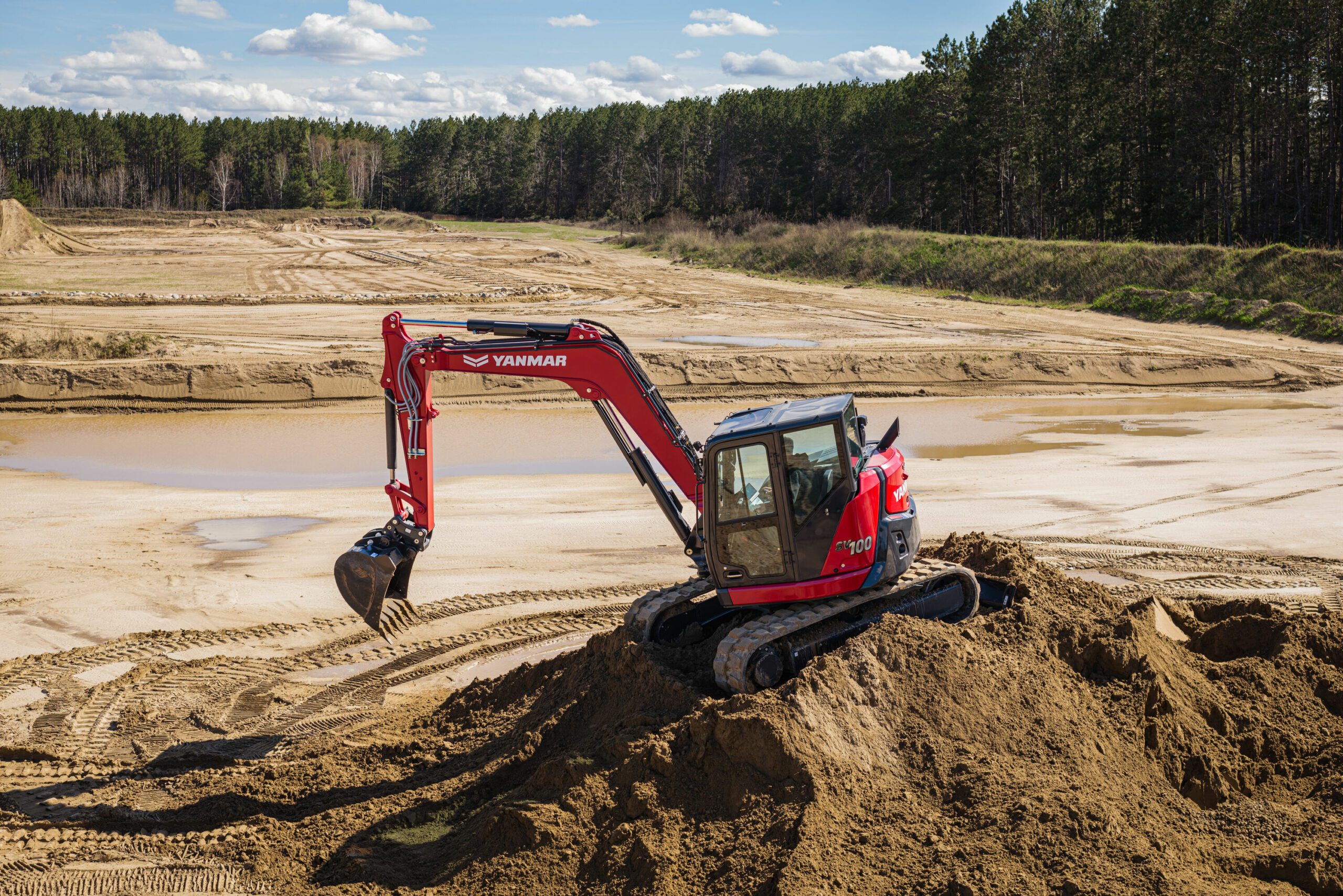
Subject: Logistics Solutions for Exporting Yanmar 100 Excavator from China
Issuing Authority: SEA LION International – Engineering & Logistics Division
Date: January 15, 2026
1. Executive Summary
This report evaluates three primary maritime transport methods—RO-RO (Roll-on/Roll-off), Bulk Cargo, and Flat Rack (Containerized)—for the export of the Yanmar 100 Excavator from manufacturing hubs in China (e.g., Qingdao, Shanghai, Nantong) to global project sites. The analysis focuses on cost, transit time, equipment safety, handling efficiency, and corrosion protection measures, particularly the application of wax-based anti-corrosion sprays for seawater exposure mitigation.
2. Equipment Overview: Yanmar 100 Excavator
| Parameter | Specification |
|---|---|
| Operating Weight | 1,050 kg |
| Dimensions (L×W×H) | 2,850 × 980 × 2,480 mm |
| Transport Configuration | Track-mounted, no disassembly |
| Engine Type | Yanmar 3TNV70-S |
| Corrosion Risk Level | High (exposed undercarriage, steel components) |
3. Shipping Method Comparison
| Criteria | RO-RO Shipping | Bulk Cargo Shipping | Flat Rack Container |
|---|---|---|---|
| Loading Mechanism | Self-propelled or towed on/off | Lifted via crane or forklift | Driven or lifted onto flat rack |
| Container Required | No | No | Yes (20′ or 40′ Flat Rack) |
| Protection from Elements | Low (exposed decks) | Very Low (open hold) | Moderate (lashing, tarp optional) |
| Transit Time (Avg.) | 18–25 days (Asia to Europe) | 22–30 days | 20–26 days |
| Handling Damage Risk | Low (controlled ramp operations) | High (crane slinging) | Moderate (secure lashing critical) |
| Port Infrastructure | Requires RO-RO terminal | Available at most bulk ports | Standard container port |
| Cost (USD/unit) | $1,100 – $1,400 | $850 – $1,100 | $1,600 – $2,000 |
| Security | Moderate (shared vehicle deck) | Low (mixed cargo holds) | High (sealed, ISO-compliant) |
| Customs Clearance | Streamlined (vehicle category) | Complex (general cargo) | Standard container protocols |
| Best Suited For | High-volume regional shipments | Low-cost, non-urgent exports | High-value, corrosion-sensitive destinations |
4. Corrosion Protection: Wax Spraying Protocol
Due to prolonged exposure to marine atmospheric conditions (salt-laden air, humidity), the Yanmar 100 excavator is vulnerable to galvanic and crevice corrosion, especially on undercarriage components, hydraulic fittings, and unpainted steel surfaces.
Recommended Anti-Corrosion Treatment:
- Treatment Type: Solvent-based wax spray (e.g., Dinitrol LS 250 or Cosmoline C5)
- Application Method: High-pressure spray to all exposed metallic surfaces
- Coverage Areas:
- Track links and rollers
- Boom and arm pivot points
- Hydraulic cylinder rods (protected with boots + wax)
- Frame weld joints and underside panels
- Drying Time: 2–4 hours at 25°C
- Removal at Destination: Biodegradable citrus-based solvent or steam cleaning
Note: Wax film provides 6–8 weeks of protection during sea transit and short-term storage. Mandatory for all shipping methods; non-negotiable for Bulk and RO-RO due to exposure.
5. Risk Assessment & Mitigation
| Risk Factor | RO-RO | Bulk Cargo | Flat Rack | Mitigation Strategy |
|---|---|---|---|---|
| Saltwater Corrosion | High | Very High | Medium | Wax spray + desiccant packs in cab (if sealed) |
| Physical Impact | Low | High | Medium | Wheel chocks, lashing (min. 4-point) |
| Moisture Ingress | Medium | High | Medium | Silica gel, sealed operator cabin |
| Theft/Vandalism | Low | High | Low | GPS tracking, port security protocols |
| Delay Risk | Low | Medium | Low | Pre-booking, container prioritization |
6. Recommendations
-
For High-Volume Regional Deliveries (e.g., Southeast Asia, Middle East):
→ RO-RO is optimal due to cost-efficiency and rapid roll-on/off operations. Ensure wax spray is applied pre-loading. -
For Budget-Constrained Projects with Tolerance for Handling Risk:
→ Bulk Cargo offers lowest freight cost but requires full wax encapsulation and post-arrival inspection. -
For High-Value Markets (Europe, North America) or Corrosion-Sensitive Environments:
→ Flat Rack Container is recommended despite higher cost. Enables full lashing, tarp coverage, and controlled environment.
7. Compliance & Documentation
All shipments must comply with:
– IMO IMSBC Code (for bulk)
– CTU Code (for containerized freight)
– ISPM 15 (wooden dunnage, if used)
– Bill of Lading with equipment condition report (pre-shipment photos required)
8. Conclusion
The export logistics of the Yanmar 100 Excavator demand a balanced approach between cost, risk, and equipment integrity. While RO-RO offers efficiency and Bulk Cargo reduces cost, Flat Rack provides superior protection—especially when combined with industrial-grade wax spraying. SEA LION International recommends integrating wax-based anti-corrosion treatment into standard export prep for all methods, with shipping mode selection based on destination, volume, and project timeline.
End of Report
SEA LION International – Engineering & Logistics Division
All data based on Q4 2025 freight benchmarks and material testing protocols
Get a Quote for Yanmar 100 Excavator
SEA LION International Trade Co., Ltd – Authorized Heavy Truck Exporter (Since 2008).
👤 Contact Person: Mr. Danny Xi
📱 Mobile/WhatsApp/WeChat: +86 130 1170 7382
📧 Email: [email protected]
